Buck Andreas, Decristoforo Clemens
Department of Nuclear Medicine, University Hospital Würzburg, Würzburg, Germany.
Department of Nuclear Medicine, Medical University Innsbruck, Anichstrasse 35, A-6020, Innsbruck, Austria.
Eur J Nucl Med Mol Imaging. 2016 Sep;43(10):1910-27. doi: 10.1007/s00259-016-3423-4. Epub 2016 May 27.
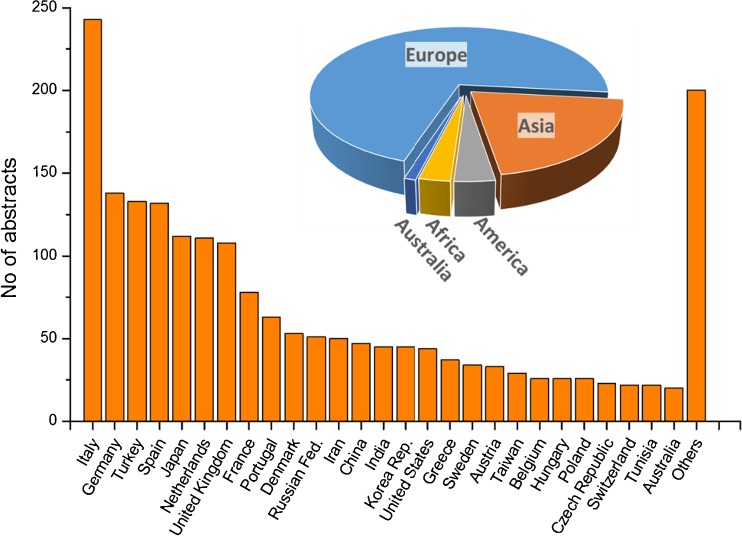
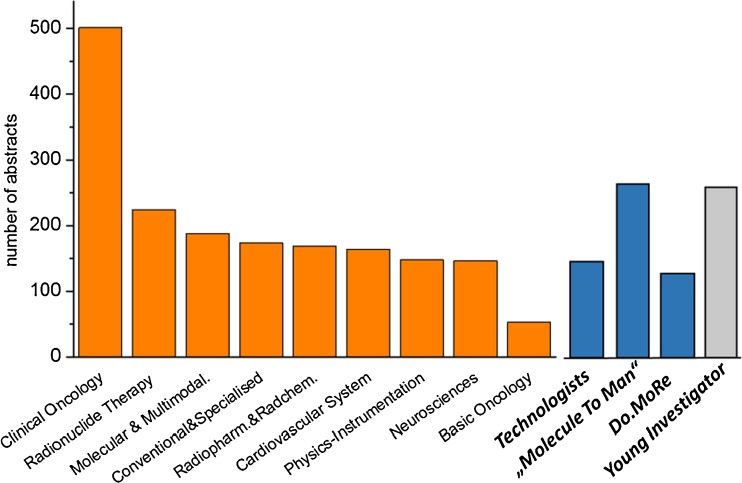
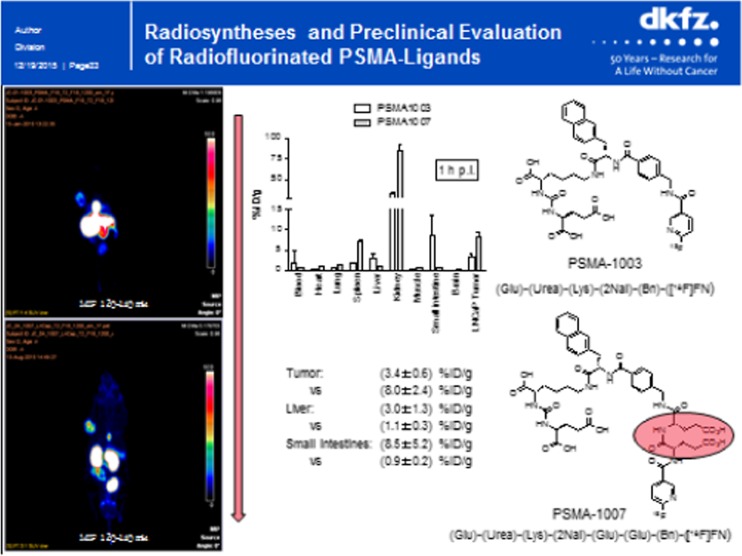
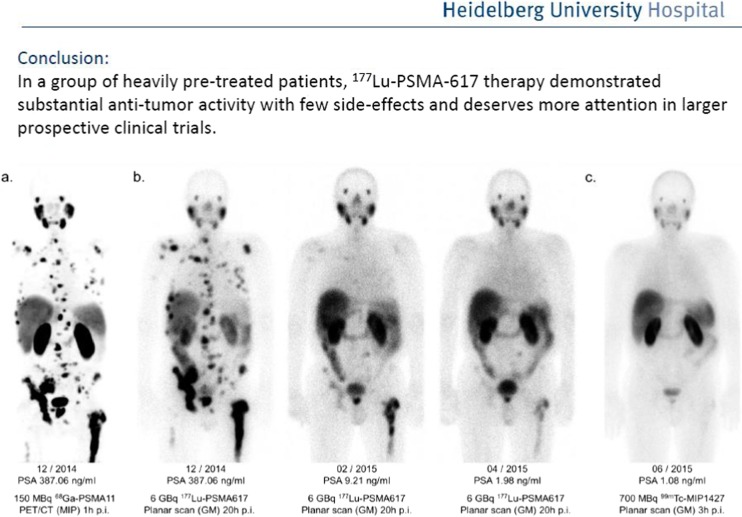
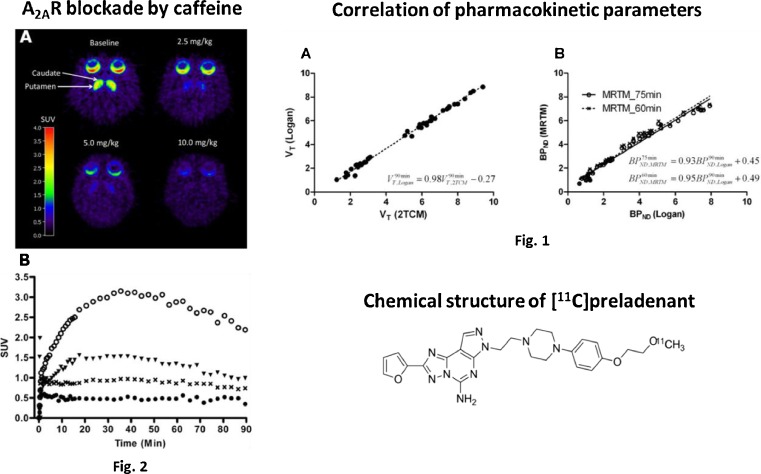
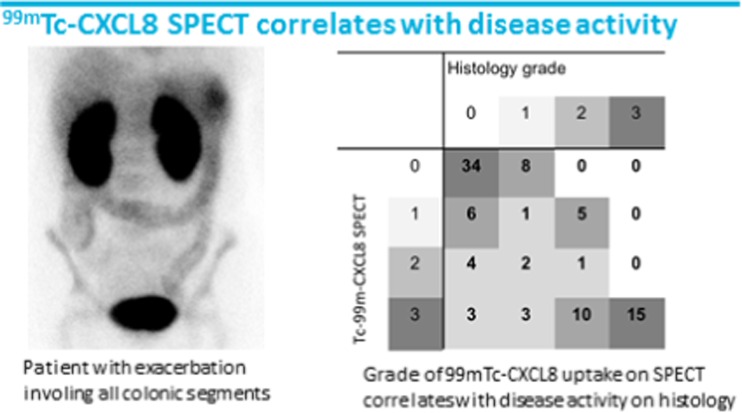
The EANM 2015 Annual Congress, held from October 10th to 14th in Hamburg, Germany, was outstanding in many respects. With 5550 participants, this was by far the largest European congress concerning nuclear medicine. More than 1750 scientific presentations were submitted, with more than 250 abstracts from young scientists, indicating that the future success of our discipline is fuelled by a high number of young individuals becoming involved in a multitude of scientific activities. Significant improvements have been made in molecular imaging of cancer, particularly in prostate cancer. PSMA-directed PET/CT appears to become a new gold standard for staging and restaging purposes. Novel tumour specific compounds have shown their potential for target identification also in other solid neoplasms and further our understanding of tumour biology and heterogeneity. In addition, a variety of nuclear imaging techniques guiding surgical interventions have been introduced. A particular focus of the congress was put on targeted, radionuclide based therapies. Novel theranostic concepts addressing also tumour entities with high incidence rates such as prostate cancer, melanoma, and lymphoma, have shown effective anti-tumour activity. Strategies have been presented to improve further already established therapeutic regimens such as somatostatin receptor based radio receptor therapy for treating advanced neuroendocrine tumours. Significant contributions were presented also in the neurosciences track. An increasing number of target structures of high interest in neurology and psychiatry are now available for PET and SPECT imaging, facilitating specific imaging of different subtypes of dementia and movement disorders as well as neuroinflammation. Major contributions in the cardiovascular track focused on further optimization of cardiac perfusion imaging by reducing radiation exposure, reducing scanning time, and improving motion correction. Besides coronary artery disease, many contributions focused on cardiac inflammation, cardiac sarcoidosis, and specific imaging of large vessel vasculitis. The physics and instrumentation track included many highlights such as novel, high resolution scanners. The most noteworthy news and developments of this meeting were summarized in the highlights lecture. Only 55 scientific contributions were mentioned, and hence they represent only a brief summary, which is outlined in this article. For a more detailed view, all presentations can be accessed by the online version of the European Journal of Nuclear Medicine and Molecular Imaging (Volume 42, Supplement 1).
2015年欧洲核医学协会年会于10月10日至14日在德国汉堡举行,在许多方面都堪称卓越。本次会议有5550名参会者,是迄今为止欧洲规模最大的核医学大会。共提交了1750多篇科学报告,其中有250多篇来自青年科学家的摘要,这表明众多青年投身于大量科学活动,为我们这一学科的未来成功注入了动力。癌症分子成像取得了显著进展,尤其是在前列腺癌方面。PSMA导向的PET/CT似乎正成为分期和再分期的新金标准。新型肿瘤特异性化合物在其他实体瘤中也显示出靶点识别潜力,进一步加深了我们对肿瘤生物学和异质性的理解。此外,还引入了多种指导手术干预的核成像技术。大会特别关注基于放射性核素的靶向治疗。针对前列腺癌、黑色素瘤和淋巴瘤等高发病率肿瘤实体的新型诊疗概念已显示出有效的抗肿瘤活性。会上还提出了进一步改进现有治疗方案的策略,如用于治疗晚期神经内分泌肿瘤的基于生长抑素受体的放射受体疗法。神经科学领域也有重要贡献。如今,神经学和精神病学中越来越多备受关注的靶点结构可用于PET和SPECT成像,有助于对不同类型的痴呆、运动障碍以及神经炎症进行特异性成像。心血管领域的主要贡献集中在通过减少辐射暴露、缩短扫描时间和改进运动校正来进一步优化心脏灌注成像。除了冠状动脉疾病,许多贡献还聚焦于心脏炎症、心脏结节病以及大血管血管炎的特异性成像。物理与仪器领域亮点众多,如新型高分辨率扫描仪。本次会议最值得关注的新闻和进展在亮点讲座中进行了总结。仅提及了55项科学贡献,因此它们只是简要总结,本文将对此进行概述。如需更详细内容,可通过《欧洲核医学与分子成像杂志》在线版(第42卷,增刊1)查阅所有报告。