Sasaki Hayato, Kimura Junpei, Nagasaki Ken-Ichi, Marusugi Kiyoma, Agui Takashi, Sasaki Nobuya
Laboratory of Laboratory Animal Science and Medicine, Faculty of Veterinary Medicine, Kitasato University, Higashi 23-35-1, Towada, 034-8628, Japan.
Laboratory of Anatomy, Department of Biomedical Sciences, Graduate School of Veterinary Medicine, Hokkaido University, Kita-18 Nishi-9, Kita-ku, Sapporo, 060-0818, Japan.
BMC Genet. 2016 May 26;17(1):69. doi: 10.1186/s12863-016-0378-1.
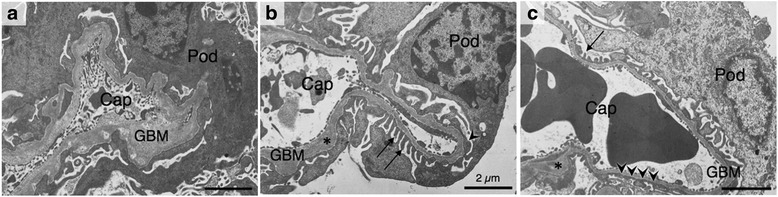
Tensin2 deficiency results in alterations in podocytes and subsequent glomerular and tubulointerstitial injuries. However, this pathology is critically dependent on genetic background. While the Tensin2-deficient podocytes of resistant murine strains, including C57BL/6J mice, remain almost intact, susceptible murine strains with Tensin2 deficency, including ICGN mice, develop chronic kidney disease following alterations in the podocyte foot processes. In a previous study, genome-wide linkage analysis was utilized to identify the quantitative trait loci associated with the disease phenotypes on mouse chromosome 2. This study investigated the disease phenotypes of chromosome 2 consomic and subcongenic strains.
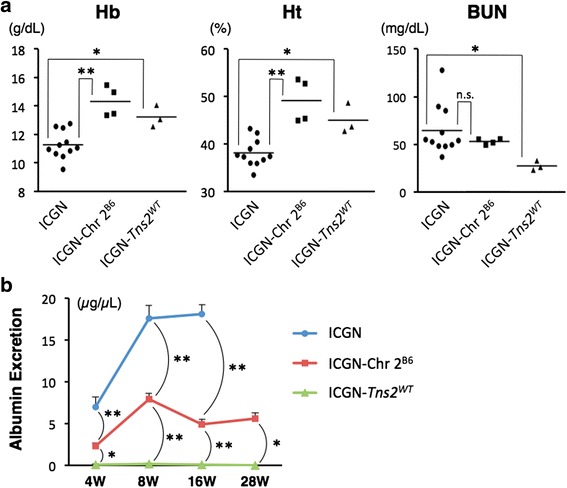
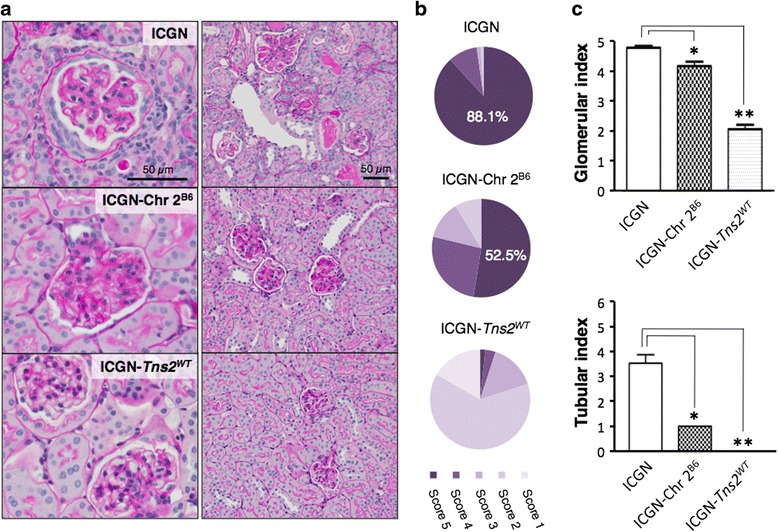
ICGN consomic mice introgressed with chromosome 2 from the C57BL/6J mouse were generated and found to exhibit milder renal failure than that in ICGN mice. We developed 6 subcongenic strains that carry C57BL/6J-derived chromosomal segments from the consomic strain. One showed significantly milder albuminuria, another showed significantly milder tubulointerstitial injury, and the both showed significantly milder glomerular injury.
These data indicate that mouse chromosome 2 harbors two major genes associated with the severities of nephropathy induced by Tensin2 deficiency. The proximal region on chromosome 2 contributes to the resistance to tubulointerstitial fibrosis. In contrast, the distal region on chromosome 2 contributes to the resistance to podocyte injury. This study would be helpful to discover the biological mechanism underlying the renal injury, and may lead to the identification of therapeutic targets.
张力蛋白2(Tensin2)缺乏会导致足细胞改变以及随后的肾小球和肾小管间质损伤。然而,这种病理状况严重依赖于遗传背景。包括C57BL/6J小鼠在内的抗性小鼠品系的Tensin2缺陷型足细胞几乎保持完整,而包括ICGN小鼠在内的具有Tensin2缺陷的易感小鼠品系,在足细胞足突改变后会发展为慢性肾病。在先前的一项研究中,利用全基因组连锁分析来鉴定与小鼠2号染色体上疾病表型相关的数量性状基因座。本研究调查了2号染色体代换系和染色体片段代换系的疾病表型。
构建了从C57BL/6J小鼠导入2号染色体的ICGN代换系小鼠,发现其肾衰竭程度比ICGN小鼠轻。我们培育了6个染色体片段代换系,它们携带来自代换系的C57BL/6J来源的染色体片段。其中一个表现出明显较轻的蛋白尿,另一个表现出明显较轻的肾小管间质损伤,且两者都表现出明显较轻的肾小球损伤。
这些数据表明,小鼠2号染色体含有两个与Tensin2缺乏所致肾病严重程度相关的主要基因。2号染色体的近端区域有助于抵抗肾小管间质纤维化。相反,2号染色体的远端区域有助于抵抗足细胞损伤。本研究将有助于发现肾损伤的生物学机制,并可能有助于确定治疗靶点。