Decock Marie, Stanga Serena, Octave Jean-Noël, Dewachter Ilse, Smith Steven O, Constantinescu Stefan N, Kienlen-Campard Pascal
CEMO-Alzheimer Dementia, Institute of Neuroscience, Université Catholique de Louvain Brussels, Belgium.
Department of Biochemistry and Cell Biology, Stony Brook University, Stony Brook NY, USA.
Front Aging Neurosci. 2016 May 10;8:107. doi: 10.3389/fnagi.2016.00107. eCollection 2016.
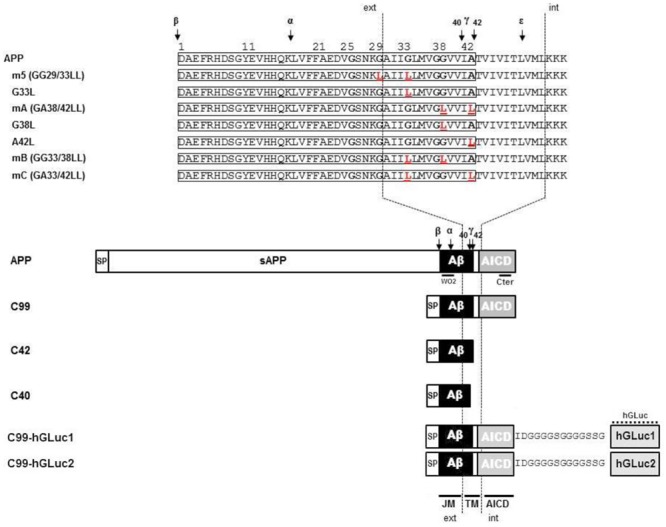
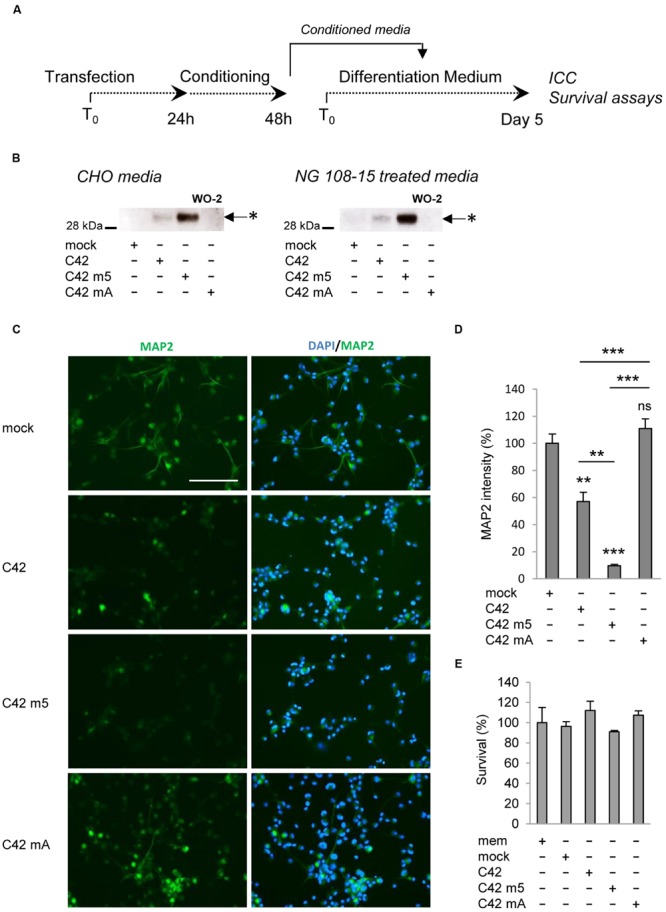
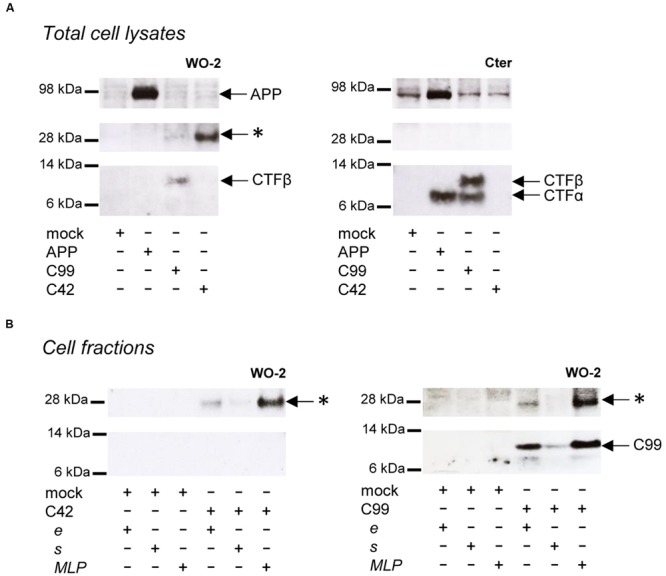
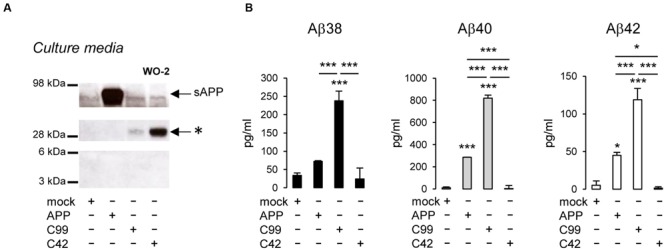
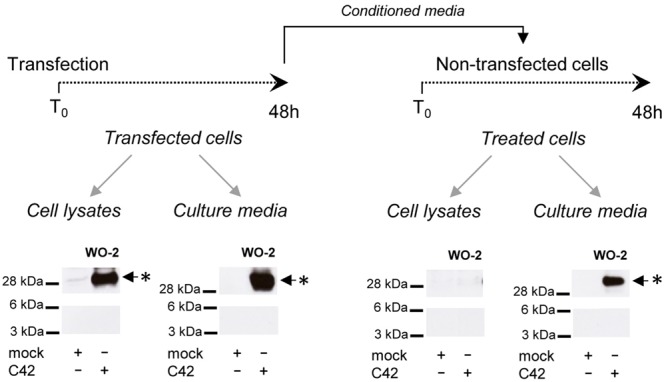
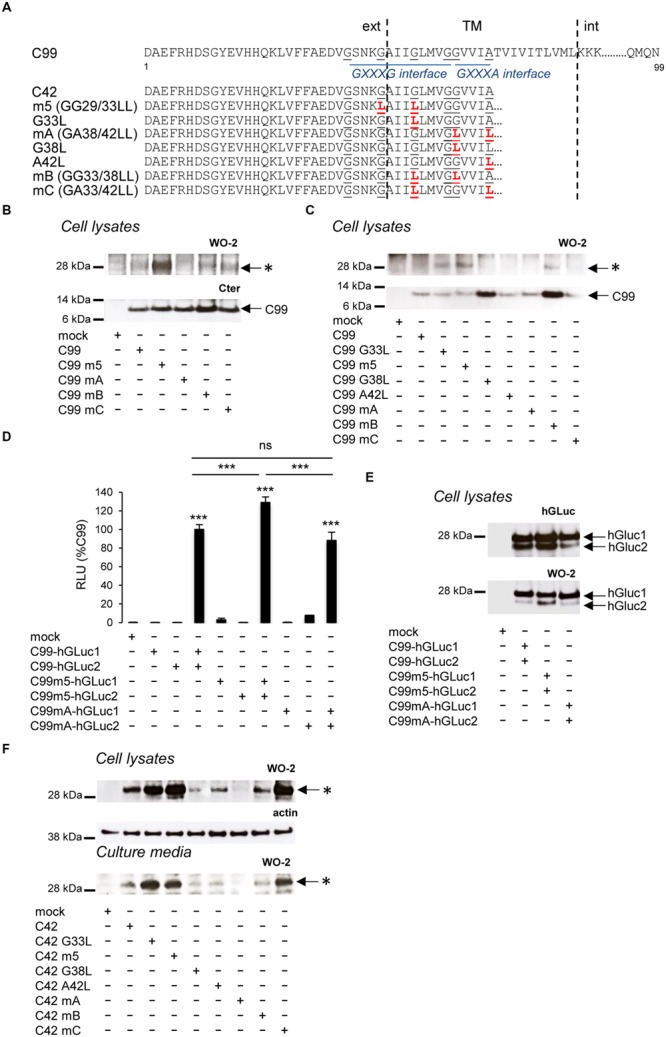
Alzheimer's disease (AD) is the most common neurodegenerative disorder characterized by progressive cognitive decline leading to dementia. The amyloid precursor protein (APP) is a ubiquitous type I transmembrane (TM) protein sequentially processed to generate the β-amyloid peptide (Aβ), the major constituent of senile plaques that are typical AD lesions. There is a growing body of evidence that soluble Aβ oligomers correlate with clinical symptoms associated with the disease. The Aβ sequence begins in the extracellular juxtamembrane region of APP and includes roughly half of the TM domain. This region contains GXXXG and GXXXA motifs, which are critical for both TM protein interactions and fibrillogenic properties of peptides derived from TM α-helices. Glycine-to-leucine mutations of these motifs were previously shown to affect APP processing and Aβ production in cells. However, the detailed contribution of these motifs to APP dimerization, their relation to processing, and the conformational changes they can induce within Aβ species remains undefined. Here, we describe highly resistant Aβ42 oligomers that are produced in cellular membrane compartments. They are formed in cells by processing of the APP amyloidogenic C-terminal fragment (C99), or by direct expression of a peptide corresponding to Aβ42, but not to Aβ40. By a point-mutation approach, we demonstrate that glycine-to-leucine mutations in the G(29)XXXG(33) and G(38)XXXA(42) motifs dramatically affect the Aβ oligomerization process. G33 and G38 in these motifs are specifically involved in Aβ oligomerization; the G33L mutation strongly promotes oligomerization, while G38L blocks it with a dominant effect on G33 residue modification. Finally, we report that the secreted Aβ42 oligomers display pathological properties consistent with their suggested role in AD, but do not induce toxicity in survival assays with neuronal cells. Exposure of neurons to these Aβ42 oligomers dramatically affects neuronal differentiation and, consequently, neuronal network maturation.
阿尔茨海默病(AD)是最常见的神经退行性疾病,其特征是认知功能进行性下降,最终导致痴呆。淀粉样前体蛋白(APP)是一种普遍存在的I型跨膜(TM)蛋白,经顺序加工可生成β-淀粉样肽(Aβ),而Aβ是老年斑的主要成分,老年斑是典型的AD病变。越来越多的证据表明,可溶性Aβ寡聚体与该疾病相关的临床症状有关。Aβ序列起始于APP的细胞外近膜区域,包括大约一半的TM结构域。该区域包含GXXXG和GXXXA基序,这对于TM蛋白相互作用以及源自TMα螺旋的肽的纤维形成特性都至关重要。先前已表明这些基序的甘氨酸到亮氨酸突变会影响细胞中APP的加工和Aβ的产生。然而,这些基序对APP二聚化的具体贡献、它们与加工的关系以及它们在Aβ物种中可诱导的构象变化仍不明确。在此,我们描述了在细胞膜区室中产生的高度抗性的Aβ42寡聚体。它们在细胞中通过APP淀粉样生成性C末端片段(C99)的加工形成,或者通过对应于Aβ42而非Aβ40的肽的直接表达形成。通过点突变方法,我们证明G(29)XXXG(33)和G(38)XXXA(42)基序中的甘氨酸到亮氨酸突变会显著影响Aβ寡聚化过程。这些基序中的G33和G38特别参与Aβ寡聚化;G33L突变强烈促进寡聚化,而G38L则以对G33残基修饰的显性作用阻断寡聚化。最后,我们报告分泌的Aβ42寡聚体表现出与其在AD中假定作用一致的病理特性,但在神经元细胞存活试验中不诱导毒性。将神经元暴露于这些Aβ42寡聚体会显著影响神经元分化,进而影响神经网络成熟。