Petrick Jessica L, Braunlin Megan, Laversanne Mathieu, Valery Patricia C, Bray Freddie, McGlynn Katherine A
Division of Cancer Epidemiology and Genetics, National Cancer Institute, Bethesda, MD.
Cancer Surveillance Section, International Agency for Research on Cancer, Lyon, France.
Int J Cancer. 2016 Oct 1;139(7):1534-45. doi: 10.1002/ijc.30211. Epub 2016 Jun 28.
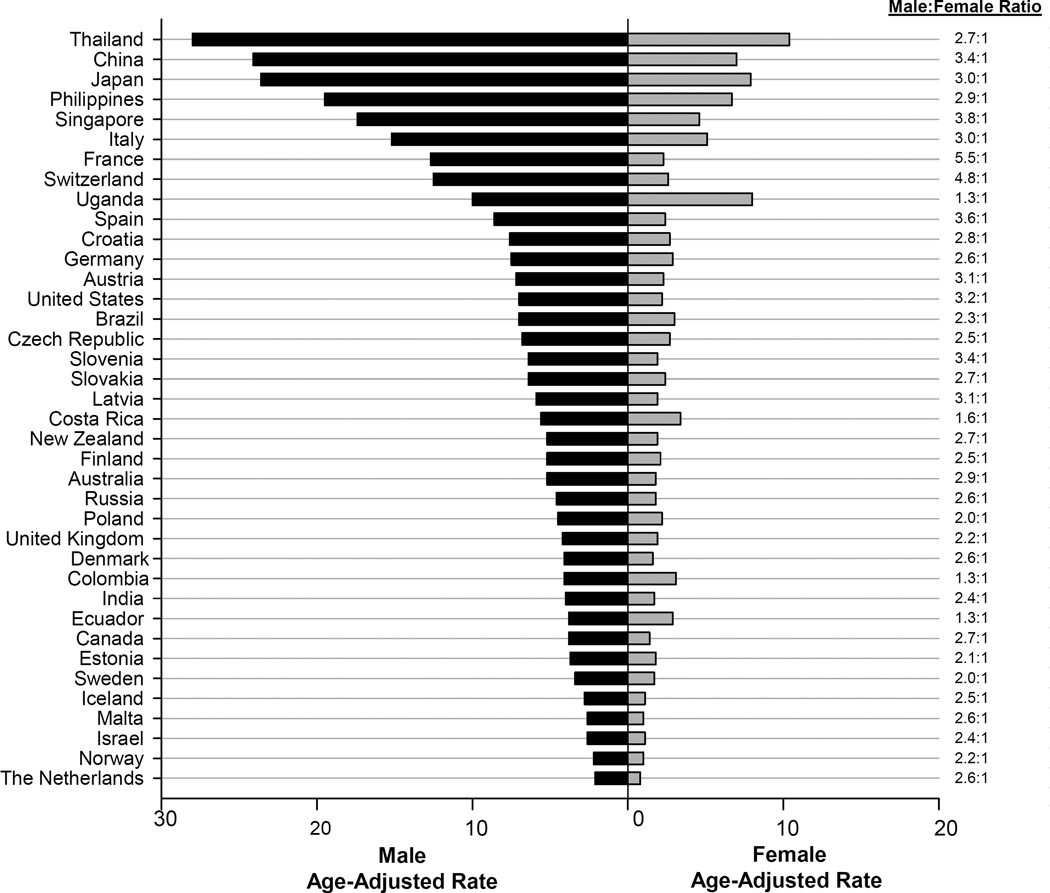
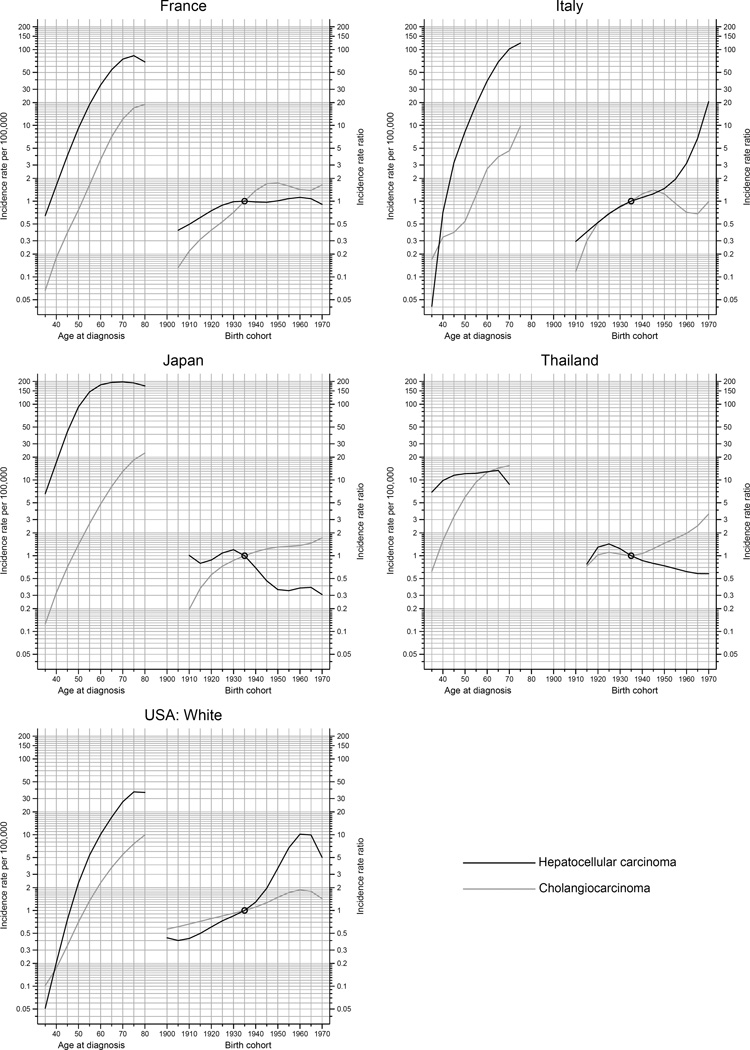
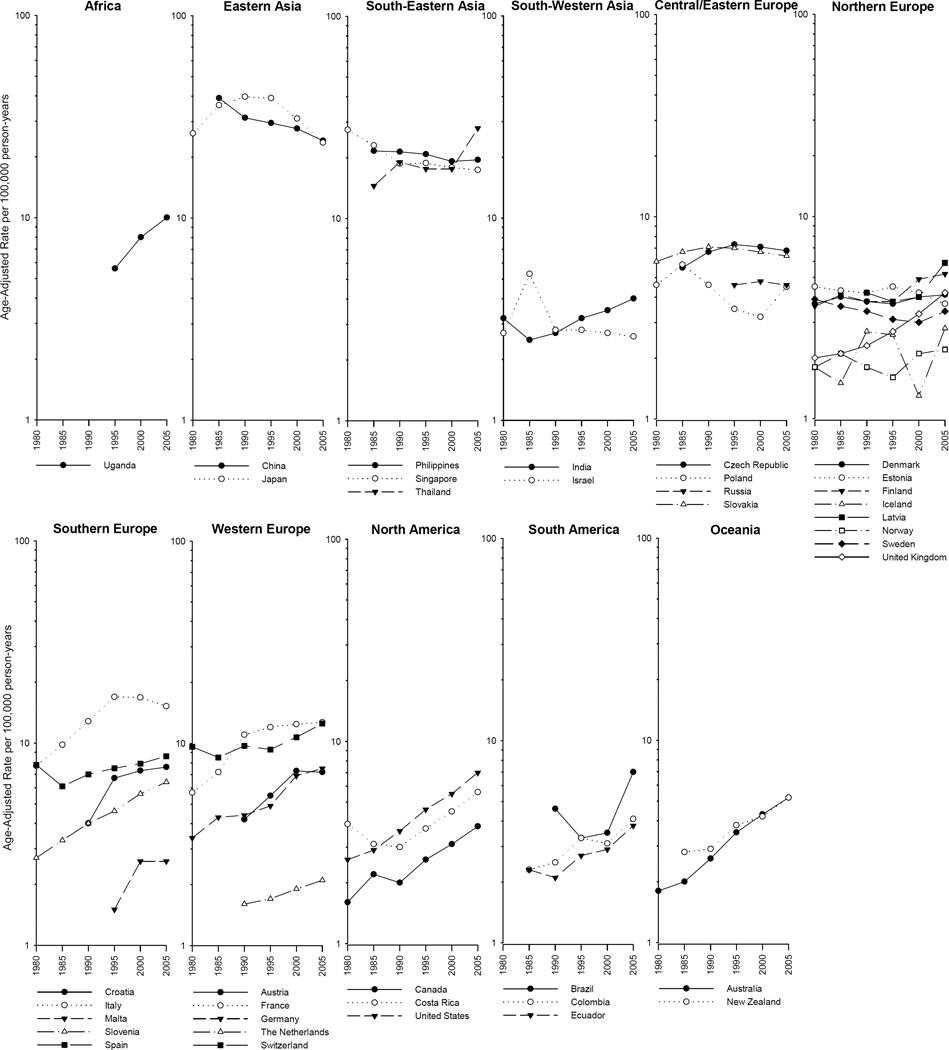
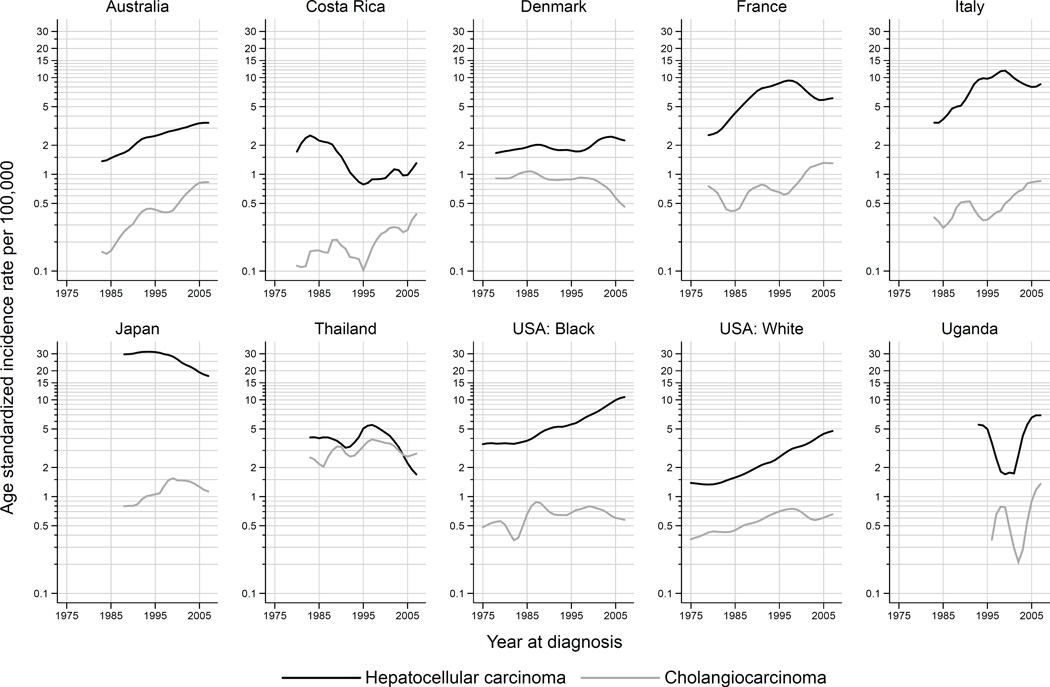
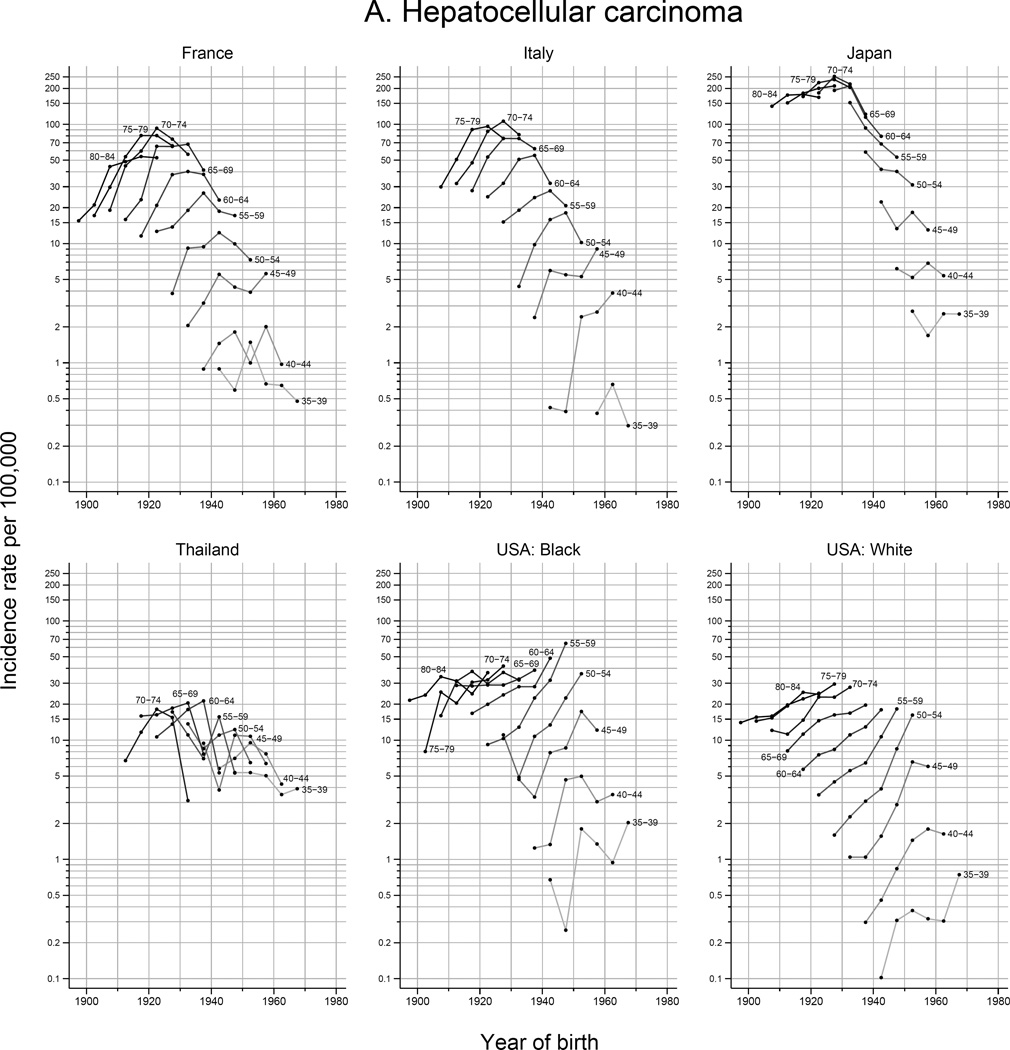
Primary liver cancer, the most common histologic types of which are hepatocellular carcinoma (HCC) and intrahepatic cholangiocarcinoma (ICC), is the second leading cause of cancer death worldwide. While rising incidence of liver cancer in low-risk areas and decreasing incidence in some high-risk areas has been reported, trends have not been thoroughly explored by country or by histologic type. We examined liver cancer incidence overall and by histology by calendar time and birth cohort for selected countries between 1978 and 2007. For each successive 5-year period, age-standardized incidence rates were calculated from volumes V-IX of the Cancer Incidence in Five Continents electronic database (CI5plus) and the newly released CI5X (volume X) database. Wide global variations persist in liver cancer incidence. Rates of liver cancer remain highest in Asian countries, specifically Eastern and South-Eastern Asian countries. While rates in most of these high-risk countries have been decreasing in recent years, rates in India and several low-risk countries of Africa, Europe, the Americas, and Oceania have been on the rise. Liver cancer rates by histologic type tend to convey a similar temporal profile. However, in Thailand, France, and Italy, ICC rates have increased while HCC rates have declined. We expect rates in high-risk countries to continue to decrease, as the population seroprevalence of hepatitis B virus (HBV) continues to decline. In low-risk countries, targeted screening and treatment of the hepatitis C virus (HCV), treatment of diabetes and primary prevention of obesity, will be key in reducing future liver cancer incidence.
原发性肝癌是全球癌症死亡的第二大主要原因,其最常见的组织学类型是肝细胞癌(HCC)和肝内胆管癌(ICC)。虽然有报道称低风险地区肝癌发病率上升,一些高风险地区发病率下降,但尚未按国家或组织学类型对趋势进行全面探讨。我们研究了1978年至2007年间选定国家按日历时间和出生队列划分的总体肝癌发病率及按组织学划分的发病率。对于每个连续的5年期间,年龄标准化发病率是根据《五大洲癌症发病率》电子数据库(CI5plus)的V - IX卷以及新发布的CI5X(第十卷)数据库计算得出的。全球肝癌发病率仍存在广泛差异。亚洲国家,特别是东亚和东南亚国家的肝癌发病率仍然最高。虽然近年来这些高风险国家中的大多数发病率一直在下降,但印度以及非洲、欧洲、美洲和大洋洲的几个低风险国家的发病率却在上升。按组织学类型划分的肝癌发病率往往呈现出类似的时间趋势。然而,在泰国、法国和意大利,ICC发病率上升而HCC发病率下降。我们预计高风险国家的发病率将继续下降,因为乙肝病毒(HBV)的人群血清流行率持续下降。在低风险国家,丙型肝炎病毒(HCV)的靶向筛查和治疗、糖尿病治疗以及肥胖症的一级预防,将是降低未来肝癌发病率的关键。