Yan Shi-hai, Zhao Ning-wei, Jiang Wei-min, Wang Xin-tong, Zhang Si-qi, Zhu Xuan-xuan, Zhang Chun-bing, Gao Yan-hong, Gao Feng, Liu Fu-ming, Fang Zhu-yuan
Affiliated Hospital of Nanjing University of Chinese Medicine, Jiangsu Province Hospital of TCM, Nanjing, People's Republic of China.
Affiliated Hospital of Nanjing University of Chinese Medicine, Jiangsu Province Hospital of TCM, Nanjing, People's Republic of China Shimadzu Biomedical Research Laboratory, Shanghai, People's Republic of China
Open Biol. 2016 Apr;6(4):150159. doi: 10.1098/rsob.150159. Epub 2016 Apr 20.
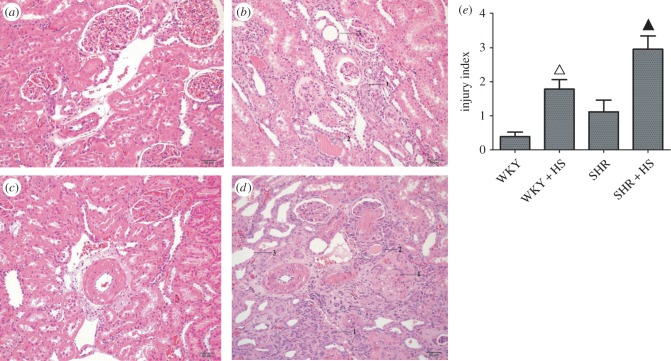
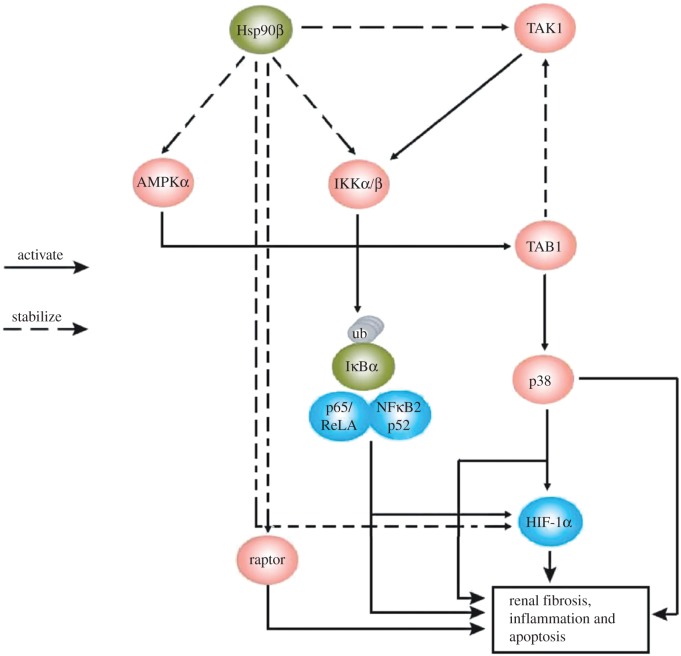
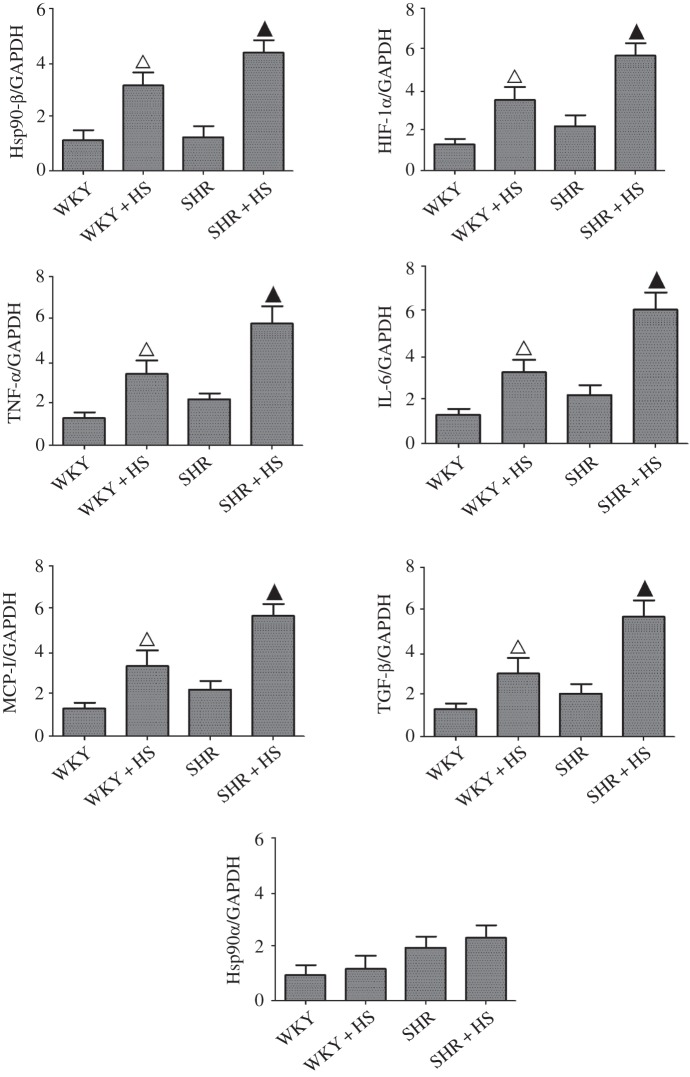
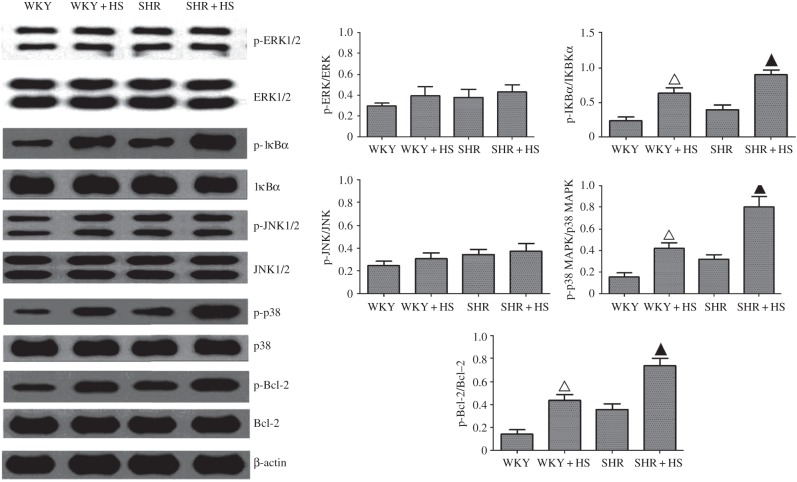
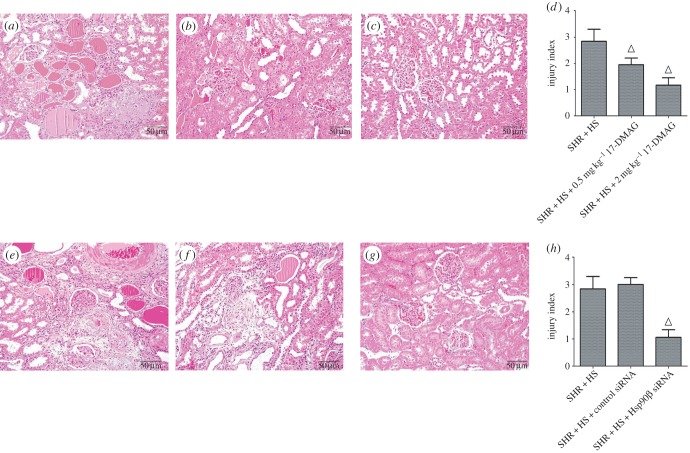
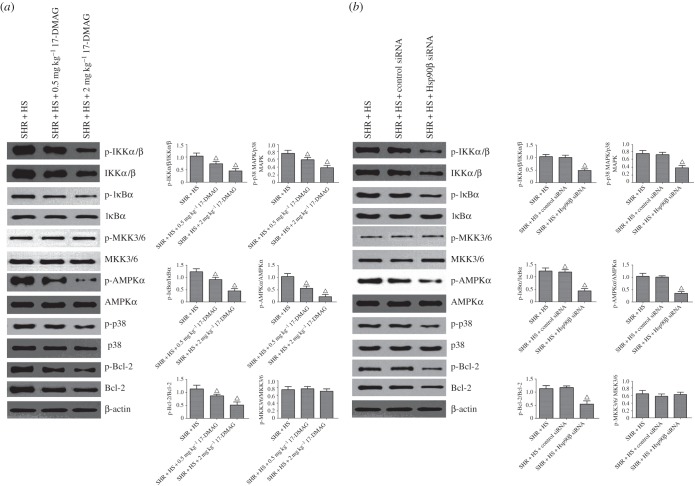
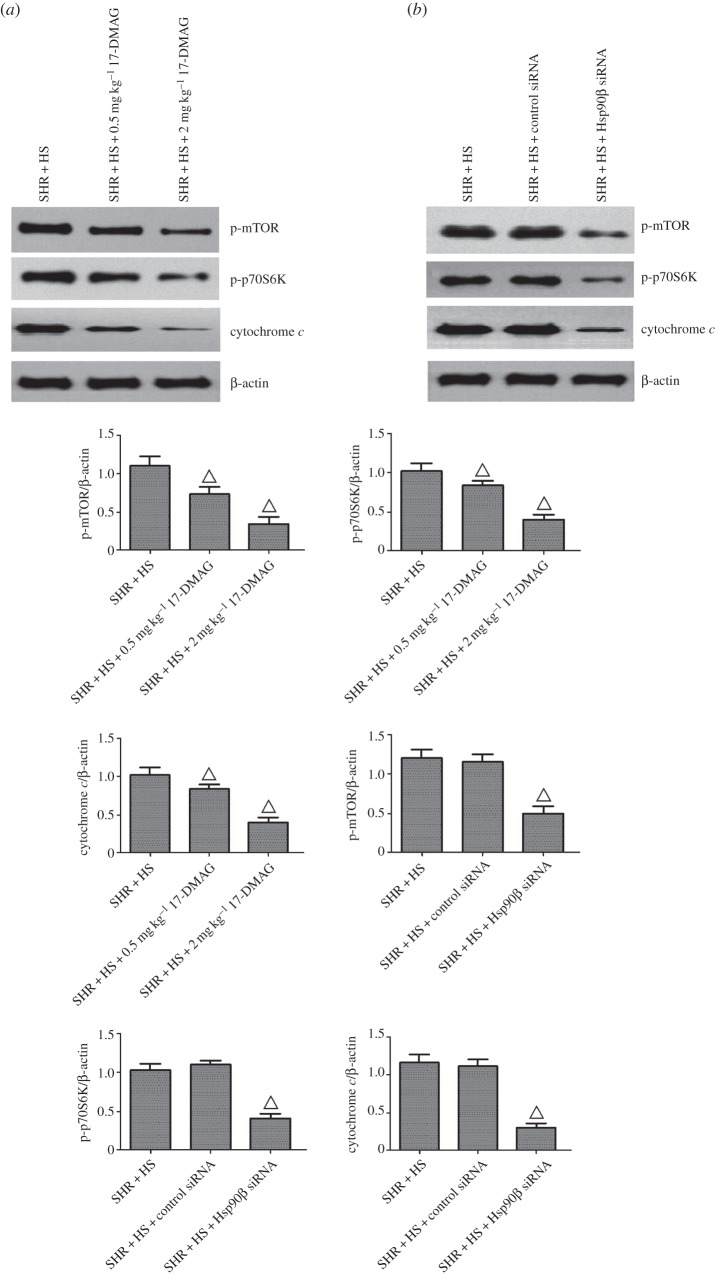
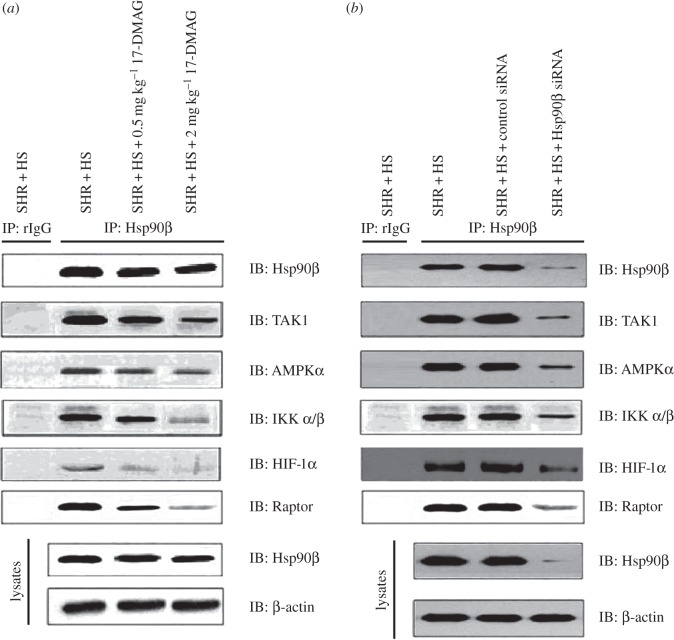
A high-salt diet often leads to a local intrarenal increase in renal hypoxia and oxidative stress, which are responsible for an excess production of pathogenic substances. Here, Wistar Kyoto/spontaneous hypertensive (WKY/SHR) rats fed a high-salt diet developed severe proteinuria, resulting from pronounced renal inflammation, fibrosis and tubular epithelial cell apoptosis. All these were mainly non-pressure-related effects. Hsp90β, TGF-β, HIF-1α, TNF-α, IL-6 and MCP-1 were shown to be highly expressed in response to salt loading. Next, we found that Hsp90β might play the key role in non-pressure-related effects of salt loading through a series of cellular signalling events, including the NF-κB, p38 activation and Bcl-2 inactivation. Hsp90β was previously proven to regulate the upstream mediators in multiple cellular signalling cascades through stabilizing and maintaining their activities. In our study, 17-dimethylaminoethylamino-17-demethoxygeldanamycin (17-DMAG) or Hsp90β knockdown dramatically alleviated the high-salt-diet-induced proteinuria and renal damage without altering blood pressure significantly, when it reversed activations of NF-κB, mTOR and p38 signalling cascades. Meanwhile, Co-IP results demonstrated that Hsp90β could interact with and stabilize TAK1, AMPKα, IKKα/β, HIF-1α and Raptor, whereas Hsp90β inhibition disrupted this process. In addition, Hsp90β inhibition-mediated renal improvements also accompanied the reduction of renal oxidative stress. In conclusion, salt loading indeed exhibited non-pressure-related impacts on proteinuria and renal dysfunction in WKY/SHR rats. Hsp90β inhibition caused the destabilization of upstream mediators in various pathogenic signalling events, thereby effectively ameliorating this nephropathy owing to renal hypoxia and oxidative stress.
高盐饮食常常导致肾脏局部缺氧及氧化应激增加,而这会导致致病物质过度产生。在此,喂食高盐饮食的Wistar Kyoto/自发性高血压(WKY/SHR)大鼠出现了严重蛋白尿,这是由明显的肾脏炎症、纤维化及肾小管上皮细胞凋亡所致。所有这些主要都是与压力无关的效应。结果显示,热休克蛋白90β(Hsp90β)、转化生长因子-β(TGF-β)、缺氧诱导因子-1α(HIF-1α)、肿瘤坏死因子-α(TNF-α)、白细胞介素-6(IL-6)及单核细胞趋化蛋白-1(MCP-1)在盐负荷刺激下高表达。接下来,我们发现Hsp90β可能通过一系列细胞信号事件,包括核因子-κB(NF-κB)、p38激活及Bcl-2失活,在盐负荷的非压力相关效应中起关键作用。Hsp90β此前已被证明可通过稳定和维持其活性来调节多个细胞信号级联反应中的上游介质。在我们的研究中,17-二甲基氨基乙基氨基-17-去甲氧基格尔德霉素(17-DMAG)或Hsp90β基因敲低显著减轻了高盐饮食诱导产生的蛋白尿及肾脏损伤,且在逆转NF-κB、哺乳动物雷帕霉素靶蛋白(mTOR)及p38信号级联反应激活时,并未显著改变血压。同时,免疫共沉淀结果表明,Hsp90β可与转化生长因子-β激活激酶1(TAK1)、腺苷酸活化蛋白激酶α(AMPKα)、IκB激酶α/β(IKKα/β)、HIF-1α及雷帕霉素靶蛋白受体(Raptor)相互作用并使其稳定,而Hsp90β抑制则破坏了这一过程。此外,Hsp90β抑制介导的肾脏改善也伴随着肾脏氧化应激的减轻。总之,盐负荷确实对WKY/SHR大鼠的蛋白尿及肾功能障碍产生了与压力无关的影响。Hsp90β抑制导致各种致病信号事件中上游介质的不稳定,从而有效改善了因肾脏缺氧及氧化应激所致的肾病。