Spitschan Manuel, Aguirre Geoffrey K, Brainard David H, Sweeney Alison M
Department of Psychology, University of Pennsylvania, Philadelphia, Pennsylvania 19104, USA.
Department of Neurology, University of Pennsylvania, Philadelphia, Pennsylvania 19104, USA.
Sci Rep. 2016 Jun 7;6:26756. doi: 10.1038/srep26756.
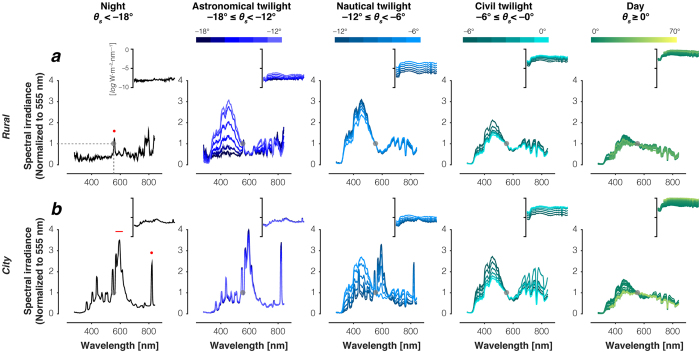
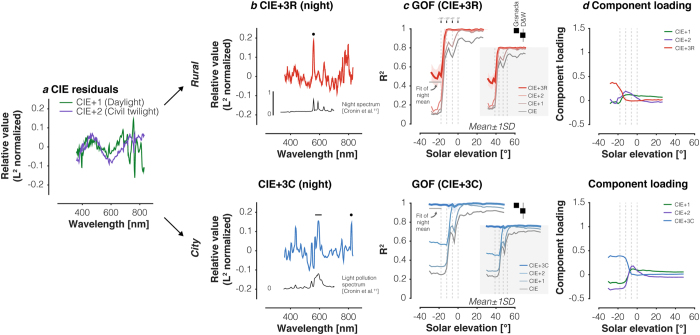
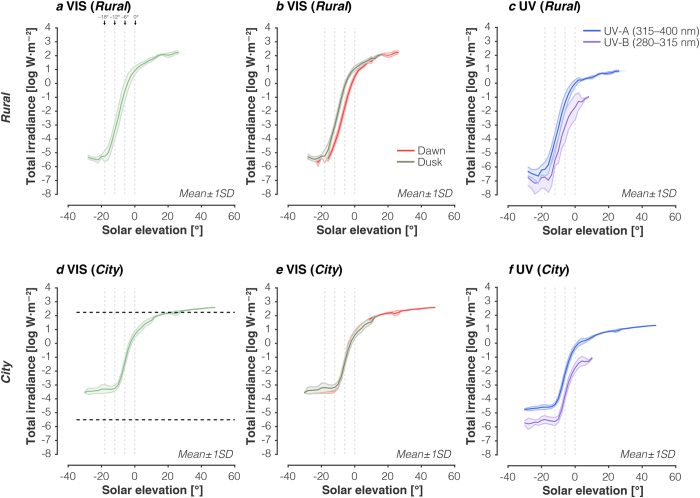
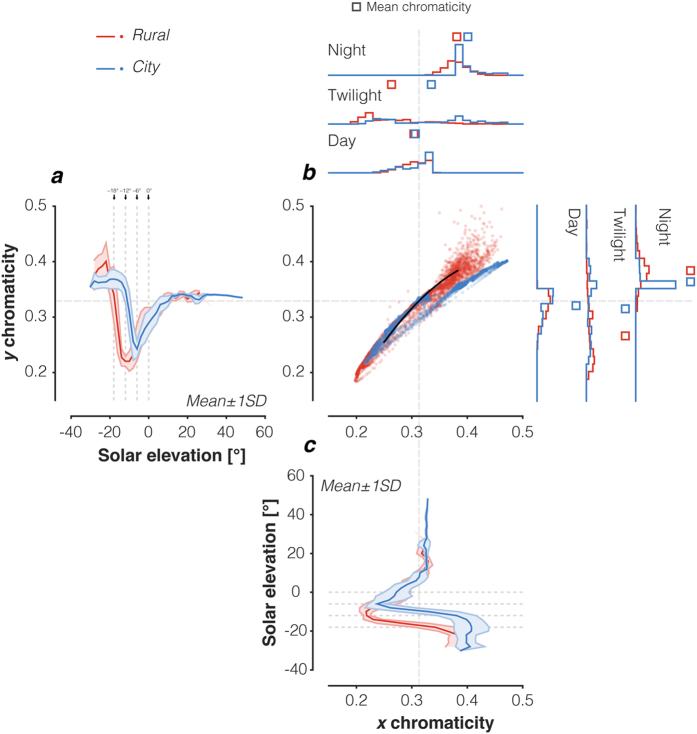
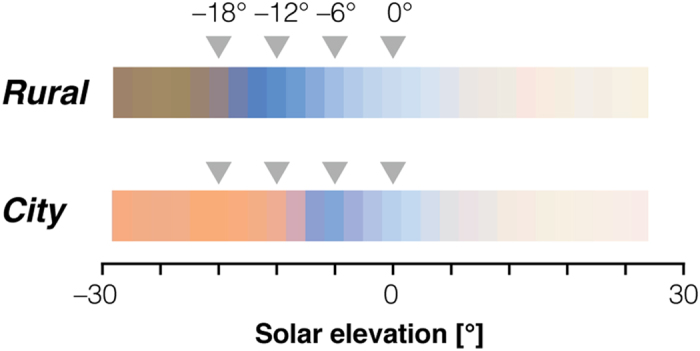
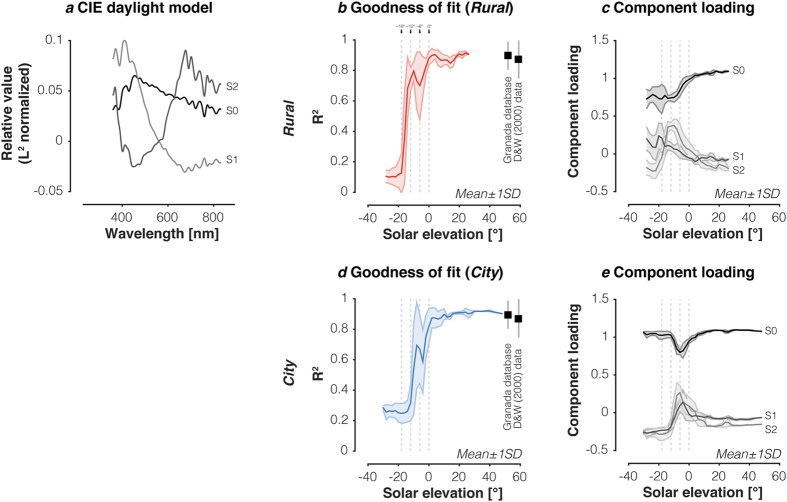
The illumination of the environment undergoes both intensity and spectral changes during the 24 h cycle of a day. Daylight spectral power distributions are well described by low-dimensional models such as the CIE (Commission Internationale de l'Éclairage) daylight model, but the performance of this model in non-daylight regimes is not characterised. We measured downwelling spectral irradiance across multiple days in two locations in North America: One rural location (Cherry Springs State Park, PA) with minimal anthropogenic light sources, and one city location (Philadelphia, PA). We characterise the spectral, intensity and colour changes and extend the existing CIE model for daylight to capture twilight components and the spectrum of the night sky.
在一天24小时的周期内,环境光照会经历强度和光谱变化。低维模型(如国际照明委员会(CIE)日光模型)能很好地描述日光光谱功率分布,但该模型在非日光条件下的性能尚未得到表征。我们在北美的两个地点进行了多天的下行光谱辐照度测量:一个是农村地点(宾夕法尼亚州樱桃泉州立公园),人为光源极少;另一个是城市地点(宾夕法尼亚州费城)。我们对光谱、强度和颜色变化进行了表征,并扩展了现有的CIE日光模型,以涵盖暮光成分和夜空光谱。