Koh Wee Ming, Bogich Tiffany, Siegel Karen, Jin Jing, Chong Elizabeth Y, Tan Chong Yew, Chen Mark Ic, Horby Peter, Cook Alex R
From the *Saw Swee Hock School of Public Health, National University of Singapore and National University Health System, Singapore; †Standard Analytics, New York, New York; ‡Rollins School of Public Health, Emory University, Atlanta, Georgia; §Duke-NUS Graduate Medical School, Singapore; ¶Communicable Disease Centre, Tan Tock Seng Hospital, Singapore; ‖Nuffield Department of Medicine, University of Oxford, United Kingdom; and **Yale-NUS College, National University of Singapore, Singapore.
Pediatr Infect Dis J. 2016 Oct;35(10):e285-300. doi: 10.1097/INF.0000000000001242.
Hand, foot and mouth disease (HFMD) is a widespread pediatric disease caused primarily by human enterovirus 71 (EV-A71) and Coxsackievirus A16 (CV-A16).
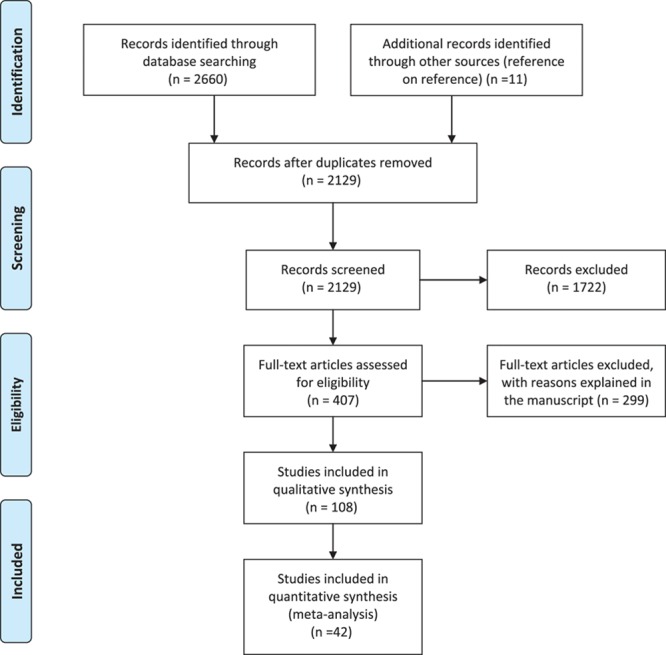
This study reports a systematic review of the epidemiology of HFMD in Asia.
PubMed, Web of Science and Google Scholar were searched up to December 2014.
Two reviewers independently assessed studies for epidemiologic and serologic information about prevalence and incidence of HFMD against predetermined inclusion/exclusion criteria.
Two reviewers extracted answers for 8 specific research questions on HFMD epidemiology. The results are checked by 3 others.
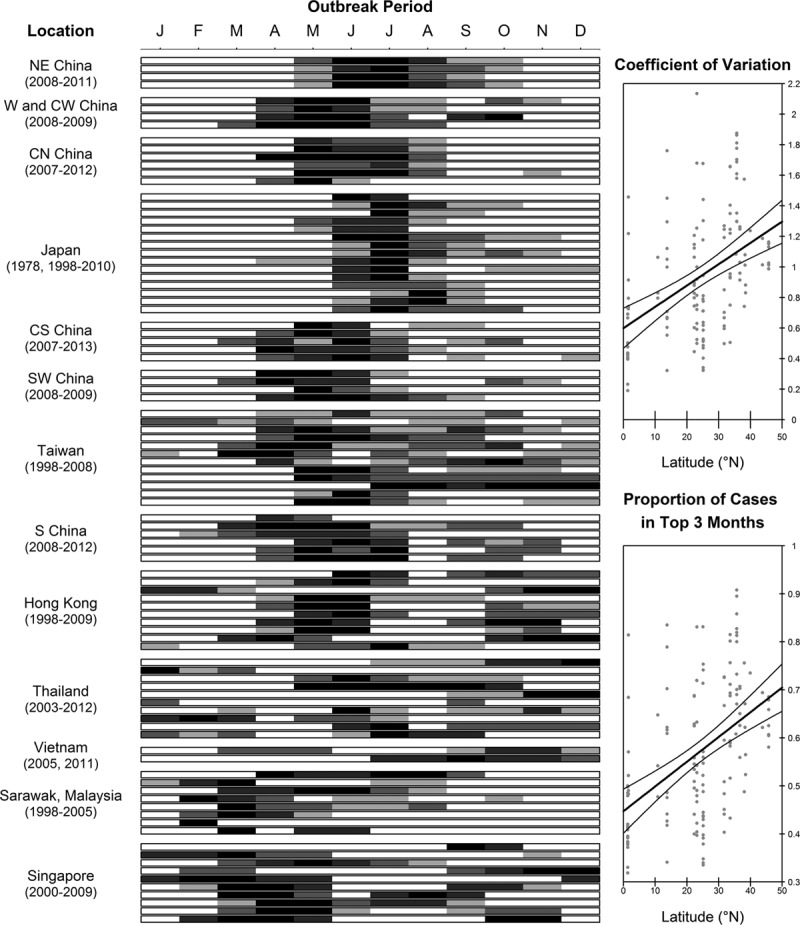
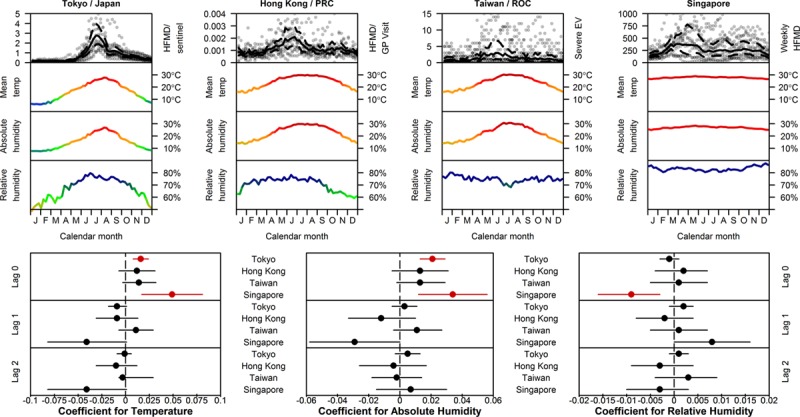
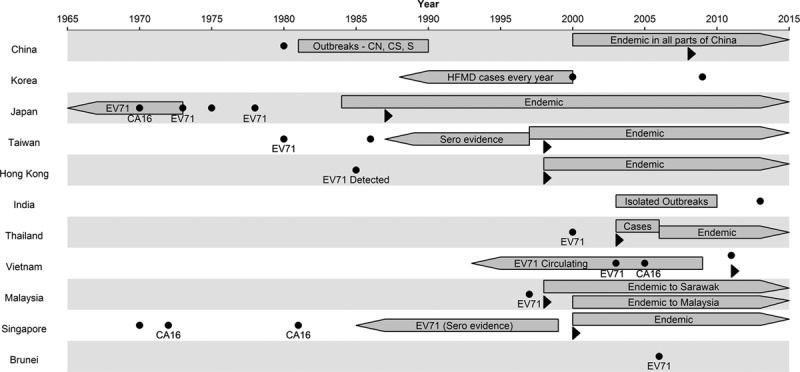
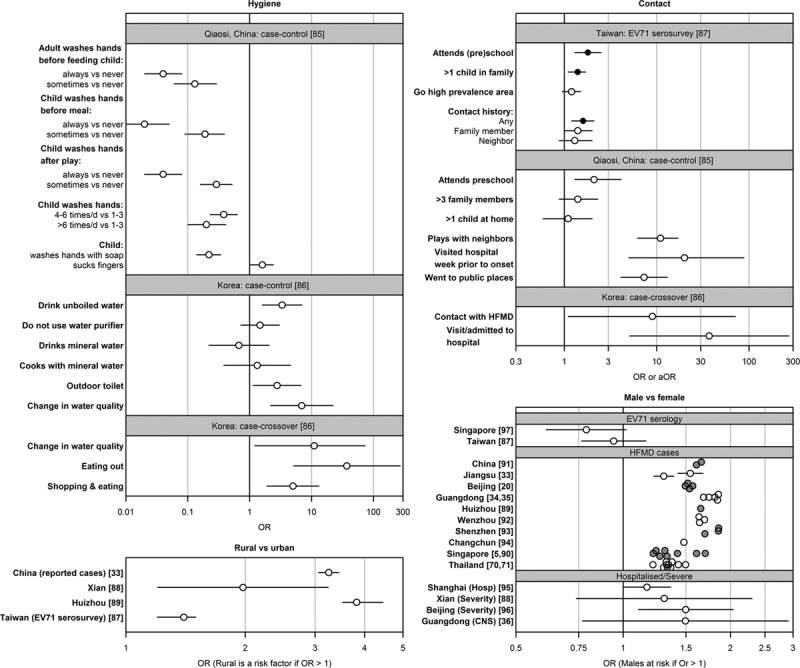
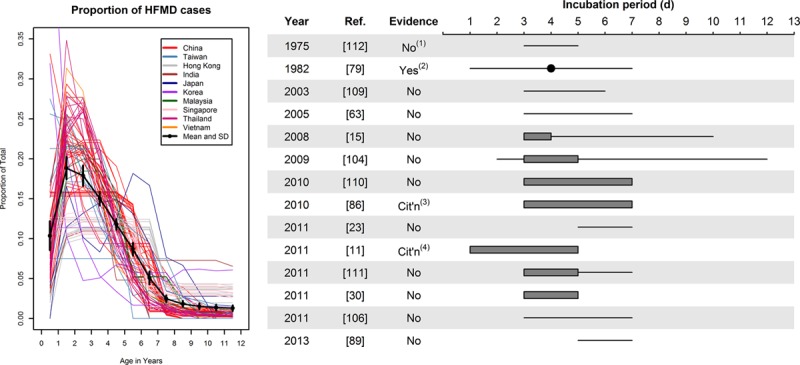
HFMD is found to be seasonal in temperate Asia with a summer peak and in subtropical Asia with spring and fall peaks, but not in tropical Asia; evidence of a climatic role was identified for temperate Japan. Risk factors for HFMD include hygiene, age, gender and social contacts, but most studies were underpowered to adjust rigorously for confounding variables. Both community-level and school-level transmission have been implicated, but their relative importance for HFMD is inconclusive. Epidemiologic indices are poorly understood: No supporting quantitative evidence was found for the incubation period of EV-A71; the symptomatic rate of EV-A71/Coxsackievirus A16 infection was from 10% to 71% in 4 studies; while the basic reproduction number was between 1.1 and 5.5 in 3 studies. The uncertainty in these estimates inhibits their use for further analysis.
Diversity of study designs complicates attempts to identify features of HFMD epidemiology.
Knowledge on HFMD remains insufficient to guide interventions such as the incorporation of an EV-A71 vaccine in pediatric vaccination schedules. Research is urgently needed to fill these gaps.
手足口病(HFMD)是一种广泛流行的儿科疾病,主要由肠道病毒71型(EV - A71)和柯萨奇病毒A16型(CV - A16)引起。
本研究报告了对亚洲手足口病流行病学的系统评价。
检索了截至2014年12月的PubMed、科学网和谷歌学术。
两名评审员根据预先确定的纳入/排除标准,独立评估有关手足口病患病率和发病率的流行病学和血清学信息的研究。
两名评审员提取了关于手足口病流行病学的8个具体研究问题的答案。结果由另外3人进行核对。
手足口病在亚洲温带地区呈季节性,夏季为高峰,在亚热带亚洲地区春季和秋季为高峰,但在热带亚洲地区并非如此;在温带日本发现了气候起作用的证据。手足口病的危险因素包括卫生状况、年龄、性别和社会接触,但大多数研究在严格调整混杂变量方面能力不足。社区层面和学校层面的传播都有涉及,但它们对手足口病的相对重要性尚无定论。对流行病学指标了解不足:未找到支持EV - A71潜伏期的定量证据;4项研究中EV - A71/柯萨奇病毒A16感染的症状发生率为10%至71%;而3项研究中基本再生数在1.1至5.5之间。这些估计值的不确定性阻碍了它们用于进一步分析。
研究设计的多样性使识别手足口病流行病学特征的尝试变得复杂。
关于手足口病的知识仍然不足以指导诸如将EV - A71疫苗纳入儿科疫苗接种计划等干预措施。迫切需要开展研究来填补这些空白。