Yitayeh Asmare, Teshome Amare
Department of Physiotherapy, School of Medicine, College of Medicine and Health Sciences, University of Gondar, Gondar, Ethiopia.
Department of Dentistry, School of Medicine, College of Medicine and Health Sciences, University of Gondar, Gondar, Ethiopia.
BMC Sports Sci Med Rehabil. 2016 Jun 6;8:17. doi: 10.1186/s13102-016-0042-0. eCollection 2016.
Balance dysfunction and postural instability in Parkinson's disease are among the most relevant determinants of an impaired quality of life. Physiotherapy interventions are essential to reduce the level of disability by treating balance dysfunction and postural instability. The aim of this systematic review with meta-analysis was to test the effectiveness of conventional physiotherapy interventions in the management of balance dysfunction and postural instability in Persons with idiopathic Parkinson's disease.
A systematic literature search of the Cochrane Library, PubMed/Medline, PEDro, Rehadat, and Rehab Trials were performed by 2 reviewers (AY and AT) independently. Eligible randomised controlled trials published from September 2005 to June 2015 were included. The selected RCTs, which investigated the effects of conventional physiotherapy treatments in the management of postural instability and balance dysfunction in Persons with Parkinson's disease, were assessed on a methodological quality rating scale. Included studies differed clearly from each other with regard to patient characteristics, intervention protocol, and outcome measures. Important characteristics and outcomes were extracted, summarized and analyzed.
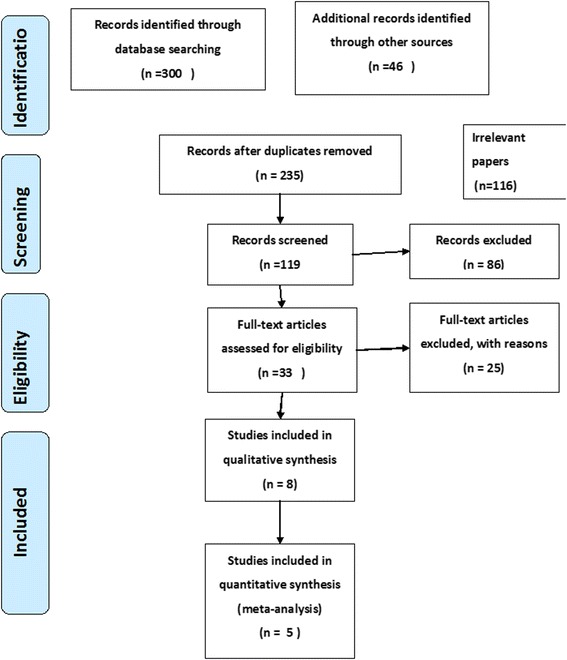
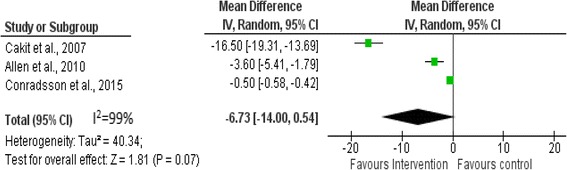
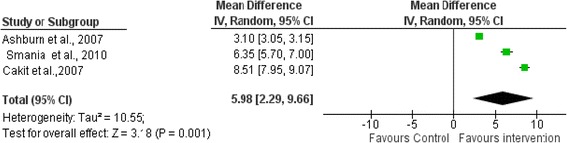
Eight trials with a total of 483 participants were eligible for inclusion of which 5 trials provide data for meta-analysis. Benefits from conventional physiotherapy treatment were reported for all of the outcomes assessed. The pooled estimates of effects showed significantly improved berg balance scale (SMD, 0.23; 95 % CI, 0.10-0.36; P < 0.001) after exercise therapy, in comparison with no exercise or sham treatment. Exercise interventions specifically addressing components of balance dysfunction demonstrated the largest efficacy with moderate effect size (SMD, 5.98; 95 % CI, 2.29-9.66; P < 0.001). Little effects were observed for interventions that specifically targeted Falls efficacy scale. The pooled data indicated that physiotherapy exercises decreased the incidence of falling by 6.73 (95 % CI: -14.00, 0.54, p = 0.07) with the overall effect of Z = 1.81.
Physiotherapy interventions like balance training combined with muscle strengthening, the range of movement and walking training exercise is effective in improving balance in patients with Parkinson's disease and more effective than balance exercises alone. Highly challenging balance training and incremental speed-dependent treadmill training can also be part of a rehabilitation program for management of balance dysfunction and Postural instability in patients with idiopathic Parkinson's disease.
帕金森病中的平衡功能障碍和姿势不稳是生活质量受损的最相关决定因素。物理治疗干预对于通过治疗平衡功能障碍和姿势不稳来降低残疾程度至关重要。本系统评价及荟萃分析的目的是检验传统物理治疗干预对特发性帕金森病患者平衡功能障碍和姿势不稳的管理效果。
由两名评价者(AY和AT)独立对Cochrane图书馆、PubMed/Medline、PEDro、Rehadat和Rehab Trials进行系统文献检索。纳入2005年9月至2015年6月发表的符合条件的随机对照试验。对所选的研究帕金森病患者姿势不稳和平衡功能障碍管理中传统物理治疗效果的随机对照试验,采用方法学质量评分量表进行评估。纳入研究在患者特征、干预方案和结局指标方面明显不同。提取、总结并分析重要特征和结局。
八项试验共483名参与者符合纳入条件,其中五项试验提供了荟萃分析数据。对于所有评估的结局,均报告了传统物理治疗的益处。与无运动或假治疗相比,运动疗法后平衡量表合并效应估计值显示显著改善(标准化均数差,0.23;95%可信区间,0.10 - 0.36;P < 0.001)。专门针对平衡功能障碍组成部分的运动干预显示出最大疗效,效应量中等(标准化均数差,5.98;95%可信区间,2.29 - 9.66;P < 0.001)。针对跌倒效能量表的干预效果甚微。汇总数据表明,物理治疗运动使跌倒发生率降低6.73(95%可信区间:-14.00,0.54,p = 0.07),总体效应Z = 1.81。
平衡训练结合肌肉强化、运动范围和步行训练等物理治疗干预对改善帕金森病患者的平衡有效,且比单纯平衡训练更有效。高挑战性平衡训练和递增速度依赖性跑步机训练也可作为特发性帕金森病患者平衡功能障碍和姿势不稳管理康复计划的一部分。