Narayanan Sowmya, Nieh Albert H, Kenwood Brandon M, Davis Christine A, Tosello-Trampont Annie-Carole, Elich Tedd D, Breazeale Steven D, Ward Eric, Anderson Richard J, Caldwell Stephen H, Hoehn Kyle L, Hahn Young S
Beirne B. Carter Center for Immunology Research, University of Virginia, Charlottesville, United States of America.
Department of Microbiology, Immunology, and Cancer Biology, University of Virginia, Charlottesville, United States of America.
PLoS One. 2016 Jun 9;11(6):e0156996. doi: 10.1371/journal.pone.0156996. eCollection 2016.
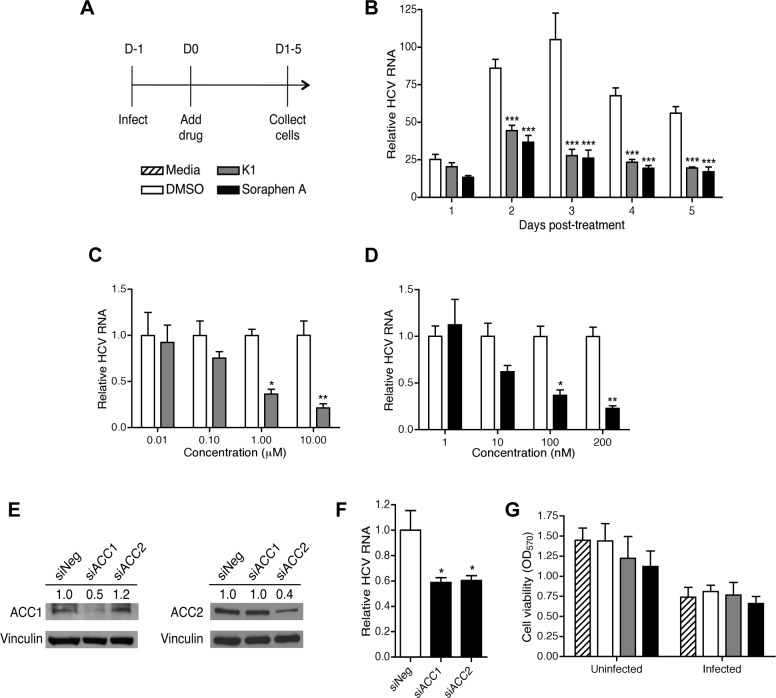
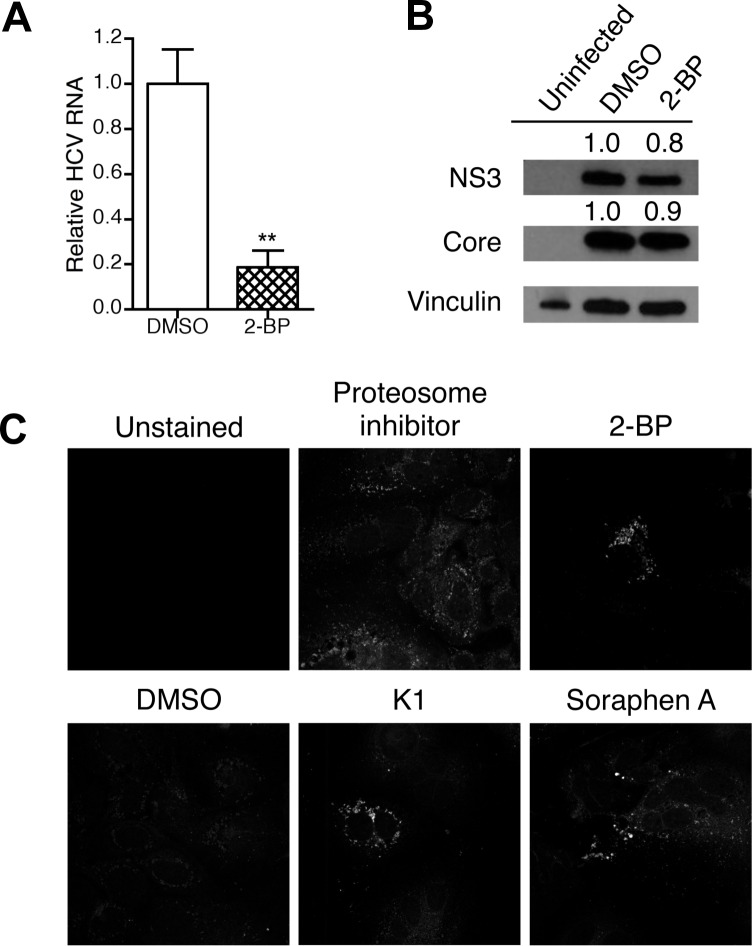
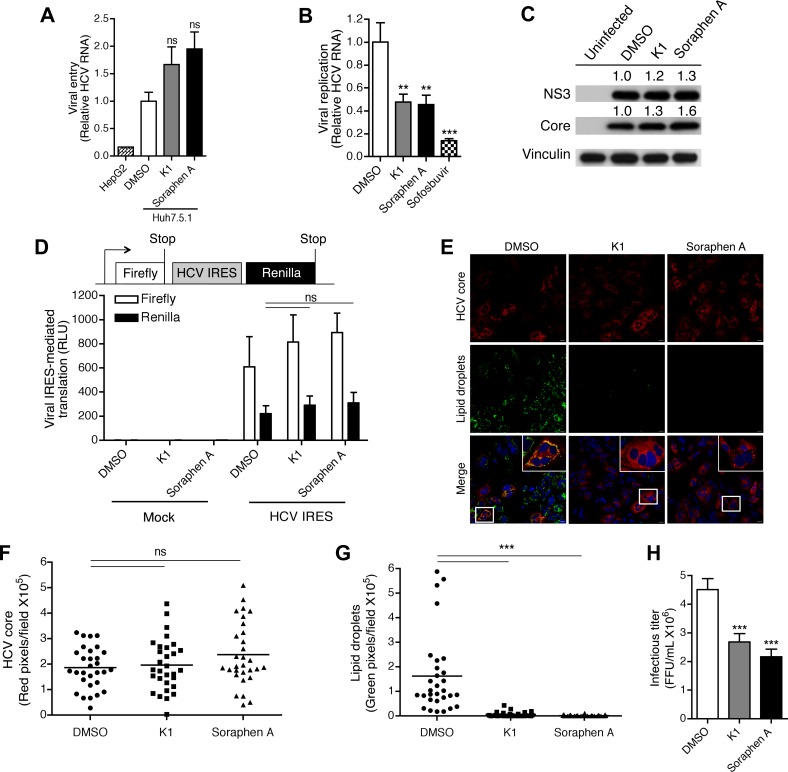
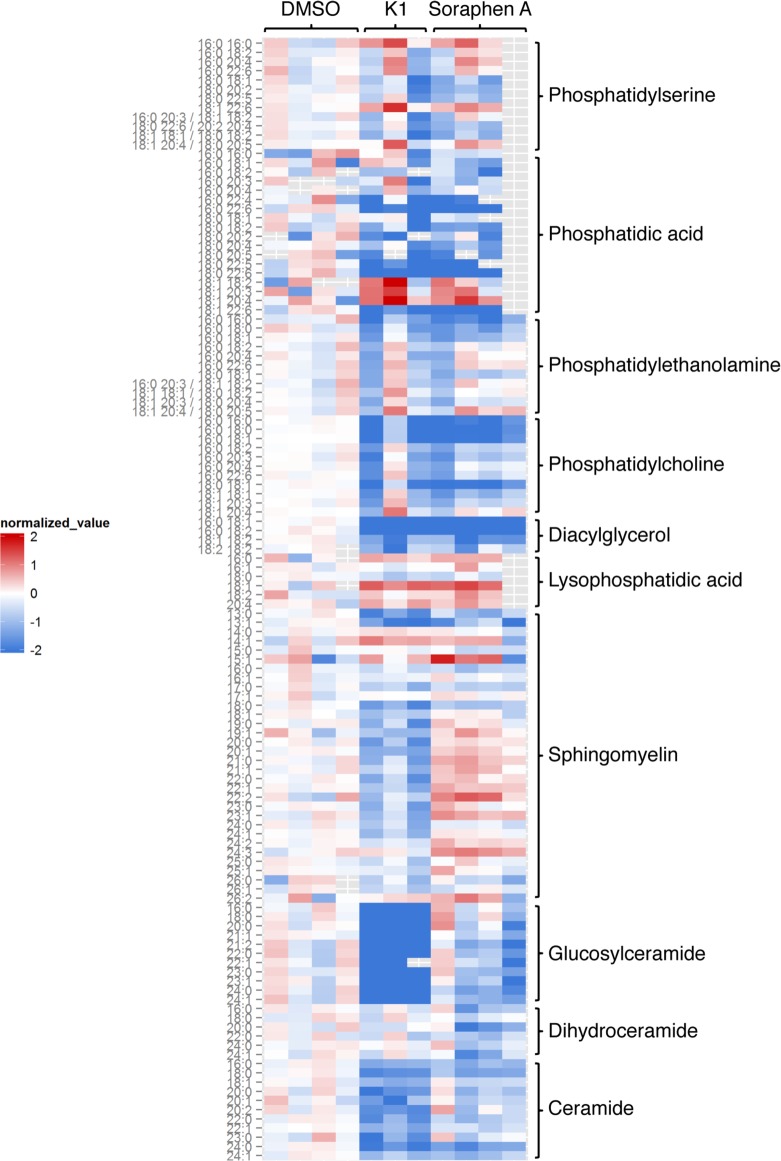
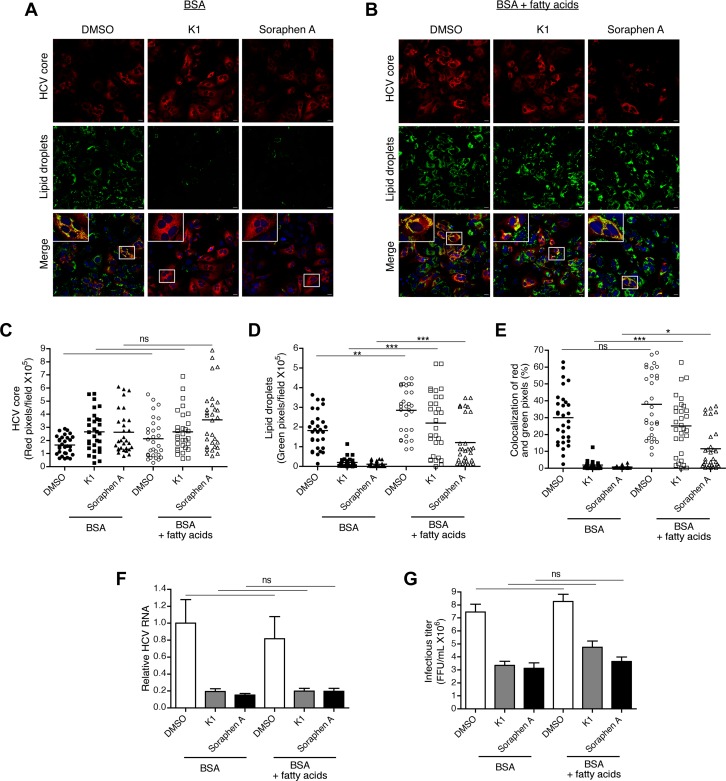
Hepatitis C is a chronic liver disease that contributes to progressive metabolic dysfunction. Infection of hepatocytes by hepatitis C virus (HCV) results in reprogramming of hepatic and serum lipids. However, the specific contribution of these distinct pools of lipids to HCV infection remains ill defined. In this study, we investigated the role of hepatic lipogenesis in HCV infection by targeting the rate-limiting step in this pathway, which is catalyzed by the acetyl-CoA carboxylase (ACC) enzymes. Using two structurally unrelated ACC inhibitors, we determined that blockade of lipogenesis resulted in reduced viral replication, assembly, and release. Supplementing exogenous lipids to cells treated with ACC inhibitors rescued HCV assembly with no effect on viral replication and release. Intriguingly, loss of viral RNA was not recapitulated at the protein level and addition of 2-bromopalmitate, a competitive inhibitor of protein palmitoylation, mirrored the effects of ACC inhibitors on reduced viral RNA without a concurrent loss in protein expression. These correlative results suggest that newly synthesized lipids may have a role in protein palmitoylation during HCV infection.
丙型肝炎是一种导致进行性代谢功能障碍的慢性肝病。丙型肝炎病毒(HCV)感染肝细胞会导致肝脏和血清脂质重新编程。然而,这些不同脂质池对HCV感染的具体作用仍不清楚。在本研究中,我们通过靶向该途径中的限速步骤(由乙酰辅酶A羧化酶(ACC)催化)来研究肝脏脂肪生成在HCV感染中的作用。使用两种结构不相关的ACC抑制剂,我们确定脂肪生成的阻断导致病毒复制、组装和释放减少。用ACC抑制剂处理的细胞补充外源性脂质可挽救HCV组装,而对病毒复制和释放无影响。有趣的是,病毒RNA的丢失在蛋白质水平上并未重现,并且添加蛋白质棕榈酰化的竞争性抑制剂2-溴棕榈酸酯,反映了ACC抑制剂对病毒RNA减少的影响,而蛋白质表达没有同时丧失。这些相关结果表明,新合成的脂质可能在HCV感染期间的蛋白质棕榈酰化中起作用。