Su Jiahao, Cai Meiqin, Li Wensheng, Hou Bo, He Haiyong, Ling Cong, Huang Tengchao, Liu Huijiao, Guo Ying
Department of Neurosurgery, Third Affiliated Hospital of Sun Yat-sen University, Guangzhou, China.
Oncol Res. 2016;24(2):117-28. doi: 10.3727/096504016X14612603423511.
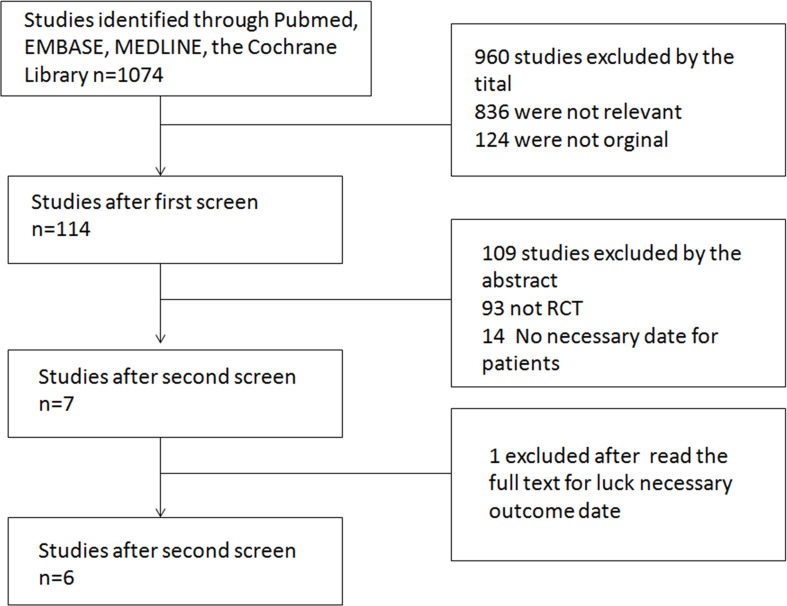
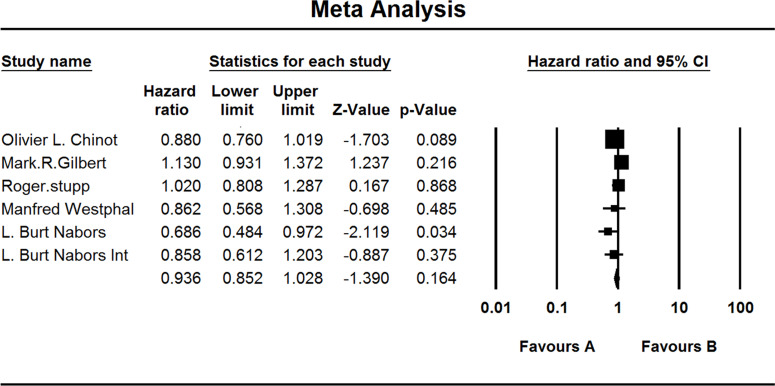
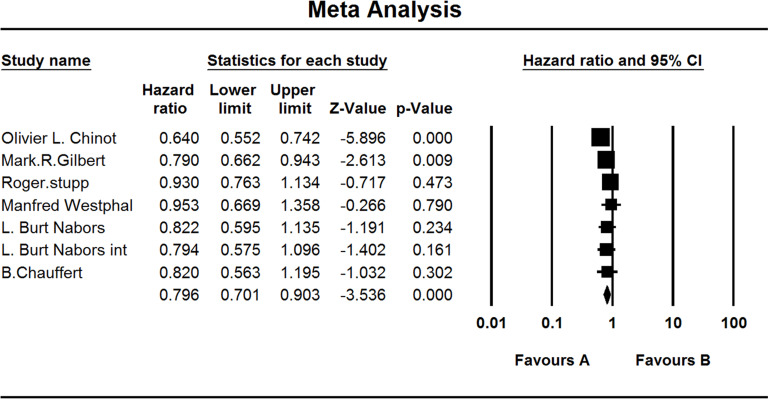
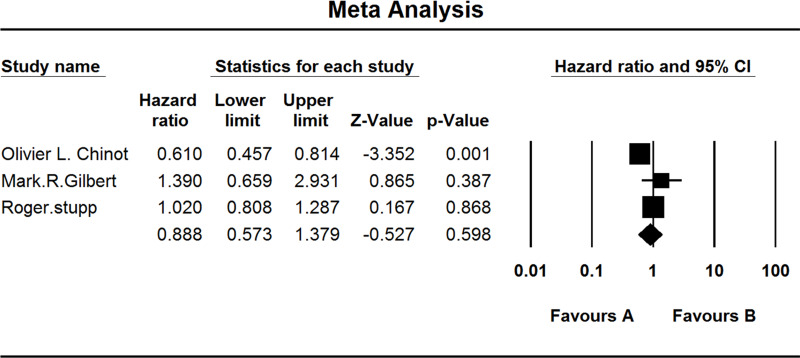
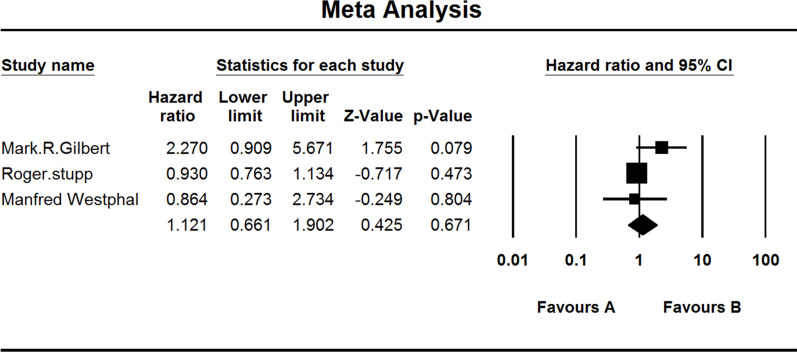
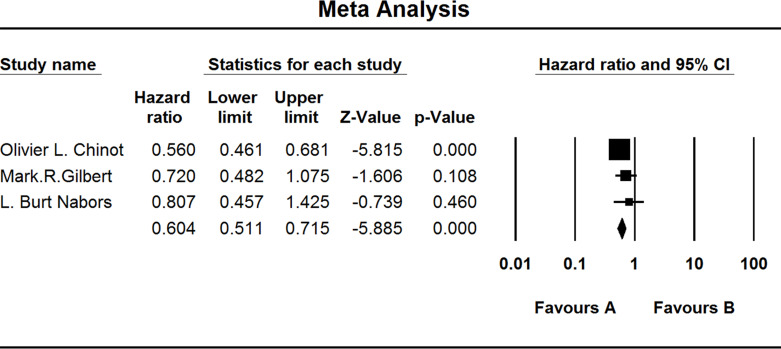
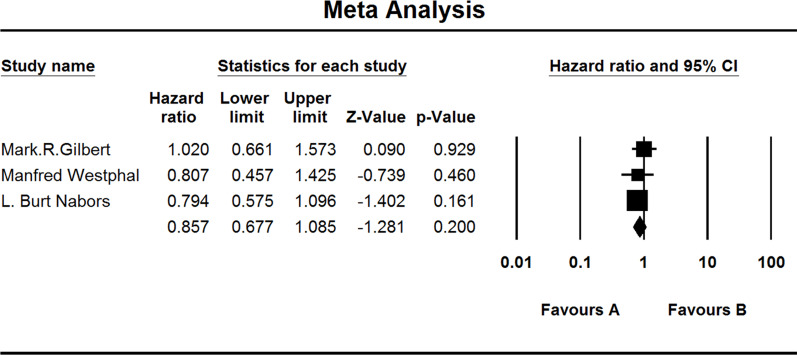
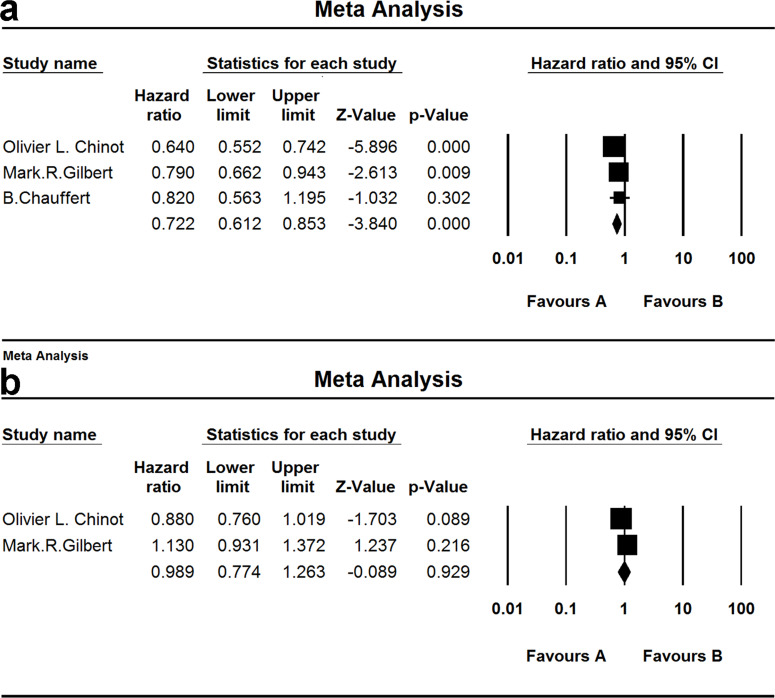
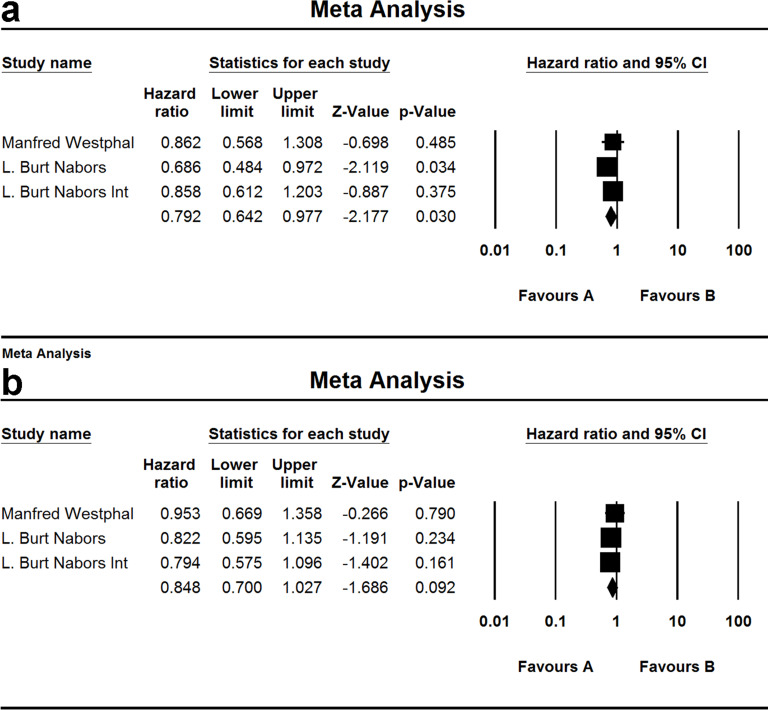
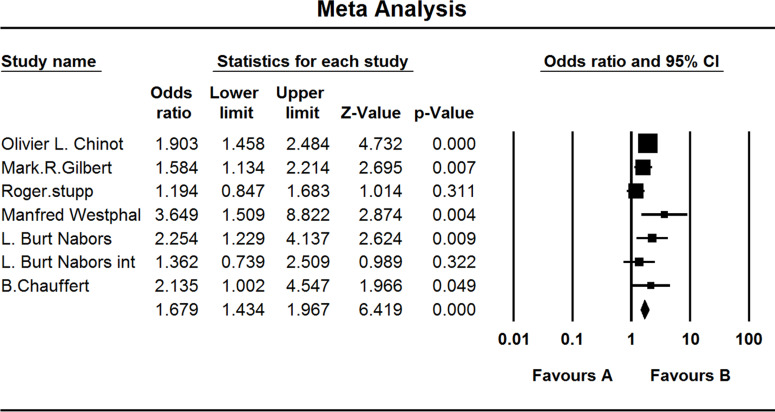
Glioblastoma (GBM) is the most common primary malignant brain tumor that nearly always results in a bad prognosis. Temozolomide plus radiotherapy (TEM+RAD) is the most common treatment for newly diagnosed GBM. With the development of molecularly targeted drugs, several clinical trials were reported; however, the efficacy of the treatment remains controversial. So we attempted to measure the dose of the molecularly targeted drug that could improve the prognosis of those patients. The appropriate electronic databases (PubMed, MEDLINE, EMBASE, and the Cochrane Library) were searched for relevant studies. A meta-analysis was performed after determining which studies met the inclusion criteria. Six randomized, controlled trials (RCTs) were identified for this meta-analysis, comprising 2,637 GBM patients. The benefit of overall survival (OS) was hazard ratio (HZ), 0.936 [95% confidence interval (CI), 0.852-1.028]. The benefit with respect to progression-free survival (PFS) rate was HZ of 0.796 (95% CI, 0.701-0.903). OS benefit of cilengitide was HZ of 0.792 (95% CI, 0.642-0.977). The adverse effects higher than grade 3 were 57.7% in the experimental group and 44.1% in the placebo group (odds ratio, 1.679; 95% CI, 1.434-1.967). The addition of molecularly targeted drugs to TEM + RAD did not improve the OS of patients with GBM; however, it did improve PFS in patients treated by cilengitide who could not get improvement in OS. The rate of adverse effects was higher in the experimental group than in the placebo group.
胶质母细胞瘤(GBM)是最常见的原发性恶性脑肿瘤,几乎总是导致预后不良。替莫唑胺联合放疗(TEM+RAD)是新诊断GBM最常用的治疗方法。随着分子靶向药物的发展,有多项临床试验报告;然而,该治疗的疗效仍存在争议。因此,我们试图测定可改善这些患者预后的分子靶向药物剂量。检索了适当的电子数据库(PubMed、MEDLINE、EMBASE和Cochrane图书馆)以查找相关研究。在确定哪些研究符合纳入标准后进行了荟萃分析。本次荟萃分析确定了6项随机对照试验(RCT),包括2637例GBM患者。总生存期(OS)获益的风险比(HZ)为0.936[95%置信区间(CI),0.852 - 1.028]。无进展生存期(PFS)率获益的HZ为0.796(95%CI,0.701 - 0.903)。西仑吉肽的OS获益HZ为0.792(95%CI,0.642 - 0.977)。实验组3级以上不良反应发生率为57.7%,安慰剂组为44.1%(优势比,1.679;95%CI,1.434 - 1.967)。在TEM+RAD基础上加用分子靶向药物并未改善GBM患者的OS;然而,对于OS无改善的接受西仑吉肽治疗的患者,确实改善了PFS。实验组的不良反应发生率高于安慰剂组。