
注意缺陷多动障碍儿童的情绪调节障碍
Emotional dysregulation in children with attention-deficit/hyperactivity disorder.
作者信息
van Stralen Judy
机构信息
Center for Pediatric Excellence, Ottawa, ON, Canada.
出版信息
Atten Defic Hyperact Disord. 2016 Dec;8(4):175-187. doi: 10.1007/s12402-016-0199-0. Epub 2016 Jun 14.
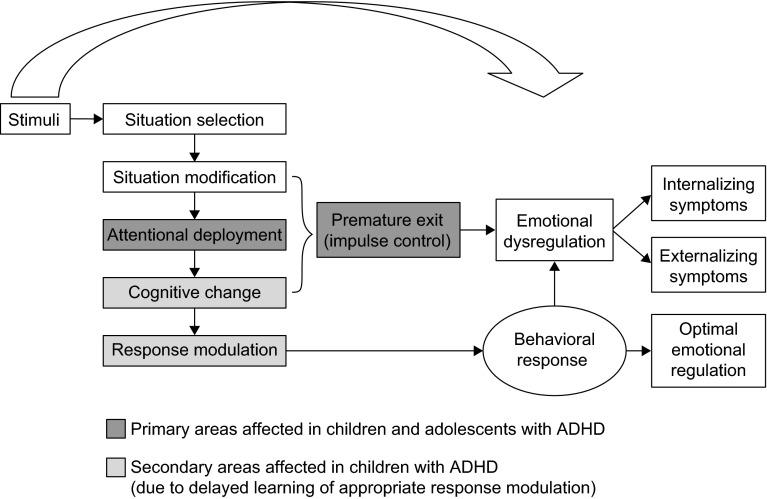
Emotional dysregulation is increasingly recognized as a core feature of attention-deficit/hyperactivity disorder (ADHD). The purpose of the present systematic literature review was to identify published data related to the neuropsychology of emotional dysregulation in children with ADHD. The literature obtained is discussed in the contexts of deficits in emotional control, impairments in executive function, the emotional components of comorbidities, neurophysiological and autonomic correlates of emotional dysregulation, and the significance of multiple neuropsychological pathways of ADHD on emotional dysregulation. These various lines of evidence are used to create a patient-oriented conceptual model framework of the pathway from stimulus to inappropriate internalized (sadness, moodiness) or externalized (anger, aggressiveness) emotional responses. The article concludes by calling for continued research into the development of reliable and universally accepted measures of emotional dysregulation in order to provide children affected with ADHD, and their caregivers, some explanation for their emotional lability and, ultimately, to be used as tools to evaluate potential treatments.
情绪调节障碍日益被视为注意力缺陷多动障碍(ADHD)的核心特征。本系统文献综述的目的是识别与ADHD儿童情绪调节障碍神经心理学相关的已发表数据。所获得的文献将在情绪控制缺陷、执行功能受损、共病的情绪成分、情绪调节障碍的神经生理和自主神经相关性以及ADHD多种神经心理学途径对情绪调节障碍的意义等背景下进行讨论。这些不同的证据线索被用于创建一个以患者为导向的概念模型框架,该框架描述了从刺激到不适当的内化(悲伤、喜怒无常)或外化(愤怒、攻击性)情绪反应的途径。文章最后呼吁继续研究开发可靠且被普遍接受的情绪调节障碍测量方法,以便为受ADHD影响的儿童及其照顾者提供一些关于他们情绪不稳定的解释,并最终用作评估潜在治疗方法的工具。
 Zotero 插件