Toapanta Franklin R, Bernal Paula J, Fresnay Stephanie, Magder Laurence S, Darton Thomas C, Jones Claire, Waddington Claire S, Blohmke Christoph J, Angus Brian, Levine Myron M, Pollard Andrew J, Sztein Marcelo B
Center for Vaccine Development, University of Maryland School of Medicine, Baltimore, Maryland, United States of America.
Department of Medicine, University of Maryland School of Medicine, Baltimore, Maryland, United States of America.
PLoS Negl Trop Dis. 2016 Jun 14;10(6):e0004766. doi: 10.1371/journal.pntd.0004766. eCollection 2016 Jun.
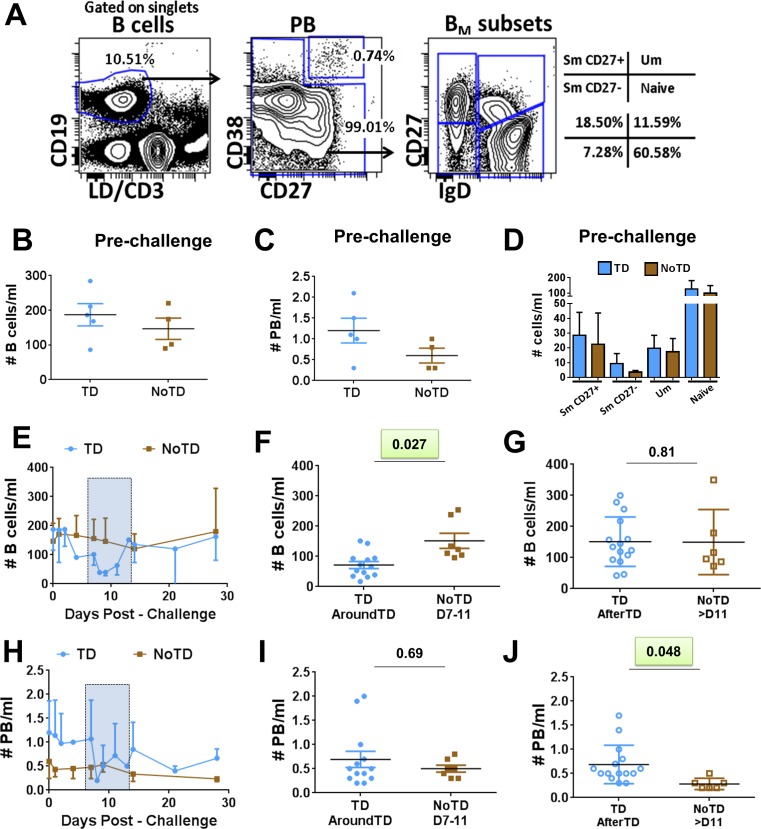
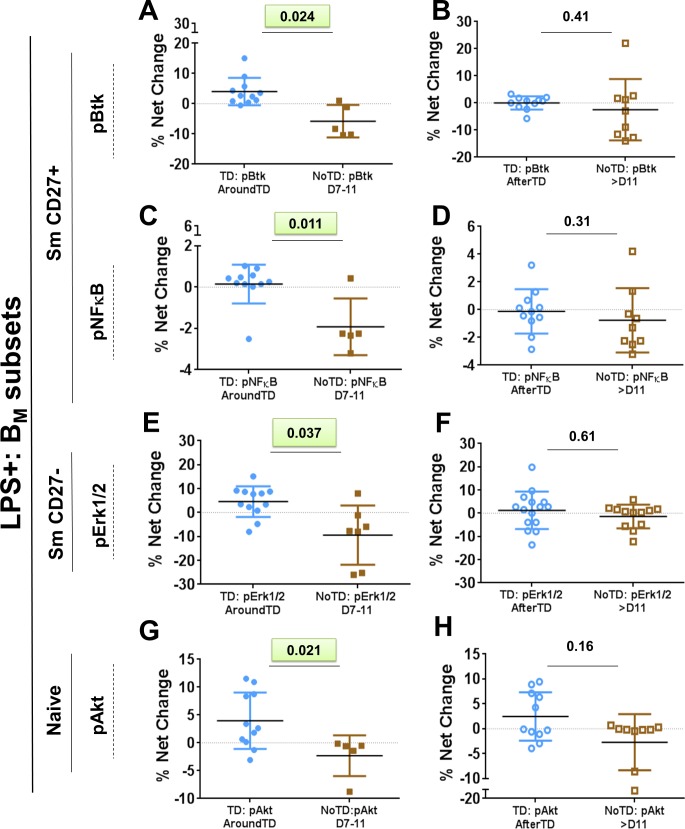
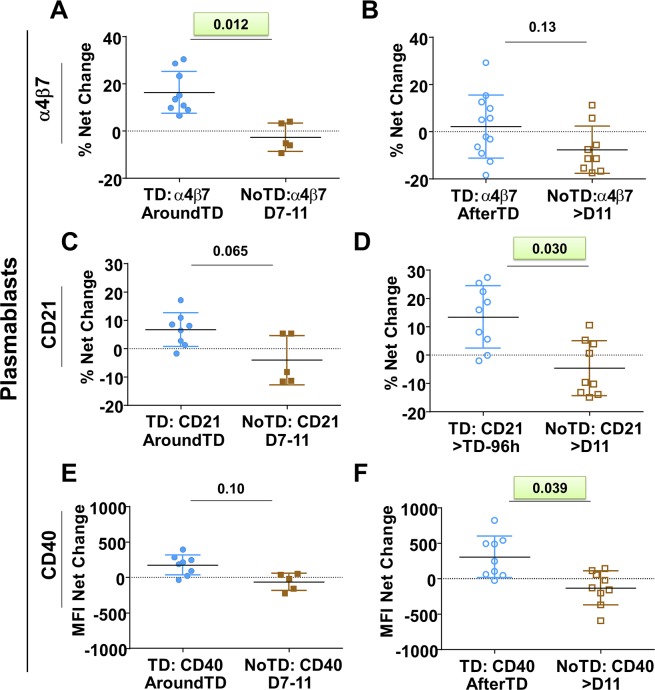
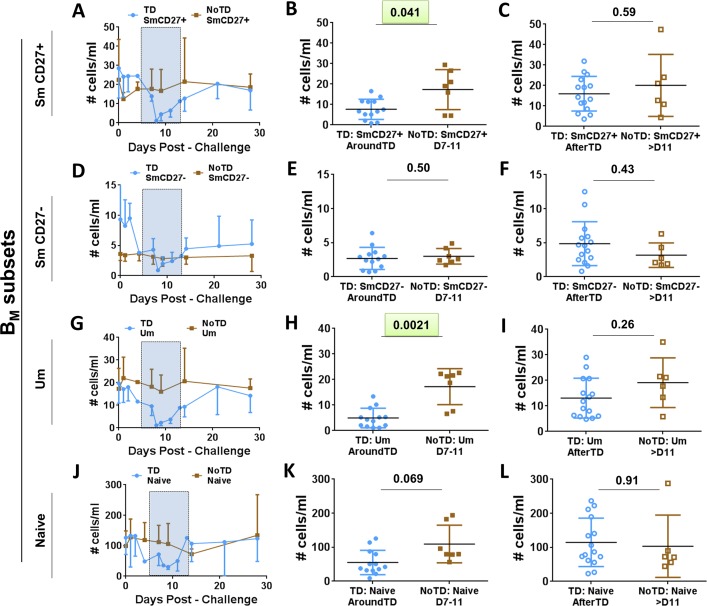
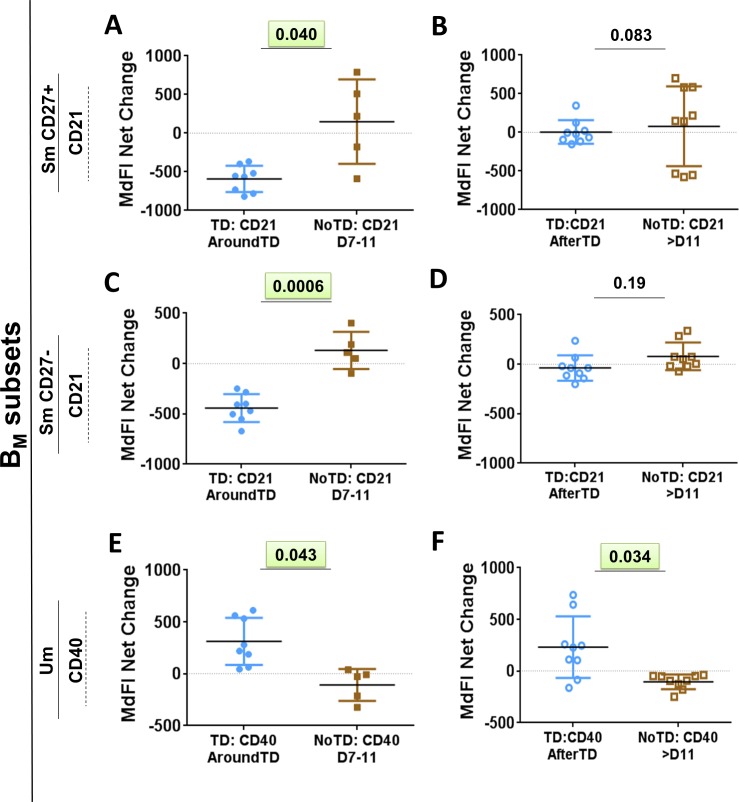
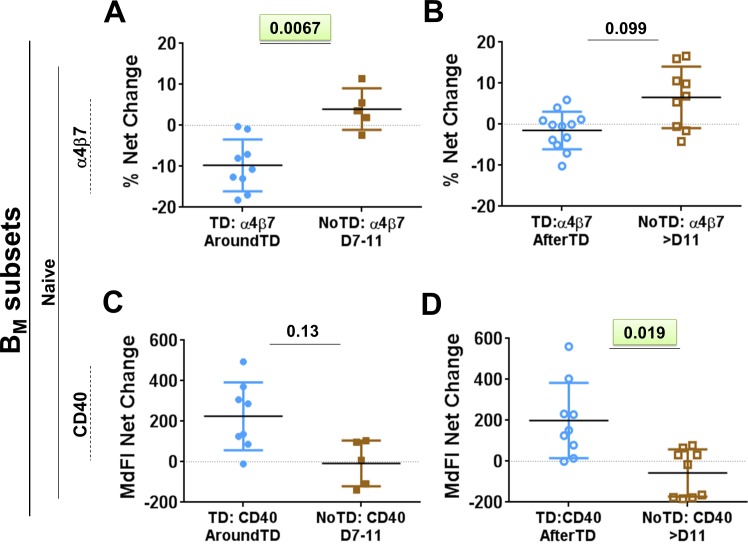
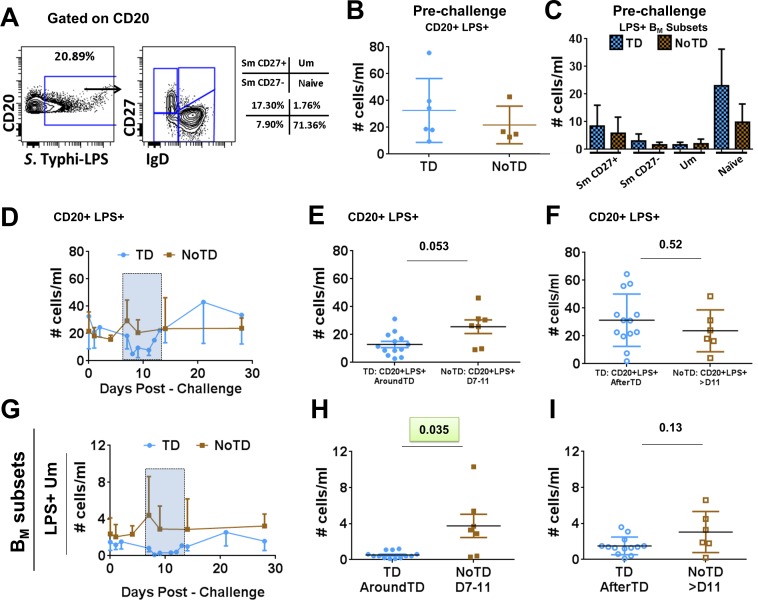
A novel human oral challenge model with wild-type Salmonella Typhi (S. Typhi) was recently established by the Oxford Vaccine Group. In this model, 104 CFU of Salmonella resulted in 65% of participants developing typhoid fever (referred here as typhoid diagnosis -TD-) 6-9 days post-challenge. TD was diagnosed in participants meeting clinical (oral temperature ≥38°C for ≥12h) and/or microbiological (S. Typhi bacteremia) endpoints. Changes in B cell subpopulations following S. Typhi challenge remain undefined. To address this issue, a subset of volunteers (6 TD and 4 who did not develop TD -NoTD-) was evaluated. Notable changes included reduction in the frequency of B cells (cells/ml) of TD volunteers during disease days and increase in plasmablasts (PB) during the recovery phase (>day 14). Additionally, a portion of PB of TD volunteers showed a significant increase in activation (CD40, CD21) and gut homing (integrin α4β7) molecules. Furthermore, all BM subsets of TD volunteers showed changes induced by S. Typhi infections such as a decrease in CD21 in switched memory (Sm) CD27+ and Sm CD27- cells as well as upregulation of CD40 in unswitched memory (Um) and Naïve cells. Furthermore, changes in the signaling profile of some BM subsets were identified after S. Typhi-LPS stimulation around time of disease. Notably, naïve cells of TD (compared to NoTD) volunteers showed a higher percentage of cells phosphorylating Akt suggesting enhanced survival of these cells. Interestingly, most these changes were temporally associated with disease onset. This is the first study to describe differences in B cell subsets directly related to clinical outcome following oral challenge with wild-type S. Typhi in humans.
牛津疫苗小组最近建立了一种新型的野生型伤寒沙门氏菌(伤寒杆菌)人体口服激发模型。在该模型中,104 CFU的沙门氏菌导致65%的参与者在激发后6 - 9天出现伤寒热(此处称为伤寒诊断 -TD-)。符合临床(口腔温度≥38°C持续≥12小时)和/或微生物学(伤寒杆菌菌血症)终点的参与者被诊断为TD。伤寒杆菌激发后B细胞亚群的变化仍不明确。为了解决这个问题,对一部分志愿者(6名TD患者和4名未发生TD -NoTD-者)进行了评估。显著变化包括疾病期间TD志愿者B细胞频率(细胞/毫升)降低,恢复阶段(>第14天)浆母细胞(PB)增加。此外,TD志愿者的一部分PB显示激活分子(CD40、CD21)和肠道归巢分子(整合素α4β7)显著增加。此外,TD志愿者的所有骨髓亚群均显示出由伤寒杆菌感染引起的变化,如转换记忆(Sm)CD27 +和Sm CD27 -细胞中CD21减少,以及未转换记忆(Um)和幼稚细胞中CD40上调。此外,在疾病发作前后,伤寒杆菌 - 脂多糖刺激后,一些骨髓亚群的信号谱发生了变化。值得注意的是,TD(与NoTD相比)志愿者的幼稚细胞中磷酸化Akt的细胞百分比更高,表明这些细胞的存活率提高。有趣的是,大多数这些变化在时间上与疾病发作相关。这是第一项描述人类口服野生型伤寒杆菌激发后与临床结果直接相关的B细胞亚群差异的研究。