Prasad B, Gaedigk A, Vrana M, Gaedigk R, Leeder J S, Salphati L, Chu X, Xiao G, Hop Ceca, Evers R, Gan L, Unadkat J D
Department of Pharmaceutics, University of Washington, Seattle, Washington, USA.
Division of Clinical Pharmacology, Toxicology and Therapeutic Innovation, Children's Mercy, Kansas City, Missouri, USA.
Clin Pharmacol Ther. 2016 Oct;100(4):362-70. doi: 10.1002/cpt.409. Epub 2016 Aug 13.
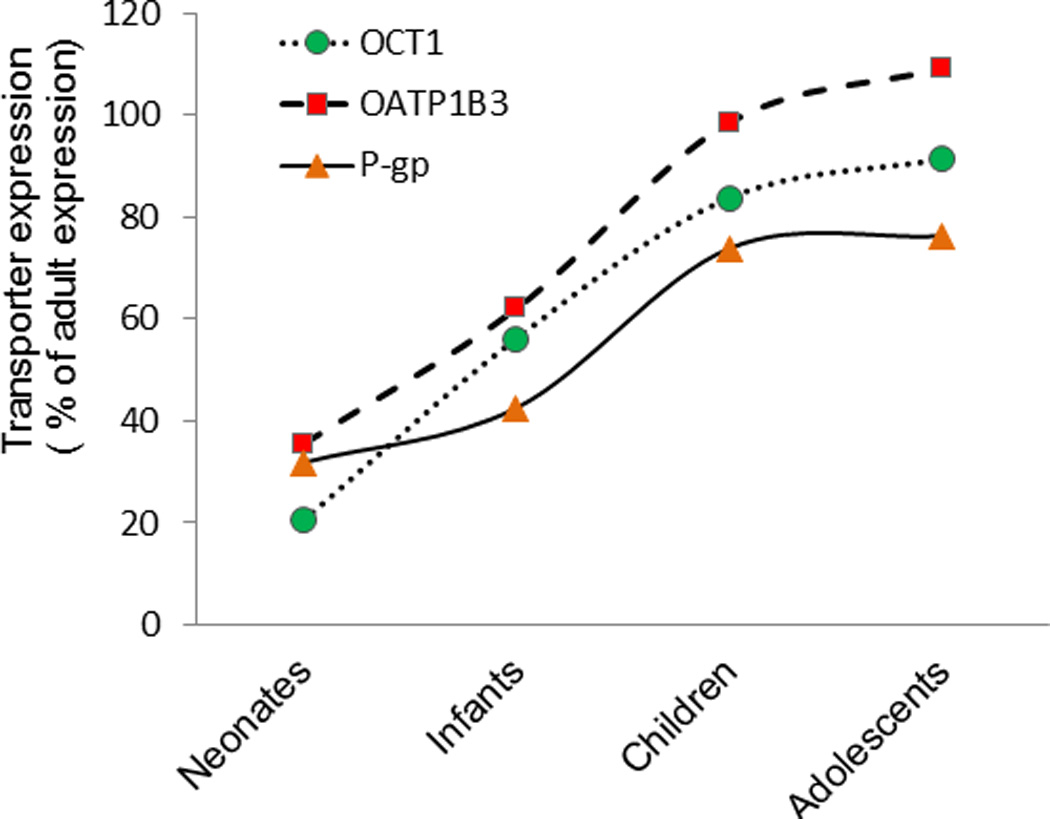
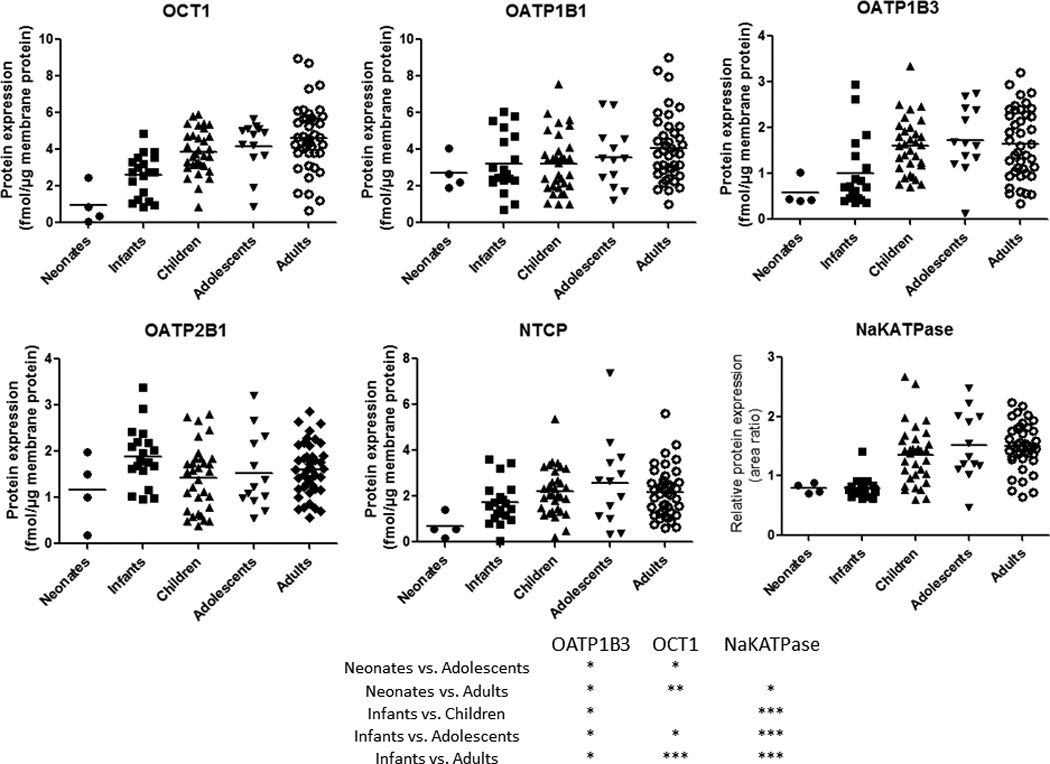
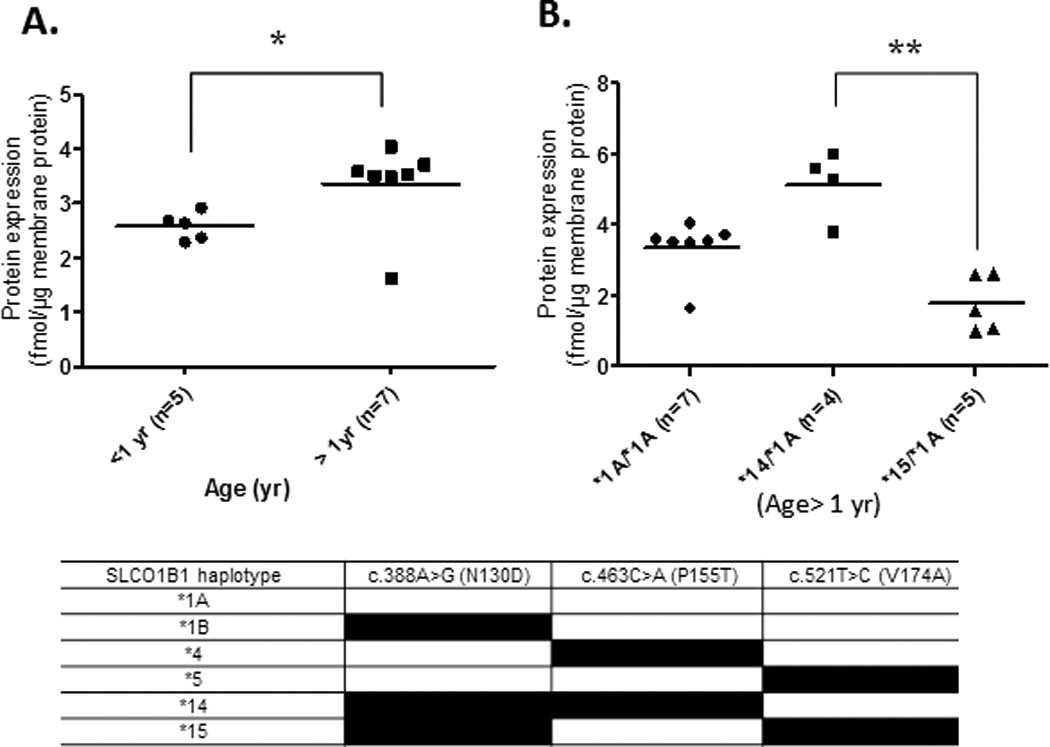
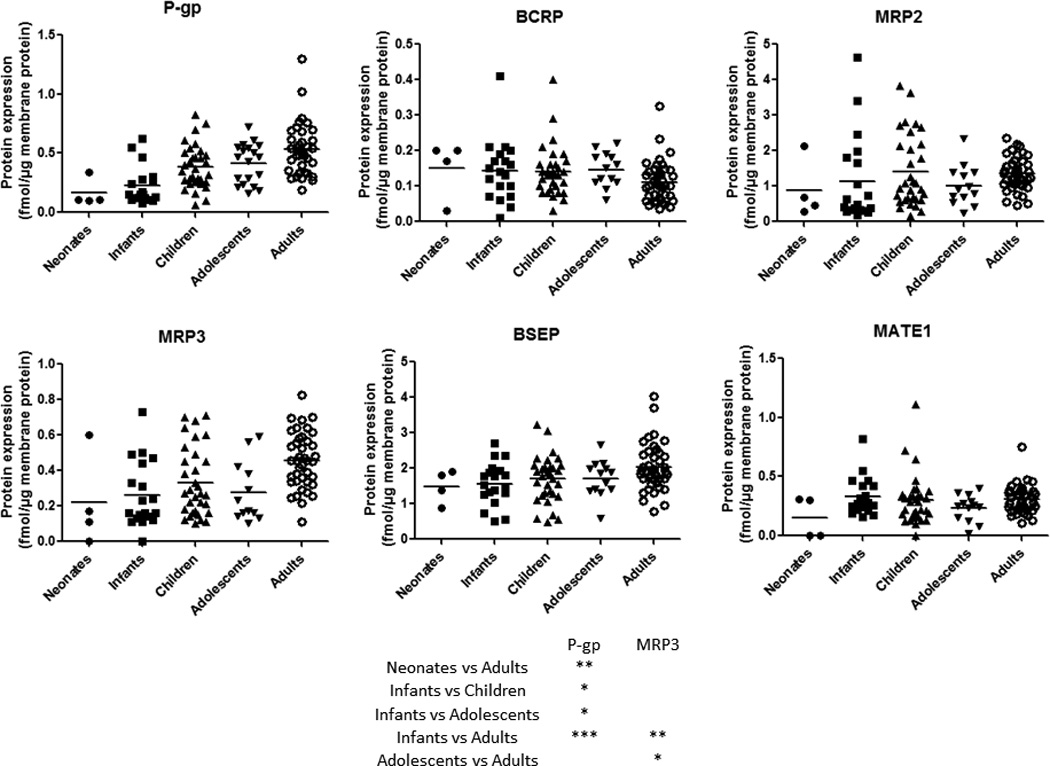
Protein expression of major hepatic uptake and efflux drug transporters in human pediatric (n = 69) and adult (n = 41) livers was quantified by liquid chromatography / tandem mass spectroscopy (LC-MS/MS). Transporter protein expression of OCT1, OATP1B3, P-gp, and MRP3 was age-dependent. Particularly, significant differences were observed in transporter expression (P < 0.05) between the following age groups: neonates vs. adults (OCT1, OATP1B3, P-gp), neonates or infants vs. adolescents and/or adults (OCT1, OATP1B3, and P-gp), infants vs. children (OATP1B3 and P-gp), and adolescents vs. adults (MRP3). OCT1 showed the largest increase, of almost 5-fold, in protein expression with age. Ontogenic expression of OATP1B1 was confounded by genotype and was revealed only in livers harboring SLCO1B11A/*1A. In livers >1 year, tissues harboring SLCO1B114/1A showed 2.5-fold higher (P < 0.05) protein expression than SLCO1B115/*1A. Integration of these ontogeny data in physiologically based pharmacokinetic (PBPK) models will be a crucial step in predicting hepatic drug disposition in children.
通过液相色谱/串联质谱法(LC-MS/MS)对69例儿科和41例成人肝脏中主要肝脏摄取和外排药物转运蛋白的蛋白表达进行了定量分析。OCT1、OATP1B3、P-糖蛋白和MRP3的转运蛋白表达具有年龄依赖性。特别是,在以下年龄组之间观察到转运蛋白表达存在显著差异(P<0.05):新生儿与成人(OCT1、OATP1B3、P-糖蛋白)、新生儿或婴儿与青少年和/或成人(OCT1、OATP1B3和P-糖蛋白)、婴儿与儿童(OATP1B3和P-糖蛋白)以及青少年与成人(MRP3)。OCT1的蛋白表达随年龄增长增加最多,几乎增加了5倍。OATP1B1的个体发育表达受基因型影响,仅在携带SLCO1B1*1A/1A的肝脏中表现出来。在大于1岁的肝脏中,携带SLCO1B114/1A的组织比携带SLCO1B115/*1A的组织蛋白表达高2.5倍(P<0.05)。将这些个体发育数据整合到基于生理的药代动力学(PBPK)模型中将是预测儿童肝脏药物处置的关键一步。