Burroughs A L, Durr P A, Boyd V, Graham K, White J R, Todd S, Barr J, Smith I, Baverstock G, Meers J, Crameri G, Wang L-F
Commonwealth Scientific and Industrial Research Organisation, Australian Animal Health Laboratory, Geelong, Victoria, Australia.
School of Veterinary Science, University of Queensland, Gatton, Queensland, Australia.
PLoS One. 2016 Jun 15;11(6):e0155252. doi: 10.1371/journal.pone.0155252. eCollection 2016.
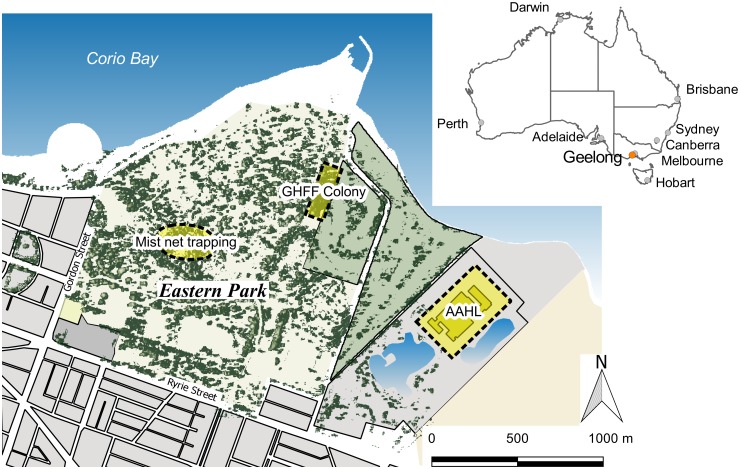
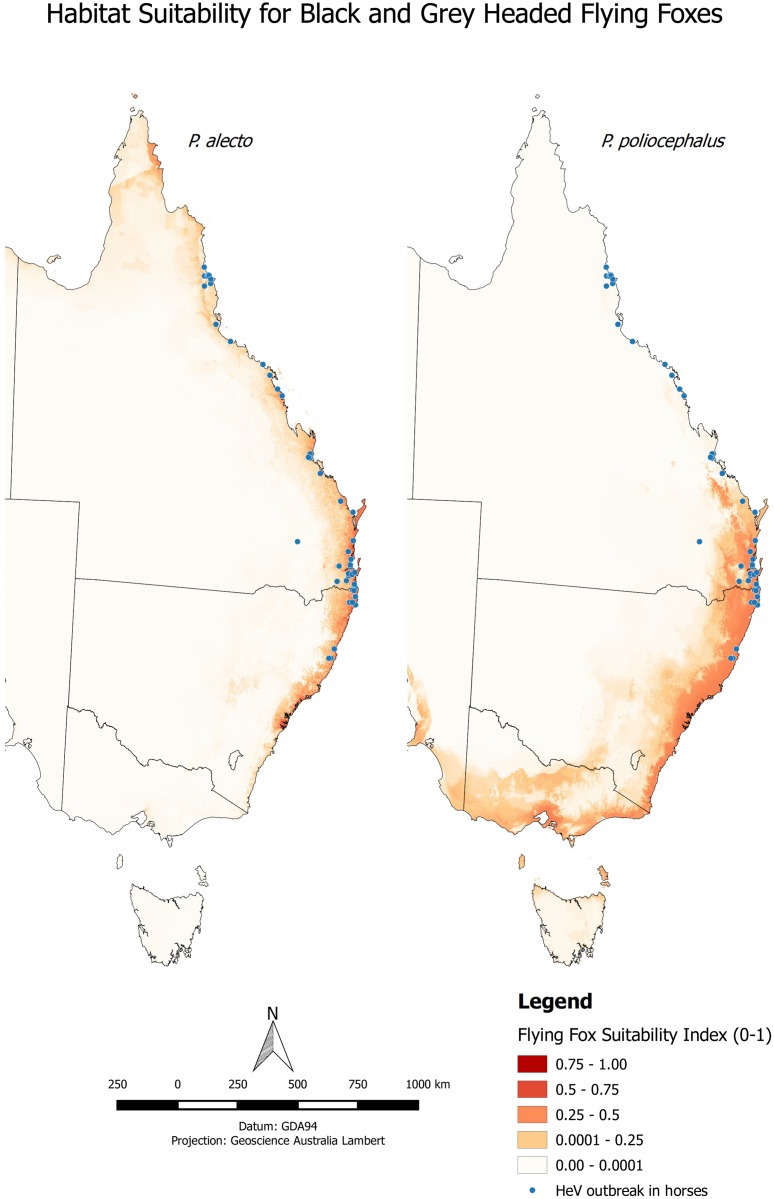
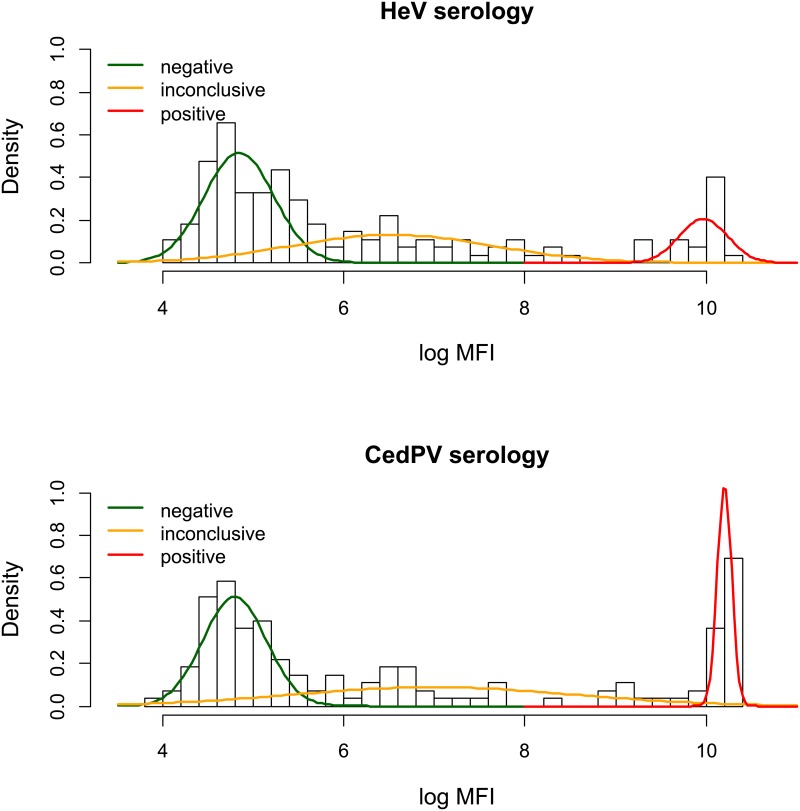
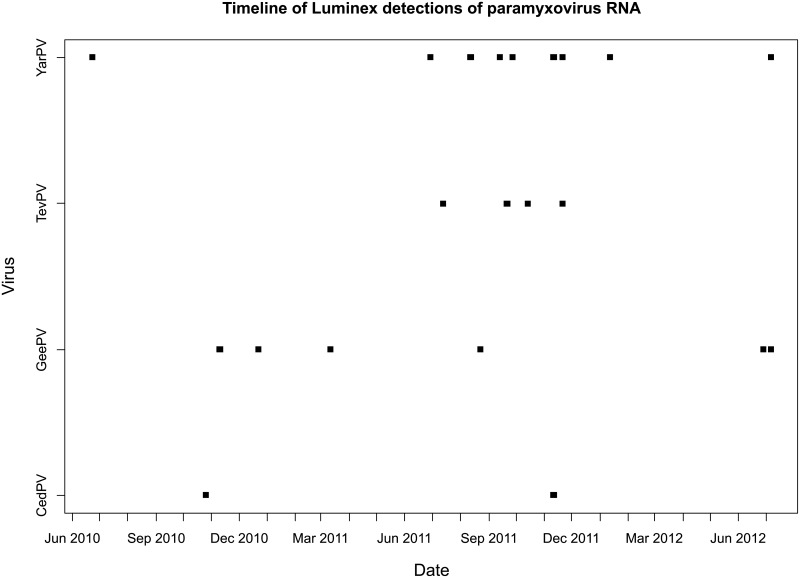
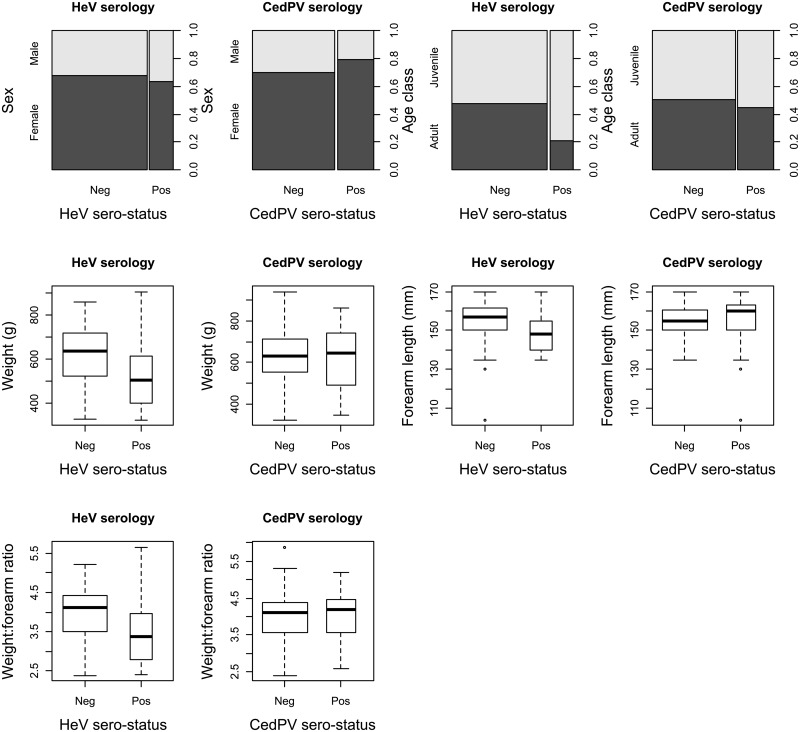
Hendra virus (HeV) is an important emergent virus in Australia known to infect horses and humans in certain regions of the east coast. Whilst pteropid bats ("flying foxes") are considered the natural reservoir of HeV, which of the four mainland species is the principal reservoir has been a source of ongoing debate, particularly as shared roosting is common. To help resolve this, we sampled a colony consisting of just one of these species, the grey-headed flying fox, (Pteropus poliocephalus), at the southernmost extent of its range. Using the pooled urine sampling technique at approximately weekly intervals over a two year period, we determined the prevalence of HeV and related paramyxoviruses using a novel multiplex (Luminex) platform. Whilst all the pooled urine samples were negative for HeV nucleic acid, we successfully identified four other paramyxoviruses, including Cedar virus; a henipavirus closely related to HeV. Collection of serum from individually caught bats from the colony showed that antibodies to HeV, as estimated by a serological Luminex assay, were present in between 14.6% and 44.5% of animals. The wide range of the estimate reflects uncertainties in interpreting intermediate results. Interpreting the study in the context of HeV studies from states to the north, we add support for an arising consensus that it is the black flying fox and not the grey-headed flying fox that is the principal source of HeV in spillover events to horses.
亨德拉病毒(HeV)是澳大利亚一种重要的新兴病毒,已知会感染东海岸某些地区的马匹和人类。虽然狐蝠(“飞狐”)被认为是HeV的天然宿主,但四种大陆狐蝠物种中哪一种是主要宿主一直存在争议,特别是因为共同栖息很常见。为了帮助解决这个问题,我们在灰头狐蝠(Pteropus poliocephalus)分布范围的最南端对一个仅由该物种组成的群体进行了采样。在两年时间里,我们大约每周使用一次混合尿液采样技术,通过一种新型多重(Luminex)平台确定HeV和相关副粘病毒的流行情况。虽然所有混合尿液样本的HeV核酸检测均为阴性,但我们成功鉴定出了其他四种副粘病毒,包括雪松病毒;一种与HeV密切相关的亨尼帕病毒。从该群体中单独捕获的蝙蝠采集血清显示,通过血清学Luminex检测估计,14.6%至44.5%的动物体内存在HeV抗体。估计范围较宽反映了在解释中间结果时存在的不确定性。结合北部各州关于HeV的研究来解读这项研究,我们进一步支持了一种逐渐形成的共识,即在HeV溢出感染马匹的事件中,主要源头是黑狐蝠而非灰头狐蝠。