Mansfield Avril, Knorr Svetlana, Poon Vivien, Inness Elizabeth L, Middleton Laura, Biasin Louis, Brunton Karen, Howe Jo-Anne, Brooks Dina
Toronto Rehabilitation Institute, University Health Network, 550 University Avenue, Toronto, ON, Canada M5G 2A2; Department of Physical Therapy, University of Toronto, 500 University Avenue, Toronto, ON, Canada M5G 1V7; Evaluative Clinical Sciences, Hurvitz Brain Sciences Program, Sunnybrook Research Institute, 2075 Bayview Avenue, Toronto, ON, Canada M4N 3M5.
Toronto Rehabilitation Institute, University Health Network, 550 University Avenue, Toronto, ON, Canada M5G 2A2.
Stroke Res Treat. 2016;2016:9476541. doi: 10.1155/2016/9476541. Epub 2016 May 30.
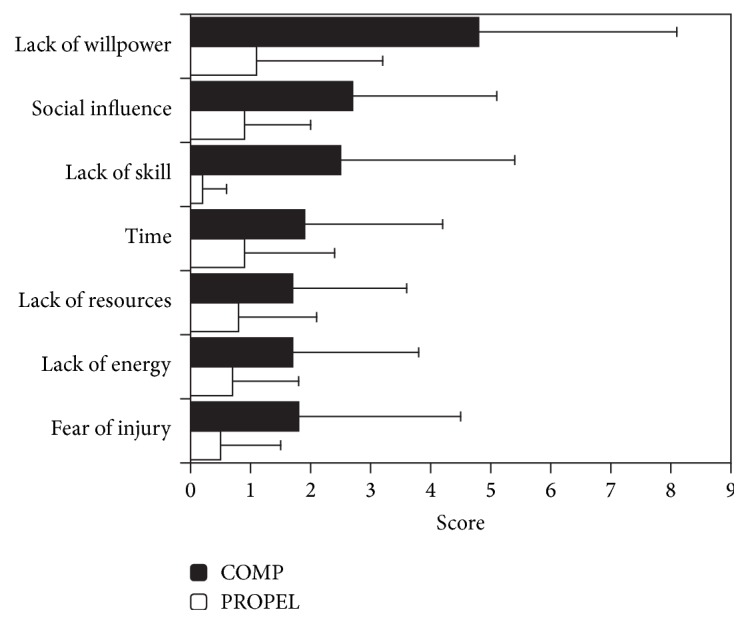
People with stroke do not achieve adequate levels of physical exercise following discharge from rehabilitation. We developed a group exercise and self-management program (PROPEL), delivered during stroke rehabilitation, to promote uptake of physical activity after discharge. This study aimed to establish the feasibility of a larger study to evaluate the effect of this program on participation in self-directed physical activity. Participants with subacute stroke were recruited at discharge from one of three rehabilitation hospitals; one hospital offered the PROPEL program whereas the other two did not (comparison group; COMP). A high proportion (11/16) of eligible PROPEL program participants consented to the study. Fifteen COMP participants were also recruited. Compliance with wearing an accelerometer for 6 weeks continuously and completing physical activity questionnaires was high (>80%), whereas only 34% of daily heart rate data were available. Individuals who completed the PROPEL program seemed to have higher outcome expectations for exercise, fewer barriers to physical activity, and higher participation in physical activity than COMP participants (Hedge's g ≥ 0.5). The PROPEL program delivered during stroke rehabilitation shows promise for reducing barriers to exercise and increasing participation in physical activity after discharge. This study supports feasibility of a larger randomized trial to evaluate this program.
中风患者在康复出院后未能达到足够的体育锻炼水平。我们制定了一项团体锻炼和自我管理计划(PROPEL),在中风康复期间实施,以促进出院后体育活动的参与度。本研究旨在确定一项更大规模研究的可行性,以评估该计划对参与自主体育活动的影响。从三家康复医院之一出院时招募了亚急性中风患者;其中一家医院提供PROPEL计划,而另外两家医院不提供(对照组;COMP)。符合条件的PROPEL计划参与者中有很大比例(11/16)同意参与该研究。还招募了15名COMP参与者。连续6周佩戴加速度计并完成体育活动问卷的依从性很高(>80%),而每日心率数据仅有34%可用。与COMP参与者相比,完成PROPEL计划的个体似乎对锻炼有更高的结果期望、体育活动障碍更少且体育活动参与度更高(赫奇斯g≥0.5)。在中风康复期间实施的PROPEL计划有望减少锻炼障碍并增加出院后体育活动的参与度。本研究支持进行一项更大规模的随机试验来评估该计划的可行性。