Ishaq Abbas, Hanson Peter S, Morris Christopher M, Saretzki Gabriele
Institute for Cell and Molecular Biosciences, Newcastle University, Newcastle upon Tyne NE1 7RU, UK.
Newcastle University Institute for Ageing, Campus for Ageing and Vitality, Newcastle University, Newcastle upon Tyne NE1 7RU, UK.
Genes (Basel). 2016 Jun 16;7(6):27. doi: 10.3390/genes7060027.
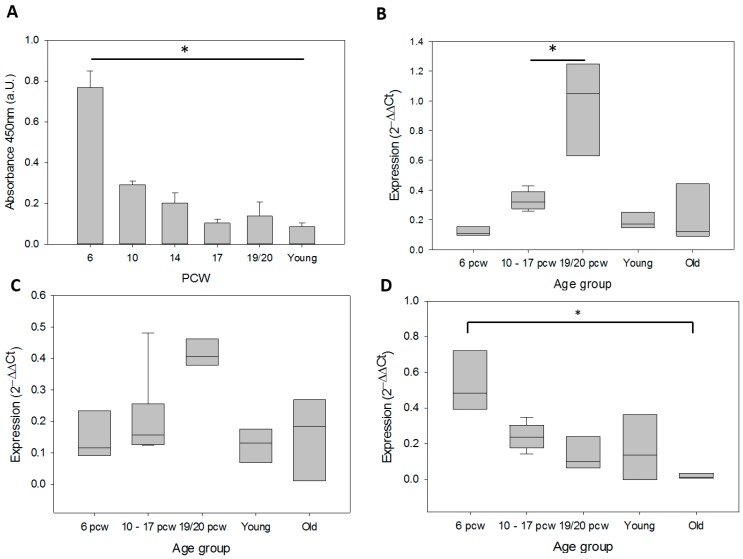
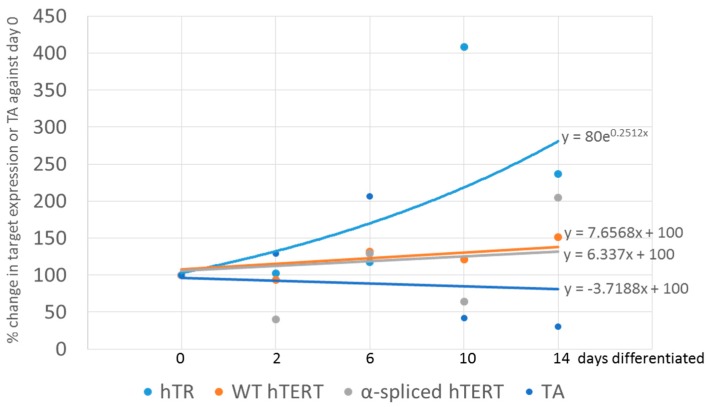
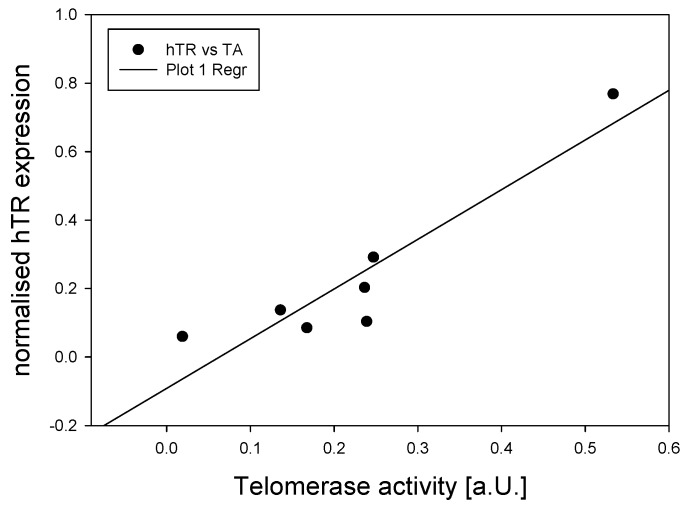
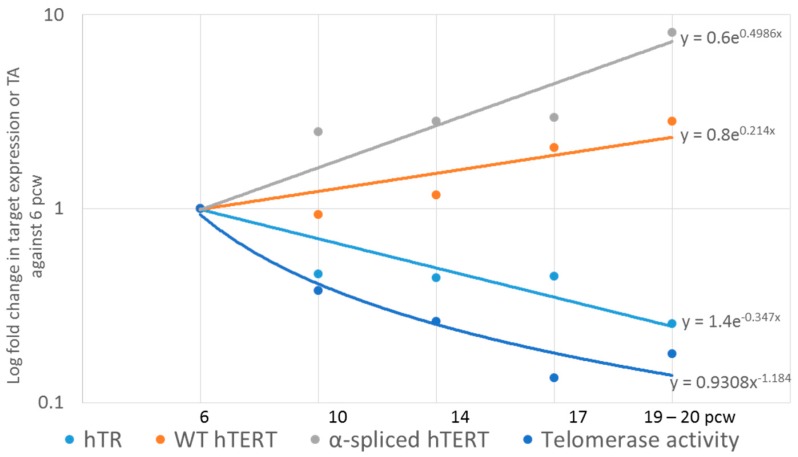
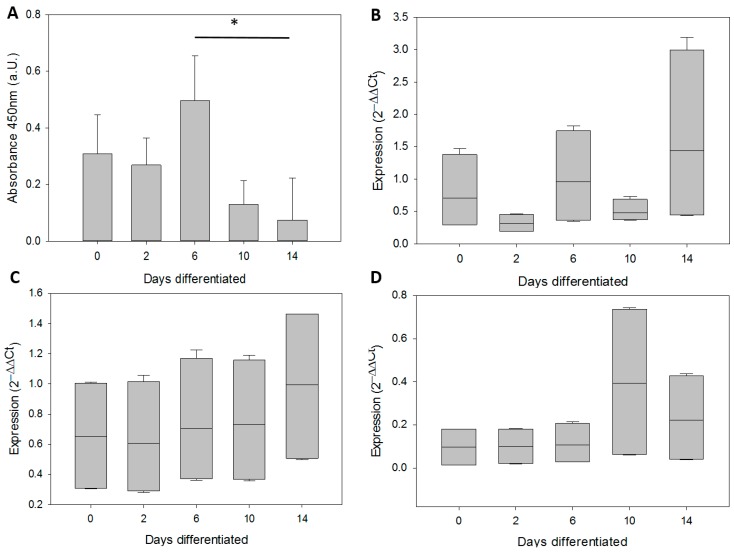
Changes in hTERT splice variant expression have been proposed to facilitate the decrease of telomerase activity during fetal development in various human tissues. Here, we analyzed the expression of telomerase RNA (hTR), wild type and α-spliced hTERT in developing human fetal brain (post conception weeks, pcw, 6-19) and in young and old cortices using qPCR and correlated it to telomerase activity measured by TRAP assay. Decrease of telomerase activity occurred early during brain development and correlated strongest to decreased hTR expression. The expression of α-spliced hTERT increased between pcw 10 and 19, while that of wild type hTERT remained unchanged. Lack of expression differences between young and old cortices suggests that most changes seem to occur early during human brain development. Using in vitro differentiation of neural precursor stem cells (NPSCs) derived at pcw 6 we found a decrease in telomerase activity but no major expression changes in telomerase associated genes. Thus, they do not seem to model the mechanisms for the decrease in telomerase activity in fetal brains. Our results suggest that decreased hTR levels, as well as transient increase in α-spliced hTERT, might both contribute to downregulation of telomerase activity during early human brain development between 6 and 17 pcw.
有人提出,hTERT剪接变体表达的变化有助于在胎儿发育过程中各种人体组织中端粒酶活性的降低。在此,我们使用qPCR分析了发育中的人类胎儿大脑(受孕后周数,pcw,6 - 19)以及年轻和老年皮质中,端粒酶RNA(hTR)、野生型和α剪接的hTERT的表达,并将其与通过TRAP分析测定的端粒酶活性相关联。端粒酶活性在大脑发育早期就开始下降,并且与hTR表达的下降相关性最强。α剪接的hTERT的表达在pcw 10至19之间增加,而野生型hTERT的表达保持不变。年轻和老年皮质之间缺乏表达差异表明,大多数变化似乎发生在人类大脑发育的早期阶段。利用在pcw 6时获得的神经前体干细胞(NPSCs)进行体外分化,我们发现端粒酶活性下降,但端粒酶相关基因没有明显的表达变化。因此,它们似乎无法模拟胎儿大脑中端粒酶活性降低的机制。我们的结果表明,hTR水平的降低以及α剪接的hTERT的短暂增加,可能都有助于在受孕后6至17周的人类大脑发育早期阶段下调端粒酶活性。