Kageyama Haruaki, Shiba Kanako, Hirako Satoshi, Wada Nobuhiro, Yamanaka Satoru, Nogi Yukinori, Takenoya Fumiko, Nonaka Naoko, Hirano Tsutomu, Inoue Shuji, Shioda Seiji
Division of Nutrition, Faculty of Health Care, Kiryu University, Gunma 379-2392, Japan.
Department of Anatomy, Showa University School of Medicine, Tokyo, 142-8555, Japan.
Sci Rep. 2016 Jun 21;6:28200. doi: 10.1038/srep28200.
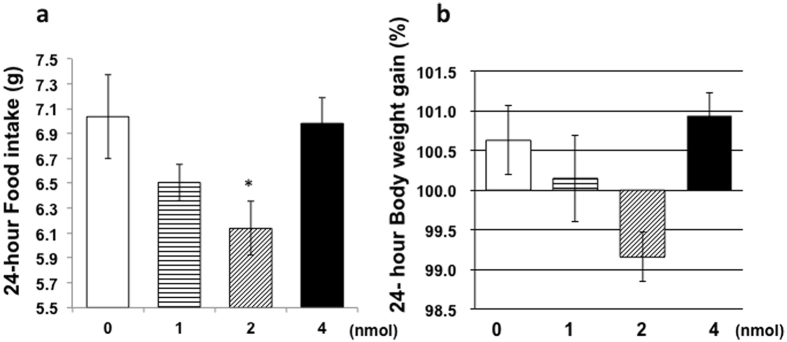
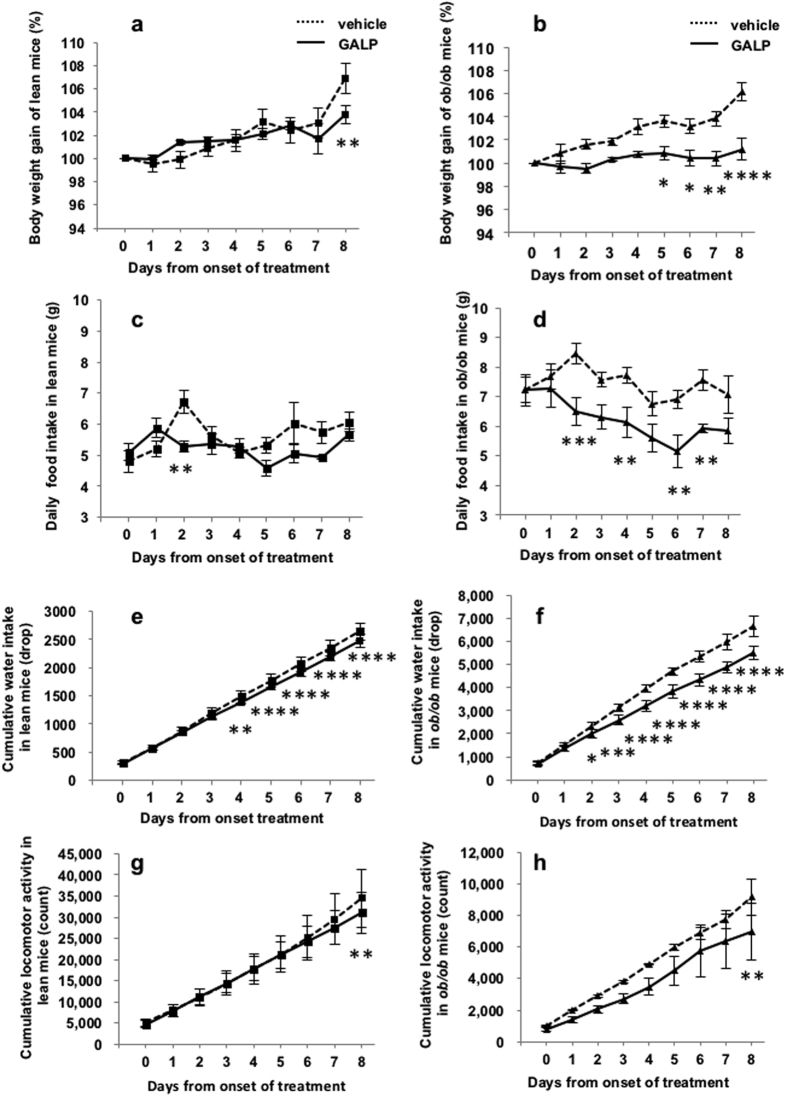
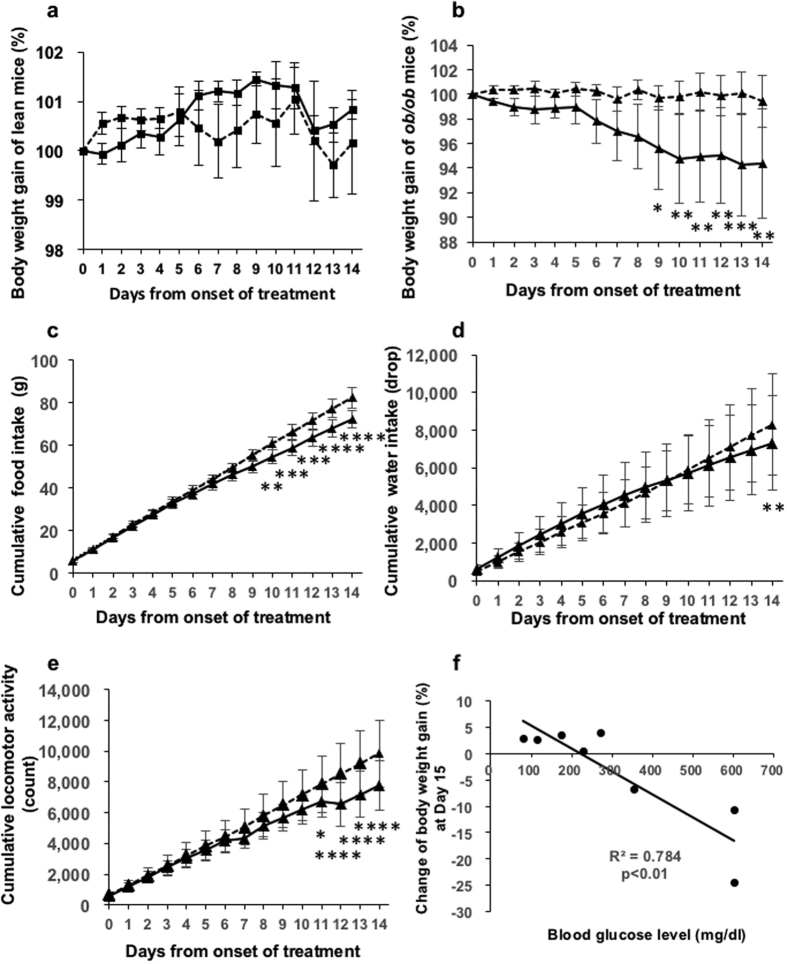
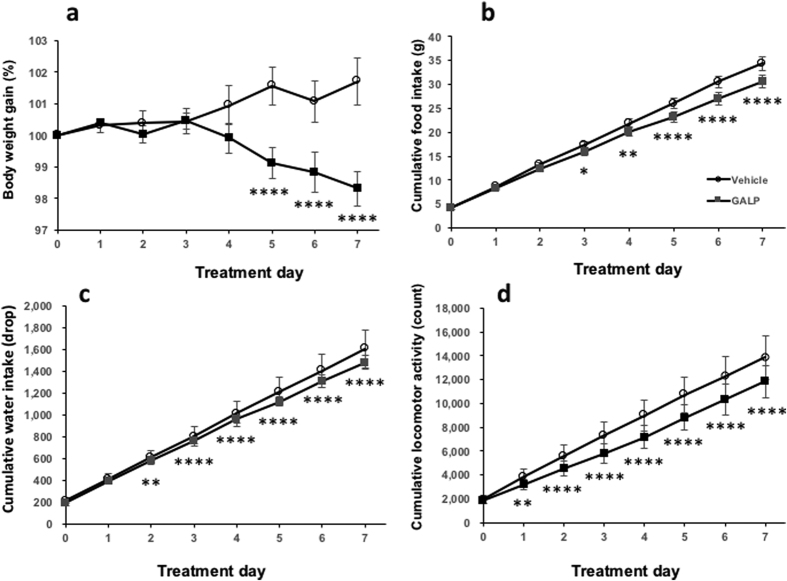
Galanin-like peptide (GALP) has an anti-obesity effect in rats and mice. It has been reported that the uptake of GALP by the brain is higher after intranasal administration than with intravenous injection. This study therefore aimed to clarify the effect of intranasal administration of GALP on the feeding behavior of lean and obese mice. Autoradiography revealed the presence of (125)I-GALP in the olfactory bulb and the brain microcirculation. The body weights of ob/ob mice gradually increased during vehicle treatment, but remained unchanged in response to repeated intranasal administration of GALP, with both ob/ob and diet-induced obese mice displaying significantly decreased food intake, water intake and locomotor activity when treated with GALP. These results suggest that intranasal administration is an effective route whereby GALP can exert its effect as an anti-obesity drug.
甘丙肽样肽(GALP)在大鼠和小鼠中具有抗肥胖作用。据报道,经鼻给药后大脑对GALP的摄取高于静脉注射。因此,本研究旨在阐明经鼻给药GALP对瘦小鼠和肥胖小鼠摄食行为的影响。放射自显影显示嗅球和脑微循环中存在(125)I-GALP。在给予载体治疗期间,ob/ob小鼠的体重逐渐增加,但反复经鼻给予GALP后体重保持不变,在用GALP治疗时,ob/ob小鼠和饮食诱导的肥胖小鼠的食物摄入量、饮水量和运动活动均显著降低。这些结果表明,经鼻给药是GALP作为抗肥胖药物发挥作用的有效途径。