Lu Y M, Sun B A, Zhao L Z, Wang W H, Pan M X, Liu C T, Yang Y
Institute of Physics, Chinese Academy of Sciences, Beijing 100190, P.R. China.
Centre for Advanced Structural Materials, Department of Mechanical and Biomedical Engineering, City University of Hong Kong, Tat Chee Avenue, Kowloon Tong, Kowloon, Hong Kong SAR, P.R. China.
Sci Rep. 2016 Jun 21;6:28523. doi: 10.1038/srep28523.
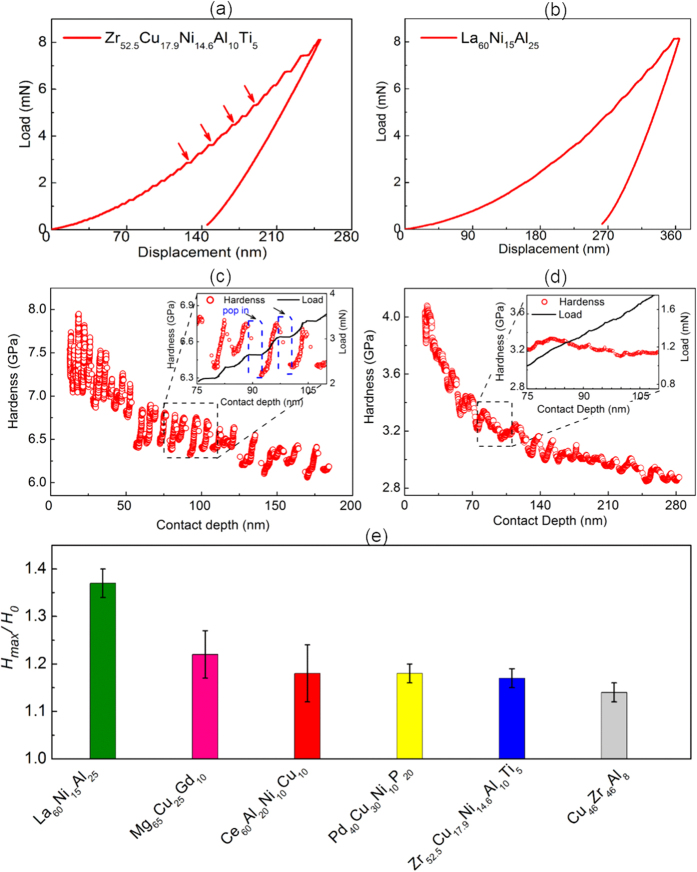
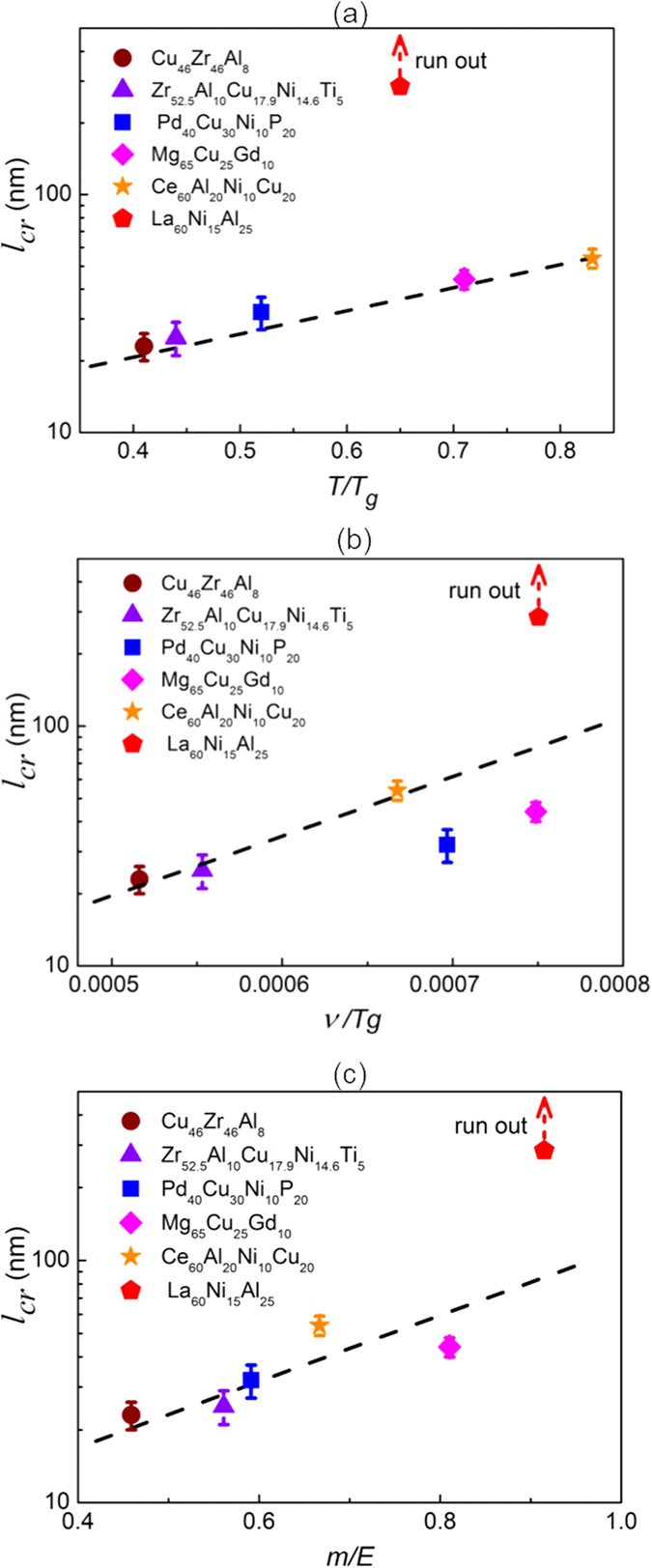
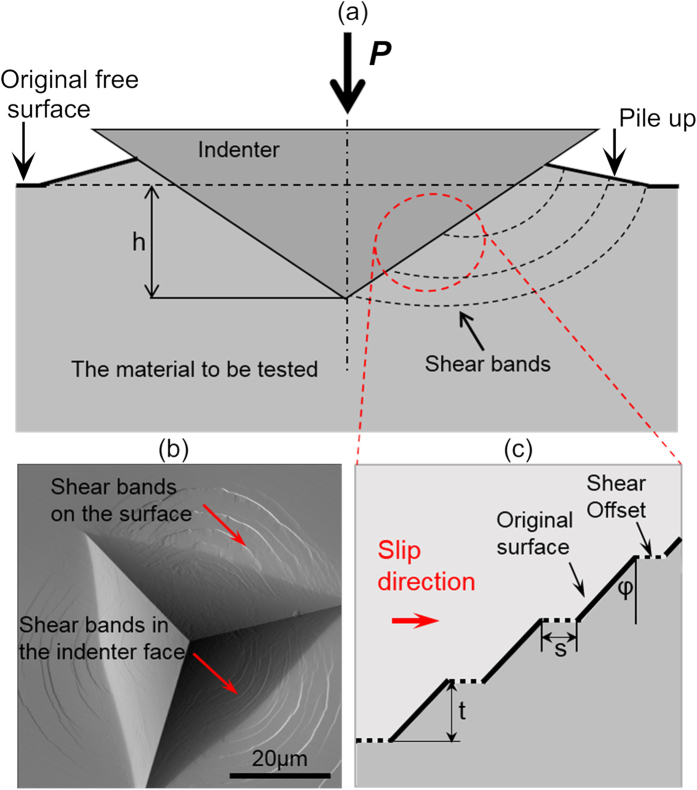
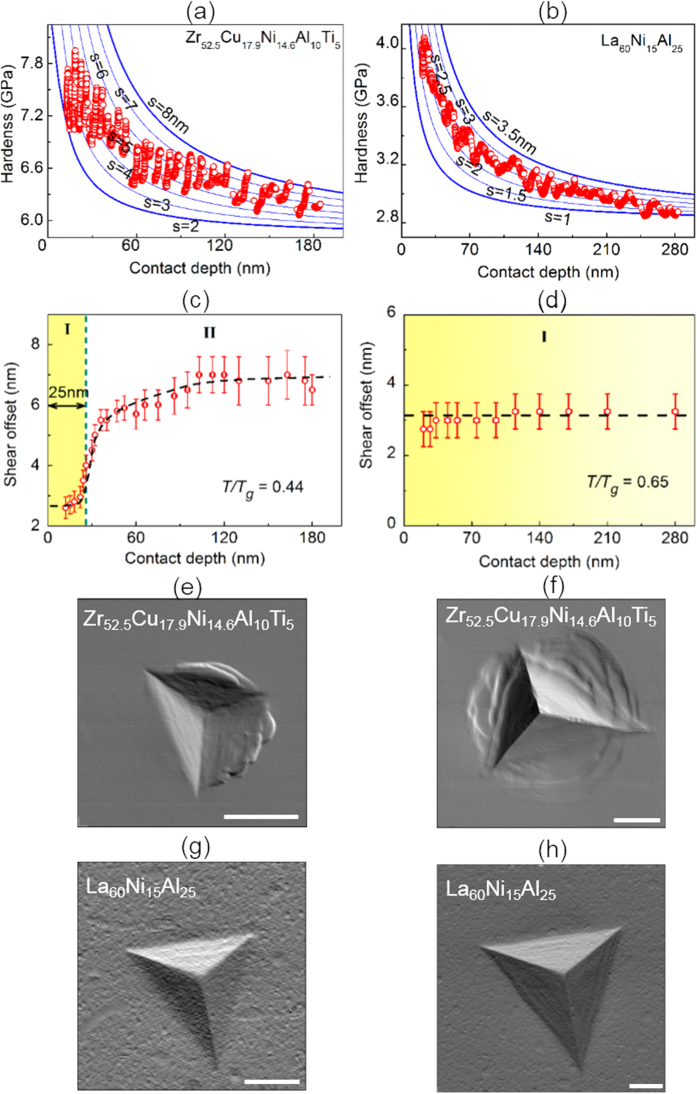
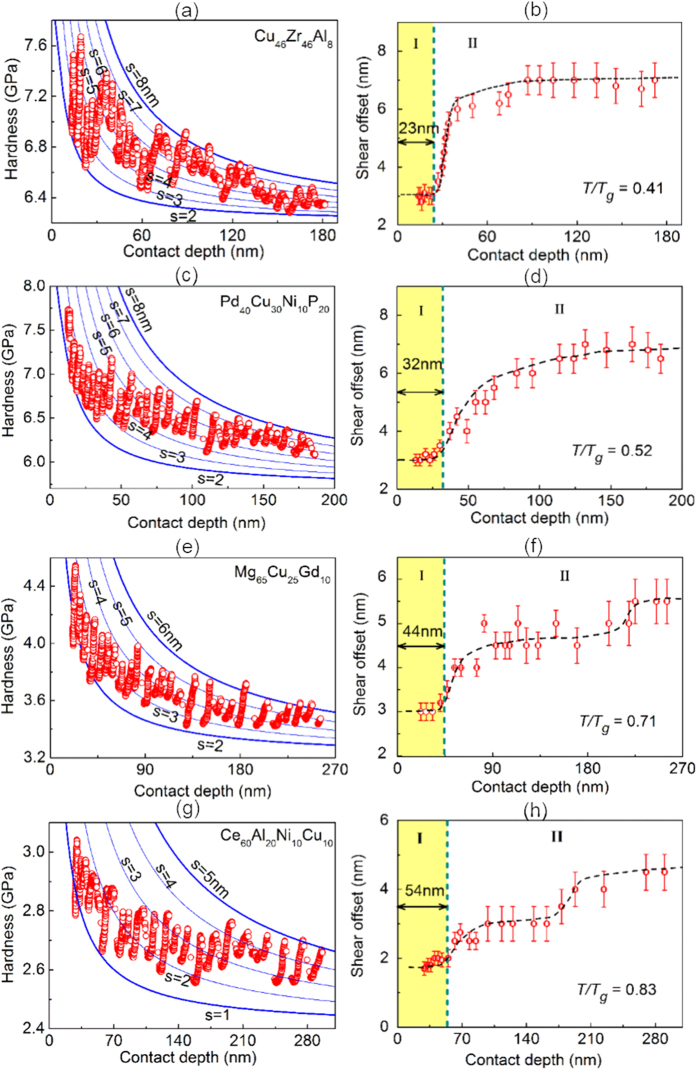
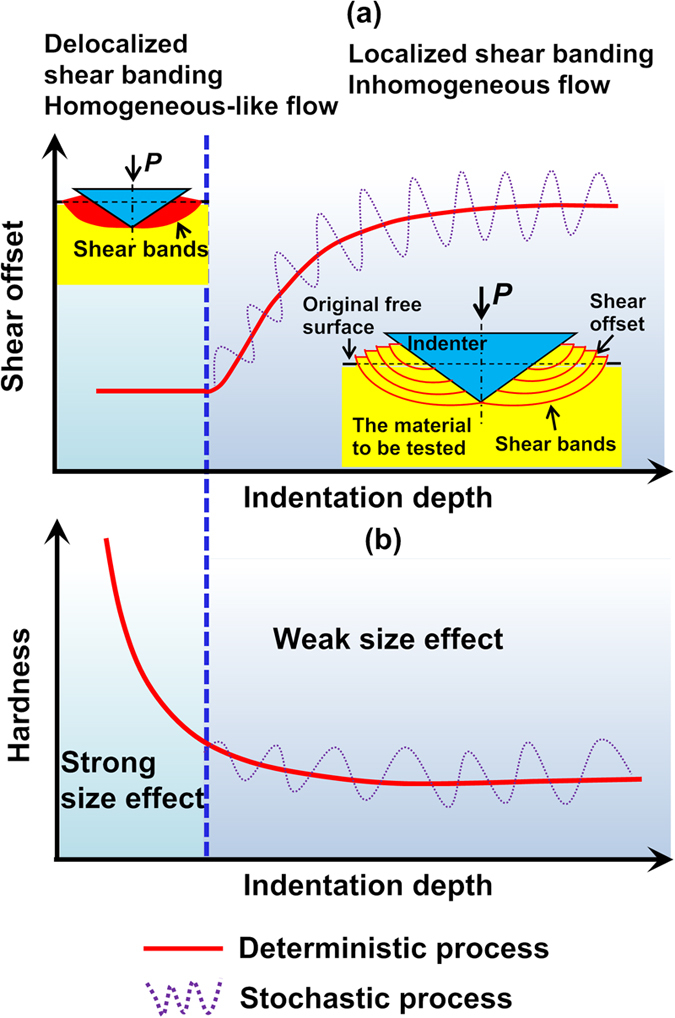
Shear-banding is commonly regarded as the "plasticity carrier" of metallic glasses (MGs), which usually causes severe strain localization and catastrophic failure if unhindered. However, through the use of the high-throughput dynamic nanoindentation technique, here we reveal that nano-scale shear-banding in different MGs evolves from a "distributed" fashion to a "localized" mode when the resultant plastic flow extends over a critical length scale. Consequently, a pronounced indentation size effect arises from the distributed shear-banding but vanishes when shear-banding becomes localized. Based on the critical length scales obtained for a variety of MGs, we unveil an intrinsic interplay between elasticity and fragility that governs the nanoscale plasticity transition in MGs. Our current findings provide a quantitative insight into the indentation size effect and transition mechanisms of nano-scale plasticity in MGs.
剪切带通常被视为金属玻璃(MGs)的“塑性载体”,如果不受阻碍,它通常会导致严重的应变局部化和灾难性失效。然而,通过使用高通量动态纳米压痕技术,我们在此揭示,当合成的塑性流动扩展超过临界长度尺度时,不同金属玻璃中的纳米尺度剪切带从“分布式”方式演变为“局部化”模式。因此,分布式剪切带会产生明显的压痕尺寸效应,但当剪切带局部化时,该效应消失。基于为多种金属玻璃获得的临界长度尺度,我们揭示了弹性和脆性之间的内在相互作用,这种相互作用控制着金属玻璃中的纳米尺度塑性转变。我们目前的研究结果为金属玻璃中压痕尺寸效应和纳米尺度塑性转变机制提供了定量的见解。