McClure C Patrick, Urbanowicz Richard A, King Barnabas J, Cano-Crespo Sara, Tarr Alexander W, Ball Jonathan K
School of Life Sciences and NIHR Nottingham Digestive Diseases Biomedical Research Unit, The University of Nottingham, Nottingham University Hospitals NHS Trust, Nottingham, UK.
J Gen Virol. 2016 Sep;97(9):2187-2193. doi: 10.1099/jgv.0.000530. Epub 2016 Jun 21.
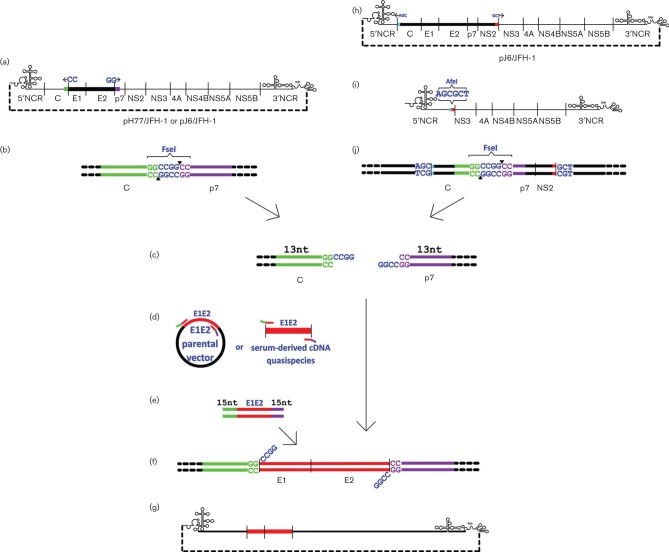
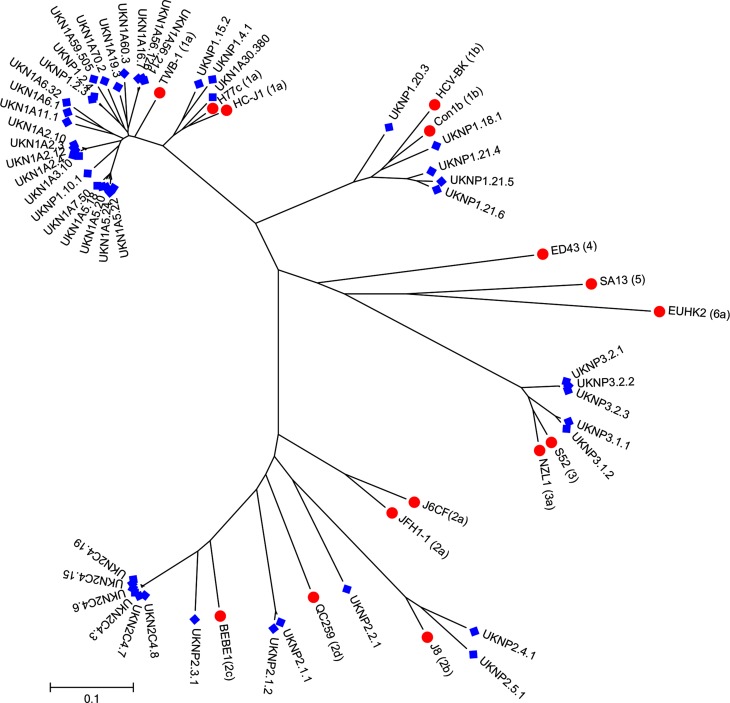
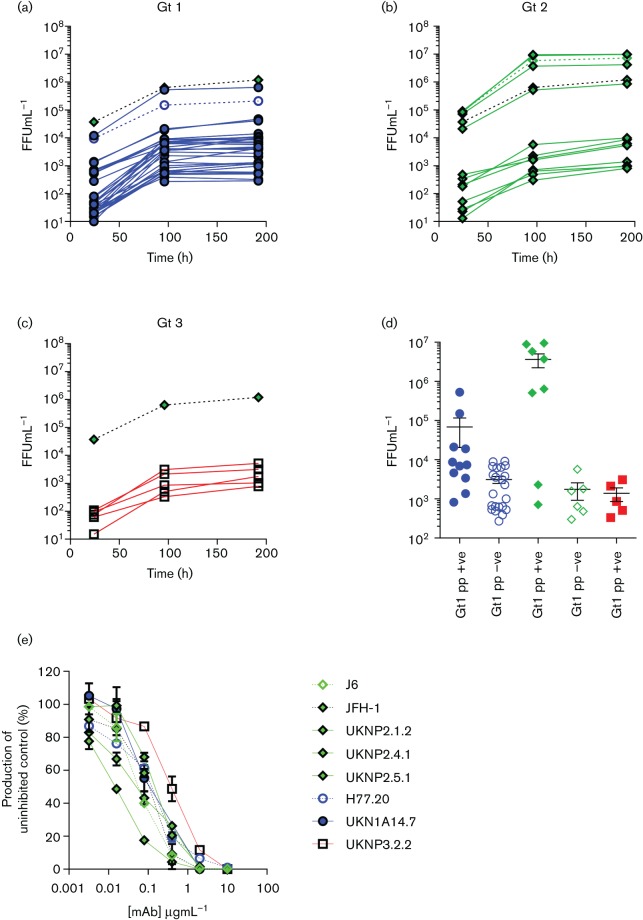
A novel and broadly applicable strategy combining site-directed mutagenesis and DNA assembly for constructing seamless viral chimeras is described using hepatitis C virus (HCV) as an exemplar. Full-length HCV genomic cloning cassettes, which contained flexibly situated restriction endonuclease sites, were prepared via a single, site-directed mutagenesis reaction and digested to receive PCR-amplified virus envelope genes by In-Fusion cloning. Using this method, we were able to construct gene-shuttle cassettes for generation of cell culture-infectious JFH-1-based chimeras containing genotype 1-3 E1E2 genes. Importantly, using this method we also show that E1E2 clones that were not able to support cell entry in the HCV pseudoparticle assay did confer entry when shuttled into the chimeric cell culture chimera system. This method can be easily applied to other genes of study and other viruses and, as such, will greatly simplify reverse genetics studies of variable viruses.
本文以丙型肝炎病毒(HCV)为例,描述了一种结合定点诱变和DNA组装来构建无缝病毒嵌合体的新颖且广泛适用的策略。通过单一的定点诱变反应制备了全长HCV基因组克隆盒,其中包含灵活定位的限制性内切酶位点,并通过In-Fusion克隆进行消化以接收PCR扩增的病毒包膜基因。使用这种方法,我们能够构建基因穿梭盒,用于生成包含1-3型E1E2基因的基于细胞培养感染性JFH-1的嵌合体。重要的是,使用这种方法我们还表明,在HCV假病毒颗粒试验中不能支持细胞进入的E1E2克隆,当穿梭到嵌合细胞培养嵌合体系统中时确实能够实现细胞进入。这种方法可以很容易地应用于其他研究基因和其他病毒,因此将大大简化可变病毒的反向遗传学研究。