Inserm, U1110, Institute for Viral and Liver Disease, Strasbourg, France.
Université de Strasbourg, Strasbourg, France.
Hepatology. 2019 Nov;70(5):1506-1520. doi: 10.1002/hep.30699. Epub 2019 Jun 21.
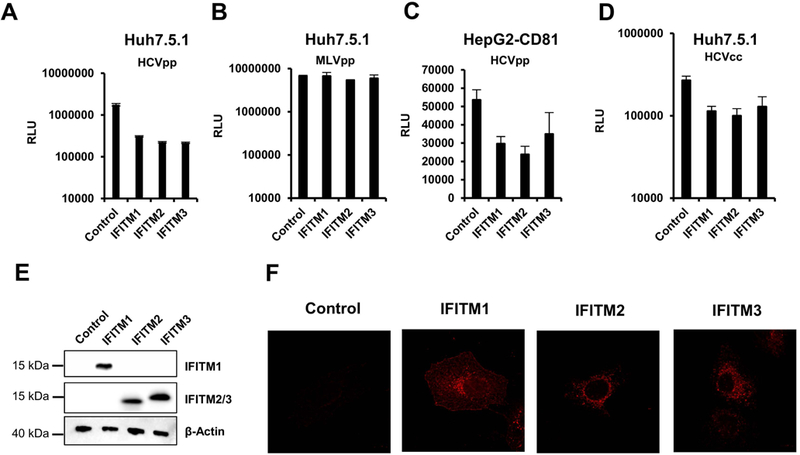
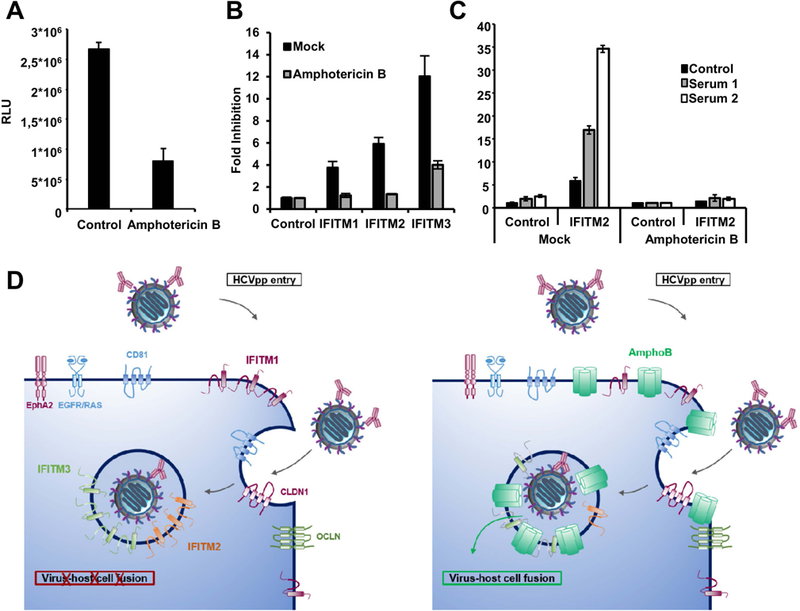
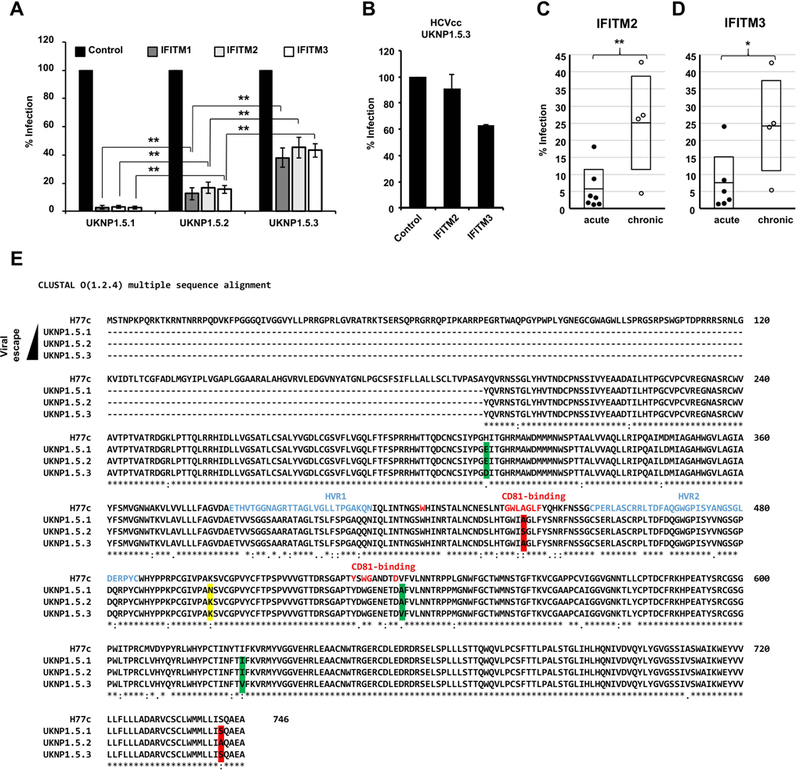
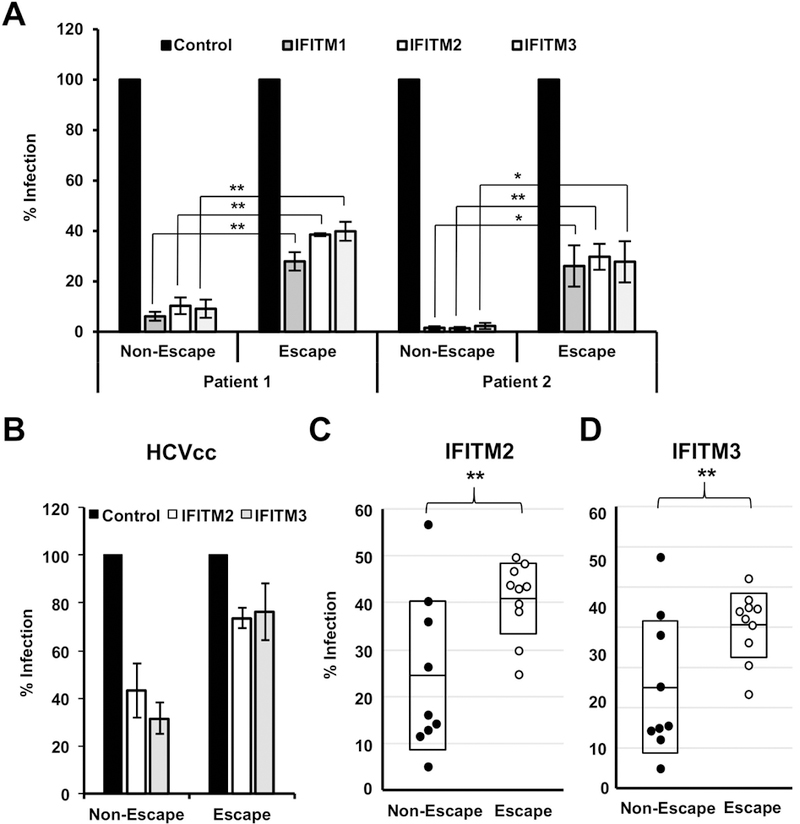
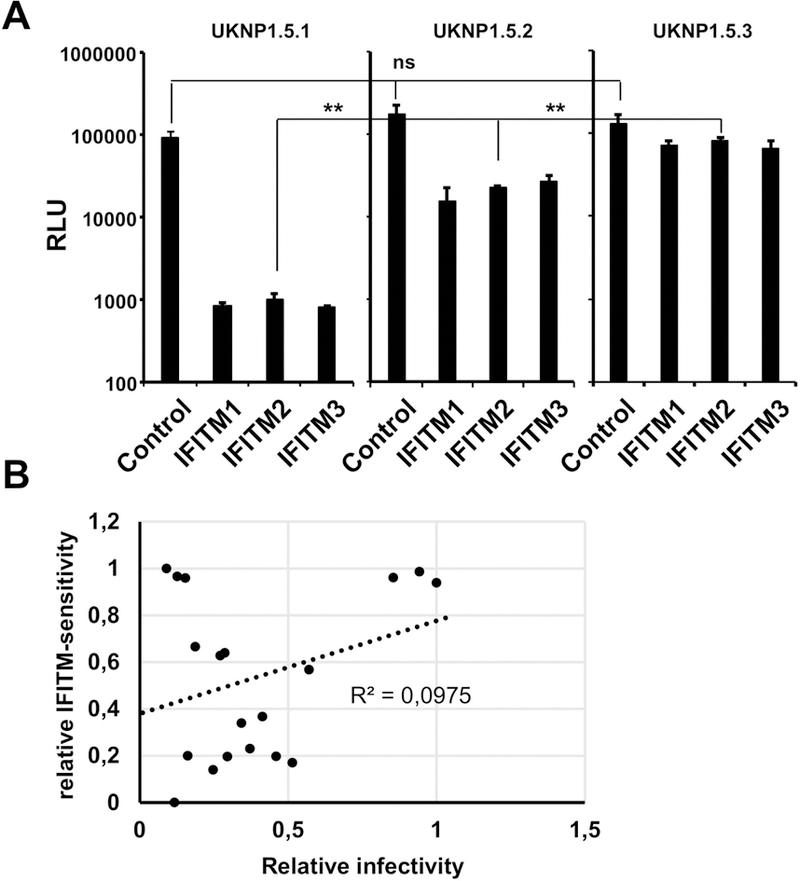
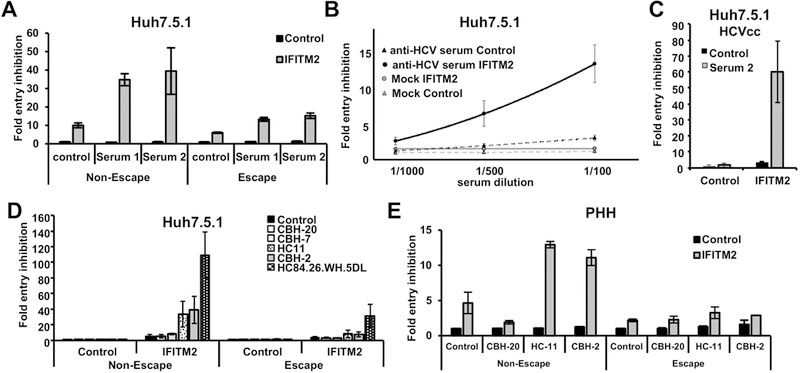
Although adaptive immune responses against hepatitis C virus (HCV) infection have been studied in great detail, the role of innate immunity in protection against HCV infection and immune evasion is only partially understood. Interferon-induced transmembrane proteins (IFITMs) are innate effector proteins restricting host cell entry of many enveloped viruses, including HCV. However, the clinical impact of IFITMs on HCV immune escape remains to be determined. Here, we show that IFITMs promote viral escape from the neutralizing antibody (nAb) response in clinical cohorts of HCV-infected patients. Using pseudoparticles bearing HCV envelope proteins from acutely infected patients, we show that HCV variants isolated preseroconversion are more sensitive to the antiviral activity of IFITMs than variants from patients isolated during chronic infection postseroconversion. Furthermore, HCV variants escaping nAb responses during liver transplantation exhibited a significantly higher resistance to IFITMs than variants that were eliminated posttransplantation. Gain-of-function and mechanistic studies revealed that IFITMs markedly enhance the antiviral activity of nAbs and suggest a cooperative effect of human monoclonal antibodies and IFITMs for antibody-mediated neutralization driving the selection pressure in viral evasion. Perturbation studies with the IFITM antagonist amphotericin B revealed that modulation of membrane properties by IFITM proteins is responsible for the IFITM-mediated blockade of viral entry and enhancement of antibody-mediated neutralization. Conclusion: Our results indicate IFITM proteins as drivers of viral immune escape and antibody-mediated HCV neutralization in acute and chronic HCV infection. These findings are of clinical relevance for the design of urgently needed HCV B-cell vaccines and might help to increase the efficacy of future vaccine candidates.
尽管针对丙型肝炎病毒(HCV)感染的适应性免疫反应已得到深入研究,但先天免疫在保护机体免受 HCV 感染和免疫逃逸中的作用仍部分了解。干扰素诱导的跨膜蛋白(IFITMs)是先天效应蛋白,可限制多种包膜病毒(包括 HCV)进入宿主细胞。然而,IFITMs 对 HCV 免疫逃逸的临床影响仍有待确定。在这里,我们展示了 IFITMs 可促进 HCV 从感染 HCV 的临床患者队列中的中和抗体(nAb)反应中逃逸。使用来自急性感染患者的 HCV 包膜蛋白假型颗粒,我们发现,与慢性感染后获得的患者分离的病毒株相比,在获得性感染前分离的 HCV 变异体对 IFITMs 的抗病毒活性更为敏感。此外,在肝移植期间逃避 nAb 反应的 HCV 变异体对 IFITMs 的耐药性明显高于移植后被消除的变异体。功能获得和机制研究表明,IFITMs 可显著增强 nAb 的抗病毒活性,并提示人源单克隆抗体和 IFITMs 具有协同作用,可通过抗体介导的中和作用驱动病毒逃逸的选择压力。使用 IFITM 拮抗剂两性霉素 B 的扰动研究表明,IFITM 蛋白对膜性质的调节是 IFITM 介导的病毒进入阻断和增强抗体介导的中和作用的原因。结论:我们的研究结果表明 IFITM 蛋白是急性和慢性 HCV 感染中病毒免疫逃逸和抗体介导的 HCV 中和的驱动因素。这些发现对设计迫切需要的 HCV B 细胞疫苗具有临床意义,并可能有助于提高未来疫苗候选物的疗效。