Beier Anna, Teichert Ines, Krisp Christoph, Wolters Dirk A, Kück Ulrich
Lehrstuhl für Allgemeine und Molekulare Botanik, Ruhr-Universität, Bochum, Germany.
Lehrstuhl für Analytische Chemie, Ruhr-Universität, Bochum, Germany.
mBio. 2016 Jun 21;7(3):e00870-16. doi: 10.1128/mBio.00870-16.
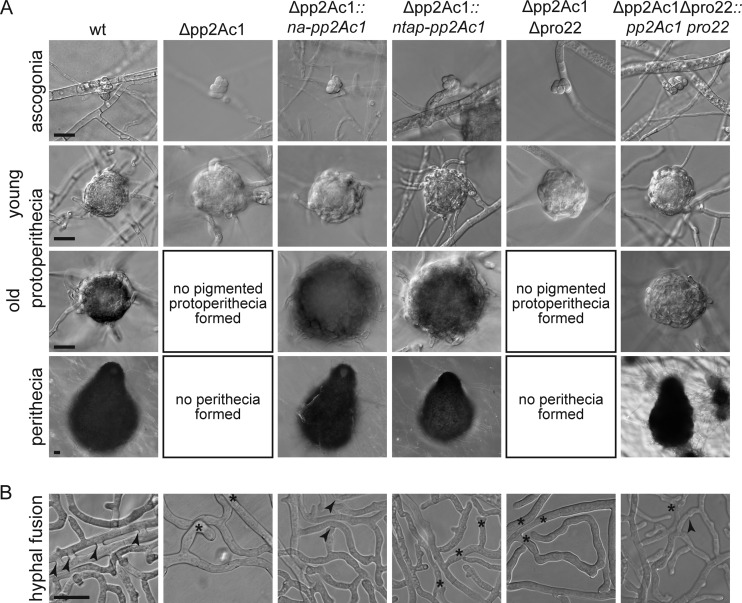
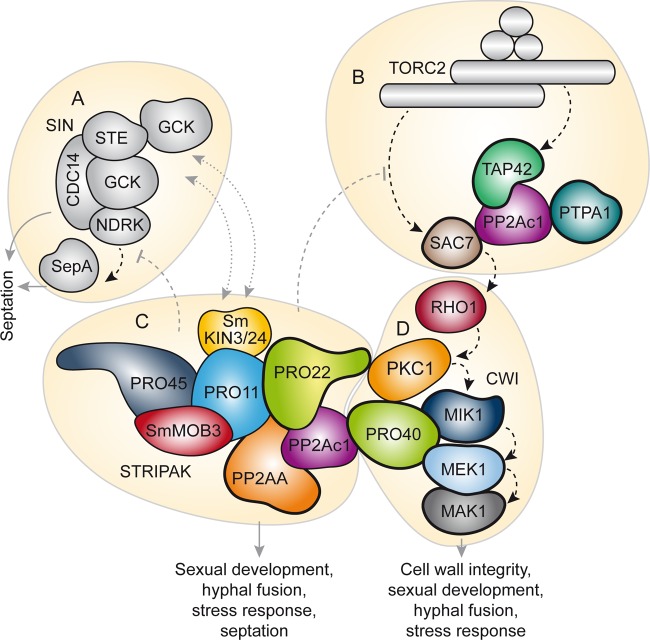
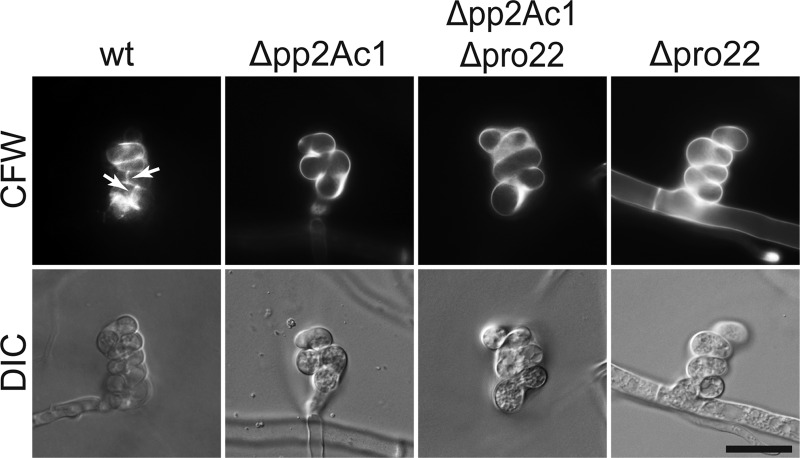
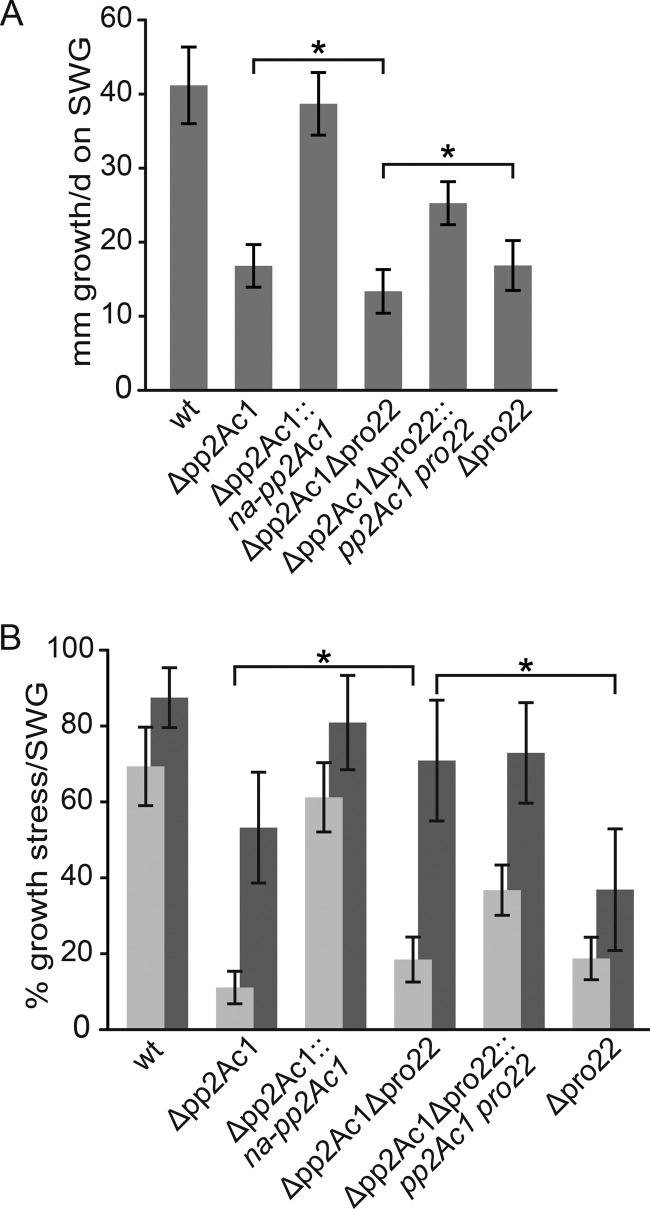
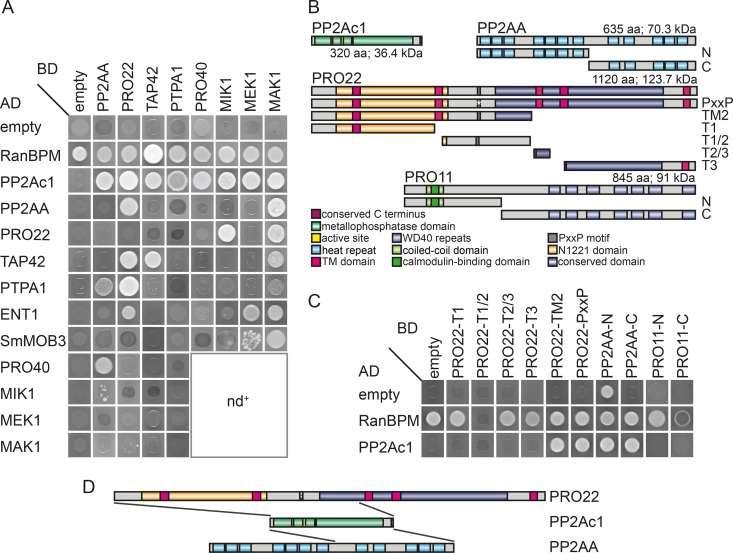
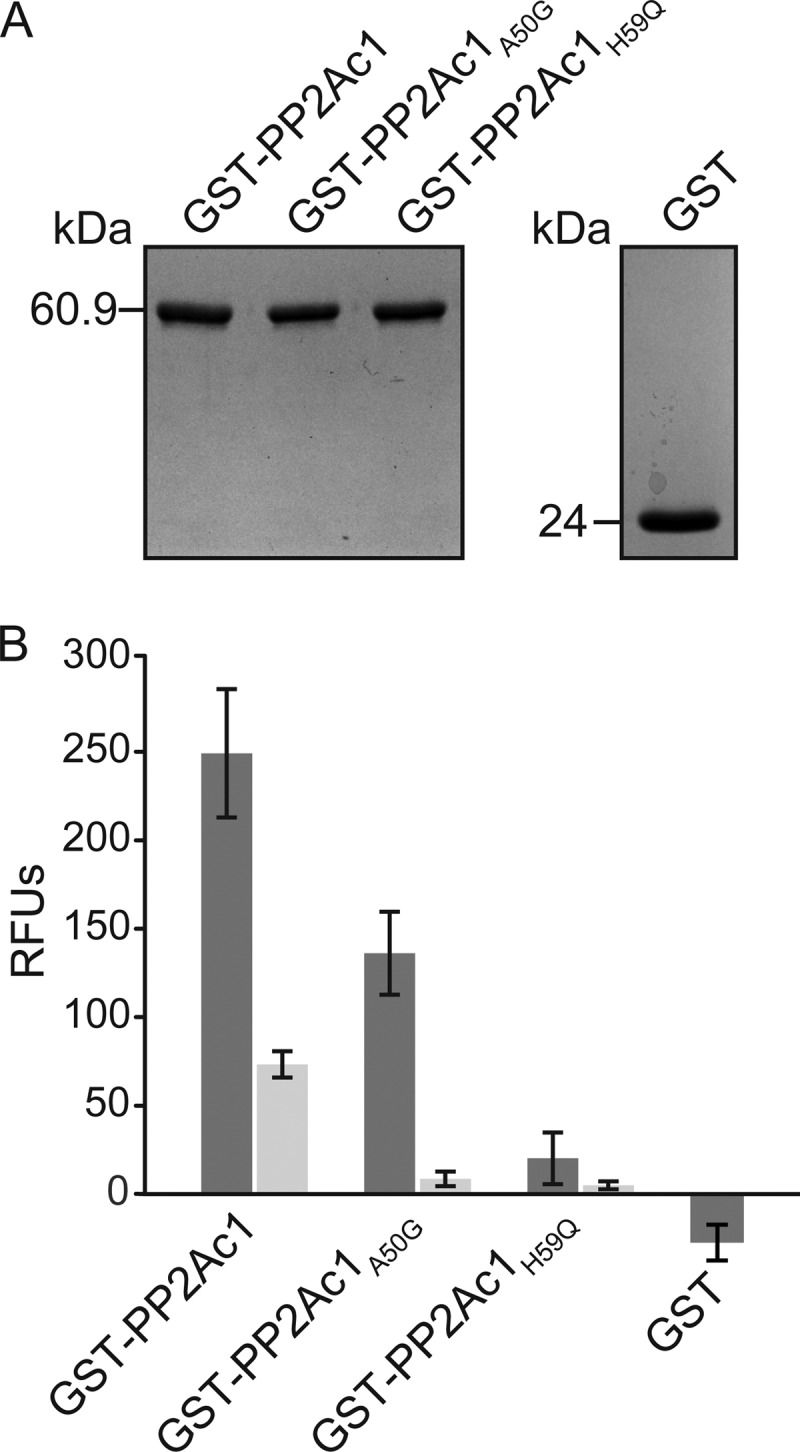
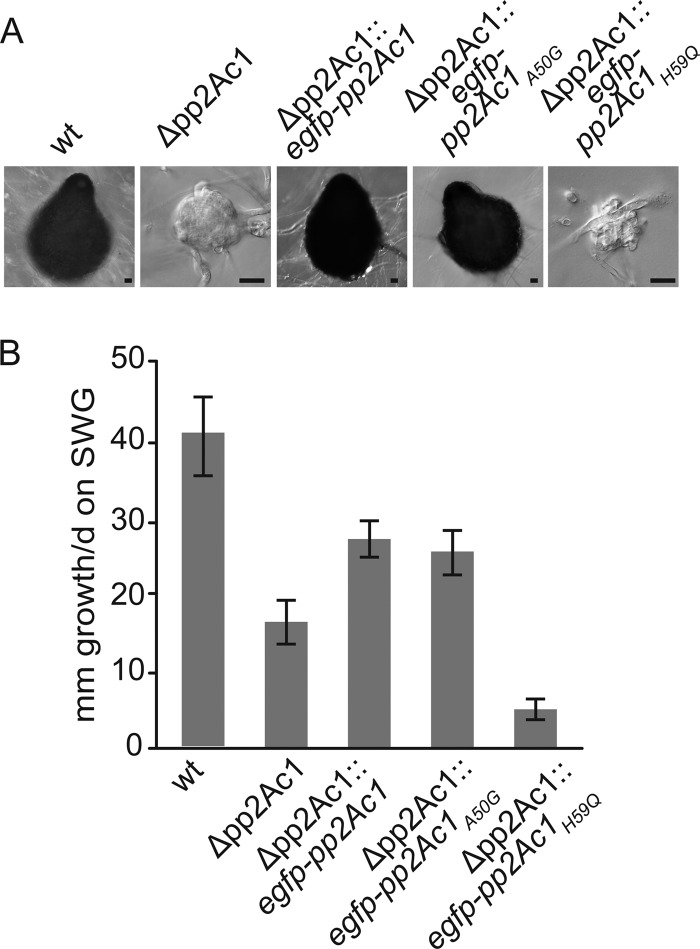
The generation of complex three-dimensional structures is a key developmental step for most eukaryotic organisms. The details of the molecular machinery controlling this step remain to be determined. An excellent model system to study this general process is the generation of three-dimensional fruiting bodies in filamentous fungi like Sordaria macrospora Fruiting body development is controlled by subunits of the highly conserved striatin-interacting phosphatase and kinase (STRIPAK) complex, which has been described in organisms ranging from yeasts to humans. The highly conserved heterotrimeric protein phosphatase PP2A is a subunit of STRIPAK. Here, catalytic subunit 1 of PP2A was functionally characterized. The Δpp2Ac1 strain is sterile, unable to undergo hyphal fusion, and devoid of ascogonial septation. Further, PP2Ac1, together with STRIPAK subunit PRO22, governs vegetative and stress-related growth. We revealed in vitro catalytic activity of wild-type PP2Ac1, and our in vivo analysis showed that inactive PP2Ac1 blocks the complementation of the sterile deletion strain. Tandem affinity purification, followed by mass spectrometry and yeast two-hybrid analysis, verified that PP2Ac1 is a subunit of STRIPAK. Further, these data indicate links between the STRIPAK complex and other developmental signaling pathways, implying the presence of a large interconnected signaling network that controls eukaryotic developmental processes. The insights gained in our study can be transferred to higher eukaryotes and will be important for understanding eukaryotic cellular development in general.
The striatin-interacting phosphatase and kinase (STRIPAK) complex is highly conserved from yeasts to humans and is an important regulator of numerous eukaryotic developmental processes, such as cellular signaling and cell development. Although functional insights into the STRIPAK complex are accumulating, the detailed molecular mechanisms of single subunits are only partially understood. The first fungal STRIPAK was described in Sordaria macrospora, which is a well-established model organism used to study the formation of fungal fruiting bodies, three-dimensional organ-like structures. We analyzed STRIPAK subunit PP2Ac1, catalytic subunit 1 of protein phosphatase PP2A, to study the importance of the catalytic activity of this protein during sexual development. The results of our yeast two-hybrid analysis and tandem affinity purification, followed by mass spectrometry, indicate that PP2Ac1 activity connects STRIPAK with other signaling pathways and thus forms a large interconnected signaling network.
生成复杂的三维结构是大多数真核生物发育过程中的关键步骤。控制这一步骤的分子机制细节仍有待确定。研究这一普遍过程的一个极佳模型系统是丝状真菌(如大孢粪壳菌)中三维子实体的生成。子实体发育由高度保守的条纹蛋白相互作用磷酸酶和激酶(STRIPAK)复合体的亚基控制,该复合体在从酵母到人类的各种生物体中均有描述。高度保守的异源三聚体蛋白磷酸酶PP2A是STRIPAK的一个亚基。在此,对PP2A的催化亚基1进行了功能表征。Δpp2Ac1菌株不育,无法进行菌丝融合,且没有产囊体隔膜。此外,PP2Ac1与STRIPAK亚基PRO22共同调控营养生长和与应激相关的生长。我们揭示了野生型PP2Ac1的体外催化活性,并且我们的体内分析表明无活性的PP2Ac1会阻断不育缺失菌株的互补作用。串联亲和纯化,随后进行质谱分析和酵母双杂交分析,证实PP2Ac1是STRIPAK的一个亚基。此外,这些数据表明STRIPAK复合体与其他发育信号通路之间存在联系,这意味着存在一个控制真核生物发育过程的大型相互连接的信号网络。
条纹蛋白相互作用磷酸酶和激酶(STRIPAK)复合体从酵母到人类高度保守,是众多真核生物发育过程(如细胞信号传导和细胞发育)的重要调节因子。尽管对STRIPAK复合体的功能见解不断积累,但单个亚基的详细分子机制仅得到部分理解。首个真菌STRIPAK是在大孢粪壳菌中描述的,大孢粪壳菌是一种用于研究真菌子实体(三维器官样结构)形成的成熟模式生物。我们分析了STRIPAK亚基PP2Ac1(蛋白磷酸酶PP2A的催化亚基1),以研究该蛋白的催化活性在有性发育过程中的重要性。我们的酵母双杂交分析以及串联亲和纯化随后进行质谱分析的结果表明,PP2Ac1的活性将STRIPAK与其他信号通路连接起来,从而形成一个大型相互连接的信号网络。