Iglesias-Carrasco Maider, Head Megan L, Jennions Michael D, Cabido Carlos
Department of Evolutionary Ecology, National Museum of Natural Sciences, Spanish National Research Council (CSIC), José Gutiérrez Abascal, 2, 28006, Madrid, Spain.
Department of Herpetology, Aranzadi Science Society, Alto de Zorroaga, 1, 20014, Donostia-San Sebastián, Spain.
BMC Evol Biol. 2016 Jun 21;16(1):135. doi: 10.1186/s12862-016-0706-0.
The optimal allocation of resources to sexual signals and other life history traits is usually dependent on an individual's condition, while variation in the expression of sexual traits across environments depends on the combined effects of local adaptation, mean condition, and phenotypic responses to environment-specific cues that affect resource allocation. A clear contrast can often be drawn between natural habitats and novel habitats, such as forest plantations and urban areas. In some species, males seem to change their sexual signals in these novel environments, but why this occurs and how it affects signal reliability is still poorly understood.
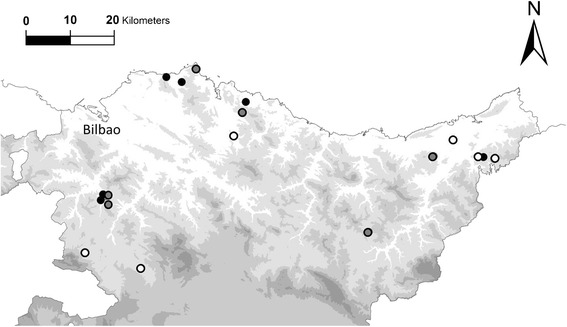
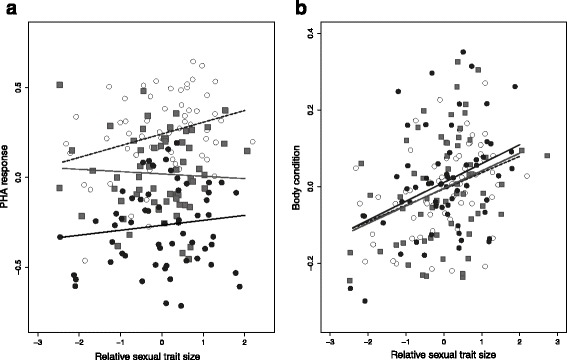
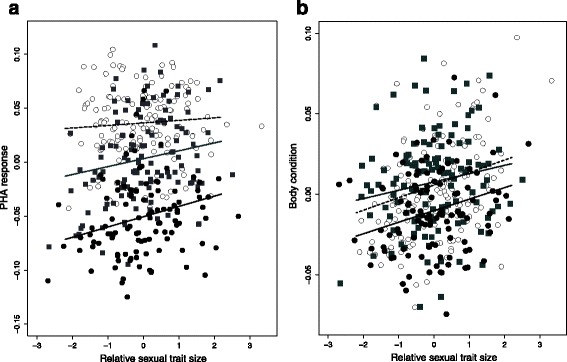
The relative size of sexual traits and level of immune responses were significantly lower for male palmate newts Lissotriton helveticus caught in pine and eucalyptus plantations compared to those caught in native forests, but there was no habitat-dependent difference in body condition (n = 18 sites, 382 males). The reliability with which sexual traits signalled body condition and immune responses was the same in all three habitats. Finally, we conducted a mesocosm experiment in which males were maintained in pine, eucalypt or oak infused water for 21 days. Males in plantation-like water (pine or eucalypt) showed significantly lower immune responses but no change in body condition. This matches the pattern seen for field-caught males. Unlike field-caught males, however, there was no relationship between water type and relative sexual trait size.
Pine and eucalyptus plantations are likely to be detrimental to male palmate newt because they are associated with reduced immune function and smaller sexual traits. This could be because ecological aspects of these novel habitats, such as high water turbidity or changes in male-male competition, drive selection for reduced investment into sexual traits. However, it is more probable that there are differences in the ease of acquisition, hence optimal allocation, of resources among habitats. Our mesocosm experiment also provides some evidence that water toxicity is a causal factor. Our findings offer insights into how plantations affect amphibian life histories, and how novel habitats might generate long-term selection for new resource allocation strategies in native species.
用于性信号及其他生活史特征的资源最优分配通常取决于个体的身体状况,而性特征在不同环境中的表达差异则取决于局部适应、平均身体状况以及对影响资源分配的特定环境线索的表型反应的综合作用。自然栖息地与诸如人工林和城市地区等新栖息地之间往往能形成鲜明对比。在某些物种中,雄性似乎会在这些新环境中改变其性信号,但这种现象为何发生以及如何影响信号可靠性仍知之甚少。
与在原生森林中捕获的雄性瑞士掌蹼螈相比,在松树和桉树林人工林中捕获的雄性瑞士掌蹼螈的性特征相对大小和免疫反应水平显著更低,但身体状况不存在栖息地依赖性差异(n = 18个地点,382只雄性)。在所有三种栖息地中,性特征表明身体状况和免疫反应的可靠性是相同的。最后,我们进行了一项中宇宙实验,将雄性置于注入松树、桉树或橡木的水中21天。处于类似人工林环境的水中(松树或桉树)的雄性免疫反应显著降低,但身体状况没有变化。这与在野外捕获的雄性的模式相符。然而,与野外捕获的雄性不同的是,水体类型与性特征相对大小之间没有关系。
松树和桉树林人工林可能对雄性瑞士掌蹼螈有害,因为它们与免疫功能降低和性特征变小有关。这可能是因为这些新栖息地的生态因素,如高水体浊度或雄雄竞争的变化,促使对性特征投资减少的选择。然而,更有可能的是,不同栖息地在资源获取的难易程度以及因此的最优分配方面存在差异。我们的中宇宙实验也提供了一些证据表明水体毒性是一个因果因素。我们的研究结果为人工林如何影响两栖动物生活史以及新栖息地如何可能对本地物种的新资源分配策略产生长期选择提供了见解。