Guo Wei, Chu Yu-Xia, Imai Satoshi, Yang Jia-Le, Zou Shiping, Mohammad Zaid, Wei Feng, Dubner Ronald, Ren Ke
University of Maryland School of Denstistry.
University of Maryland School of DenstistryUniversity of Maryland School of DentistryUniversity of Maryland School of DentristryUniversity of Maryland School of DentistryUniversity of Maryland School of Dentistry.
Mol Pain. 2016 Jun 21;12. doi: 10.1177/1744806916658043. Print 2016.
Bone marrow stromal cells (BMSCs) have shown potential to treat chronic pain, although much still needs to be learned about their efficacy and mechanisms of action under different pain conditions. Here, we provide further convergent evidence on the effects of BMSCs in rodent pain models.
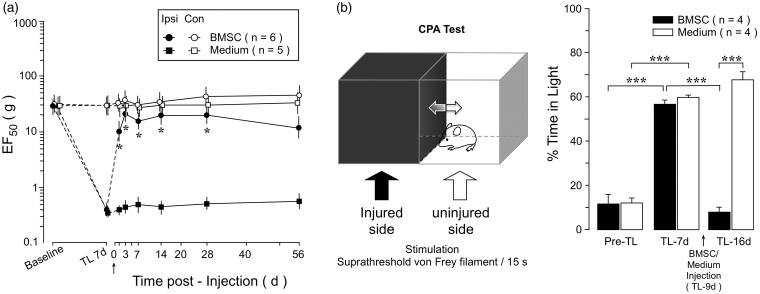
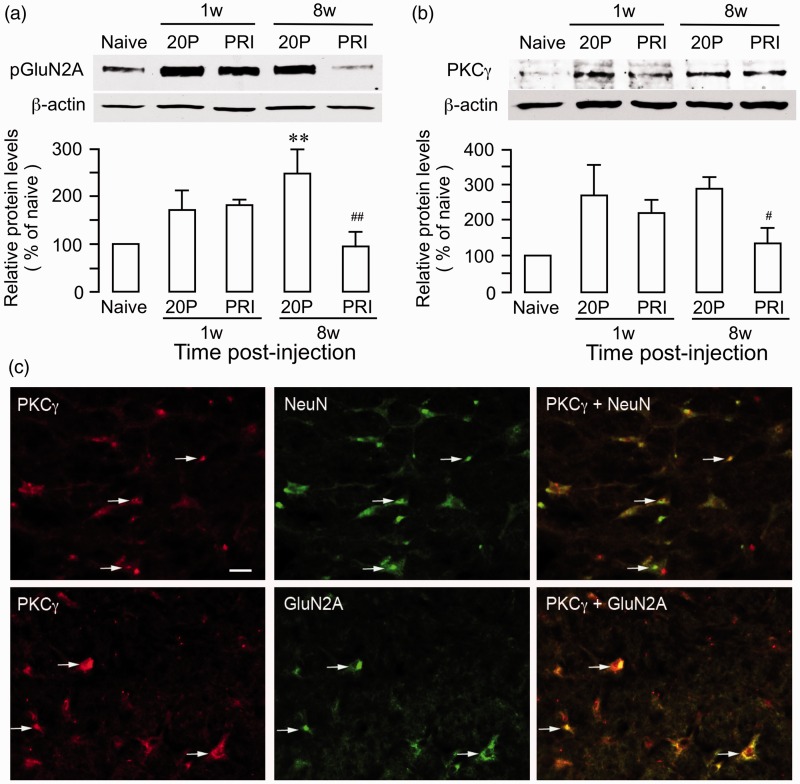
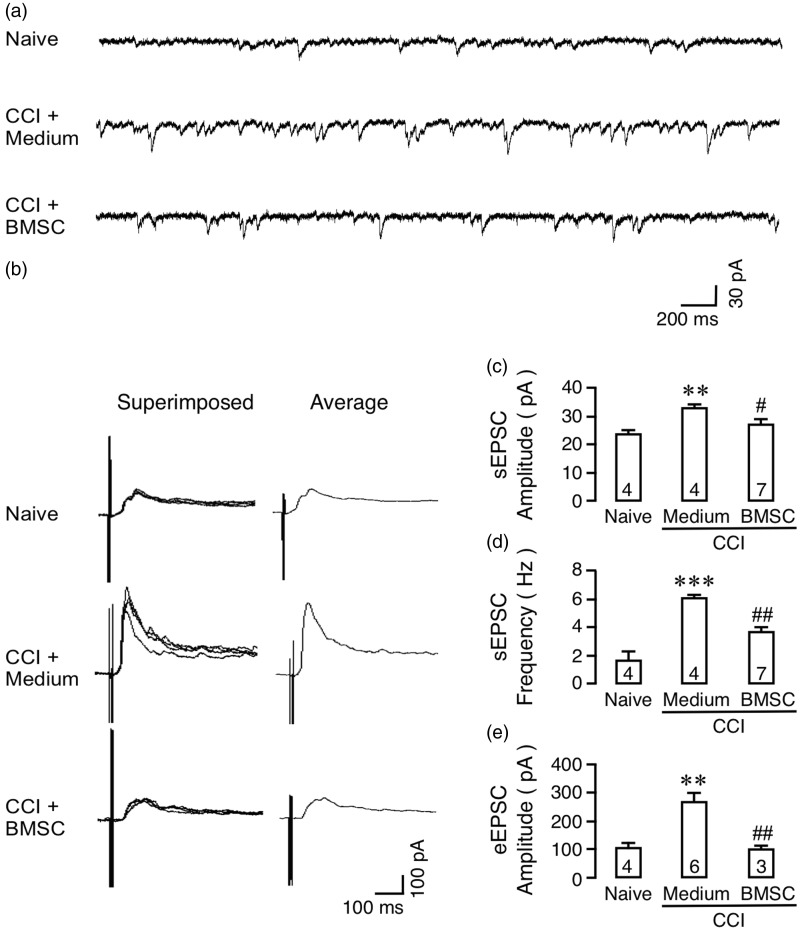
In an orofacial pain model involving injury of a tendon of the masseter muscle, BMSCs attenuated behavioral pain conditions assessed by von Frey filaments and a conditioned place avoidance test in female Sprague-Dawley rats. The antihyperalgesia of BMSCs in females lasted for <8 weeks, which is shorter than that seen in males. To relate preclinical findings to human clinical conditions, we used human BMSCs. Human BMSCs (1.5 M cells, i.v.) attenuated mechanical and thermal hyperalgesia induced by spinal nerve ligation and suppressed spinal nerve ligation-induced aversive behavior, and the effect persisted through the 8-week observation period. In a trigeminal slice preparation, BMSC-treated and nerve-injured C57B/L mice showed reduced amplitude and frequency of spontaneous excitatory postsynaptic currents, as well as excitatory synaptic currents evoked by electrical stimulation of the trigeminal nerve root, suggesting inhibition of trigeminal neuronal hyperexcitability and primary afferent input by BMSCs. Finally, we observed that GluN2A (N-methyl-D-aspartate receptor subunit 2A) tyrosine phosphorylation and protein kinase Cgamma (PKCg) immunoreactivity in rostral ventromedial medulla was suppressed at 8 weeks after BMSC in tendon-injured rats.
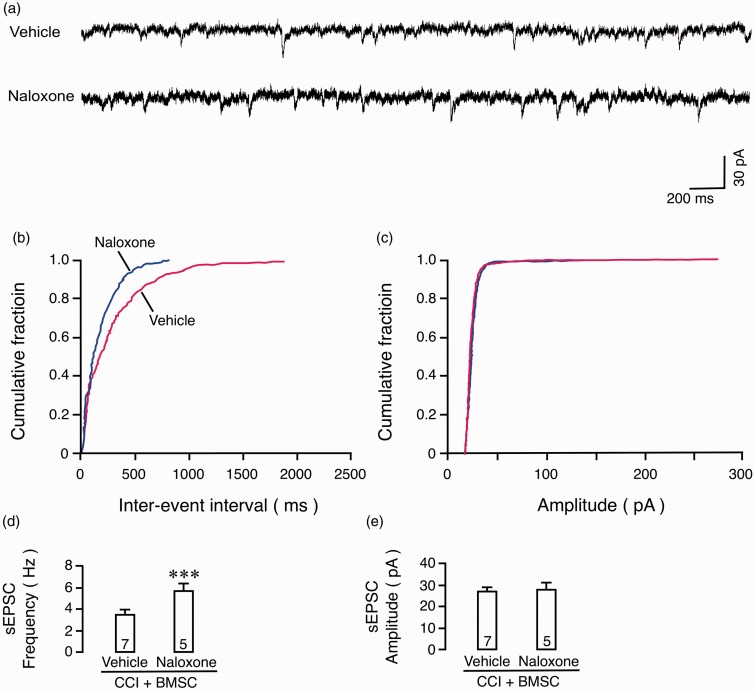
Collectively, the present work adds convergent evidence supporting the use of BMSCs in pain control. As PKCg activity related to N-methyl-D-aspartate receptor activation is critical in opioid tolerance, these results help to understand the mechanisms of BMSC-produced long-term antihyperalgesia, which requires opioid receptors in rostral ventromedial medulla and apparently lacks the development of tolerance.
骨髓基质细胞(BMSCs)已显示出治疗慢性疼痛的潜力,尽管在不同疼痛条件下其疗效和作用机制仍有许多需要了解。在此,我们提供关于BMSCs在啮齿动物疼痛模型中作用的进一步趋同证据。
在一个涉及咬肌肌腱损伤的口面部疼痛模型中,BMSCs减轻了通过von Frey细丝和条件性位置回避试验评估的雌性Sprague-Dawley大鼠的行为疼痛状况。BMSCs对雌性大鼠的抗痛觉过敏作用持续时间小于8周,短于雄性大鼠。为了将临床前研究结果与人类临床情况相关联,我们使用了人BMSCs。人BMSCs(150万个细胞,静脉注射)减轻了脊髓神经结扎诱导的机械性和热性痛觉过敏,并抑制了脊髓神经结扎诱导的厌恶行为,且该效应在8周观察期内持续存在。在三叉神经切片制备中,经BMSC处理且神经损伤的C57B/L小鼠显示出自发性兴奋性突触后电流的幅度和频率降低,以及三叉神经根电刺激诱发的兴奋性突触电流降低,提示BMSCs抑制了三叉神经元的过度兴奋性和初级传入输入。最后,我们观察到在肌腱损伤大鼠中,BMSC注射8周后,延髓头端腹内侧的GluN2A(N-甲基-D-天冬氨酸受体亚基2A)酪氨酸磷酸化和蛋白激酶Cγ(PKCγ)免疫反应性受到抑制。
总体而言,本研究工作增加了支持使用BMSCs进行疼痛控制的趋同证据。由于与N-甲基-D-天冬氨酸受体激活相关的PKCγ活性在阿片类药物耐受性中起关键作用,这些结果有助于理解BMSC产生长期抗痛觉过敏的机制,该机制需要延髓头端腹内侧的阿片受体,且显然不存在耐受性的发展。