Institute of Biology-Applied Zoology/Animal Ecology, Freie Universität Berlin, Haderslebener Str. 9, D-12163 Berlin, Germany.
Institute of Biology-Applied Genetics/Dahlem Centre of Plant Sciences, Freie Universität Berlin, Albrecht-Thaer-Weg 6, D-14195 Berlin, Germany.
Sci Rep. 2016 Jun 22;6:28544. doi: 10.1038/srep28544.
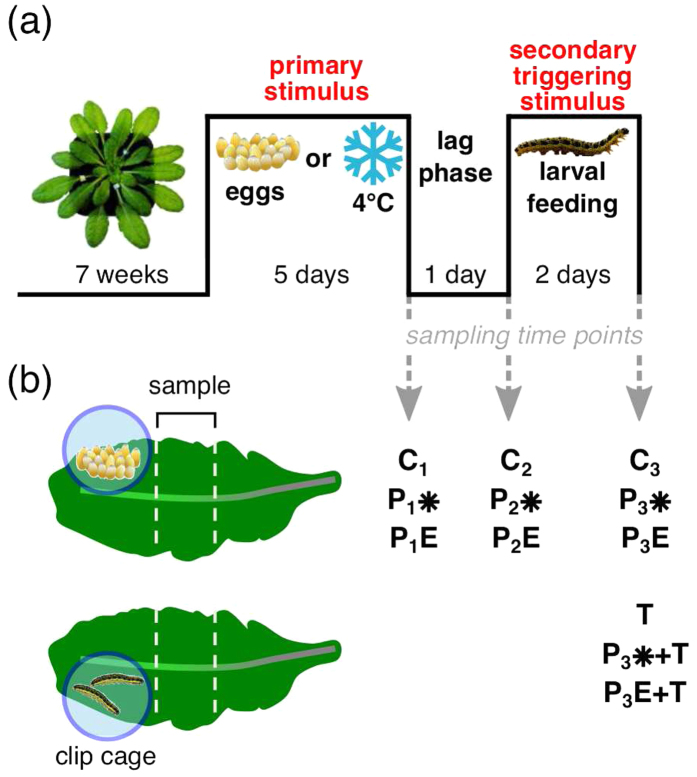
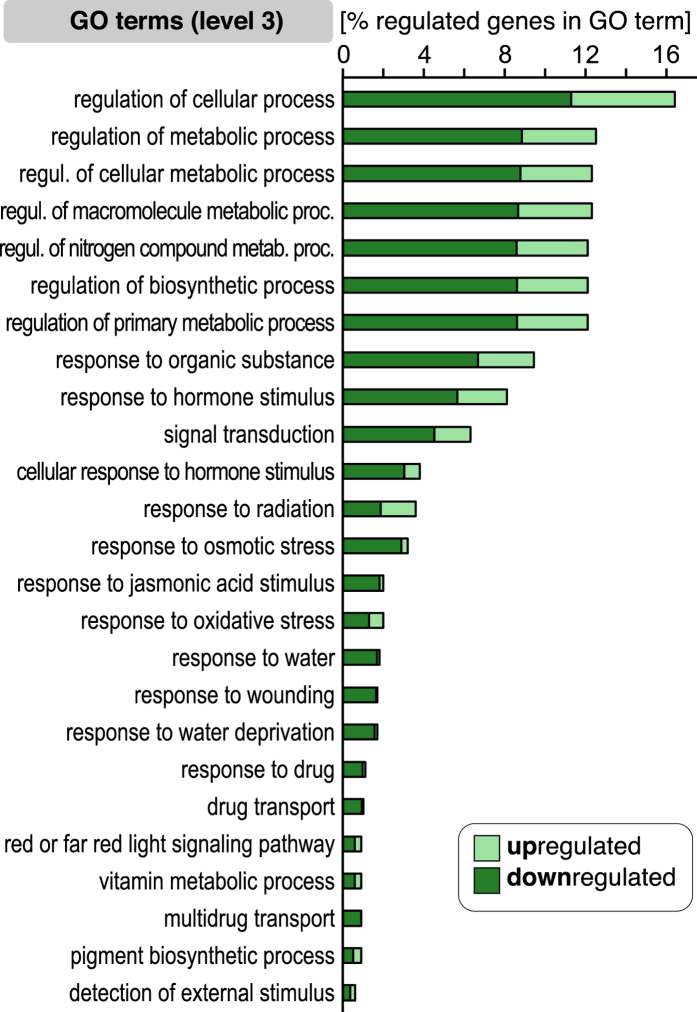
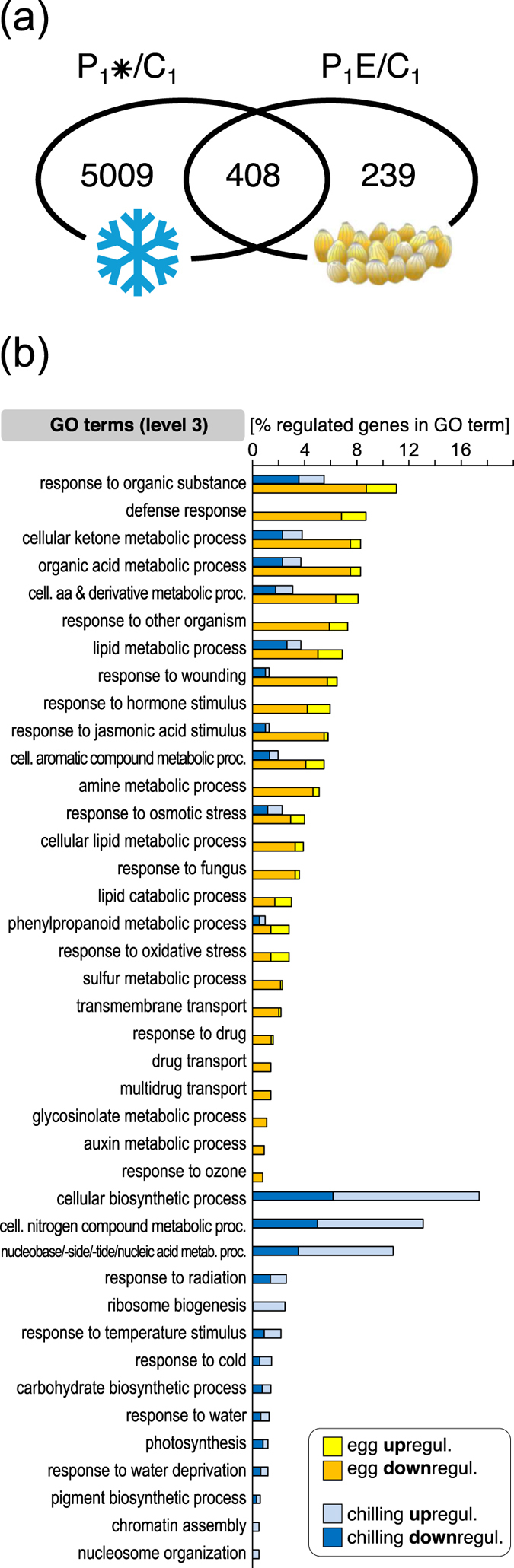
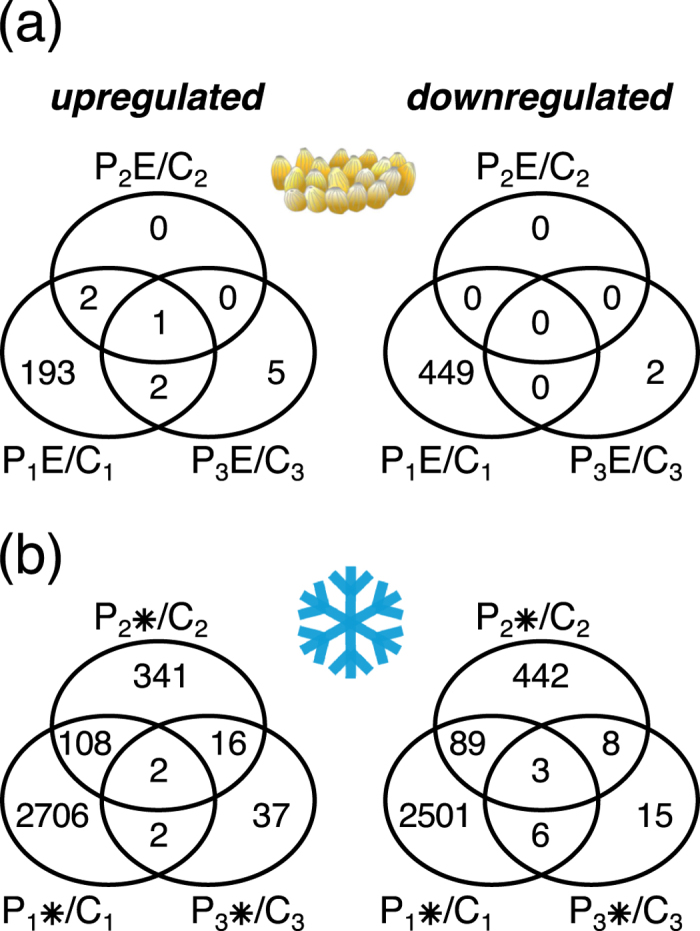
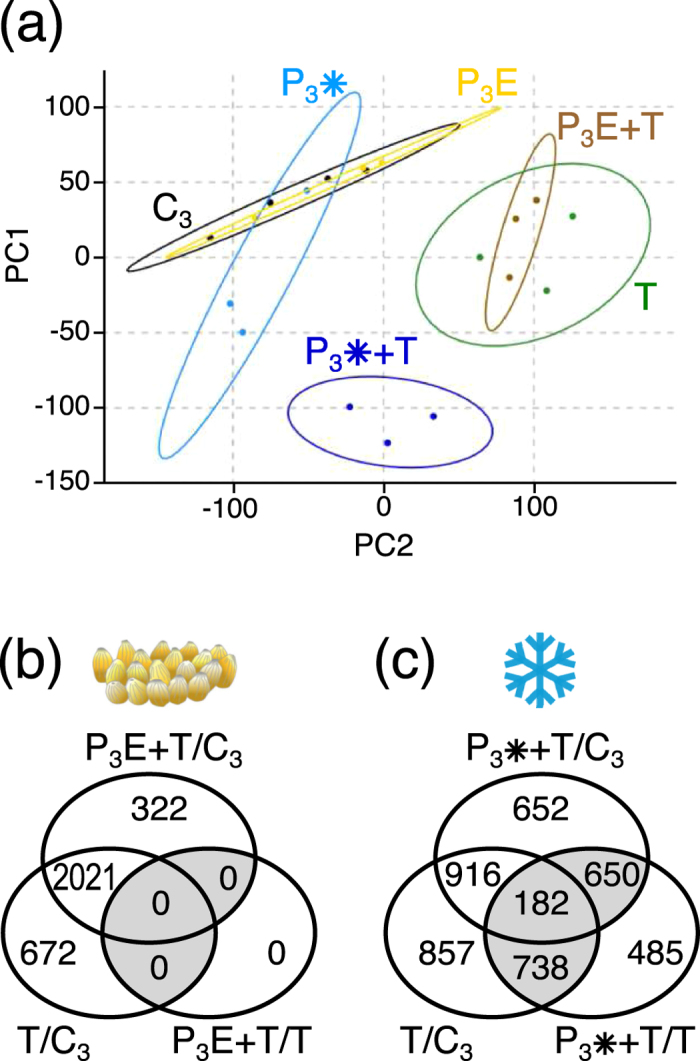
Plants can retain information about environmental stress and thus, prepare themselves for impending stress. In nature, it happens that environmental stimuli like 'cold' and 'insect egg deposition' precede insect herbivory. Both these stimuli are known to elicit transcriptomic changes in Arabidposis thaliana. It is unknown, however, whether they affect the plant's anti-herbivore defence and feeding-induced transcriptome when they end prior to herbivory. Here we investigated the transcriptomic response of Arabidopsis to feeding by Pieris brassicae larvae after prior exposure to cold or oviposition. The transcriptome of plants that experienced a five-day-chilling period (4 °C) was not fully reset to the pre-chilling state after deacclimation (20 °C) for one day and responded differently to herbivory than that of chilling-inexperienced plants. In contrast, when after a five-day-lasting oviposition period the eggs were removed, one day later the transcriptome and, consistently, also its response to herbivory resembled that of egg-free plants. Larval performance was unaffected by previous exposure of plants to cold and to eggs, thus indicating P. brassicae tolerance to cold-mediated plant transcriptomic changes. Our results show strong differences in the persistence of the plant's transcriptomic state after removal of different environmental cues, and consequently differential effects on the transcriptomic response to later herbivory.
植物可以保留有关环境胁迫的信息,从而为即将到来的胁迫做好准备。在自然界中,环境刺激物(如“寒冷”和“昆虫产卵”)往往先于昆虫取食。这两种刺激物都会引起拟南芥的转录组变化。然而,当它们在取食之前结束时,它们是否会影响植物的抗虫防御和取食诱导的转录组尚不清楚。在这里,我们研究了拟南芥在经历冷胁迫或产卵后被菜粉蝶幼虫取食时的转录组反应。经历了为期五天的冷却期(4°C)的植物的转录组在脱驯化(20°C)一天后并未完全恢复到冷却前的状态,并且对取食的反应与未经历冷却的植物不同。相比之下,当五天的产卵期结束后,将卵移除,一天后,其转录组及其对取食的反应与无卵植物相似。幼虫的表现不受植物先前暴露于寒冷和产卵的影响,这表明菜粉蝶对冷介导的植物转录组变化具有耐受性。我们的研究结果表明,在去除不同环境线索后,植物转录组状态的持久性存在显著差异,因此对随后取食的转录组反应也存在差异。