Buerger Patrick, Alvarez-Roa Carlos, Weynberg Karen D, Baekelandt Sebastien, van Oppen Madeleine J H
Australian Institute of Marine Science, Townsville, QLD, Australia; College of Science and Engineering, James Cook University, Townsville, QLD, Australia; AIMS@JCU, James Cook University, Townsville, QLD, Australia; Australian Research Council (ARC) Centre of Excellence for Coral Reef Studies, Townsville, QLD, Australia.
College of Science and Engineering, James Cook University , Townsville, QLD , Australia.
PeerJ. 2016 Jun 9;4:e2110. doi: 10.7717/peerj.2110. eCollection 2016.
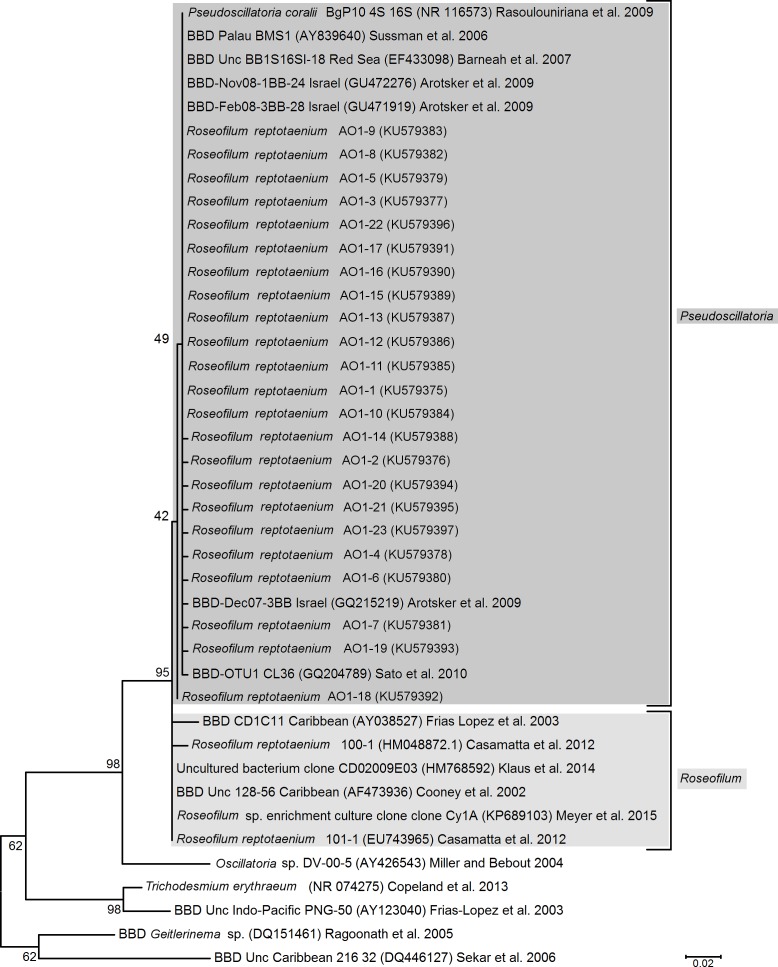
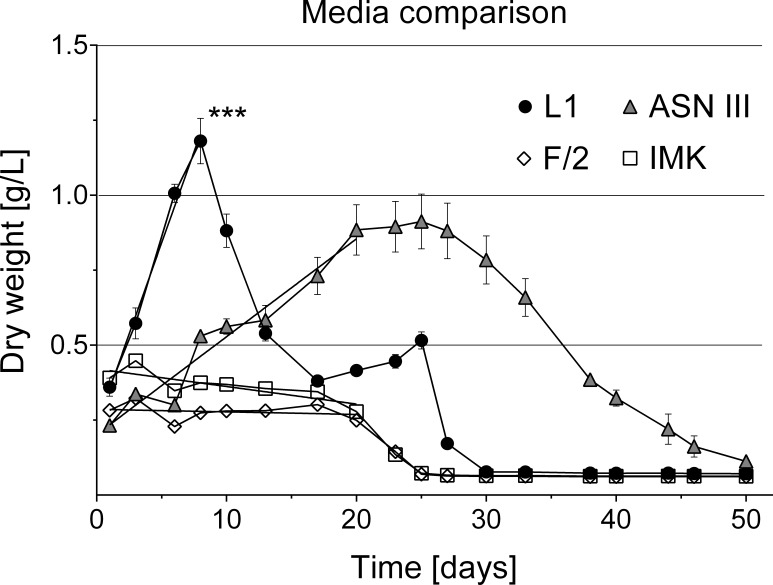
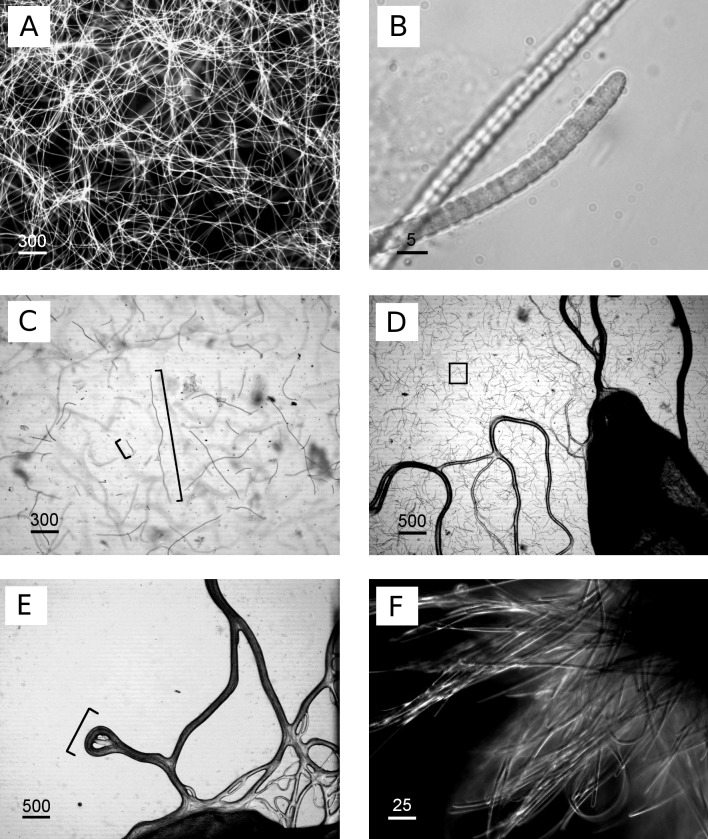
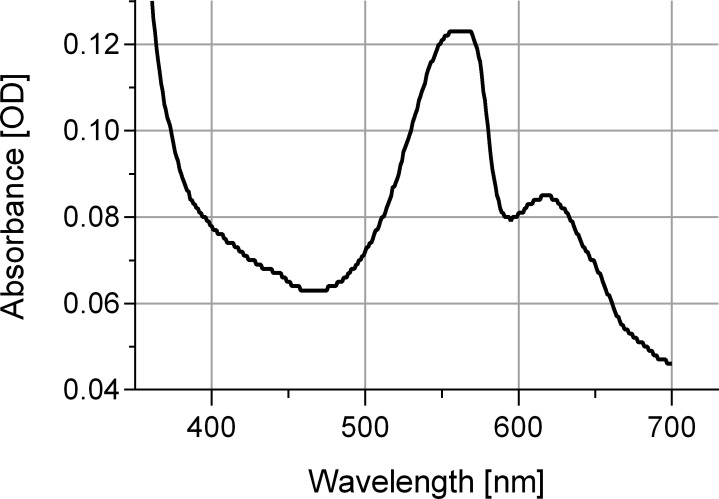
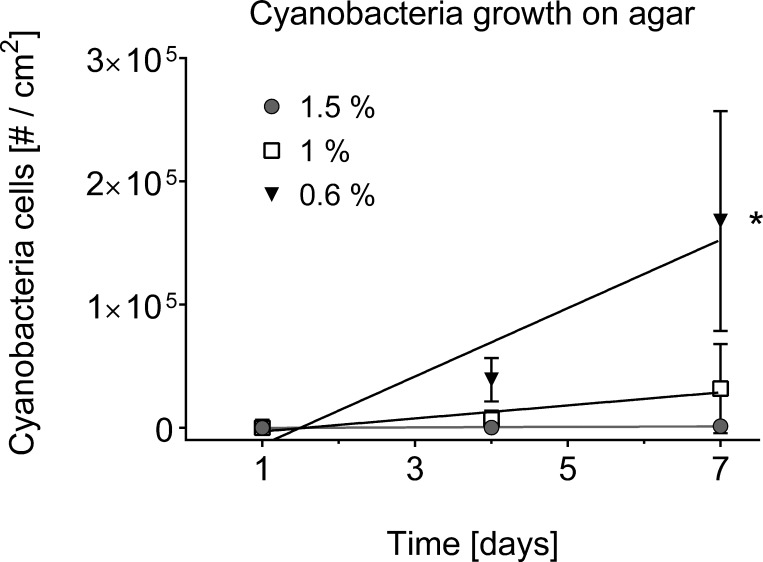
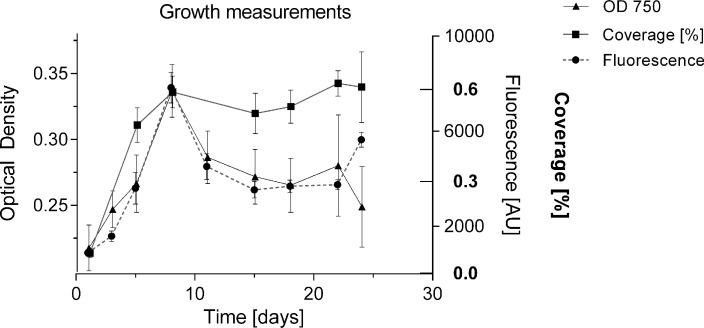
Black band disease (BBD) is a common disease of reef-building corals with a worldwide distribution that causes tissue loss at a rate of up to 3 cm/day. Critical for a mechanistic understanding of the disease's aetiology is the cultivation of its proposed pathogen, filamentous cyanobacteria (genus Roseofilum). Here, we optimise existing protocols for the isolation and cultivation of Roseofilum cyanobacteria using a new strain from the central Great Barrier Reef. We demonstrate that the isolation of this bacterium via inoculation onto agar plates was highly effective with a low percentage agar of 0.6% and that growth monitoring was most sensitive with fluorescence measurements of chlorophyll-a (440/685 nm). Cell growth curves in liquid and solid media were generated for the first time for this cyanobacterium and showed best growth rates for the previously untested L1-medium (growth rate k = 0.214 biomass/day; doubling time t gen = 4.67 days). Our results suggest that the trace metals contained in L1-medium maximise biomass increase over time for this cyanobacterium. Since the newly isolated Roseofilum strain is genetically closest to Pseudoscillatoria coralii, but in terms of pigmentation and cell size closer to Roseofilum reptotaenium, we formally merge the two species into a single taxon by providing an emended species description, Roseofilum reptotaenium (Rasoulouniriana) Casamatta emend. Following this optimized protocol is recommended for fast isolation and cultivation of Roseofilum cyanobacteria, for growth curve generation in strain comparisons and for maximisation of biomass in genetic studies.
黑带病(BBD)是一种造礁珊瑚的常见疾病,在全球范围内均有分布,可导致珊瑚组织以高达每天3厘米的速度损失。对于从机制上理解该疾病的病因而言,培养其假定的病原体丝状蓝细菌(玫瑰丝菌属)至关重要。在此,我们利用来自大堡礁中部的一个新菌株,优化了现有的玫瑰丝菌蓝细菌分离和培养方案。我们证明,通过接种到琼脂平板上分离这种细菌,在琼脂含量低至0.6%时非常有效,并且通过叶绿素a(440/685纳米)的荧光测量来监测生长最为灵敏。首次为这种蓝细菌绘制了液体和固体培养基中的细胞生长曲线,结果表明,对于之前未经测试的L1培养基,其生长速率最佳(生长速率k = 0.214生物量/天;倍增时间tgen = 4.67天)。我们的结果表明,L1培养基中含有的微量金属可使这种蓝细菌的生物量随时间增加最大化。由于新分离的玫瑰丝菌菌株在基因上与珊瑚伪振荡藻最接近,但在色素沉着和细胞大小方面更接近爬生玫瑰丝菌,因此我们通过提供一个修订后的物种描述,将这两个物种正式合并为一个分类单元,即爬生玫瑰丝菌(拉苏卢尼里亚纳)卡萨马塔修订种。建议遵循此优化方案,以便快速分离和培养玫瑰丝菌蓝细菌,用于菌株比较中的生长曲线绘制以及基因研究中的生物量最大化。