Tollot Marie, Assmann Daniela, Becker Christian, Altmüller Janine, Dutheil Julien Y, Wegner Carl-Eric, Kahmann Regine
Max Planck Institute for Terrestrial Microbiology, Department of Organismic Interactions, Marburg, Germany.
Cologne Center for Genomics (CCG), University of Cologne, Cologne, Germany.
PLoS Pathog. 2016 Jun 22;12(6):e1005697. doi: 10.1371/journal.ppat.1005697. eCollection 2016 Jun.
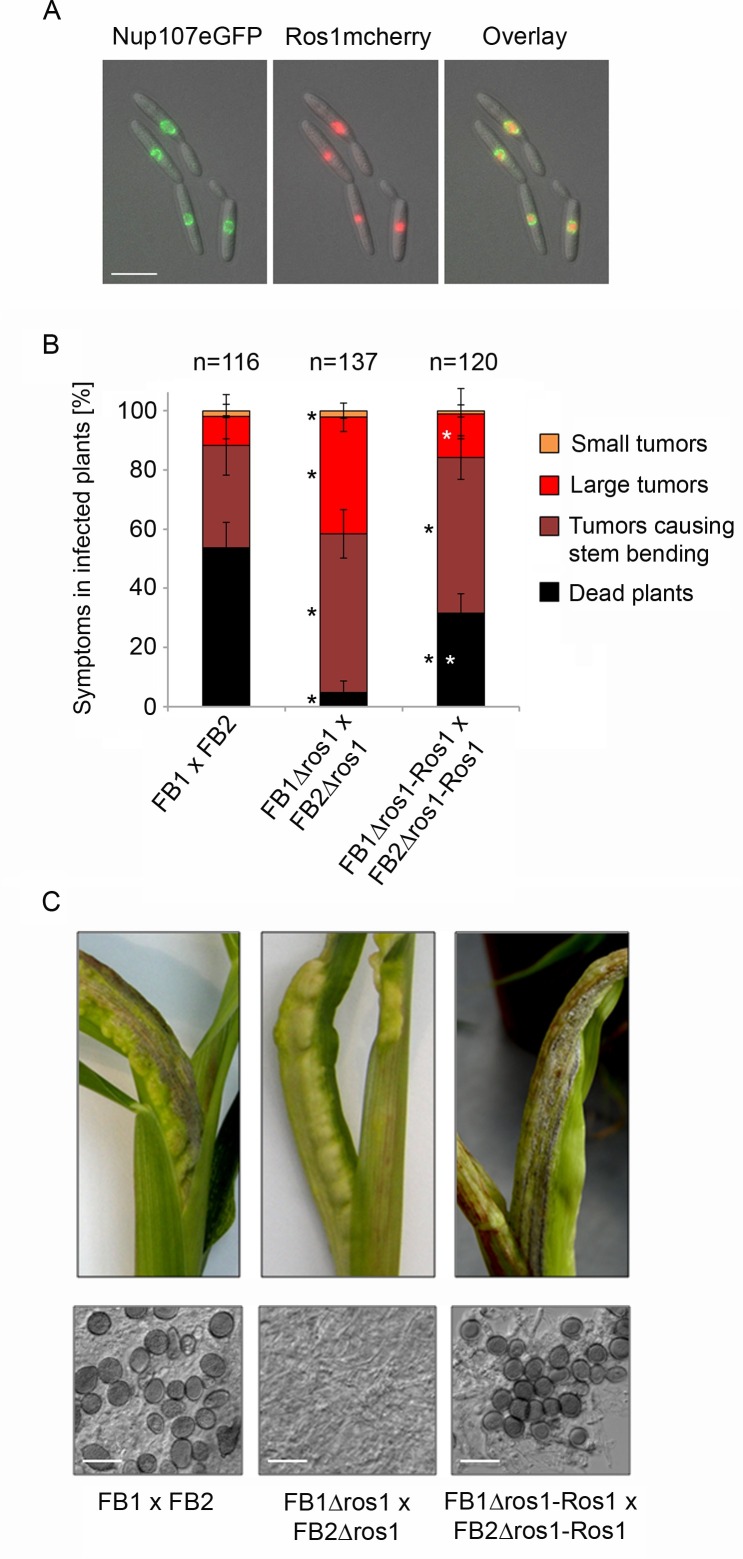
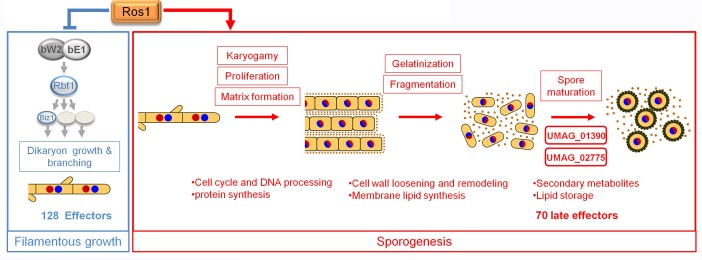
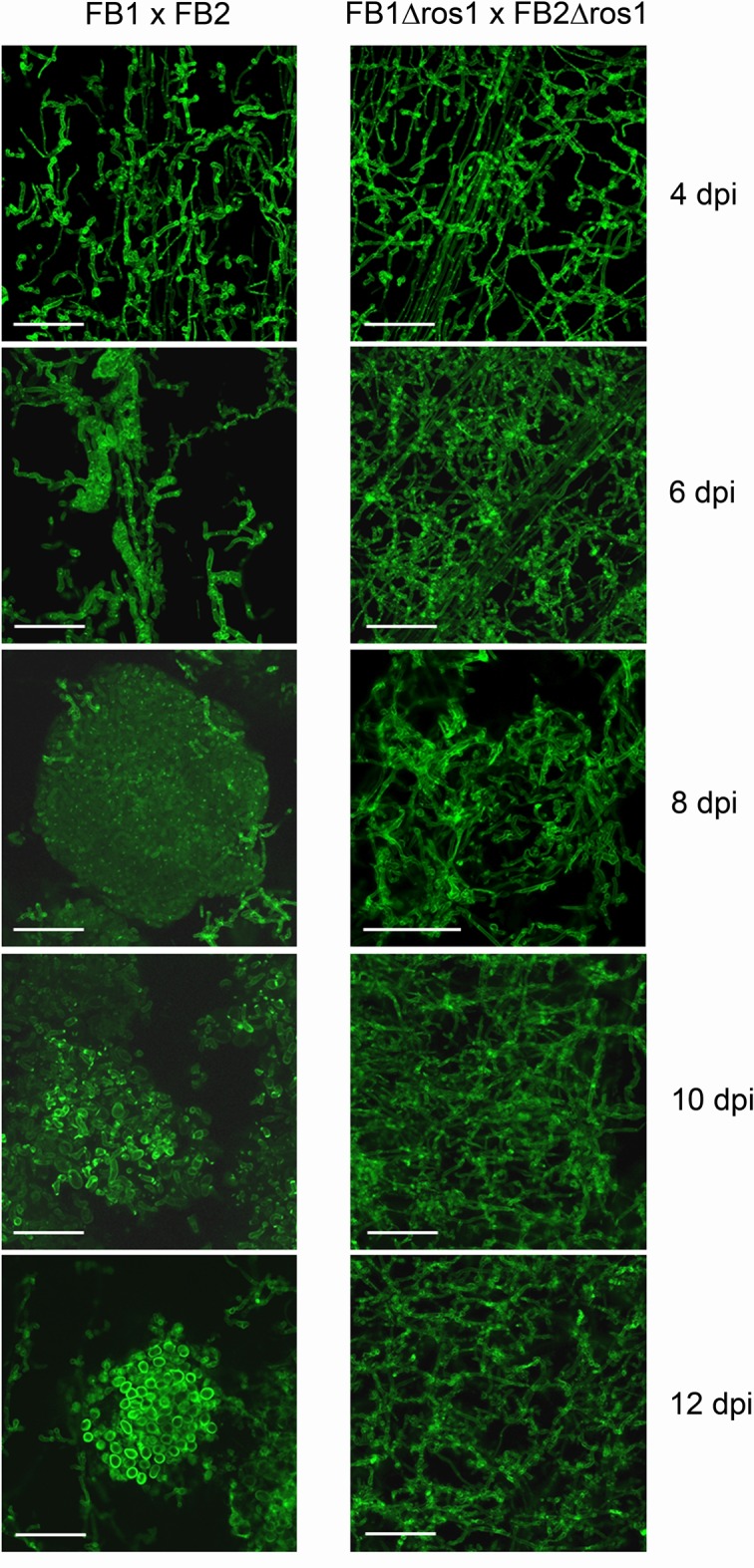
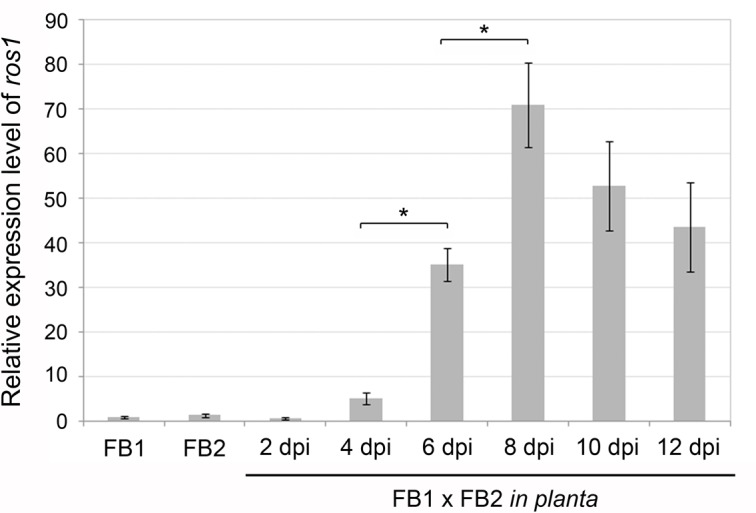
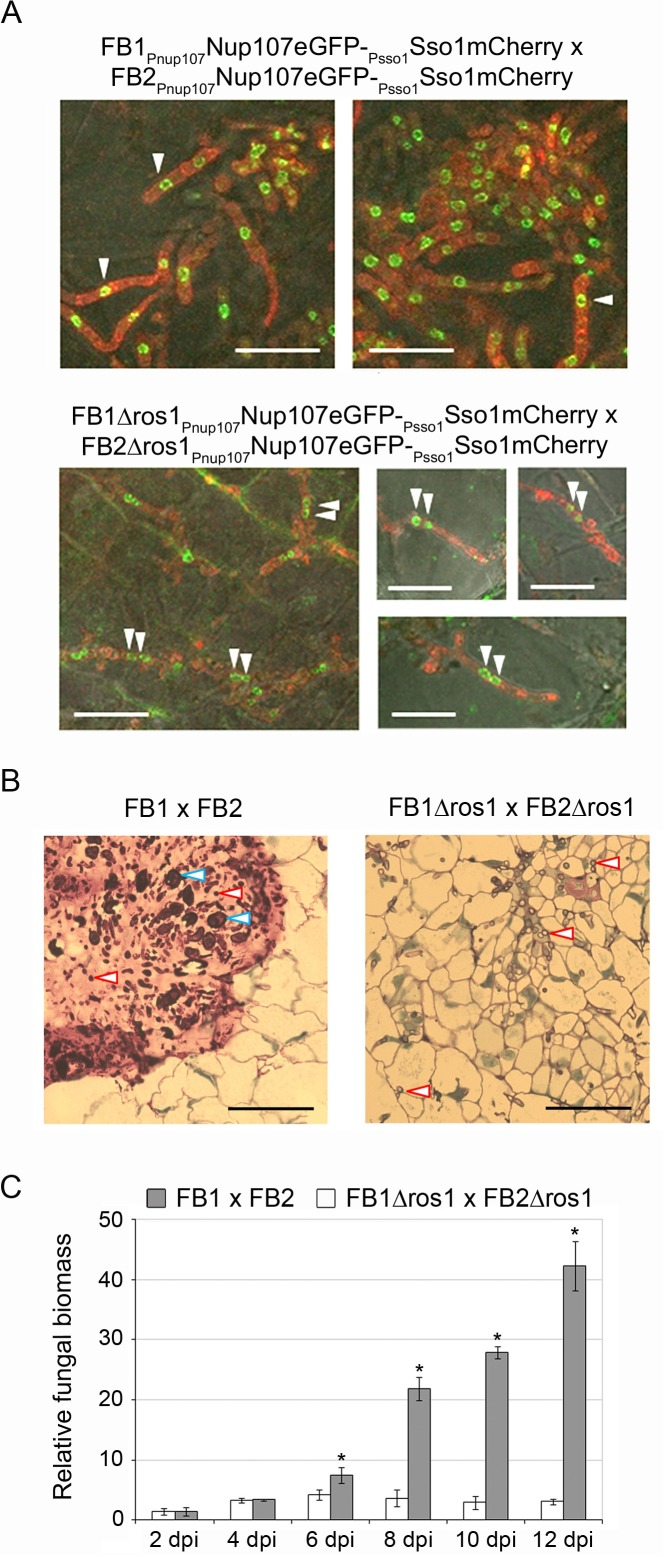
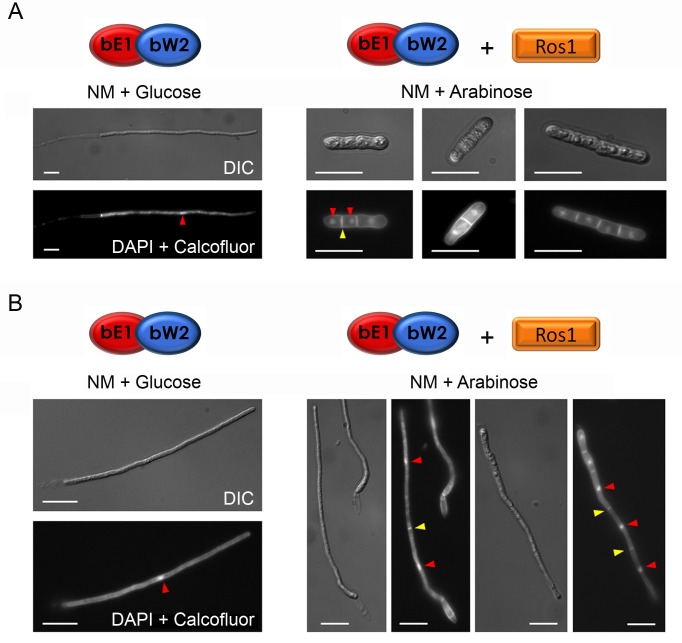
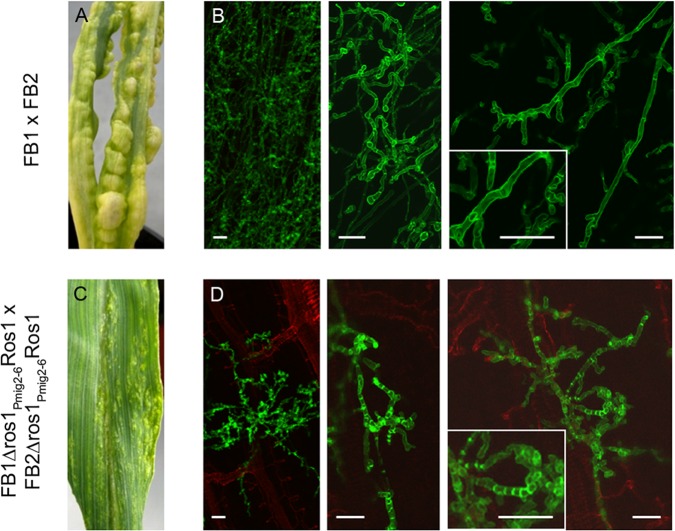
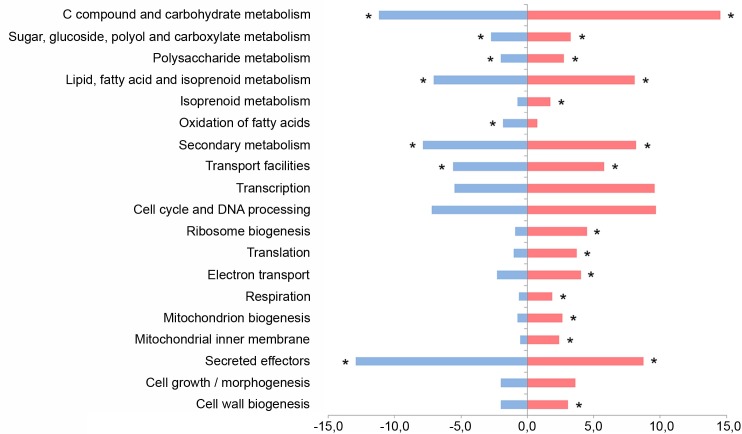
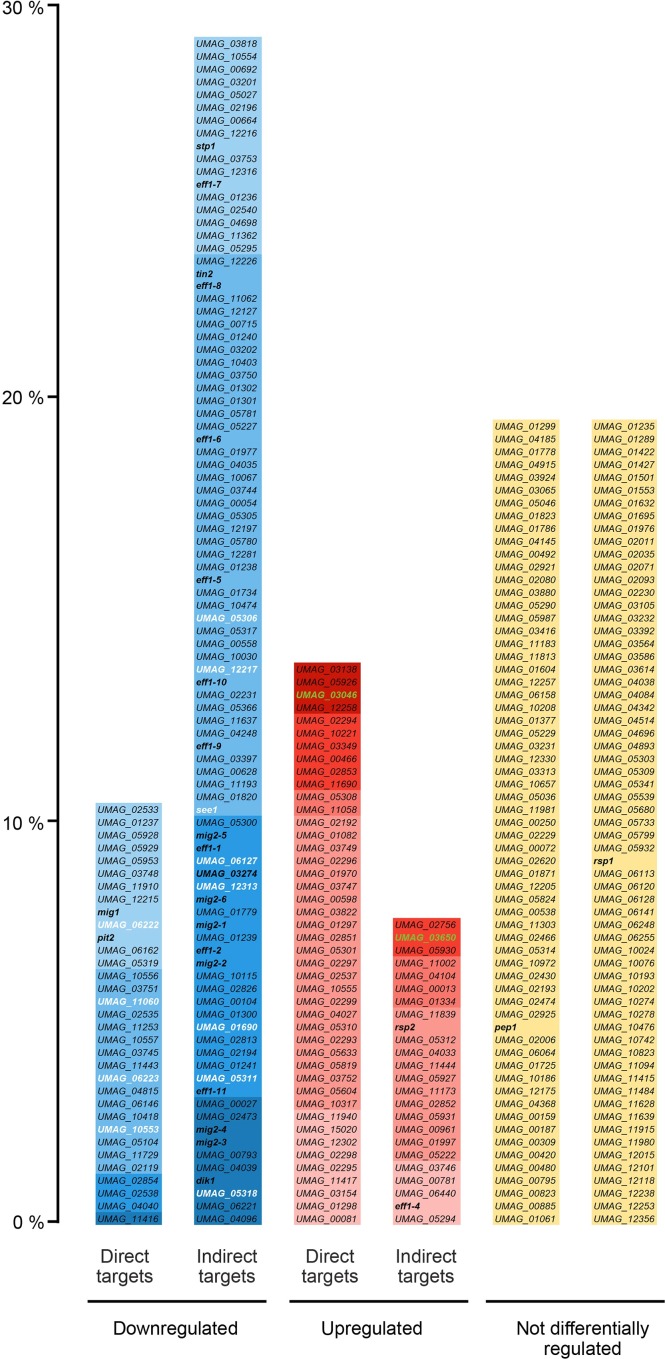
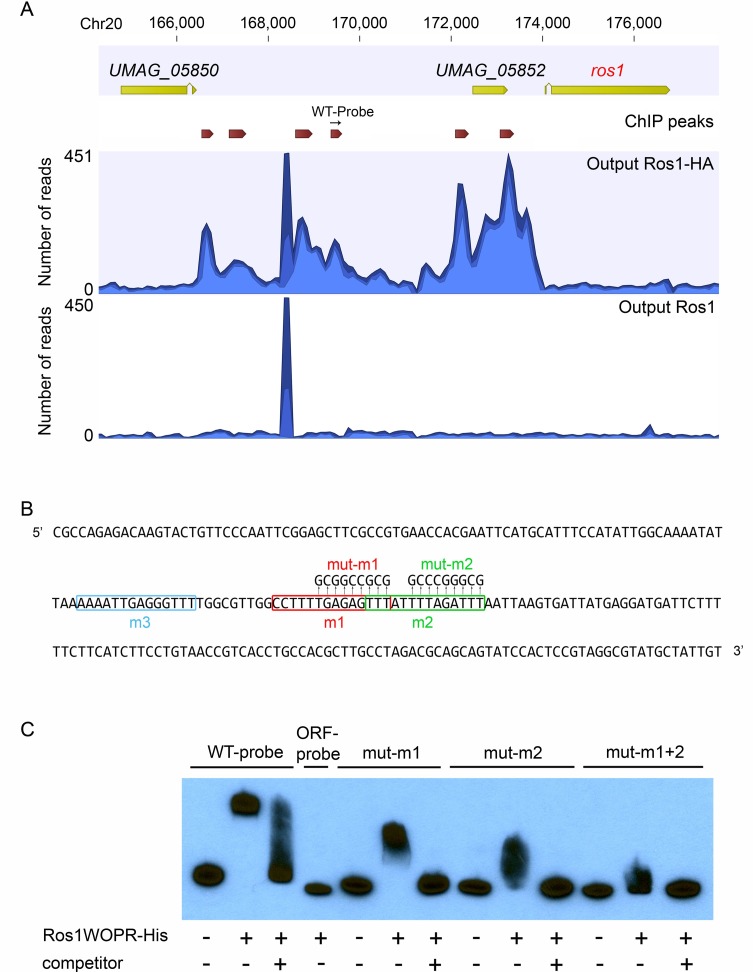
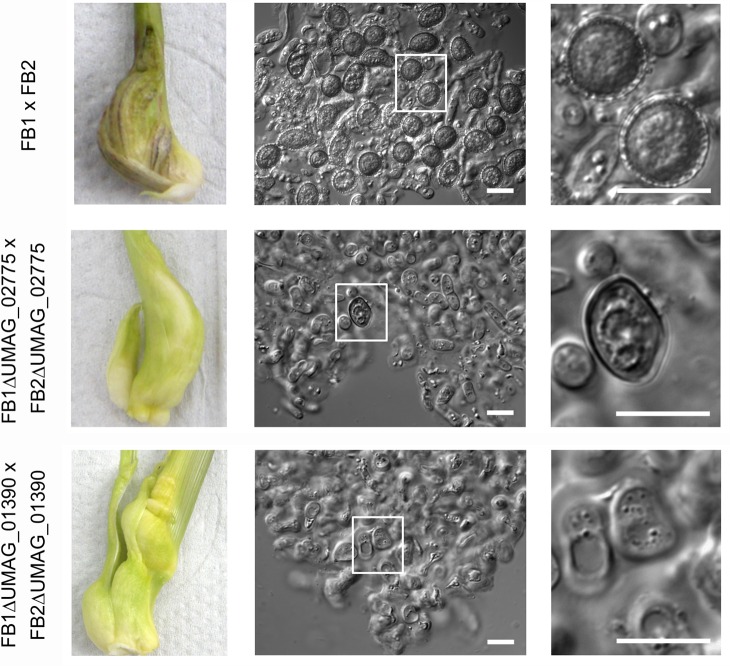
The biotrophic basidiomycete fungus Ustilago maydis causes smut disease in maize. Hallmarks of the disease are large tumors that develop on all aerial parts of the host in which dark pigmented teliospores are formed. We have identified a member of the WOPR family of transcription factors, Ros1, as major regulator of spore formation in U. maydis. ros1 expression is induced only late during infection and hence Ros1 is neither involved in plant colonization of dikaryotic fungal hyphae nor in plant tumor formation. However, during late stages of infection Ros1 is essential for fungal karyogamy, massive proliferation of diploid fungal cells and spore formation. Premature expression of ros1 revealed that Ros1 counteracts the b-dependent filamentation program and induces morphological alterations resembling the early steps of sporogenesis. Transcriptional profiling and ChIP-seq analyses uncovered that Ros1 remodels expression of about 30% of all U. maydis genes with 40% of these being direct targets. In total the expression of 80 transcription factor genes is controlled by Ros1. Four of the upregulated transcription factor genes were deleted and two of the mutants were affected in spore development. A large number of b-dependent genes were differentially regulated by Ros1, suggesting substantial changes in this regulatory cascade that controls filamentation and pathogenic development. Interestingly, 128 genes encoding secreted effectors involved in the establishment of biotrophic development were downregulated by Ros1 while a set of 70 "late effectors" was upregulated. These results indicate that Ros1 is a master regulator of late development in U. maydis and show that the biotrophic interaction during sporogenesis involves a drastic shift in expression of the fungal effectome including the downregulation of effectors that are essential during early stages of infection.
活体营养型担子菌真菌玉米黑粉菌可引发玉米的黑粉病。该病的特征是在寄主植物的所有地上部分形成大的瘤,瘤内形成深色的冬孢子。我们已鉴定出转录因子WOPR家族的一个成员Ros1,它是玉米黑粉菌中孢子形成的主要调节因子。ros1的表达仅在感染后期被诱导,因此Ros1既不参与双核真菌菌丝对植物的定殖,也不参与植物肿瘤的形成。然而,在感染后期,Ros1对于真菌核融合、二倍体真菌细胞的大量增殖以及孢子形成至关重要。ros1的过早表达表明,Ros1可对抗b依赖的丝状化程序,并诱导出类似于孢子发生早期步骤的形态改变。转录谱分析和ChIP-seq分析发现,Ros1重塑了玉米黑粉菌约30%的基因的表达,其中40%是直接靶点。总共有80个转录因子基因的表达受Ros1调控。对4个上调的转录因子基因进行了缺失突变,其中2个突变体的孢子发育受到影响。大量b依赖的基因受到Ros1的差异调控,这表明控制丝状化和致病发育的这一调控级联发生了重大变化。有趣的是,128个参与活体营养型发育建立的分泌效应蛋白编码基因被Ros1下调,而一组70个“晚期效应蛋白”则被上调。这些结果表明,Ros1是玉米黑粉菌后期发育的主要调节因子,并表明孢子发生过程中的活体营养型相互作用涉及真菌效应蛋白组表达的剧烈变化,包括在感染早期至关重要的效应蛋白的下调。