CECS, I-STEM, AFM, 91030 Evry Cedex, France.
Assistance Publique-Hôpitaux de Paris, Robert Debré Hospital, Department of Child and Adolescent Psychiatry, Paris, France.
EBioMedicine. 2016 Jul;9:293-305. doi: 10.1016/j.ebiom.2016.05.032. Epub 2016 May 27.
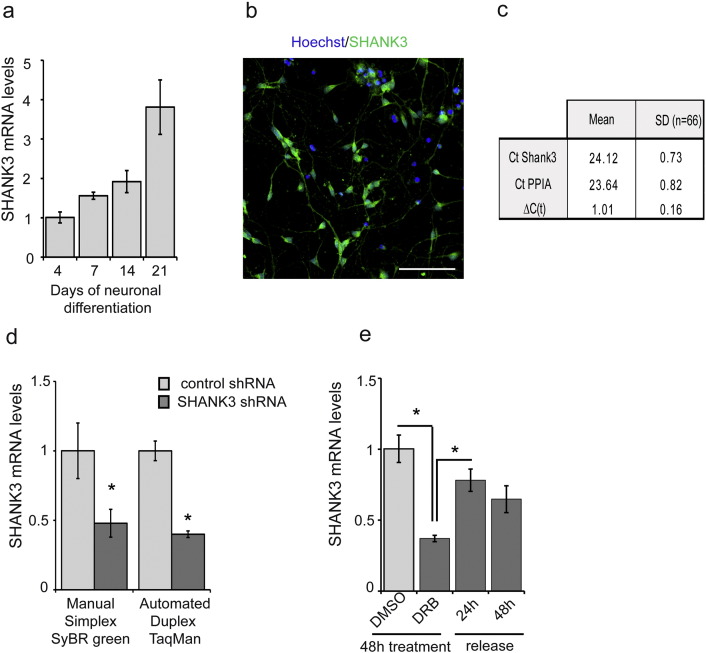
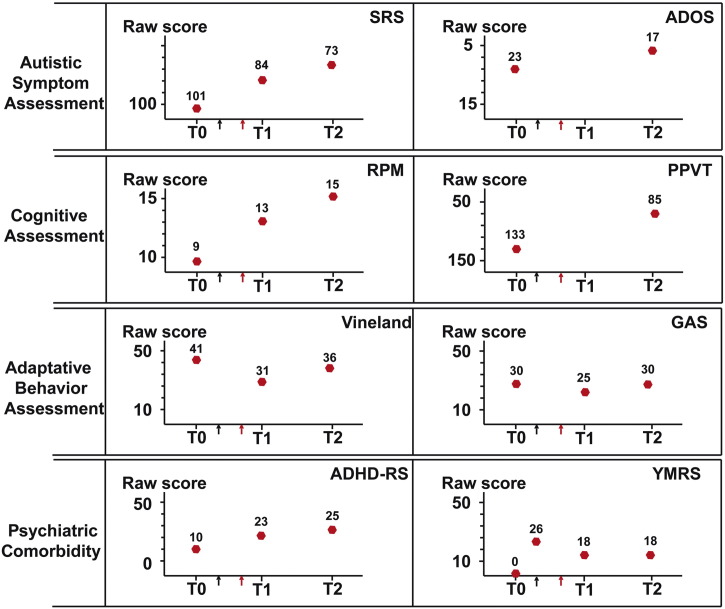
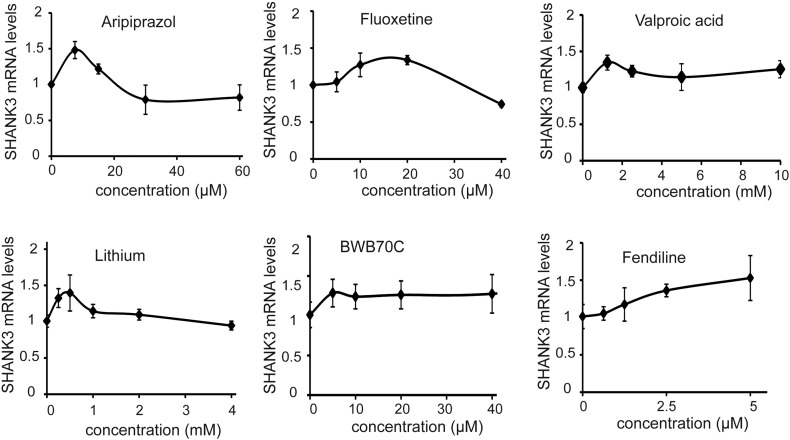
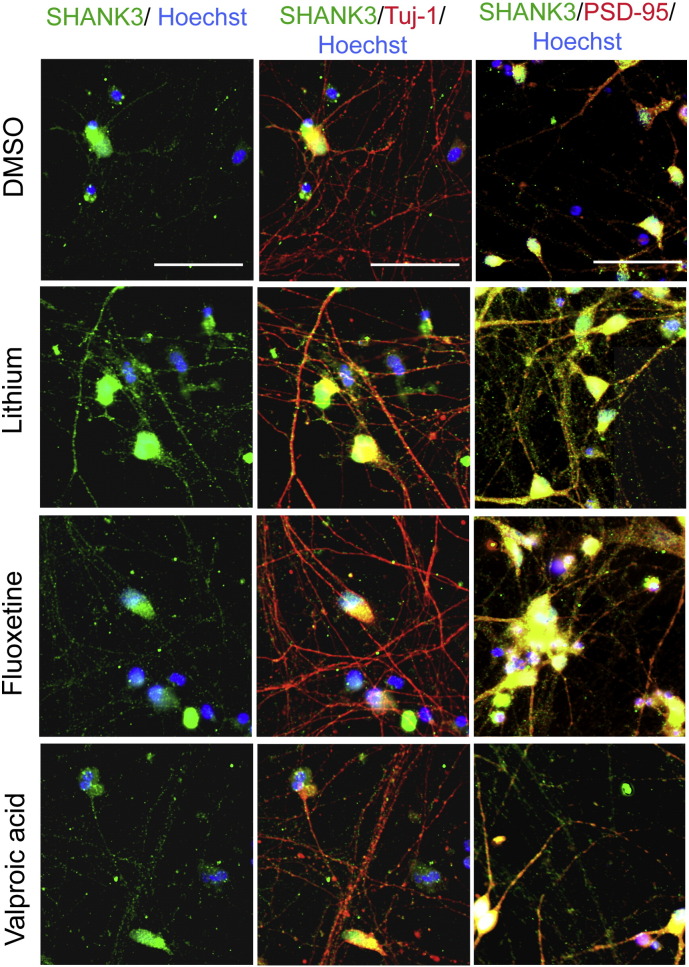
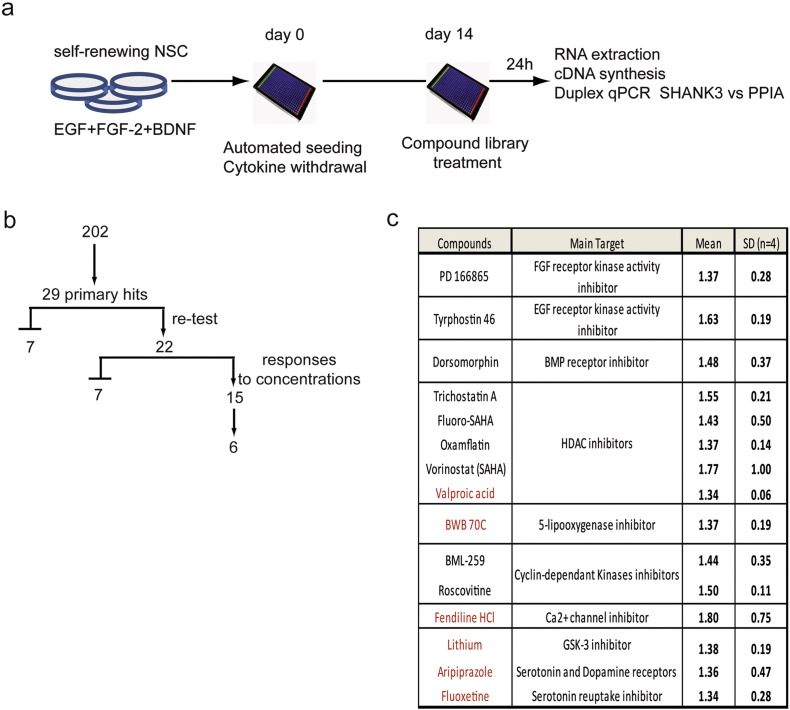
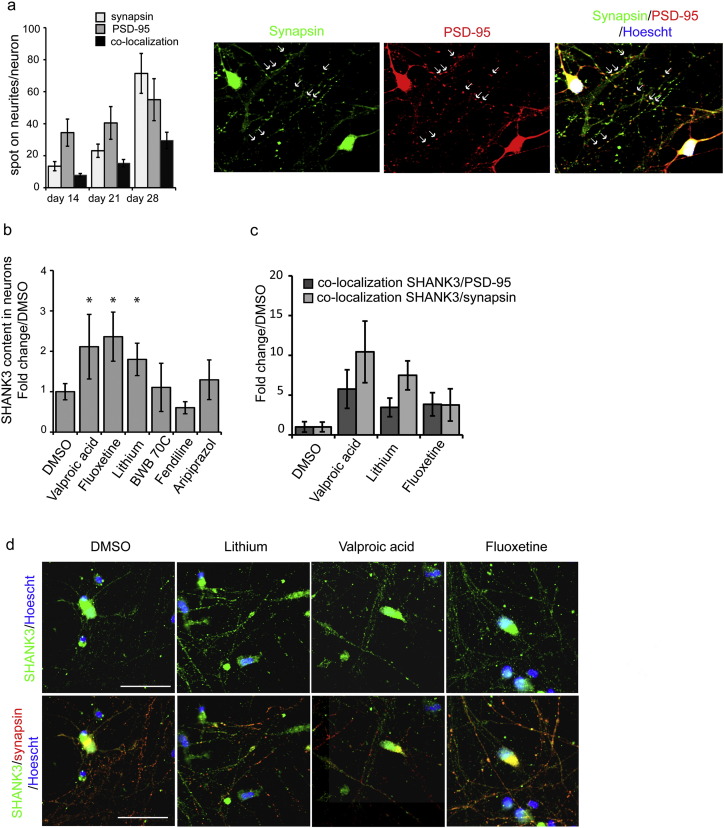
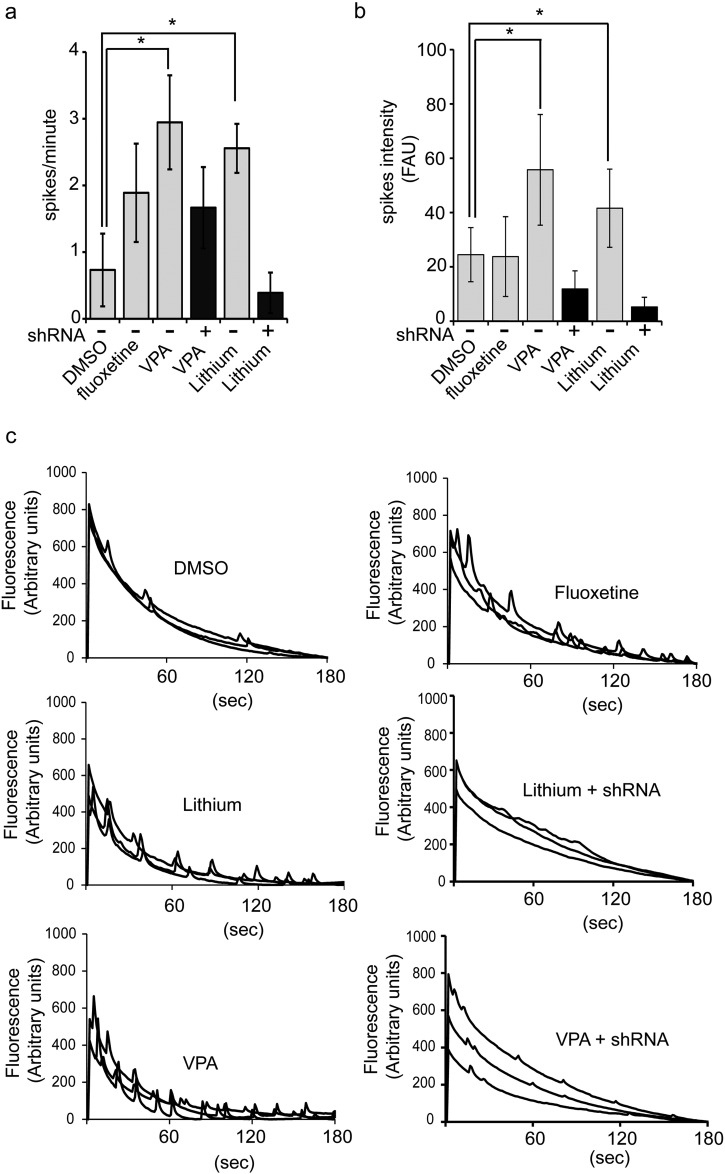
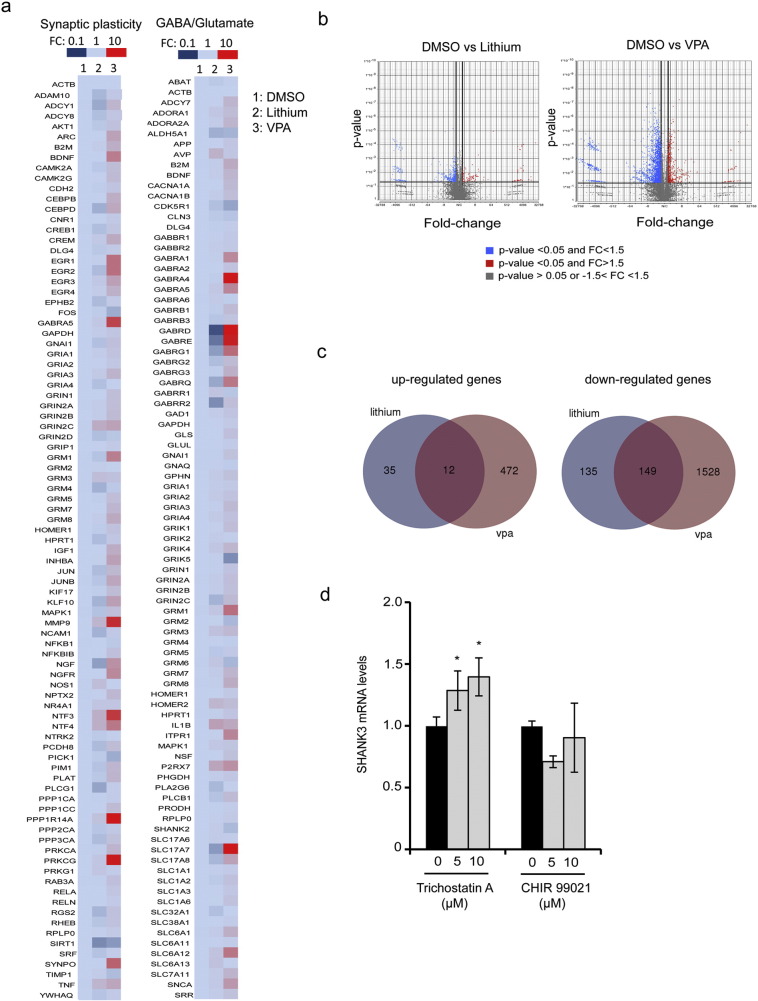
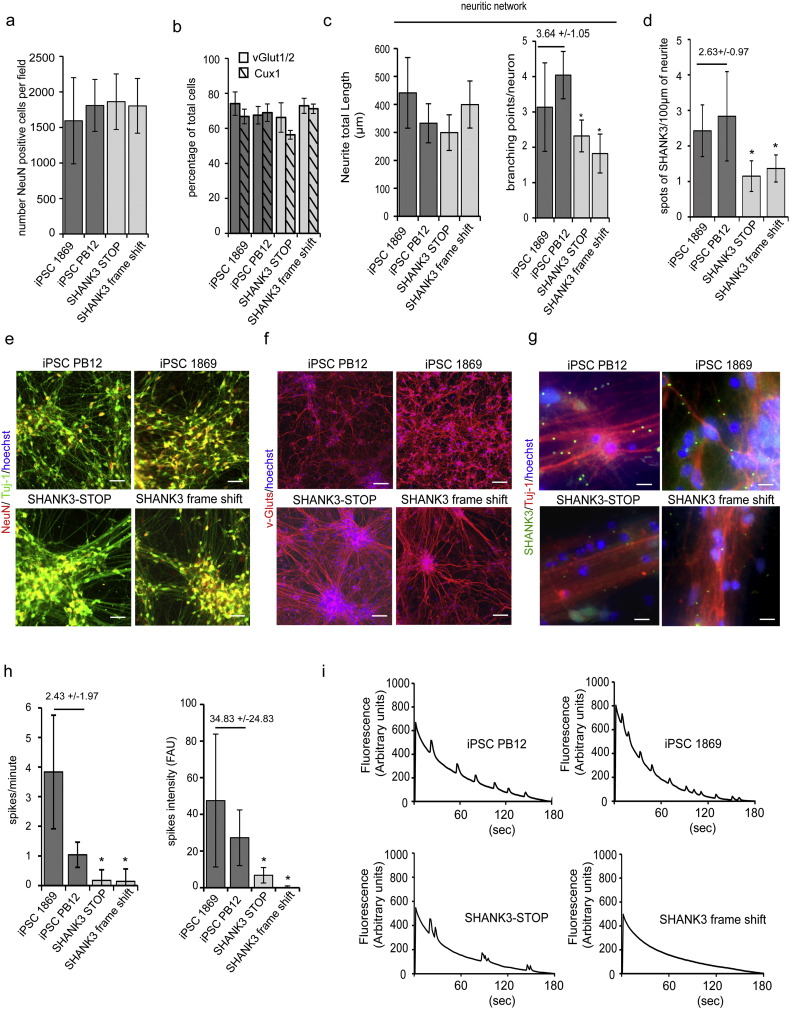
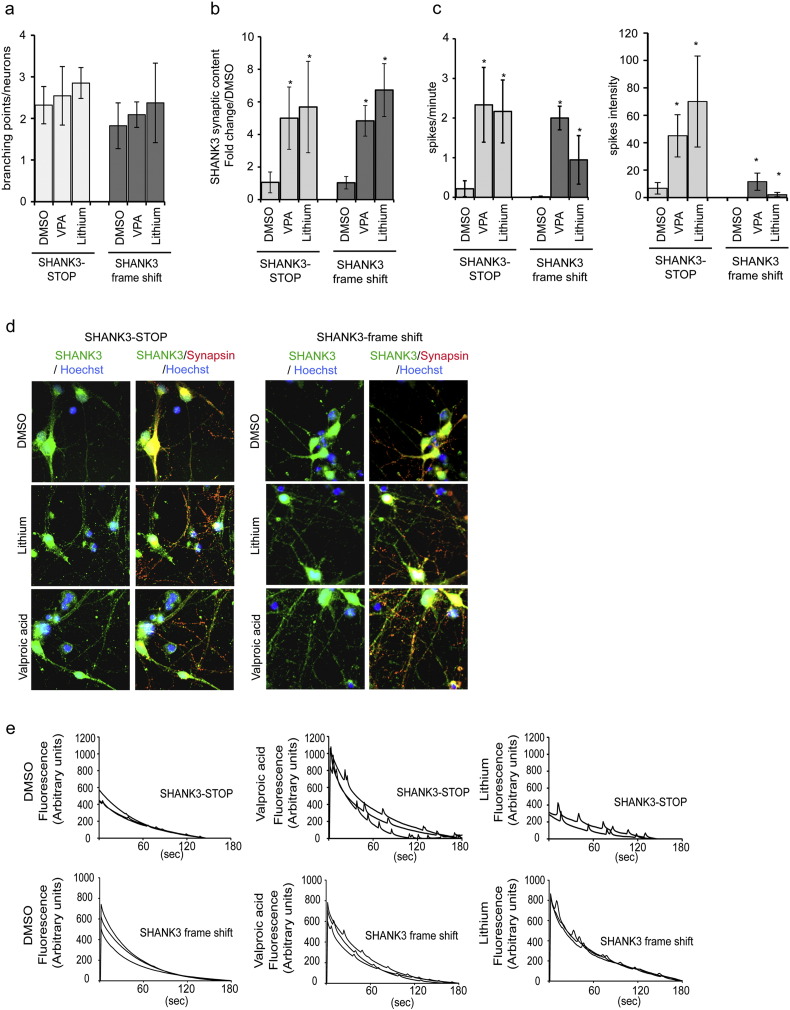
Autism spectrum disorders affect millions of individuals worldwide, but their heterogeneity complicates therapeutic intervention that is essentially symptomatic. A versatile yet relevant model to rationally screen among hundreds of therapeutic options would help improving clinical practice. Here we investigated whether neurons differentiated from pluripotent stem cells can provide such a tool using SHANK3 haploinsufficiency as a proof of principle. A library of compounds was screened for potential to increase SHANK3 mRNA content in neurons differentiated from control human embryonic stem cells. Using induced pluripotent stem cell technology, active compounds were then evaluated for efficacy in correcting dysfunctional networks of neurons differentiated from individuals with deleterious point mutations of SHANK3. Among 202 compounds tested, lithium and valproic acid showed the best efficacy at corrected SHANK3 haploinsufficiency associated phenotypes in cellulo. Lithium pharmacotherapy was subsequently provided to one patient and, after one year, an encouraging decrease in autism severity was observed. This demonstrated that pluripotent stem cell-derived neurons provide a novel cellular paradigm exploitable in the search for specific disease-modifying treatments.
自闭症谱系障碍影响着全球数以百万计的个体,但它们的异质性使得治疗干预变得复杂,而这种干预本质上只是对症治疗。一个多功能且相关的模型,可以在数百种治疗选择中进行合理筛选,这将有助于改善临床实践。在这里,我们研究了是否可以使用 SHANK3 杂合不足作为原理证明,从多能干细胞分化而来的神经元提供这样的工具。使用 SHANK3 杂合不足作为原理证明,筛选了一个化合物库,以筛选出可增加从对照人类胚胎干细胞分化而来的神经元中 SHANK3 mRNA 含量的潜在化合物。然后,使用诱导多能干细胞技术,评估活性化合物在纠正 SHANK3 点突变个体来源的神经元功能障碍网络方面的疗效。在测试的 202 种化合物中,锂和丙戊酸在体外纠正 SHANK3 杂合不足相关表型方面显示出最佳疗效。随后对一名患者进行了锂药物治疗,一年后,观察到自闭症严重程度的显著降低。这表明,多能干细胞衍生的神经元提供了一种新的细胞范例,可以用于寻找特定的疾病修饰治疗方法。