Fillenberg Simon B, Friess Mario D, Körner Samuel, Böckmann Rainer A, Muller Yves A
Division of Biotechnology, Department of Biology, Friedrich-Alexander University Erlangen-Nuremberg, Henkestr. 91, D-91052 Erlangen, Germany.
Computational Biology Group, Department of Biology, Friedrich-Alexander University Erlangen-Nuremberg, Staudtstr. 5, D-91058 Erlangen, Germany.
PLoS One. 2016 Jun 23;11(6):e0157691. doi: 10.1371/journal.pone.0157691. eCollection 2016.
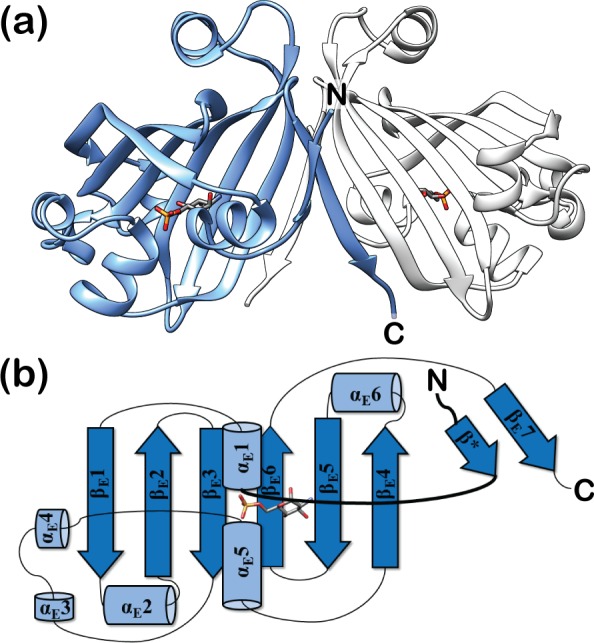
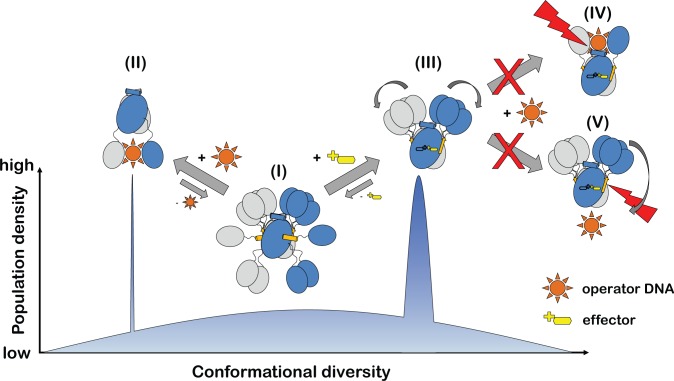
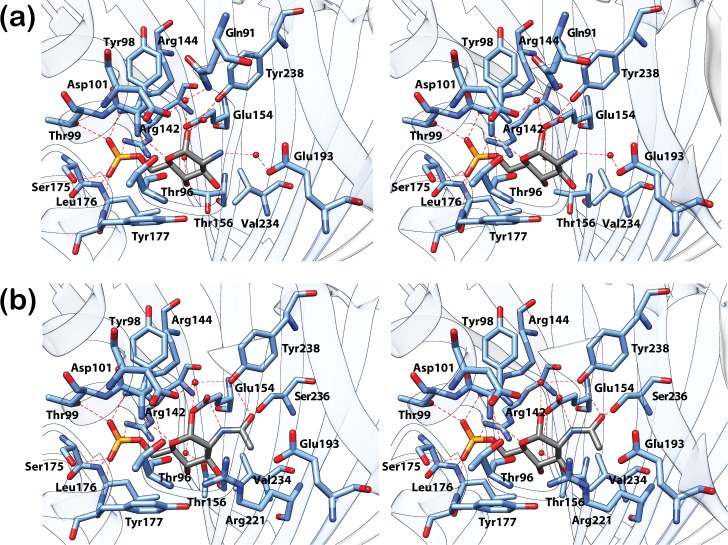
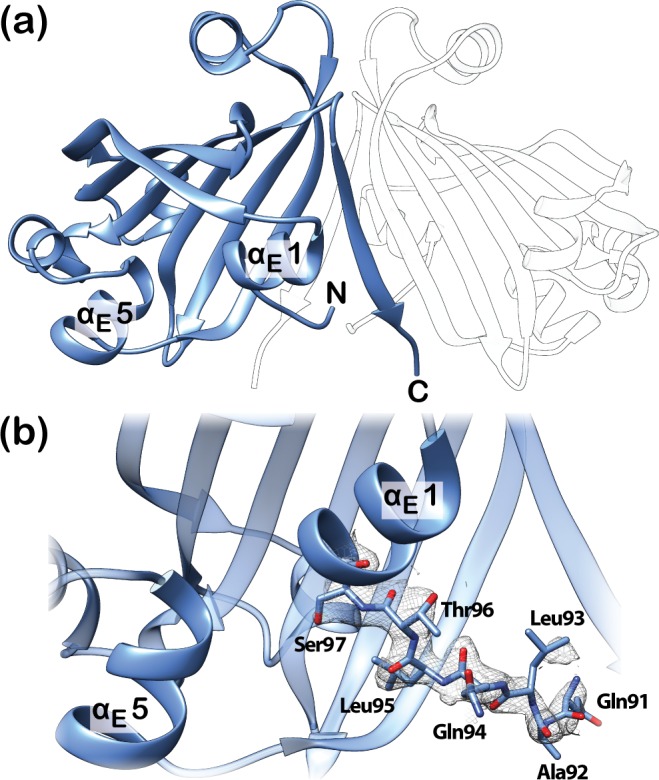
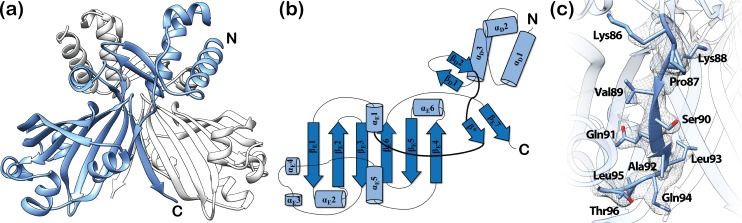
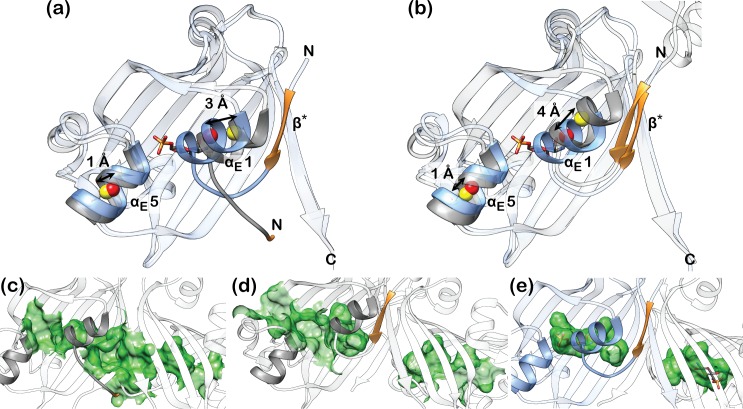
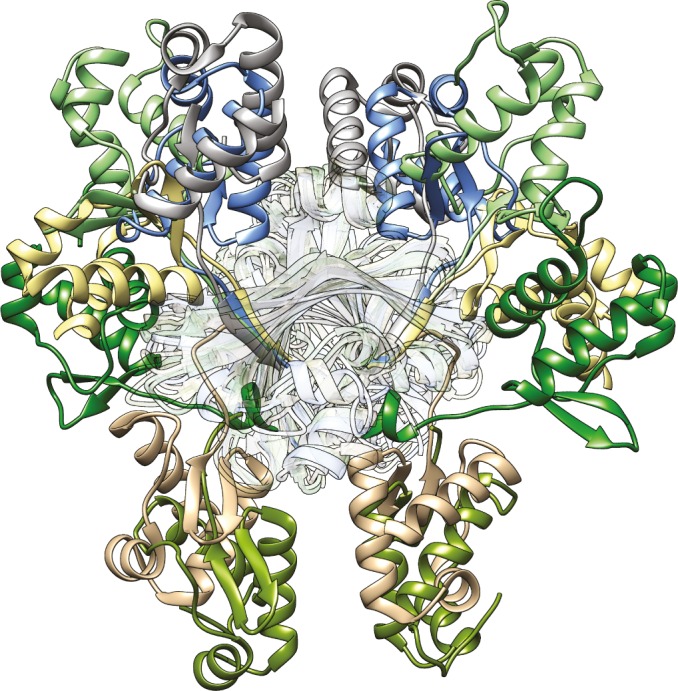
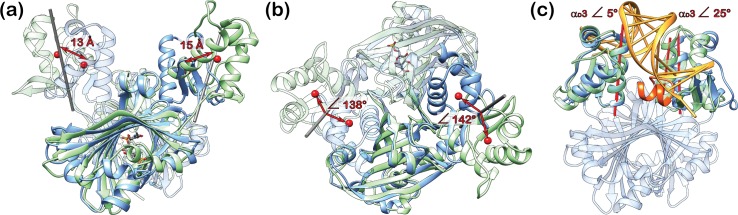
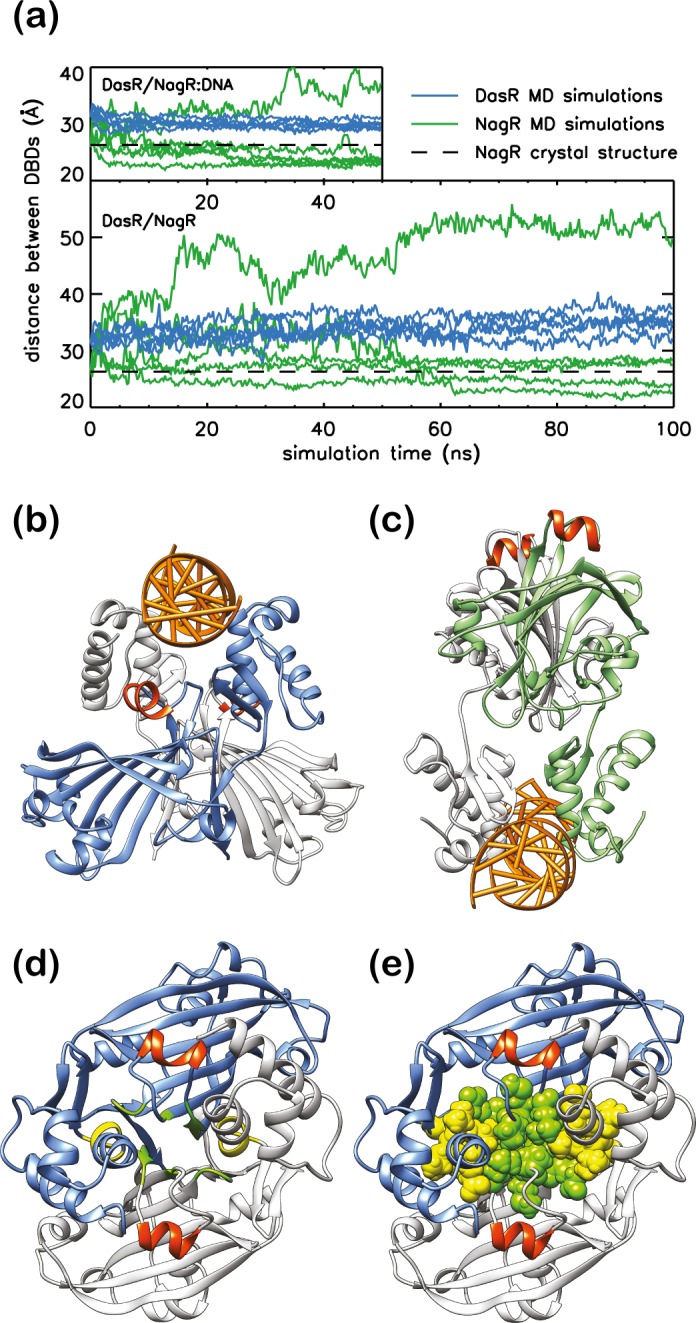
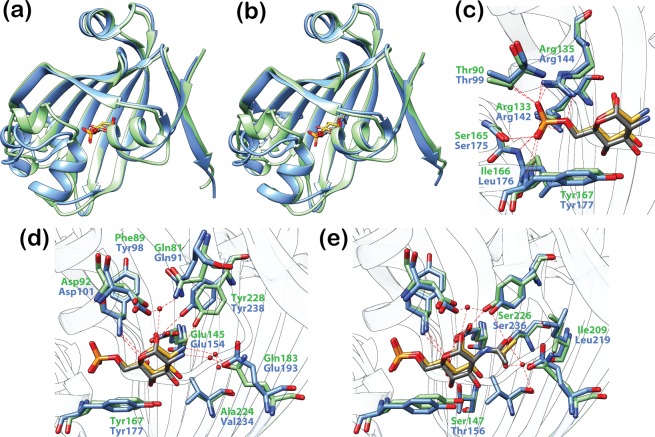
Small molecule effectors regulate gene transcription in bacteria by altering the DNA-binding affinities of specific repressor proteins. Although the GntR proteins represent a large family of bacterial repressors, only little is known about the allosteric mechanism that enables their function. DasR from Streptomyces coelicolor belongs to the GntR/HutC subfamily and specifically recognises operators termed DasR-responsive elements (dre-sites). Its DNA-binding properties are modulated by phosphorylated sugars. Here, we present several crystal structures of DasR, namely of dimeric full-length DasR in the absence of any effector and of only the effector-binding domain (EBD) of DasR without effector or in complex with glucosamine-6-phosphate (GlcN-6-P) and N-acetylglucosamine-6-phosphate (GlcNAc-6-P). Together with molecular dynamics (MD) simulations and a comparison with other GntR/HutC family members these data allowed for a structural characterisation of the different functional states of DasR. Allostery in DasR and possibly in many other GntR/HutC family members is best described by a conformational selection model. In ligand-free DasR, an increased flexibility in the EBDs enables the attached DNA-binding domains (DBD) to sample a variety of different orientations and among these also a DNA-binding competent conformation. Effector binding to the EBDs of DasR significantly reorganises the atomic structure of the latter. However, rather than locking the orientation of the DBDs, the effector-induced formation of β-strand β* in the DBD-EBD-linker segment merely appears to take the DBDs 'on a shorter leash' thereby impeding the 'downwards' positioning of the DBDs that is necessary for a concerted binding of two DBDs of DasR to operator DNA.
小分子效应物通过改变特定阻遏蛋白的DNA结合亲和力来调节细菌中的基因转录。尽管GntR蛋白代表了一大类细菌阻遏物,但对于使其发挥功能的变构机制却知之甚少。来自天蓝色链霉菌的DasR属于GntR/HutC亚家族,它特异性识别被称为DasR反应元件(dre位点)的操纵子。其DNA结合特性受磷酸化糖的调节。在这里,我们展示了DasR的几种晶体结构,即无任何效应物时的二聚体全长DasR以及无效应物或与6-磷酸葡萄糖胺(GlcN-6-P)和6-磷酸N-乙酰葡萄糖胺(GlcNAc-6-P)形成复合物时DasR的仅效应物结合结构域(EBD)。结合分子动力学(MD)模拟以及与其他GntR/HutC家族成员的比较,这些数据使得能够对DasR的不同功能状态进行结构表征。DasR以及可能许多其他GntR/HutC家族成员中的变构作用最好用构象选择模型来描述。在无配体的DasR中,EBDs中增加的灵活性使附着的DNA结合结构域(DBD)能够采样多种不同的方向,其中也包括一种具有DNA结合能力的构象。效应物与DasR的EBDs结合会显著重组后者的原子结构。然而,效应物诱导的DBD-EBD连接片段中β链β*的形成似乎并不是锁定DBDs的方向,而仅仅是使DBDs“受到更短的束缚”,从而阻碍了DasR的两个DBDs协同结合到操纵子DNA所需的DBDs“向下”定位。