Bhat Alangar Ishwara, Hohn Thomas, Selvarajan Ramasamy
ICAR-Indian Institute of Spices Research, Kozhikode 673012, Kerala, India.
UNIBAS, Botanical Institute, 4056 Basel, Switzerland.
Viruses. 2016 Jun 22;8(6):177. doi: 10.3390/v8060177.
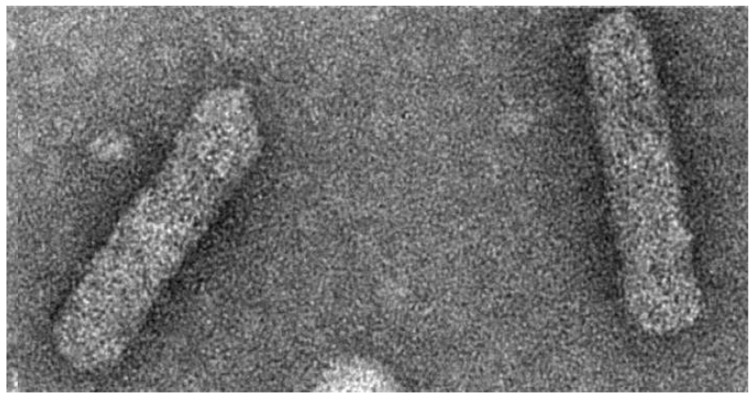
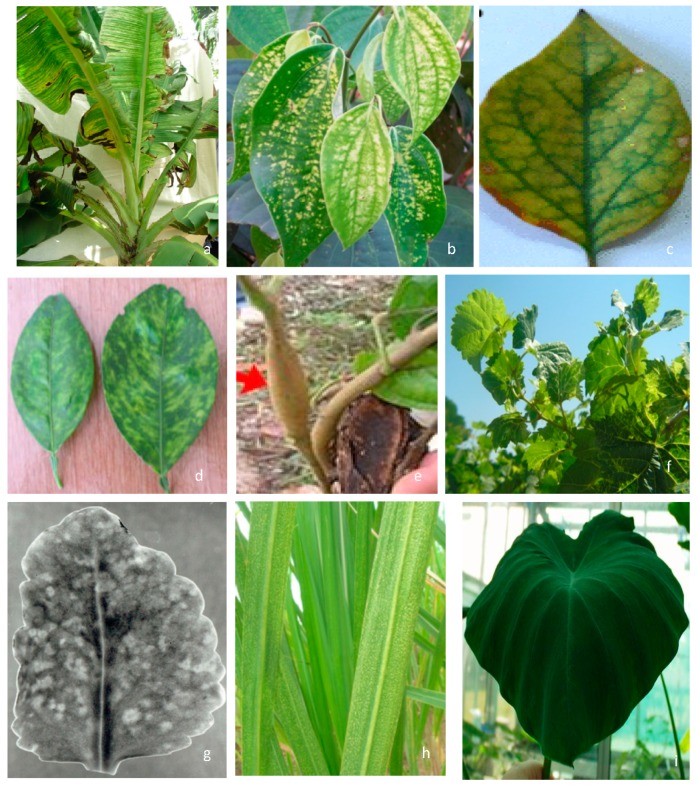
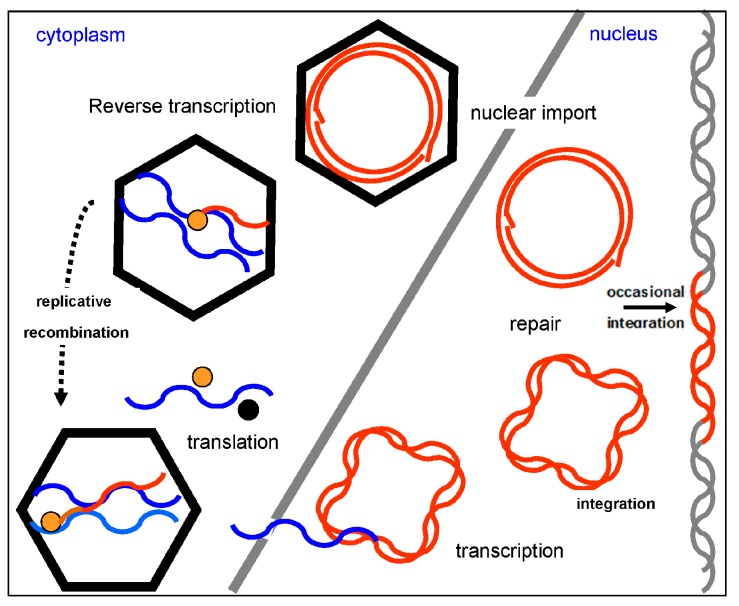
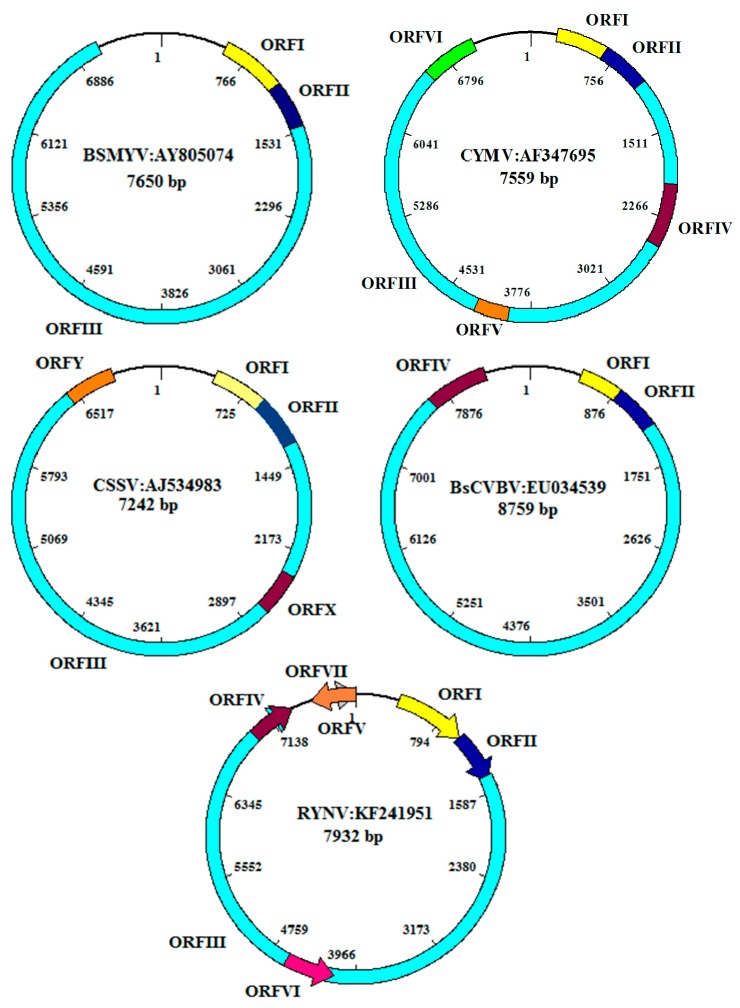
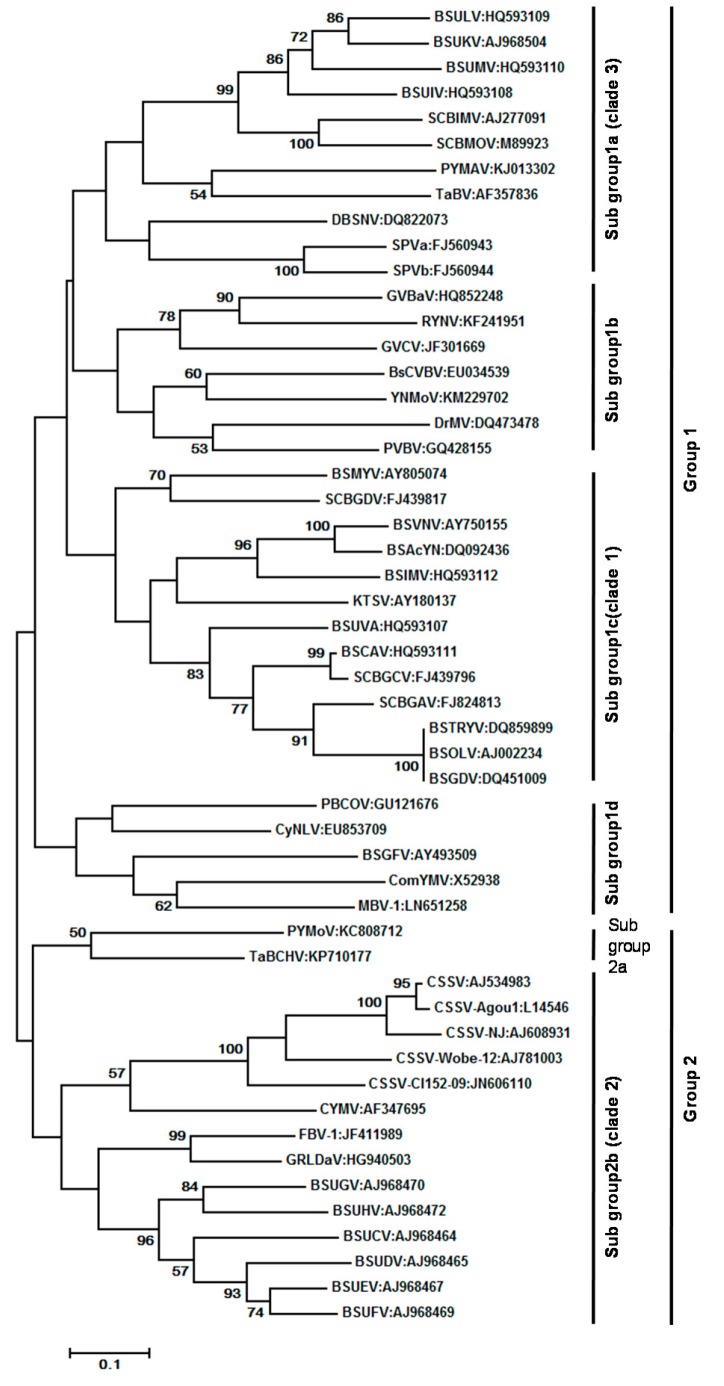
Badnaviruses (Family: Caulimoviridae; Genus: Badnavirus) are non-enveloped bacilliform DNA viruses with a monopartite genome containing about 7.2 to 9.2 kb of dsDNA with three to seven open reading frames. They are transmitted by mealybugs and a few species by aphids in a semi-persistent manner. They are one of the most important plant virus groups and have emerged as serious pathogens affecting the cultivation of several horticultural crops in the tropics, especially banana, black pepper, cocoa, citrus, sugarcane, taro, and yam. Some badnaviruses are also known as endogenous viruses integrated into their host genomes and a few such endogenous viruses can be awakened, e.g., through abiotic stress, giving rise to infective episomal forms. The presence of endogenous badnaviruses poses a new challenge for the fool-proof diagnosis, taxonomy, and management of the diseases. The present review aims to highlight emerging disease problems, virus characteristics, transmission, and diagnosis of badnaviruses.
杆状DNA病毒(科:花椰菜花叶病毒科;属:杆状DNA病毒属)是无包膜的杆状DNA病毒,其单分体基因组含有约7.2至9.2 kb的双链DNA,带有三到七个开放阅读框。它们通过粉蚧传播,少数种类通过蚜虫以半持久性方式传播。它们是最重要的植物病毒类群之一,已成为影响热带地区几种园艺作物种植的严重病原体,尤其是香蕉、黑胡椒、可可、柑橘、甘蔗、芋头和山药。一些杆状DNA病毒也被称为整合到宿主基因组中的内源性病毒,少数此类内源性病毒可以被激活,例如通过非生物胁迫,产生感染性附加型形式。内源性杆状DNA病毒的存在对疾病的可靠诊断、分类和管理提出了新的挑战。本综述旨在突出杆状DNA病毒新出现的疾病问题、病毒特征、传播和诊断。