College of Chemistry and Molecular Sciences, Institute for Advanced Studies (IAS), Wuhan University, Wuhan 430072, China.
National Research Center for Carbohydrate Synthesis, Jiangxi Normal University, Nanchang 330022, China.
Nat Commun. 2016 Jun 24;7:11676. doi: 10.1038/ncomms11676.
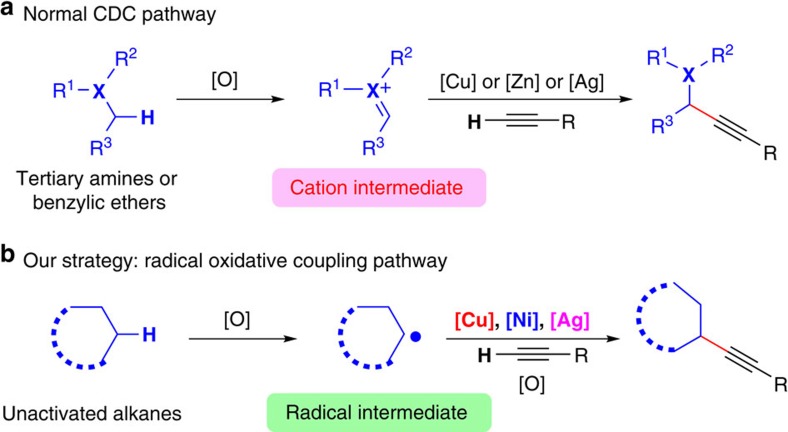
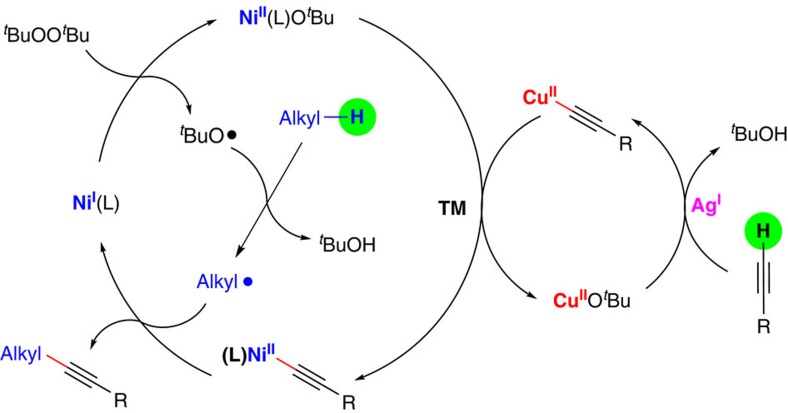
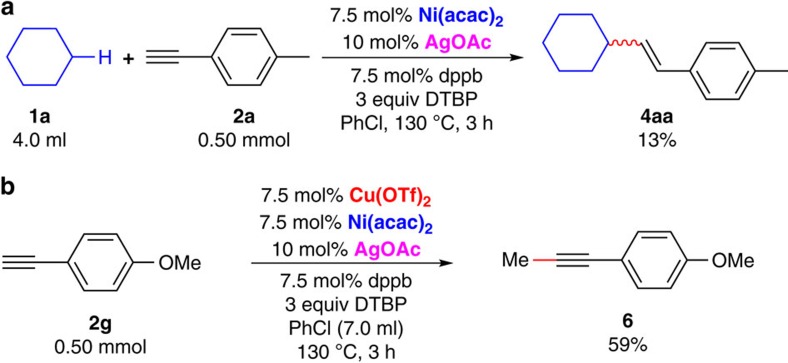
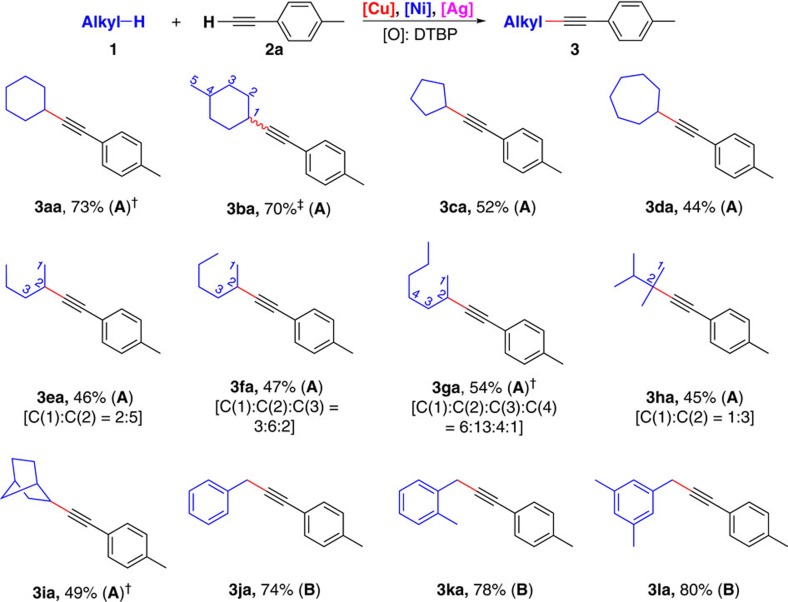
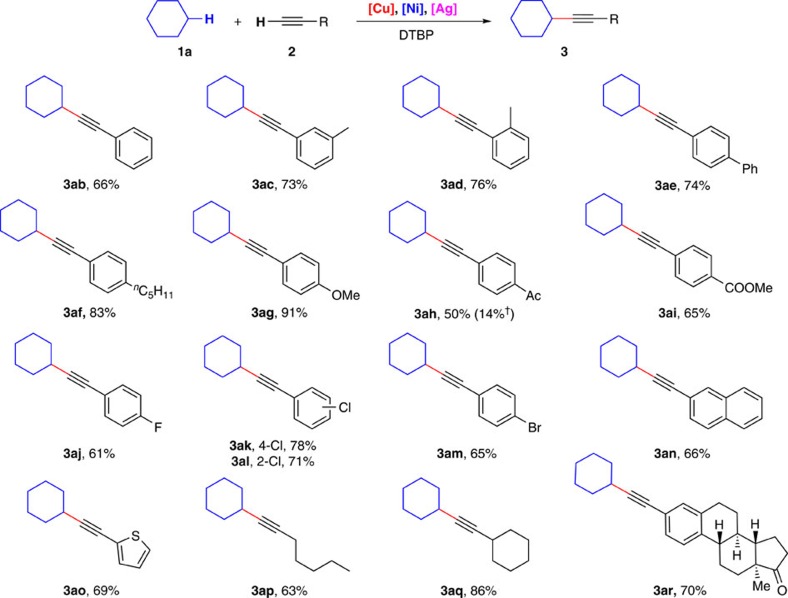
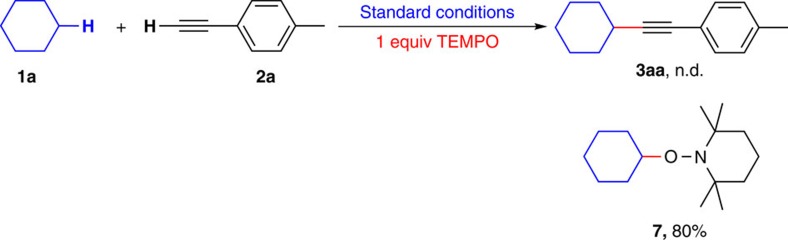
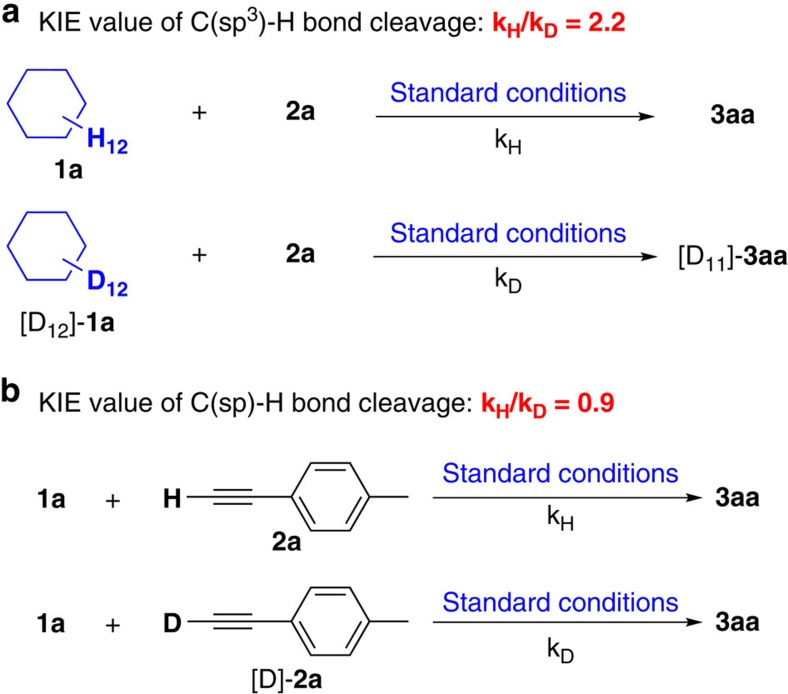
Radical involved transformations are now considered as extremely important processes in modern organic synthetic chemistry. According to the demand by atom-economic and sustainable chemistry, direct C(sp(3))-H functionalization through radical oxidative coupling represents an appealing strategy for C-C bond formations. However, the selectivity control of reactive radical intermediates is still a great challenge in these transformations. Here we show a selective radical oxidative C(sp(3))-H/C(sp)-H cross-coupling of unactivated alkanes with terminal alkynes by using a combined Cu/Ni/Ag catalytic system. It provides a new way to access substituted alkynes from readily available materials. Preliminary mechanistic studies suggest that this reaction proceeds through a radical process and the C(sp(3))-H bond cleavage is the rate-limiting step. This study may have significant implications for controlling selective C-C bond formation of reactive radical intermediates by using multimetallic catalytic systems.
自由基参与的转化现在被认为是现代有机合成化学中极其重要的过程。根据原子经济性和可持续化学的要求,通过自由基氧化偶联实现 C(sp(3))-H 键的直接功能化代表了一种用于 C-C 键形成的有吸引力的策略。然而,在这些转化中,反应性自由基中间体的选择性控制仍然是一个巨大的挑战。在这里,我们展示了一种通过 Cu/Ni/Ag 催化体系,用未活化的烷烃与末端炔烃进行选择性自由基氧化 C(sp(3))-H/C(sp)-H 交叉偶联的方法。它为从易得的材料中获得取代的炔烃提供了一种新途径。初步的机理研究表明,该反应通过自由基过程进行,C(sp(3))-H 键的断裂是速率限制步骤。这项研究可能对通过多金属催化体系控制反应性自由基中间体的选择性 C-C 键形成具有重要意义。