Shao Qing, Lin Zhe, Wu Xiaohui, Tang Junwei, Lu Shuai, Feng Dongju, Cheng Ci, Qing Lanqun, Yao Kun, Chen Yun
Department of Immunology, Nanjing Medical University, Nanjing, Jiangsu Province, People's Republic of China.
Department of Ophthalmology, The First Affiliated Hospital of Nanjing Medical University, Nanjing, Jiangsu Province, People's Republic of China.
Oncotarget. 2016 Jul 26;7(30):48070-48080. doi: 10.18632/oncotarget.10127.
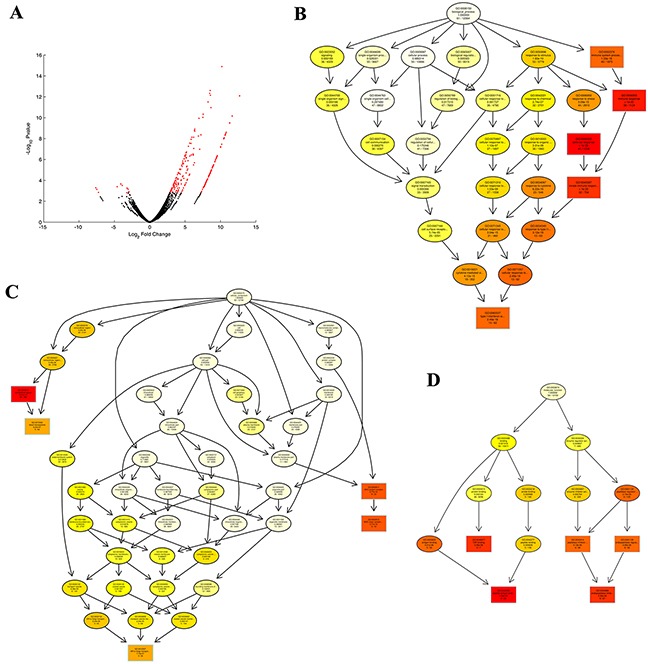
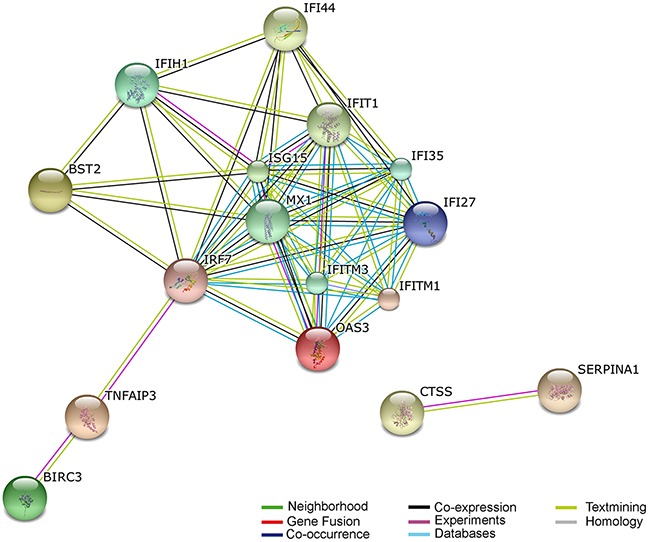
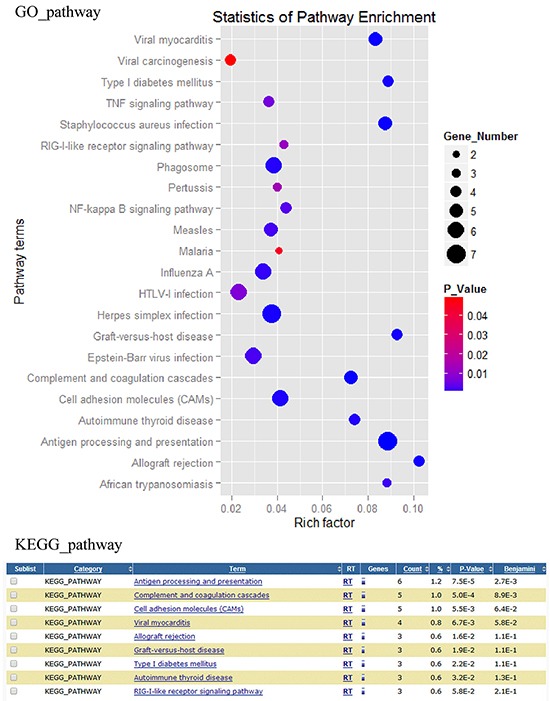
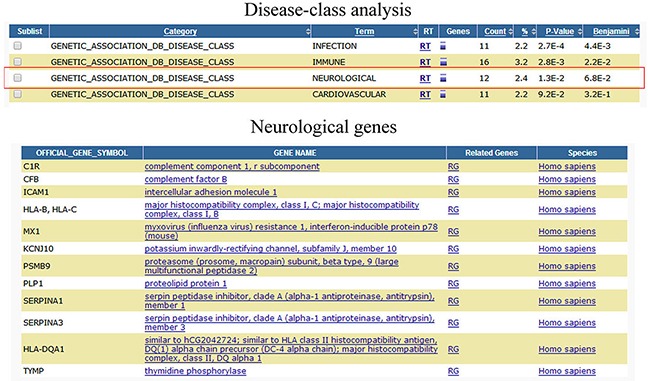
Human Herpesvirus 6 (HHV-6) has been involved in the development of several central nervous system (CNS) diseases, such as Alzheimer's disease, multiple sclerosis and glioma. In order to identify the pathogenic mechanism of HHV-6A infection, we carried out mRNA-seq study of human astrocyte HA1800 cell with HHV-6A GS infection. Using mRNA-seq analysis of HA1800-control cells with HA1800-HHV-6A GS cells, we identified 249 differentially expressed genes. After investigating these candidate genes, we found seven genes associated with two or more CNS diseases: CTSS, PTX3, CHI3L1, Mx1, CXCL16, BIRC3, and BST2. This is the first transcriptome sequencing study which showed the significant association of these genes between HHV-6A infection and neurologic diseases. We believe that our findings can provide a new perspective to understand the pathogenic mechanism of HHV-6A infection and neurologic diseases.
人类疱疹病毒6型(HHV-6)与多种中枢神经系统(CNS)疾病的发生发展有关,如阿尔茨海默病、多发性硬化症和胶质瘤。为了确定HHV-6A感染的致病机制,我们对感染了HHV-6A GS的人星形胶质细胞HA1800进行了mRNA测序研究。通过对HA1800对照细胞和HA1800-HHV-6A GS细胞进行mRNA测序分析,我们鉴定出249个差异表达基因。在对这些候选基因进行研究后,我们发现了7个与两种或更多种CNS疾病相关的基因:CTSS、PTX3、CHI3L1、Mx1、CXCL16、BIRC3和BST2。这是第一项转录组测序研究,表明这些基因在HHV-6A感染与神经系统疾病之间存在显著关联。我们相信,我们的研究结果可为理解HHV-6A感染和神经系统疾病的致病机制提供新的视角。