Department of Physiology and Biophysics, University of Illinois at Chicago, IL, Chicago, USA.
Sci Rep. 2016 Jun 27;6:28460. doi: 10.1038/srep28460.
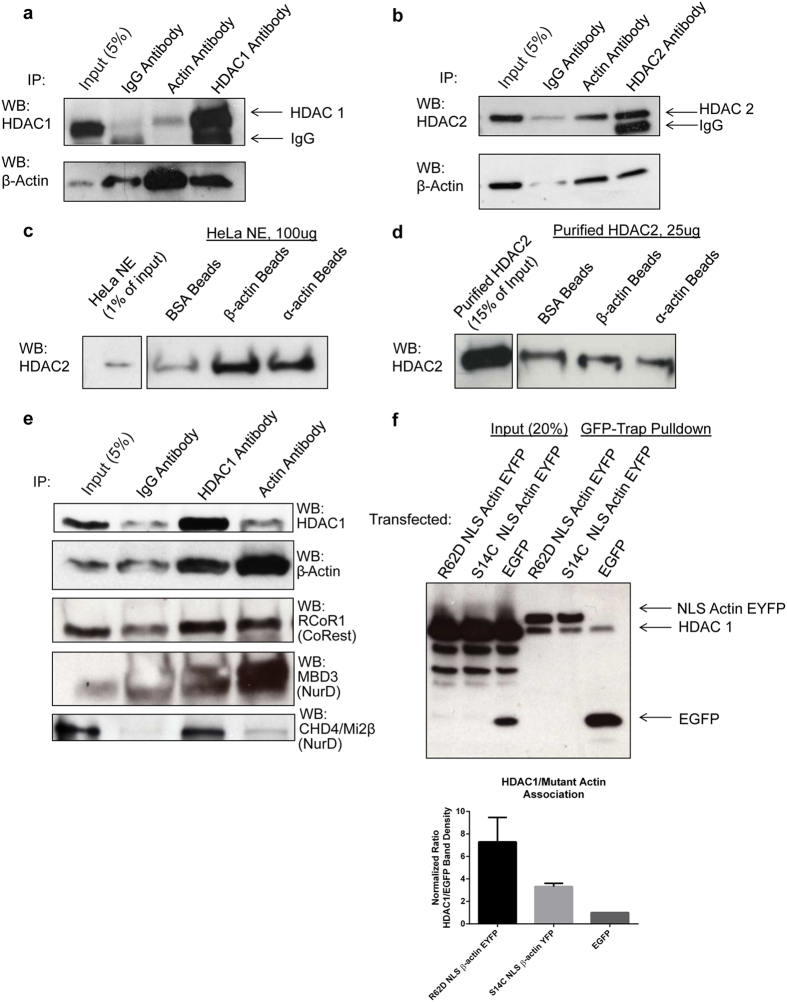
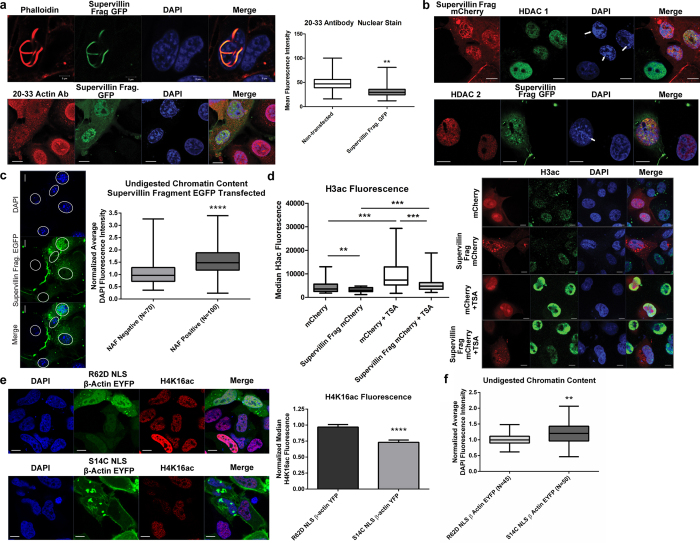
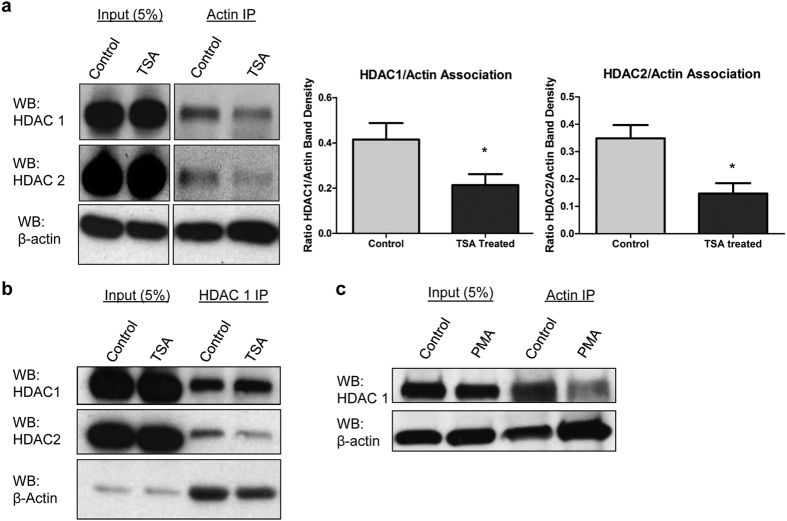
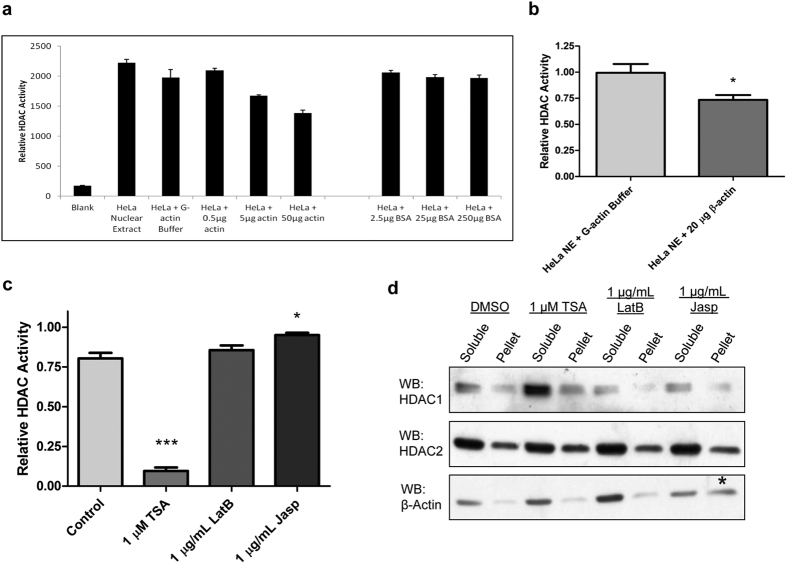
Class I histone deacetylases (HDACs) are known to remove acetyl groups from histone tails. This liberates positive charges on the histone tail and allows for tighter winding of DNA, preventing transcription factor binding and gene activation. Although the functions of HDAC proteins are becoming apparent both biochemically and clinically, how this class of proteins is regulated remains poorly understood. We identified a novel interaction between nuclear actin and HDAC 1 and HDAC 2. Nuclear actin has been previously shown to interact with a growing list of nuclear proteins including chromatin remodeling complexes, transcription factors and RNA polymerases. We find that monomeric actin is able to bind the class I HDAC complex. Furthermore, increasing the concentration of actin in HeLa nuclear extracts was able to suppress overall HDAC function. Conversely, polymerizing nuclear actin increased HDAC activity and decreased histone acetylation. Moreover, the interaction between class I HDACs and nuclear actin was found to be activity dependent. Together, our data suggest nuclear actin is able to regulate HDAC 1 and 2 activity.
I 类组蛋白去乙酰化酶(HDACs)已知能从组蛋白尾部去除乙酰基。这会在组蛋白尾部释放正电荷,使 DNA 更紧密地缠绕,从而阻止转录因子结合和基因激活。尽管 HDAC 蛋白的功能在生物化学和临床方面都越来越明显,但这类蛋白的调控机制仍知之甚少。我们发现了核肌动蛋白与 HDAC1 和 HDAC2 之间的一种新的相互作用。核肌动蛋白以前曾被证明与越来越多的核蛋白相互作用,包括染色质重塑复合物、转录因子和 RNA 聚合酶。我们发现单体肌动蛋白能够与 I 类 HDAC 复合物结合。此外,增加 HeLa 核提取物中的肌动蛋白浓度能够抑制整体 HDAC 功能。相反,聚合核肌动蛋白增加了 HDAC 活性并降低了组蛋白乙酰化。此外,还发现 I 类 HDAC 与核肌动蛋白之间的相互作用依赖于活性。总之,我们的数据表明核肌动蛋白能够调节 HDAC1 和 2 的活性。