Binder Christoph J, Papac-Milicevic Nikolina, Witztum Joseph L
Department of Laboratory Medicine, Medical University of Vienna, Lazarettgasse 14, AKH BT 25.2, A-1090 Vienna, Austria.
Research Center for Molecular Medicine of the Austrian Academy of Sciences, Lazarettgasse 14, AKH BT 25.3, A-1090 Vienna, Austria.
Nat Rev Immunol. 2016 Aug;16(8):485-97. doi: 10.1038/nri.2016.63. Epub 2016 Jun 27.
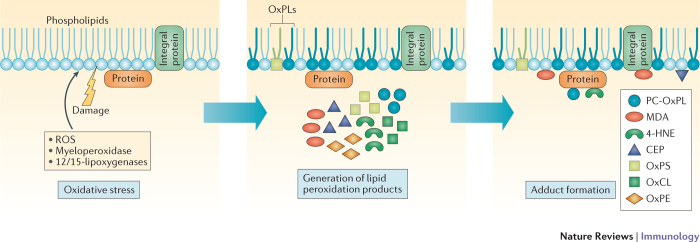
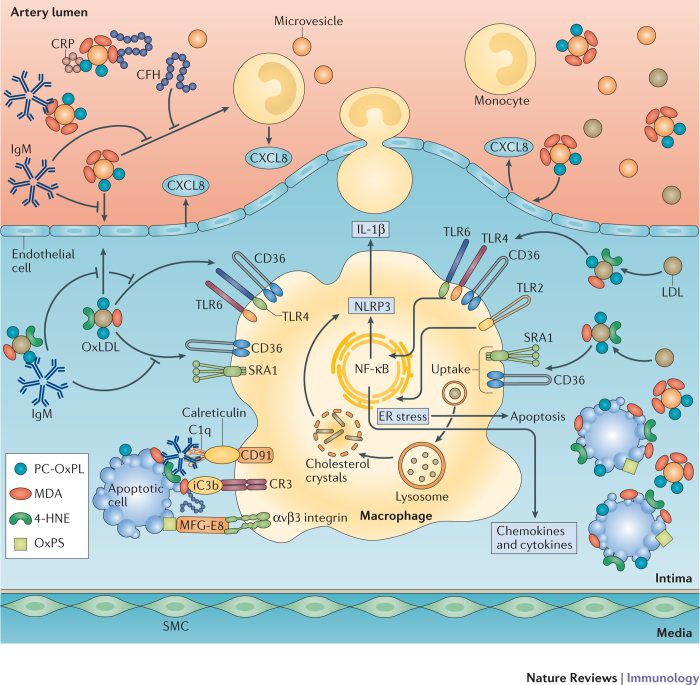
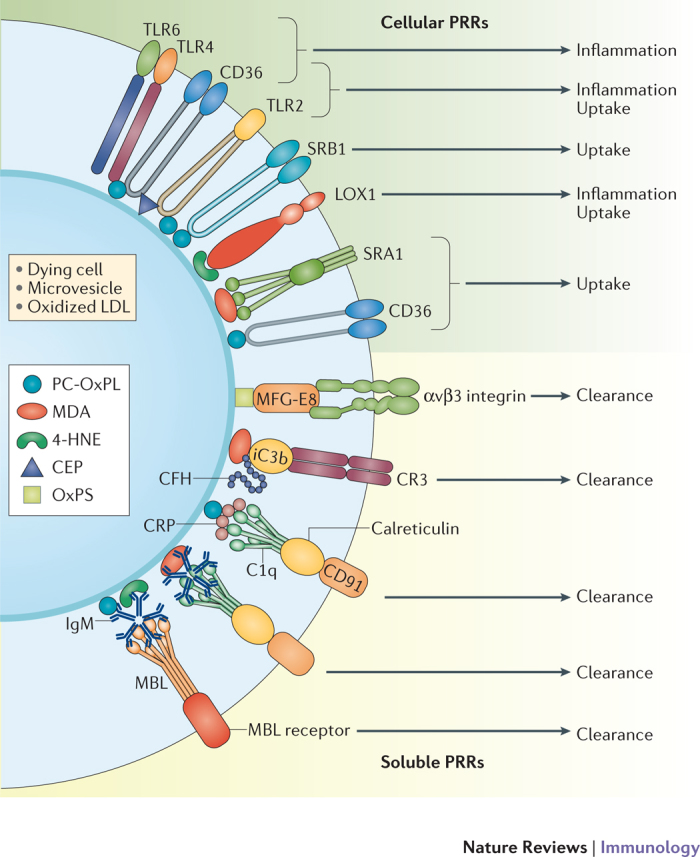
Ageing, infections and inflammation result in oxidative stress that can irreversibly damage cellular structures. The oxidative damage of lipids in membranes or lipoproteins is one of these deleterious consequences that not only alters lipid function but also leads to the formation of neo-self epitopes - oxidation-specific epitopes (OSEs) - which are present on dying cells and damaged proteins. OSEs represent endogenous damage-associated molecular patterns that are recognized by pattern recognition receptors and the proteins of the innate immune system, and thereby enable the host to sense and remove dangerous biological waste and to maintain homeostasis. If this system is dysfunctional or overwhelmed, the accumulation of OSEs can trigger chronic inflammation and the development of diseases, such as atherosclerosis and age-related macular degeneration. Understanding the molecular components and mechanisms that are involved in this process will help to identify individuals with an increased risk of developing chronic inflammation, and will also help to indicate novel modes of therapeutic intervention.
衰老、感染和炎症会导致氧化应激,进而对细胞结构造成不可逆的损害。膜或脂蛋白中脂质的氧化损伤就是这些有害后果之一,它不仅会改变脂质功能,还会导致新的自身表位——氧化特异性表位(OSEs)的形成,这些表位存在于垂死细胞和受损蛋白质上。OSEs代表内源性损伤相关分子模式,可被模式识别受体和先天免疫系统的蛋白质识别,从而使宿主能够感知并清除危险的生物废物,维持体内平衡。如果这个系统功能失调或不堪重负,OSEs的积累会引发慢性炎症和疾病的发展,如动脉粥样硬化和年龄相关性黄斑变性。了解这一过程中涉及的分子成分和机制,将有助于识别患慢性炎症风险增加的个体,也有助于指明新的治疗干预模式。