DeCaen Paul G, Liu Xiaowen, Abiria Sunday, Clapham David E
Department of Cardiology, Howard Hughes Medical Institute, Boston Children's Hospital, Boston, United States.
Department of Neurobiology, Harvard Medical School, Boston, United States.
Elife. 2016 Jun 27;5:e13413. doi: 10.7554/eLife.13413.
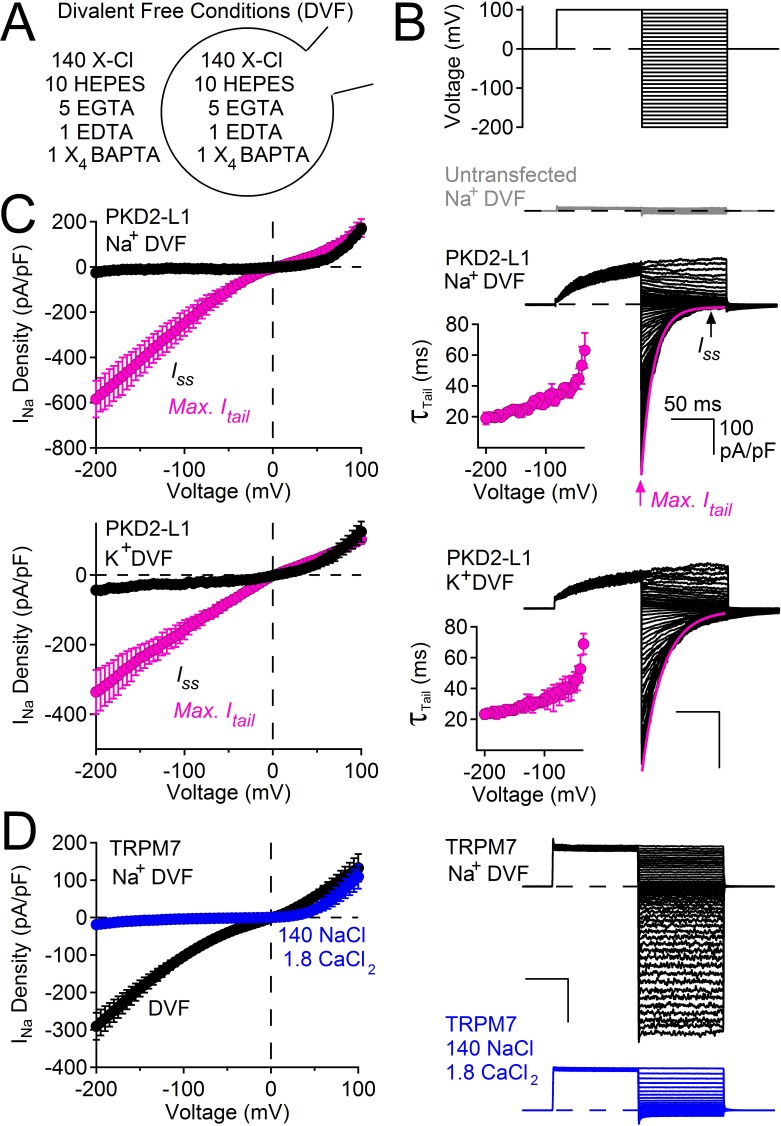
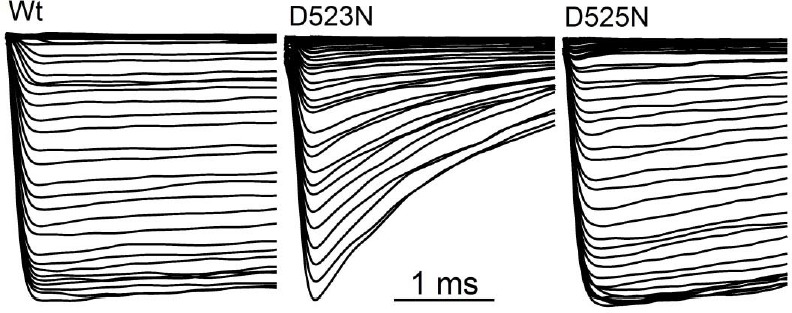
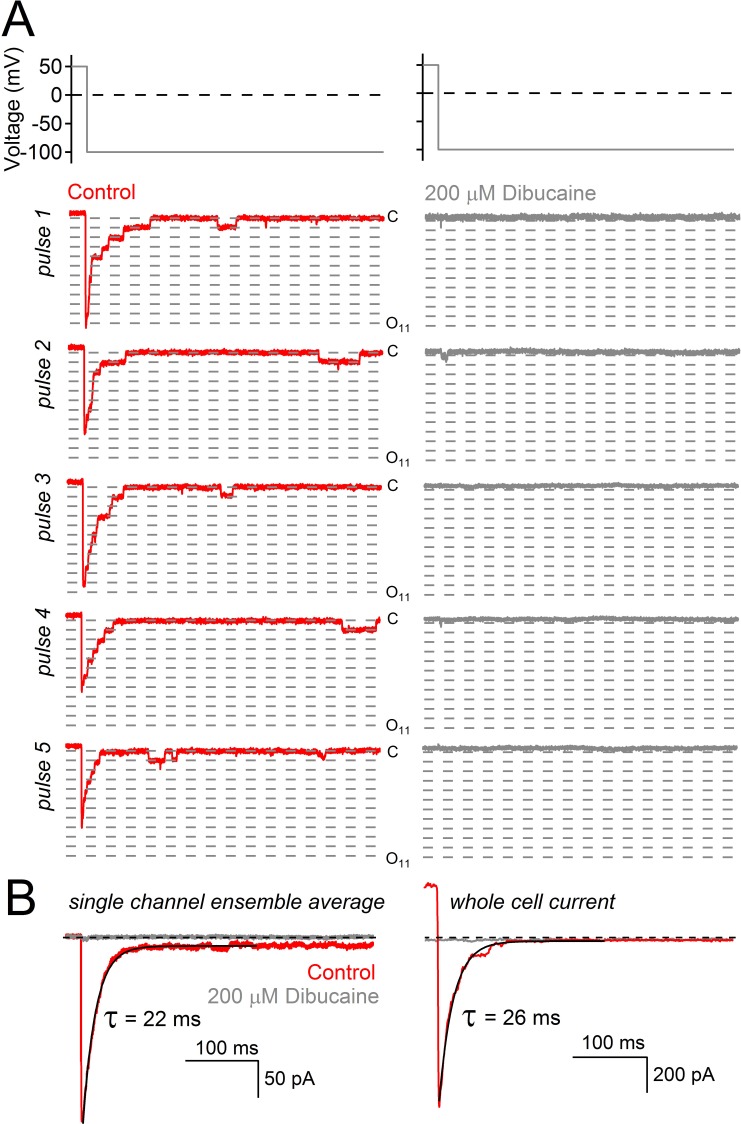
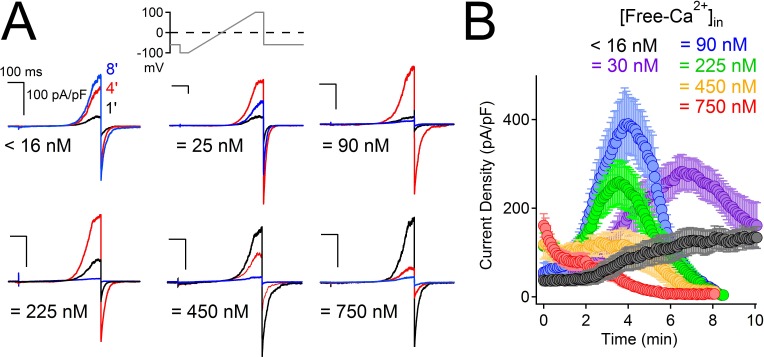
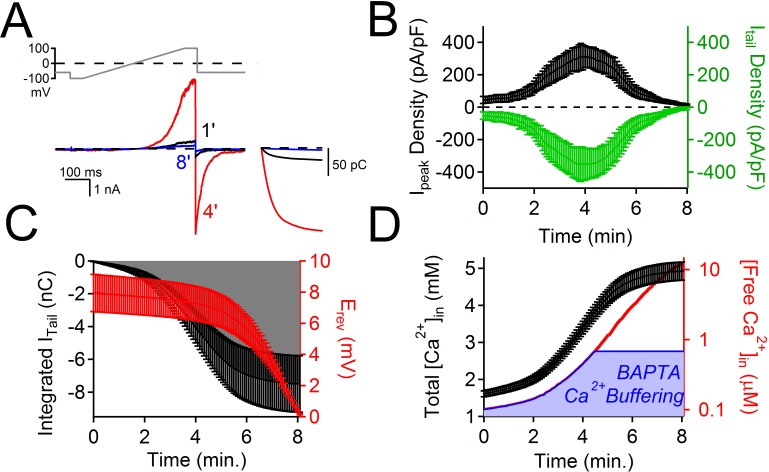
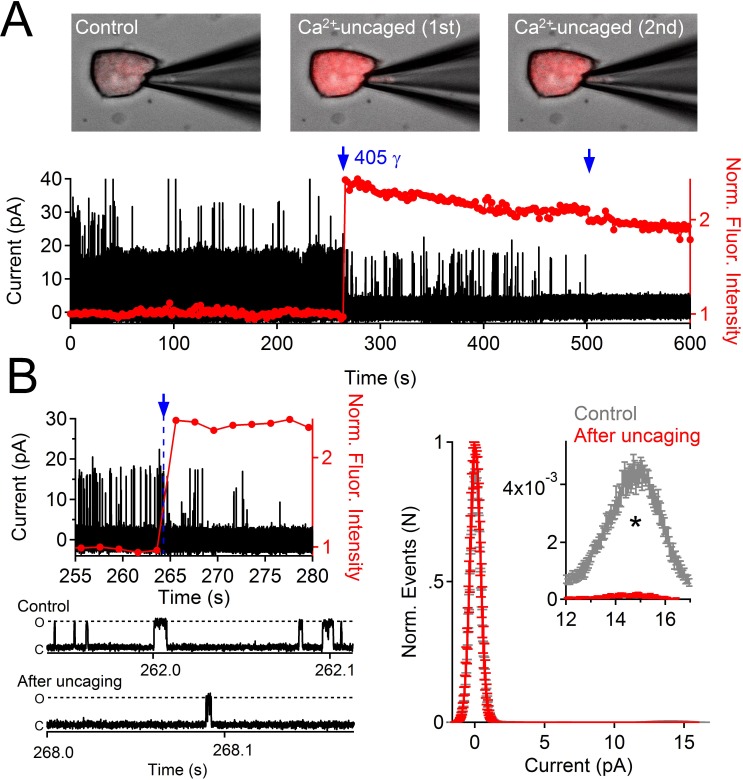
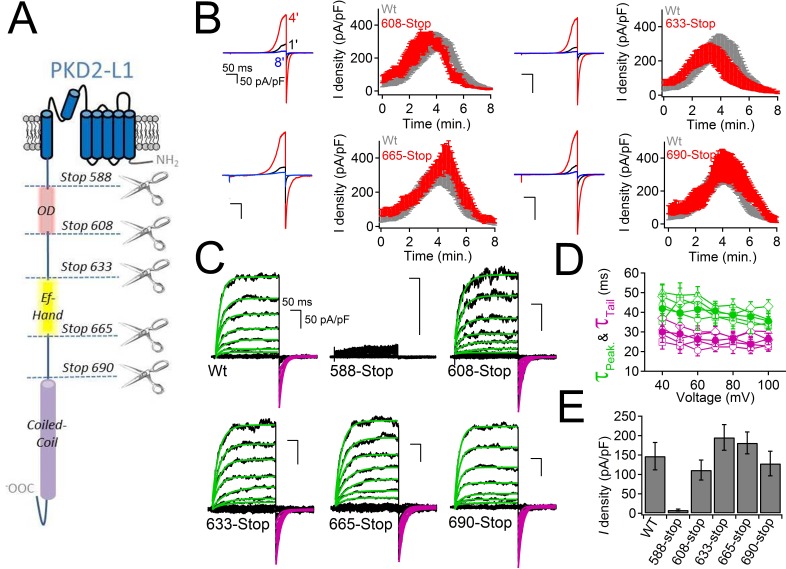
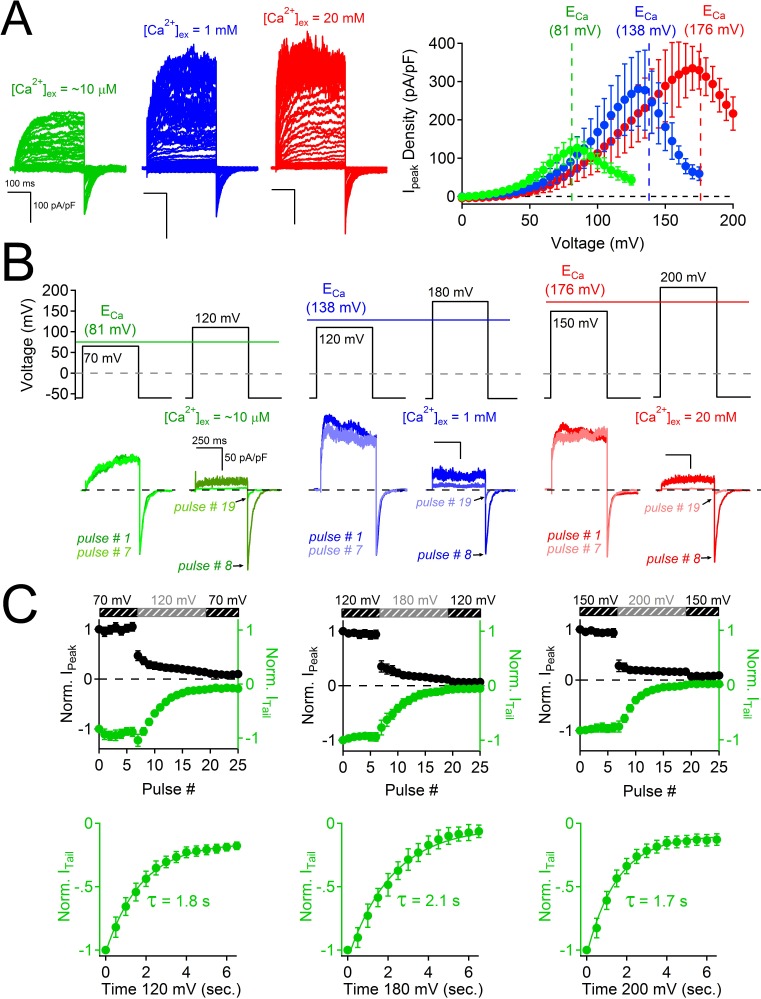
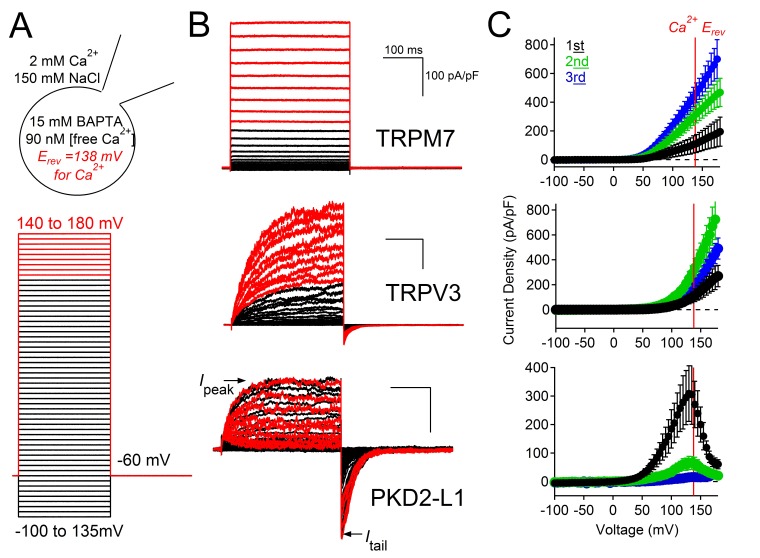
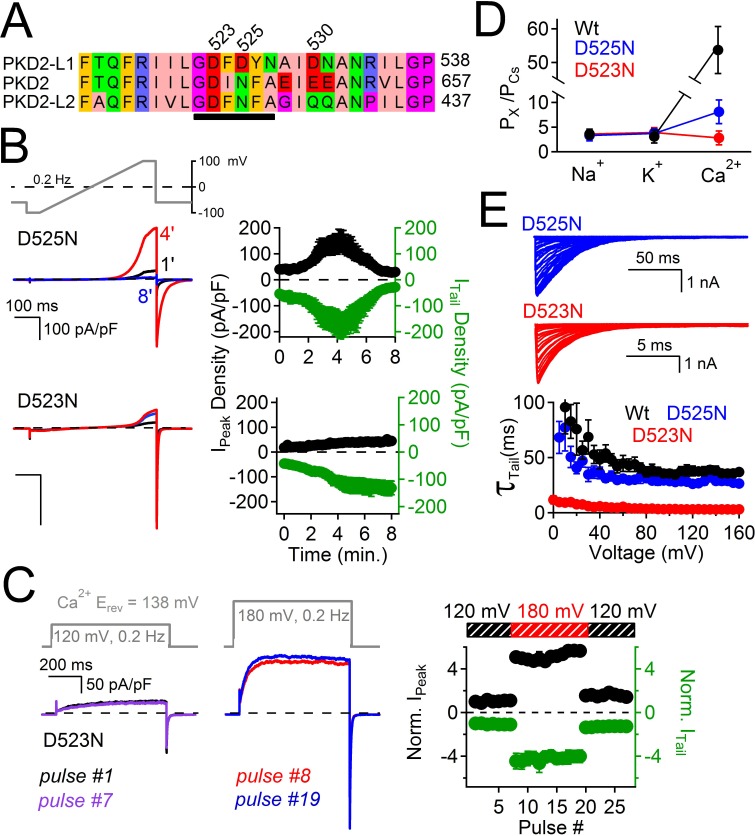
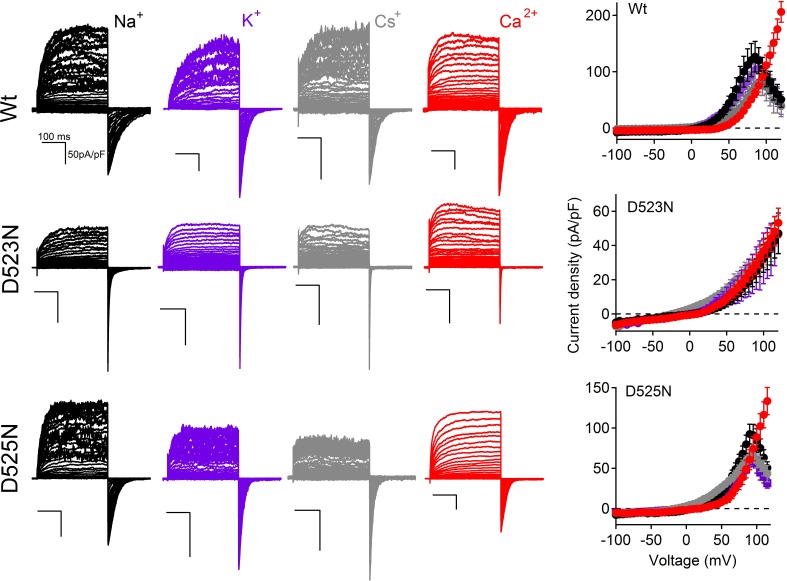
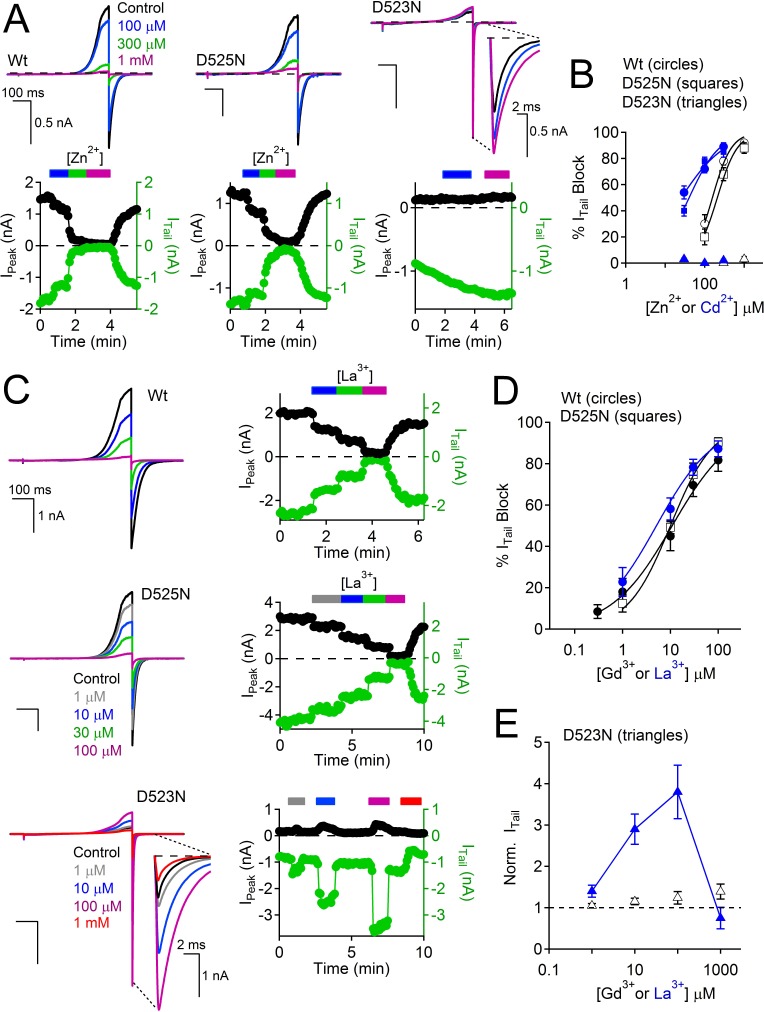
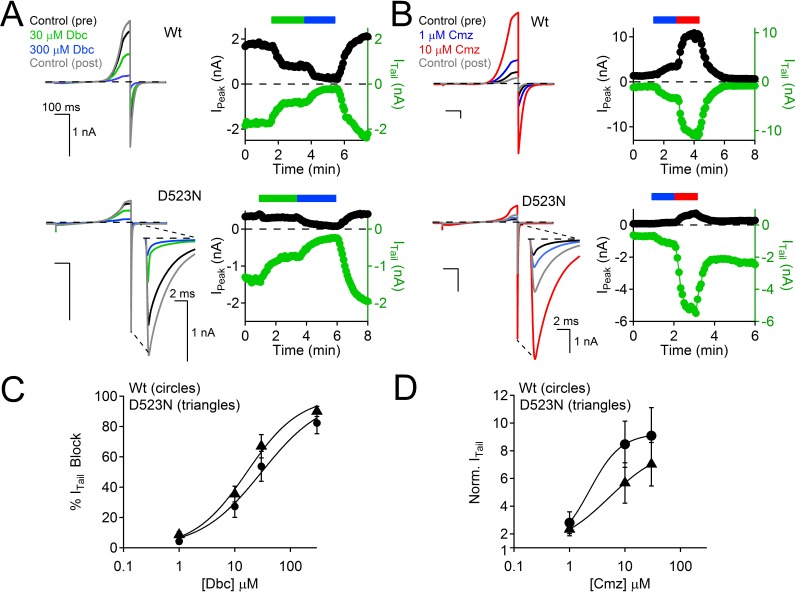
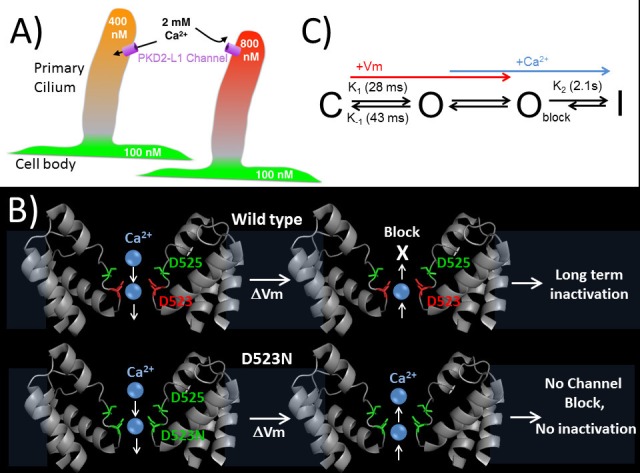
Native PKD2-L1 channel subunits are present in primary cilia and other restricted cellular spaces. Here we investigate the mechanism for the channel's unusual regulation by external calcium, and rationalize this behavior to its specialized function. We report that the human PKD2-L1 selectivity filter is partially selective to calcium ions (Ca(2+)) moving into the cell, but blocked by high internal Ca(2+)concentrations, a unique feature of this transient receptor potential (TRP) channel family member. Surprisingly, we find that the C-terminal EF-hands and coiled-coil domains do not contribute to PKD2-L1 Ca(2+)-induced potentiation and inactivation. We propose a model in which prolonged channel activity results in calcium accumulation, triggering outward-moving Ca(2+) ions to block PKD2-L1 in a high-affinity interaction with the innermost acidic residue (D523) of the selectivity filter and subsequent long-term channel inactivation. This response rectifies Ca(2+) flow, enabling Ca(2+) to enter but not leave small compartments such as the cilium.
天然的多囊蛋白2 - L1通道亚基存在于初级纤毛和其他受限的细胞空间中。在此,我们研究该通道受细胞外钙异常调节的机制,并将这种行为与其特殊功能联系起来。我们报告,人类多囊蛋白2 - L1的选择性过滤器对进入细胞的钙离子(Ca(2+))具有部分选择性,但会被高细胞内Ca(2+)浓度所阻断,这是该瞬时受体电位(TRP)通道家族成员的一个独特特征。令人惊讶的是,我们发现C端EF手型结构域和卷曲螺旋结构域对多囊蛋白2 - L1的Ca(2+)诱导的增强和失活没有作用。我们提出了一个模型,其中长时间的通道活动导致钙积累,触发向外移动的Ca(2+)离子以高亲和力与选择性过滤器的最内层酸性残基(D523)相互作用,从而阻断多囊蛋白2 - L1并导致随后的长期通道失活。这种反应纠正了Ca(2+)流,使Ca(2+)能够进入但不能离开诸如纤毛等小隔室。