van Veen J Edward, Pringle Daphne R, McMahon Martin
Helen Diller Family Comprehensive Cancer, University of California San Francisco, San Francisco, CA, United States of America.
Huntsman Cancer Institute, University of Utah, Salt Lake City, UT, United States of America.
PLoS One. 2016 Jun 27;11(6):e0157661. doi: 10.1371/journal.pone.0157661. eCollection 2016.
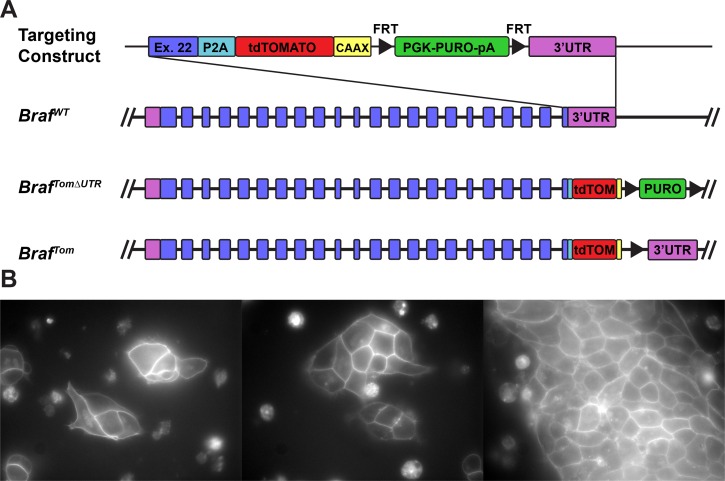
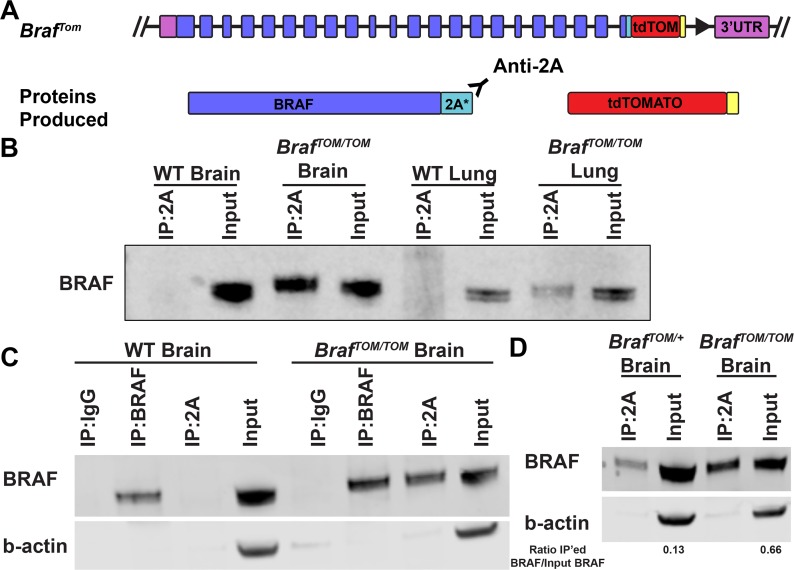
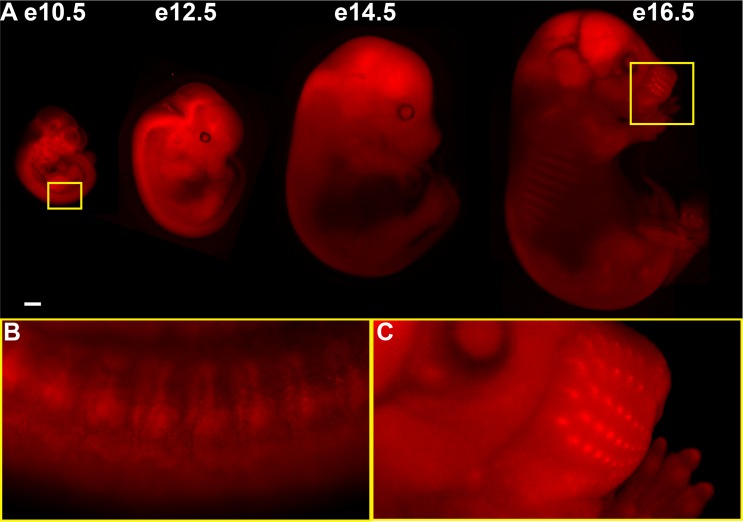
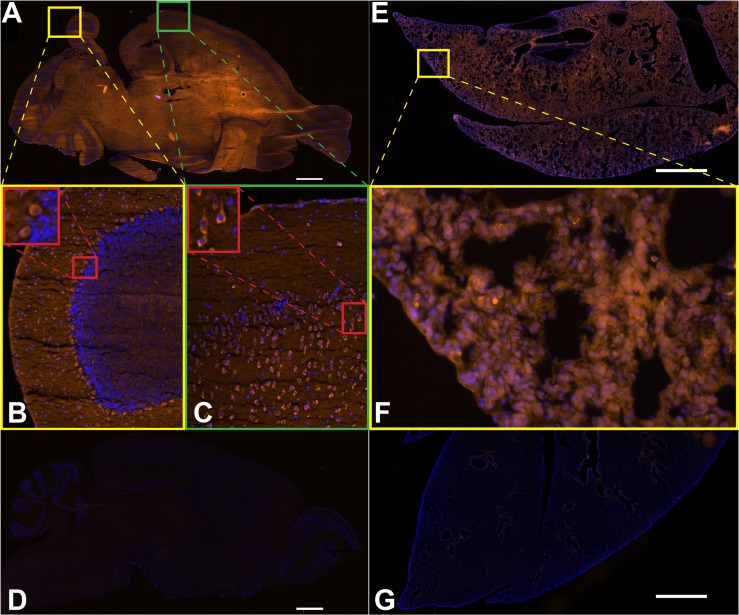
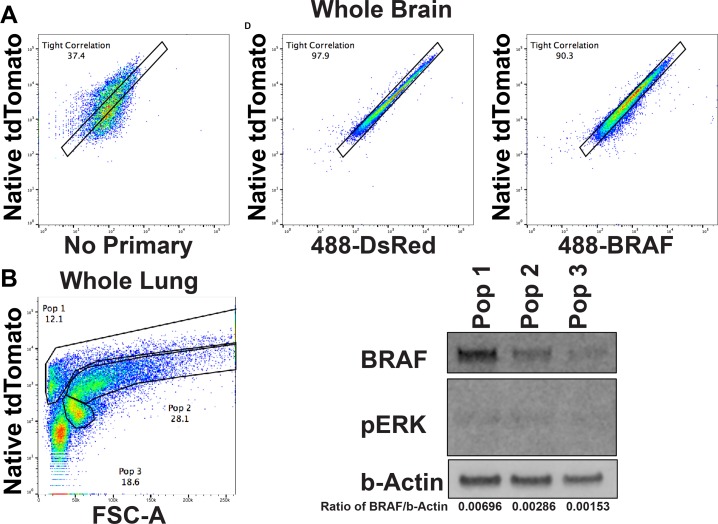
The Braf proto-oncogene is a key component of the mitogen-activated protein kinase signaling cascade and is a critical regulator of both normal development and tumorigenesis in a variety of tissues. In order to elucidate BRAF's differing roles in varying cell types, it is important to understand both the pattern and timing of BRAF expression. Here we report the production of a mouse model that links the expression of Braf with the bright red fluorescent protein, tdTomato. We have utilized a P2A knock-in strategy, ensuring that BRAF and the fluorophore are expressed from the same endogenous promoter and from the same bicistronic mRNA transcript. This mouse model (BrafTOM) shows bright red fluorescence in organs and cell types known to be sensitive to BRAF perturbation. We further show that on a cell-by-cell basis, fluorescence correlates with BRAF protein levels. Finally, we extend the utility of this mouse by demonstrating that the remnant P2A fragment attached to BRAF acts as a suitable epitope for immunoprecipitation and biochemical characterization of BRAF in vivo.
Braf原癌基因是丝裂原活化蛋白激酶信号级联反应的关键组成部分,是多种组织正常发育和肿瘤发生的关键调节因子。为了阐明BRAF在不同细胞类型中的不同作用,了解BRAF表达的模式和时间很重要。在这里,我们报告了一种小鼠模型的构建,该模型将Braf的表达与亮红色荧光蛋白tdTomato联系起来。我们采用了P2A敲入策略,确保BRAF和荧光团从相同的内源启动子和相同的双顺反子mRNA转录本表达。这种小鼠模型(BrafTOM)在已知对BRAF扰动敏感的器官和细胞类型中显示出亮红色荧光。我们进一步表明,在逐个细胞的基础上,荧光与BRAF蛋白水平相关。最后,我们通过证明附着在BRAF上的残余P2A片段作为体内BRAF免疫沉淀和生化特性分析的合适表位,扩展了该小鼠模型的用途。