BinDhim Nasser F, Alanazi Eman M, Aljadhey Hisham, Basyouni Mada H, Kowalski Stefan R, Pont Lisa G, Shaman Ahmed M, Trevena Lyndal, Alhawassi Tariq M
College of Health Sciences, Health Informatics, Saudi Electronic University, Riyadh, Saudi Arabia.
J Med Internet Res. 2016 Jun 27;18(6):e156. doi: 10.2196/jmir.5726.
The objective of disease screening is to encourage high-risk subjects to seek health care diagnosis and treatment. Mobile phone apps can effectively screen mental health conditions, including depression. However, it is not known how effective such screening methods are in motivating users to discuss the obtained results of such apps with health care professionals. Does a mobile phone depression-screening app motivate users with high depressive symptoms to seek health care professional advice? This study aimed to address this question.
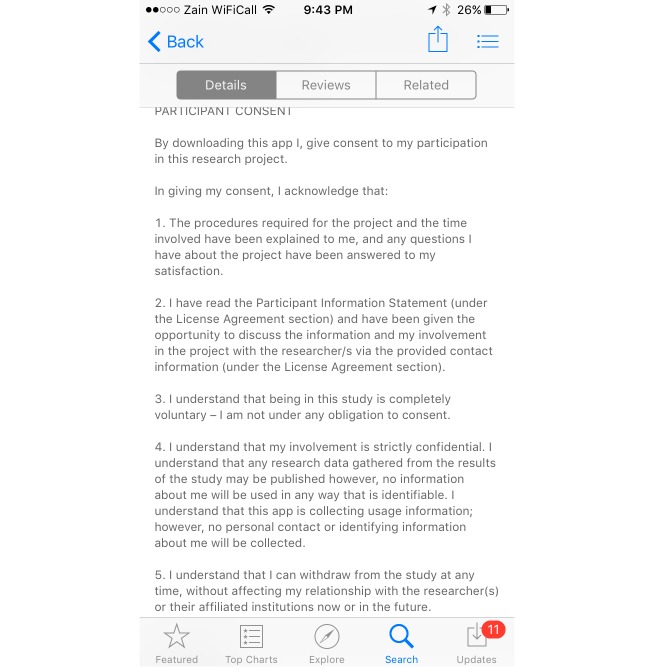
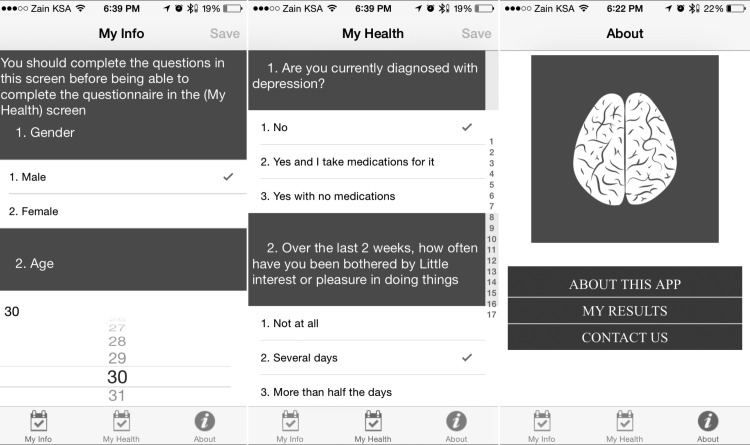
This was a single-cohort, prospective, observational study of a free mobile phone depression app developed in English and released on Apple's App Store. Apple App Store users (aged 18 or above) in 5 countries, that is, Australia, Canada, New Zealand (NZ), the United Kingdom (UK), and the United States (US), were recruited directly via the app's download page. The participants then completed the Patient Health Questionnaire (PHQ-9), and their depression screening score was displayed to them. If their score was 11 or above and they had never been diagnosed with depression before, they were advised to take their results to their health care professional. They were to follow up after 1 month.
A group of 2538 participants from the 5 countries completed PHQ-9 depression screening with the app. Of them, 322 participants were found to have high depressive symptoms and had never been diagnosed with depression, and received advice to discuss their results with health care professionals. About 74% of those completed the follow-up; approximately 38% of these self-reported consulting their health care professionals about their depression score. Only positive attitude toward depression as a real disease was associated with increased follow-up response rate (odds ratio (OR) 3.2, CI 1.38-8.29).
A mobile phone depression-screening app motivated some users to seek a depression diagnosis. However, further study should investigate how other app users use the screening results provided by such apps.
疾病筛查的目的是鼓励高危人群寻求医疗诊断和治疗。手机应用程序可以有效地筛查心理健康状况,包括抑郁症。然而,尚不清楚这种筛查方法在促使用户与医疗保健专业人员讨论此类应用程序获得的结果方面效果如何。手机抑郁症筛查应用程序是否能促使有高抑郁症状的用户寻求医疗保健专业人员的建议?本研究旨在解决这个问题。
这是一项对一款用英语开发并在苹果应用商店发布的免费手机抑郁症应用程序进行的单队列、前瞻性观察研究。通过该应用程序的下载页面直接招募了澳大利亚、加拿大、新西兰、英国和美国这5个国家的苹果应用商店用户(年龄在18岁及以上)。参与者随后完成了患者健康问卷(PHQ-9),并向他们展示了抑郁症筛查分数。如果他们的分数为11分及以上且之前从未被诊断出患有抑郁症,会建议他们将结果带给医疗保健专业人员。他们在1个月后进行随访。
来自这5个国家的2538名参与者使用该应用程序完成了PHQ-9抑郁症筛查。其中,322名参与者被发现有高抑郁症状且从未被诊断出患有抑郁症,并收到了与医疗保健专业人员讨论结果的建议。这些人中约74%完成了随访;其中约38%的人自我报告就其抑郁分数咨询了医疗保健专业人员。只有对抑郁症作为一种真实疾病的积极态度与随访应答率的提高相关(优势比(OR)为3.2,置信区间为1.38 - 8.29)。
一款手机抑郁症筛查应用程序促使一些用户寻求抑郁症诊断。然而,进一步的研究应调查其他应用程序用户如何使用此类应用程序提供的筛查结果。