Salinero María Celeste, Michalski Fernanda
Laboratório de Ecologia e Conservação de Vertebrados, Universidade Federal do Amapá, Macapá, Amapá, Brazil.
Programa de Pós-Graduação em Biodiversidade Tropical, Universidade Federal do Amapá, Macapá, Amapá, Brazil.
PLoS One. 2016 Jun 28;11(6):e0158413. doi: 10.1371/journal.pone.0158413. eCollection 2016.
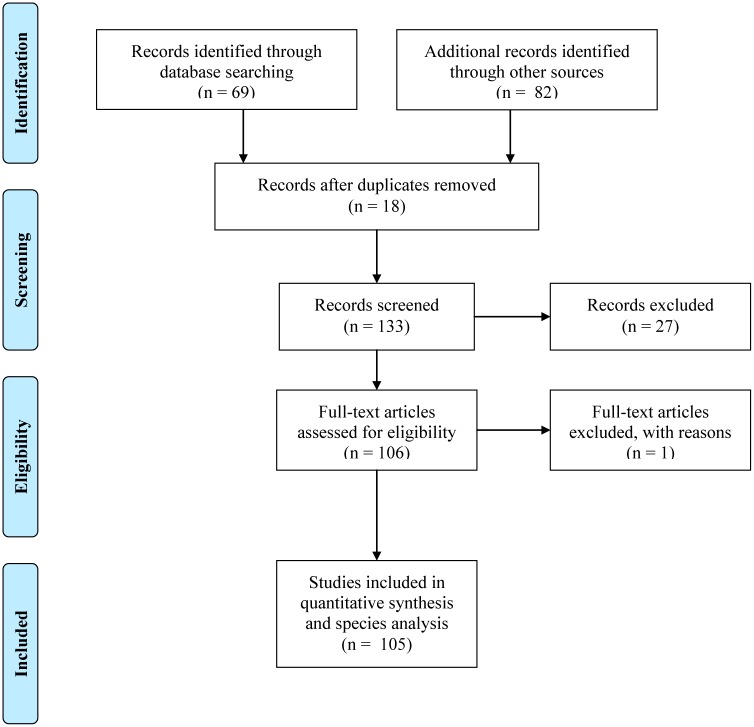
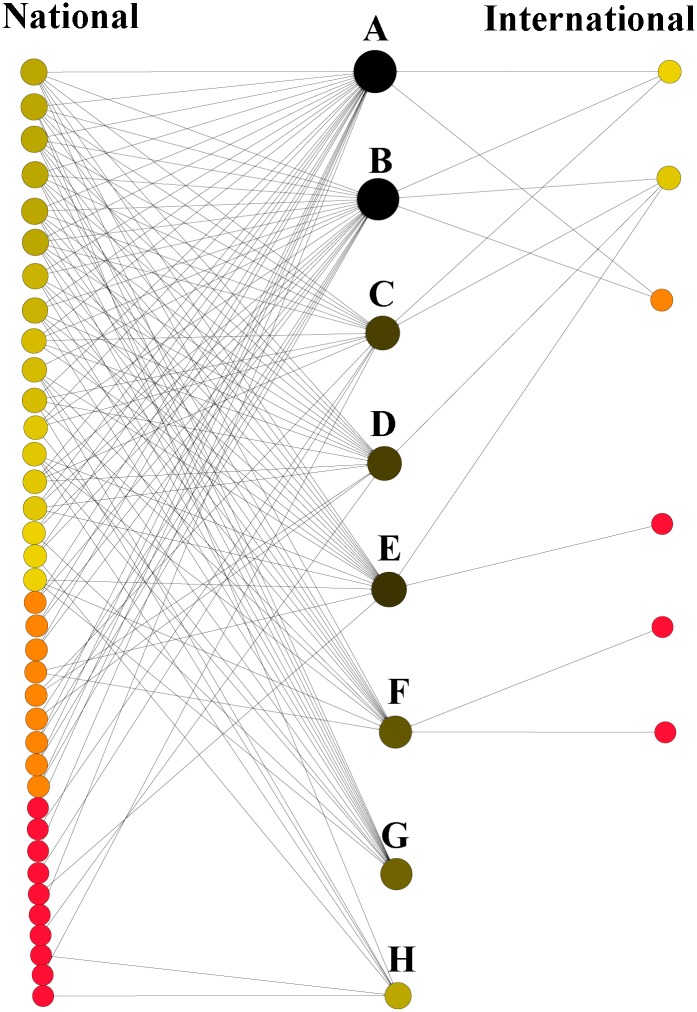
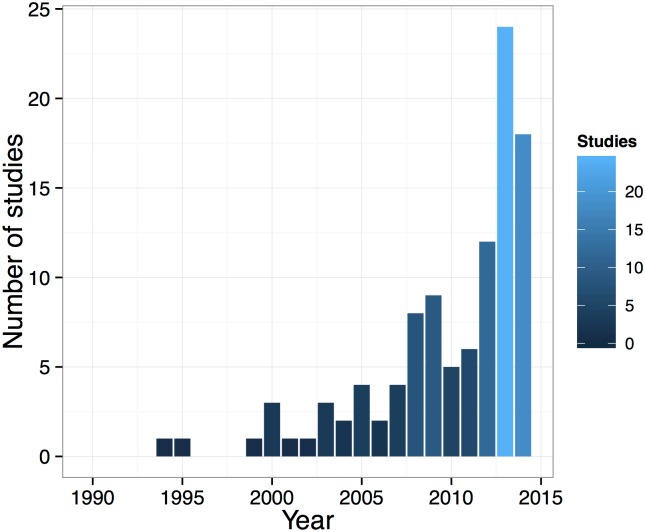
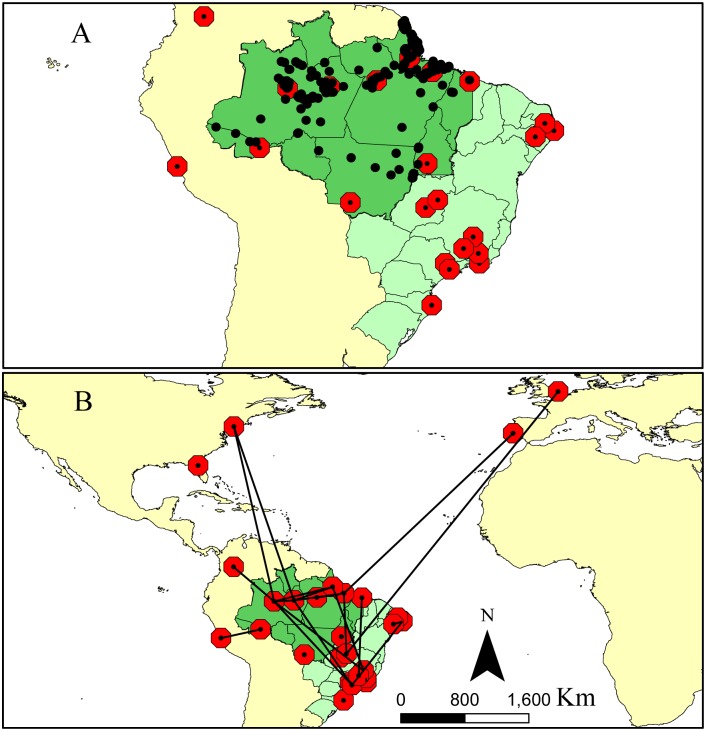
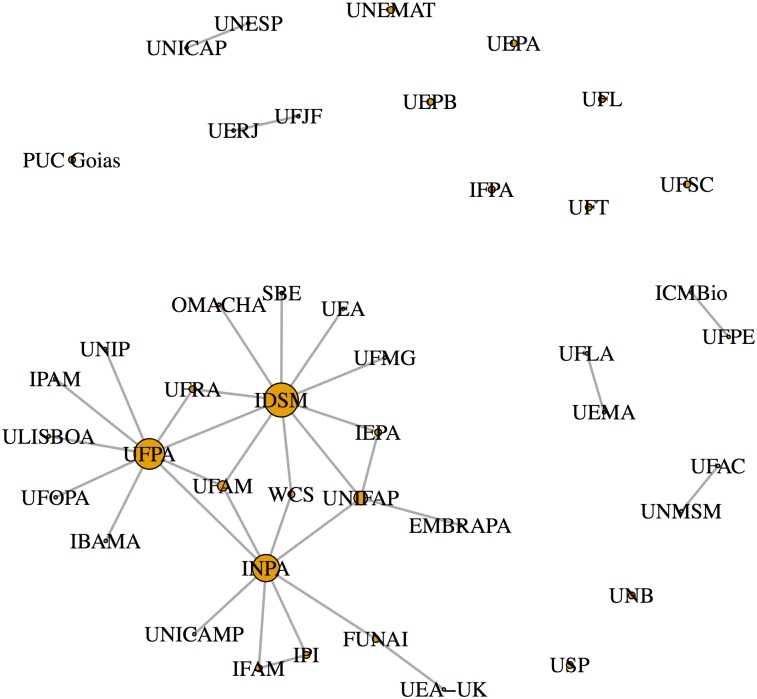
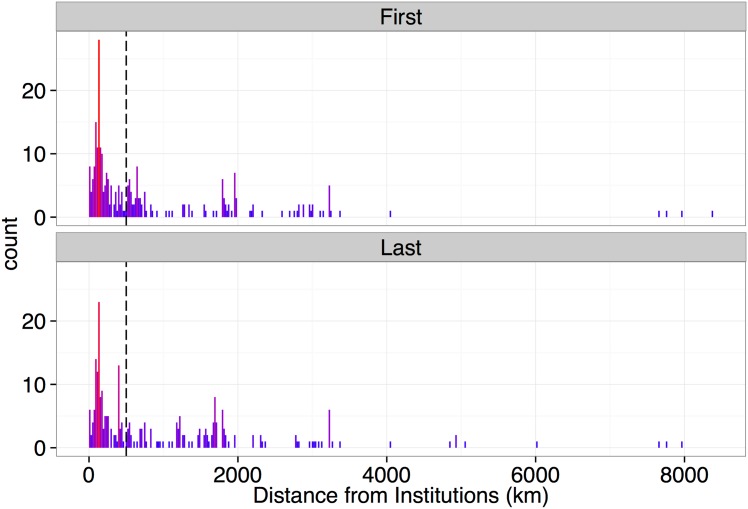
The quantity of wildlife extracted from the Amazon has increased in the past decades as a consequence of an increase in human population density and income growth. To evaluate the spatial distribution of studies on subsistence and/or commercial hunting conducted in the Brazilian Amazon, we selected eight mid-sized and large-bodied aquatic vertebrate species with a history of human exploitation in the region. We used a combination of searches in the gray and scientific literature from the past 24 years to provide an updated distributional map of studies on the target species. We calculated the distances between the study sites and the locations of the research institutes/universities that the first and last authors of the same study were affiliated to. For the period of 1990 to 2014, we found 105 studies on the subsistence and/or commercial hunting of aquatic vertebrates in the Brazilian Amazon in 271 locations that involved 43 institutions (37 Brazilian and 6 international). The spatial distribution of the studies across the Brazilian Amazon varied, but over 80% took place in the northeast and central Amazon, encompassing three States of the Legal Brazilian Amazon (Amazonas, 51.42%; Pará, 19.05%; and Amapá, 16.19%). Over half of the research study sites (52.91%) were within 500 km of the research institute/university of the first or last authors. Some research institutes/universities did not have any inter-institutional collaborations, while others collaborated with eight or more institutes. Some research institutes/universities conducted many studies, had an extensive collaboration network, and contributed greatly to the network of studies on Amazonian aquatic vertebrates. Our research contributes to the knowledge of studies on the subsistence and/or commercial hunting of the most exploited aquatic vertebrates of the Brazilian Amazon, illustrates the impact that collaboration networks have on research, and highlights potential areas for improvement and the generation of new collaborations.
在过去几十年中,由于人口密度增加和收入增长,从亚马逊地区获取的野生动物数量有所增加。为了评估巴西亚马逊地区开展的自给性和/或商业性狩猎研究的空间分布,我们选择了该地区有人类开发历史的8种中型和大型水生脊椎动物物种。我们结合了对过去24年灰色文献和科学文献的检索,以提供目标物种研究的最新分布图。我们计算了研究地点与同一研究的第一作者和最后作者所属研究机构/大学所在地之间的距离。在1990年至2014年期间,我们在巴西亚马逊地区的271个地点发现了105项关于水生脊椎动物自给性和/或商业性狩猎的研究,涉及43个机构(37个巴西机构和6个国际机构)。巴西亚马逊地区各项研究的空间分布各不相同,但超过80%的研究发生在亚马逊东北部和中部,涵盖巴西法定亚马逊地区的三个州(亚马逊州,51.42%;帕拉州,19.05%;阿马帕州,16.19%)。超过一半的研究地点(52.91%)距离第一作者或最后作者的研究机构/大学不到500公里。一些研究机构/大学没有任何机构间合作,而其他机构则与八个或更多机构合作。一些研究机构/大学开展了许多研究,拥有广泛的合作网络,并为亚马逊水生脊椎动物研究网络做出了巨大贡献。我们的研究有助于了解巴西亚马逊地区受开发程度最高的水生脊椎动物的自给性和/或商业性狩猎研究,说明了合作网络对研究的影响,并突出了潜在的改进领域和新合作的产生。