Khowaja Asif Raza, Qureshi Rahat Najam, Sawchuck Diane, Oladapo Olufemi T, Adetoro Olalekan O, Orenuga Elizabeth A, Bellad Mrutyunjaya, Mallapur Ashalata, Charantimath Umesh, Sevene Esperança, Munguambe Khátia, Boene Helena Edith, Vidler Marianne, Bhutta Zulfiqar A, von Dadelszen Peter
Division of Women & Child Health, Aga Khan University, Karachi, Pakistan.
Department of Obstetrics and Gynaecology, and the Child and Family Research Institute, University of British Columbia, Vancouver, Canada.
Reprod Health. 2016 Jun 8;13 Suppl 1(Suppl 1):56. doi: 10.1186/s12978-016-0133-0.
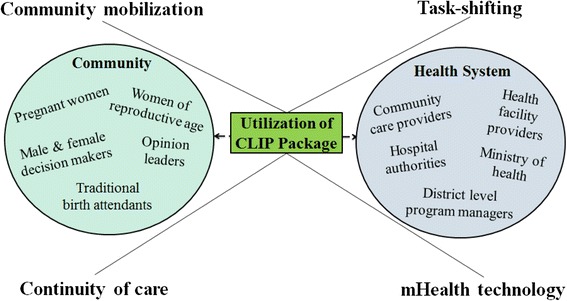
Globally, pre-eclampsia and eclampsia are major contributors to maternal and perinatal mortality; of which the vast majority of deaths occur in less developed countries. In addition, a disproportionate number of morbidities and mortalities occur due to delayed access to health services. The Community Level Interventions for Pre-eclampsia (CLIP) Trial aims to task-shift to community health workers the identification and emergency management of pre-eclampsia and eclampsia to improve access and timely care. Literature revealed paucity of published feasibility assessments prior to initiating large-scale community-based interventions. Arguably, well-conducted feasibility studies can provide valuable information about the potential success of clinical trials prior to implementation. Failure to fully understand the study context risks the effective implementation of the intervention and limits the likelihood of post-trial scale-up. Therefore, it was imperative to conduct community-level feasibility assessments for a trial of this magnitude.
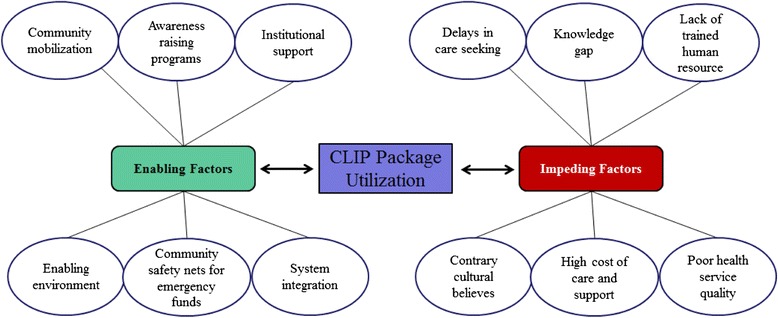
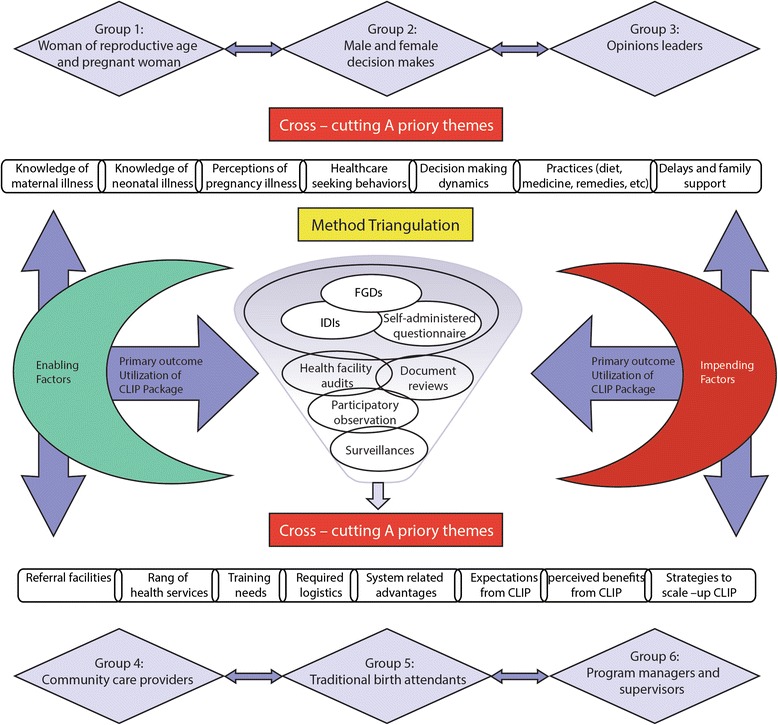
A mixed methods design guided by normalization process theory was used for this study in Nigeria, Mozambique, Pakistan, and India to explore enabling and impeding factors for the CLIP Trial implementation. Qualitative data were collected through participant observation, document review, focus group discussion and in-depth interviews with diverse groups of community members, key informants at community level, healthcare providers, and policy makers. Quantitative data were collected through health facility assessments, self-administered community health worker surveys, and household demographic and health surveillance.
Refer to CLIP Trial feasibility publications in the current and/or forthcoming supplement.
Feasibility assessments for community level interventions, particularly those involving task-shifting across diverse regions, require an appropriate theoretical framework and careful selection of research methods. The use of qualitative and quantitative methods increased the data richness to better understand the community contexts.
NCT01911494.
在全球范围内,子痫前期和子痫是孕产妇及围产期死亡的主要原因;其中绝大多数死亡发生在欠发达国家。此外,由于获得卫生服务的机会延迟,发病率和死亡率也不成比例地增加。子痫前期社区层面干预措施(CLIP)试验旨在将子痫前期和子痫的识别及应急管理工作任务转移给社区卫生工作者,以改善获得服务的机会并实现及时护理。文献显示,在启动大规模社区干预措施之前,已发表的可行性评估较少。可以说,精心开展的可行性研究能够在临床试验实施前提供有关其潜在成功性的宝贵信息。未能充分了解研究背景会危及干预措施的有效实施,并限制试验后扩大规模的可能性。因此,对于如此规模的试验,进行社区层面的可行性评估势在必行。
本研究在尼日利亚、莫桑比克、巴基斯坦和印度采用了以规范化过程理论为指导的混合方法设计,以探讨CLIP试验实施的促进因素和阻碍因素。通过参与观察、文件审查、焦点小组讨论以及对不同群体的社区成员、社区层面的关键信息提供者、医疗保健提供者和政策制定者进行深入访谈来收集定性数据。通过卫生设施评估、社区卫生工作者自行填写的调查问卷以及家庭人口和健康监测来收集定量数据。
请参考当前和/或即将出版的增刊中的CLIP试验可行性出版物。
社区层面干预措施的可行性评估,尤其是那些涉及跨不同地区任务转移的评估,需要适当的理论框架和对研究方法的精心选择。定性和定量方法的使用增加了数据丰富度,以便更好地了解社区背景。
NCT01911494