He Zhenyue, Yi Jun, Liu Xiaolong, Chen Jing, Han Siqi, Jin Li, Chen Longbang, Song Haizhu
Department of Medical Oncology, Jinling Hospital, Medical School of Nanjing University, 305 Zhongshan East Road, Nanjing, Jiangsu, 210002, People's Republic of China.
Department of Cardiothoracic Surgery, Jinling Hospital, Medical School of Nanjing University, 305 Zhongshan East Road, Nanjing, Jiangsu, 210002, People's Republic of China.
Mol Cancer. 2016 Jun 29;15(1):51. doi: 10.1186/s12943-016-0533-3.
Dysregulation of microRNAs (miRNAs) have been demonstrated to contribute to carcinogenesis. MiR-143-3p has been identified to function as a tumor suppressor in several tumors, but the role of miR-143-3p in esophageal squamous cell carcinoma (ESCC) has not been intensively investigated. Our aim was to evaluate the potential role of miR-143-3p in the progression of ESCC.
The expression levels of miR-143-3p and QKI-5 protein were measured in 80 resected ESCC tumor specimens and the clinicopathological significance of these levels determined. We also investigated the role of miR-143-3p in the regulation of QKI-5 expression in ESCC cell lines both in vivo and in vitro.
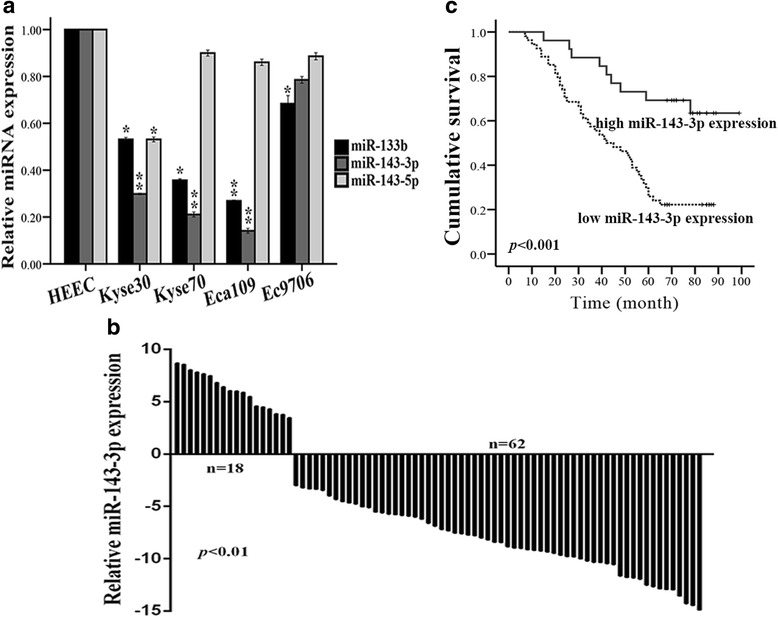
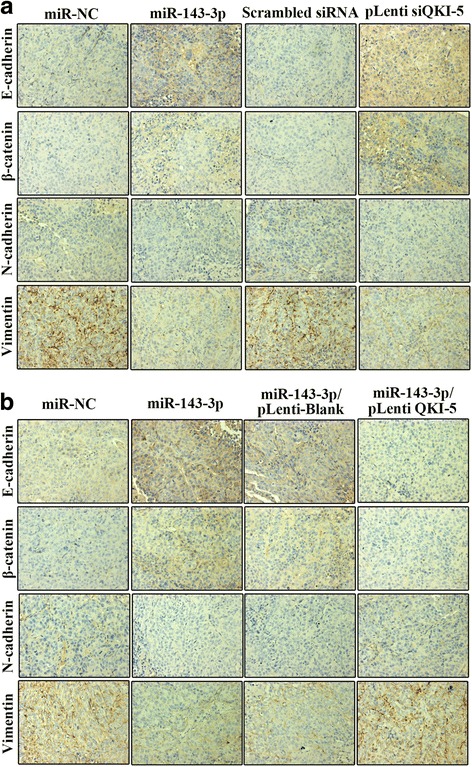
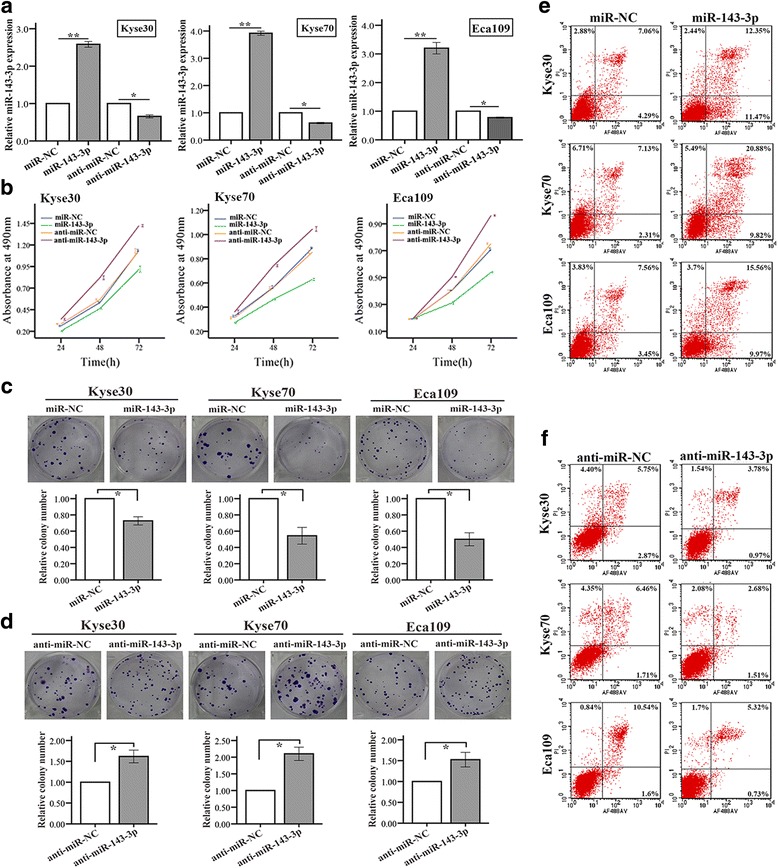
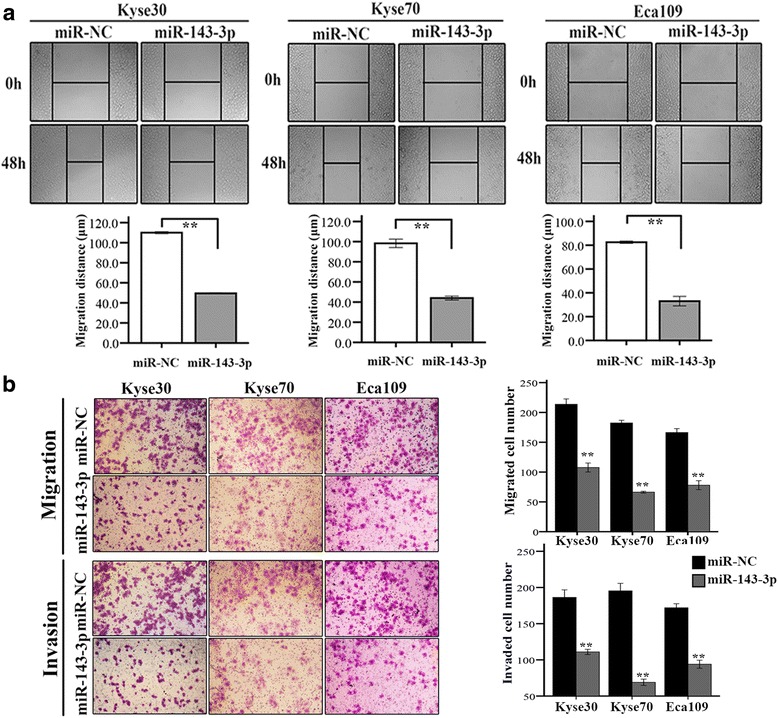
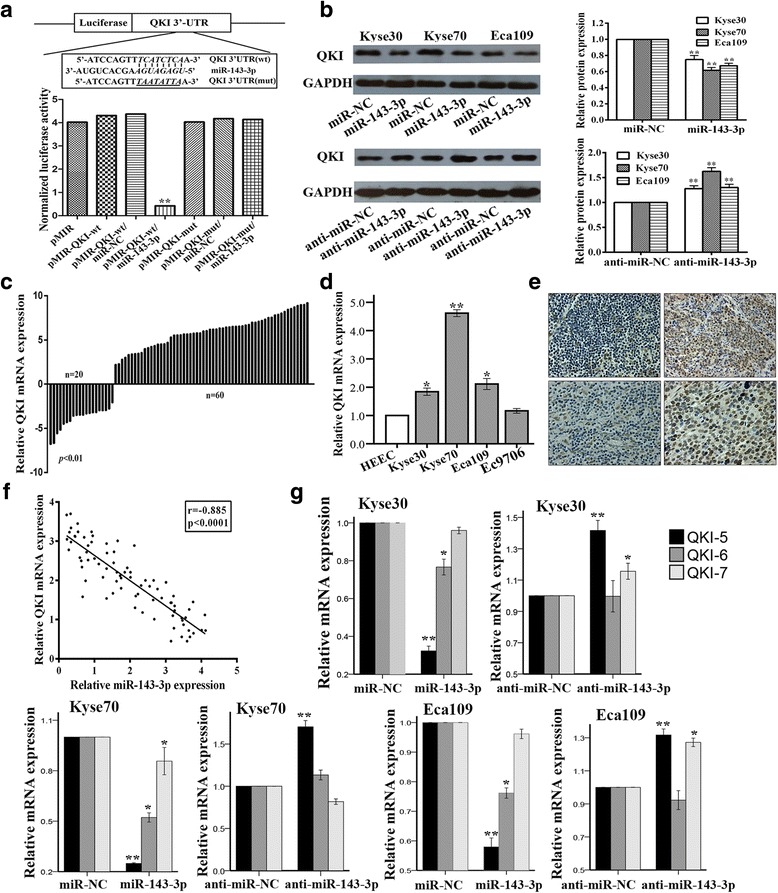
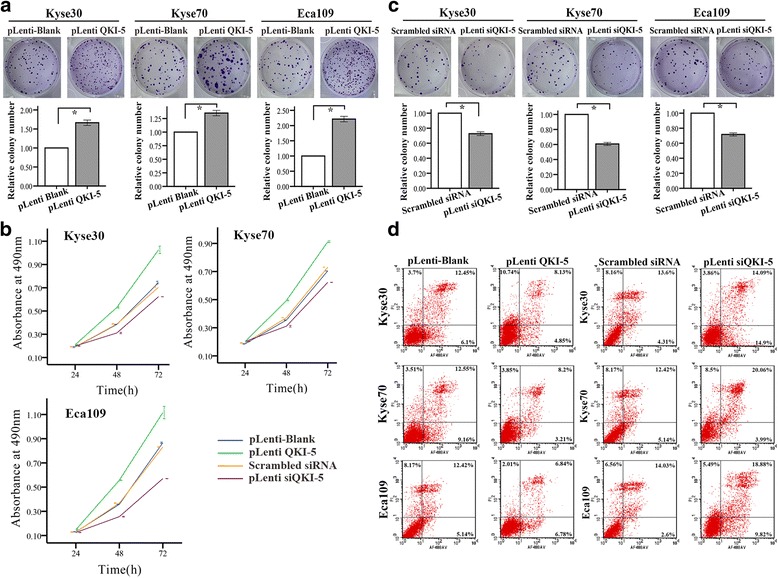
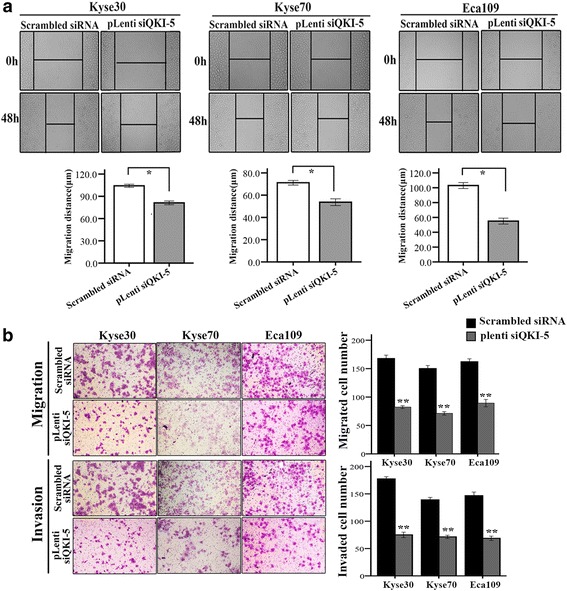
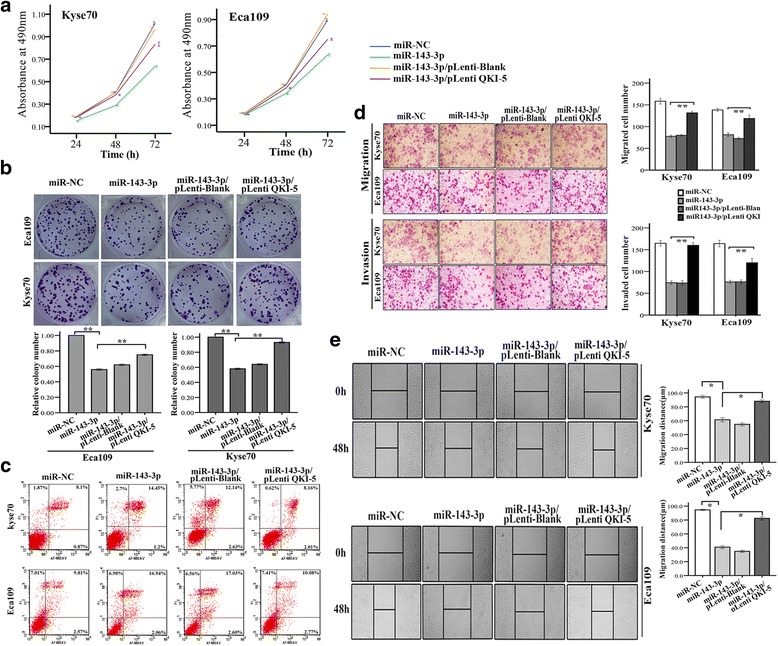
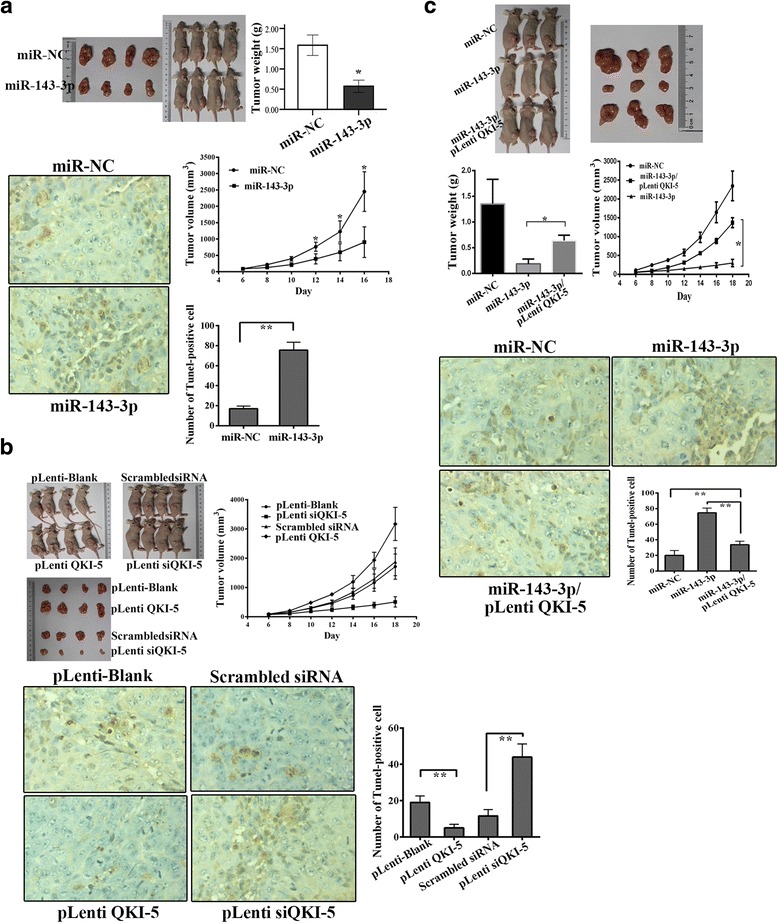
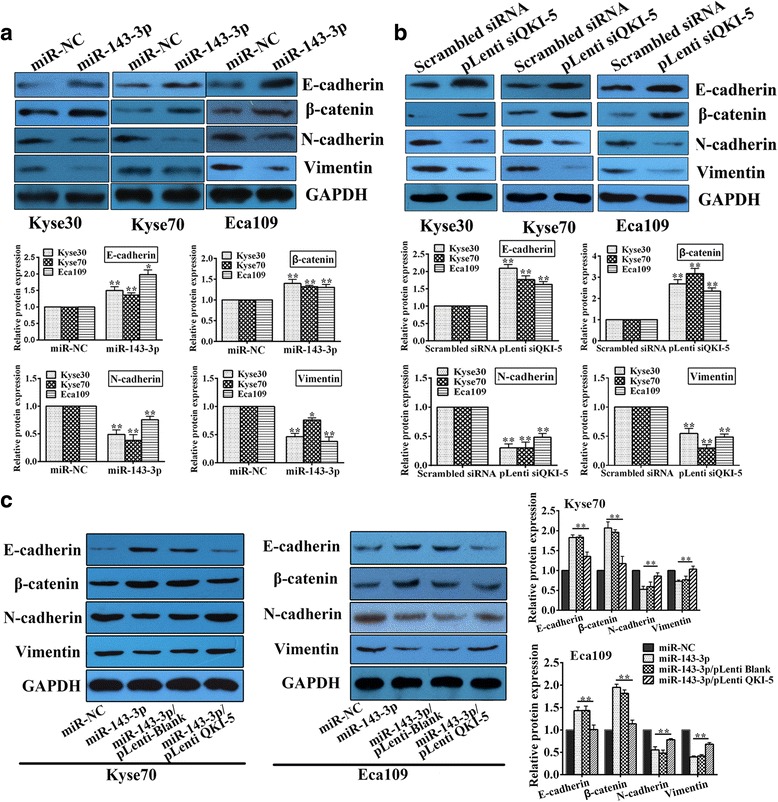
MiR-143-3p levels were decreased in ESCC clinical samples and low expression of miR-143-3p was significantly associated with poor prognosis in ESCC patients. Ectopic expression of miR-143-3p suppressed proliferation and induced apoptosis in ESCC cells both in vivo and in vitro. Ectopic expression of miR-143-3p also reduced the metastatic potential of cells by selectively regulating epithelial-mesenchymal transition regulatory proteins. Furthermore, QKI-5 isoform was upregulated in ESCC tissues and was a direct target of miR-143-3p. Lastly, re-introduction of QKI-5 expression abrogated the inhibitory effects of miR-143-3p on ESCC cell proliferation and motility.
Our results demonstrate that miR-143-3p acts as a tumor-suppressor by targeting QKI-5 in ESCC, suggesting that miR-143-3p is a potential therapy for the treatment of ESCC.
微小RNA(miRNA)失调已被证明与肿瘤发生有关。已确定miR-143-3p在多种肿瘤中发挥肿瘤抑制作用,但miR-143-3p在食管鳞状细胞癌(ESCC)中的作用尚未得到深入研究。我们的目的是评估miR-143-3p在ESCC进展中的潜在作用。
检测80例切除的ESCC肿瘤标本中miR-143-3p和QKI-5蛋白的表达水平,并确定这些水平的临床病理意义。我们还在体内和体外研究了miR-143-3p在ESCC细胞系中对QKI-5表达的调节作用。
ESCC临床样本中miR-143-3p水平降低,miR-143-3p低表达与ESCC患者预后不良显著相关。miR-143-3p的异位表达在体内和体外均抑制ESCC细胞的增殖并诱导其凋亡。miR-143-3p的异位表达还通过选择性调节上皮-间质转化调节蛋白降低细胞的转移潜能。此外,QKI-5异构体在ESCC组织中上调,是miR-143-3p的直接靶点。最后,重新引入QKI-5表达消除了miR-143-3p对ESCC细胞增殖和运动的抑制作用。
我们的结果表明,miR-143-3p在ESCC中通过靶向QKI-5发挥肿瘤抑制作用,提示miR-143-3p是治疗ESCC的潜在疗法。