van Diemen Ferdy R, Kruse Elisabeth M, Hooykaas Marjolein J G, Bruggeling Carlijn E, Schürch Anita C, van Ham Petra M, Imhof Saskia M, Nijhuis Monique, Wiertz Emmanuel J H J, Lebbink Robert Jan
Medical Microbiology, University Medical Center Utrecht, Utrecht, The Netherlands.
Department of Ophthalmology, University Medical Center Utrecht, Utrecht, The Netherlands.
PLoS Pathog. 2016 Jun 30;12(6):e1005701. doi: 10.1371/journal.ppat.1005701. eCollection 2016 Jun.
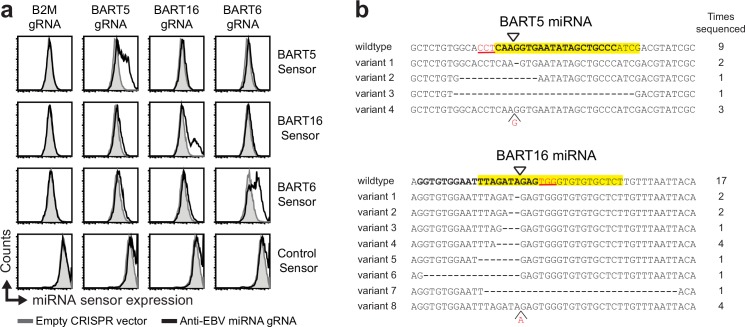
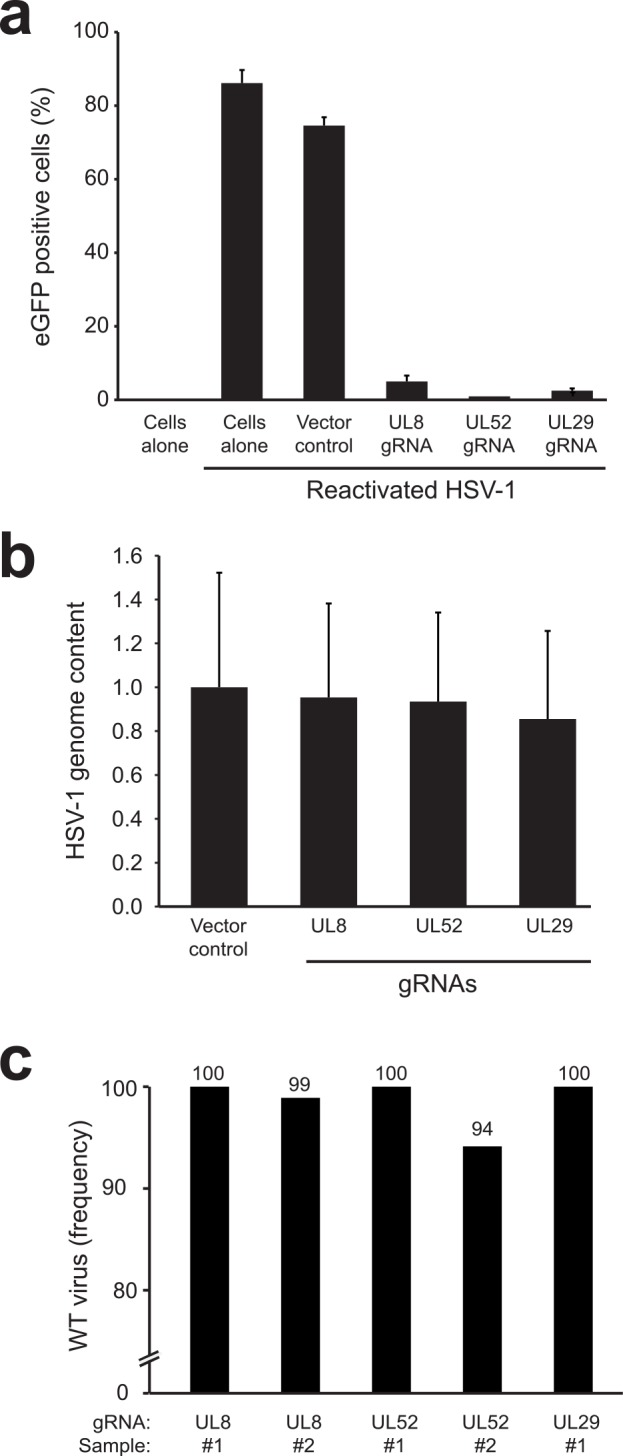
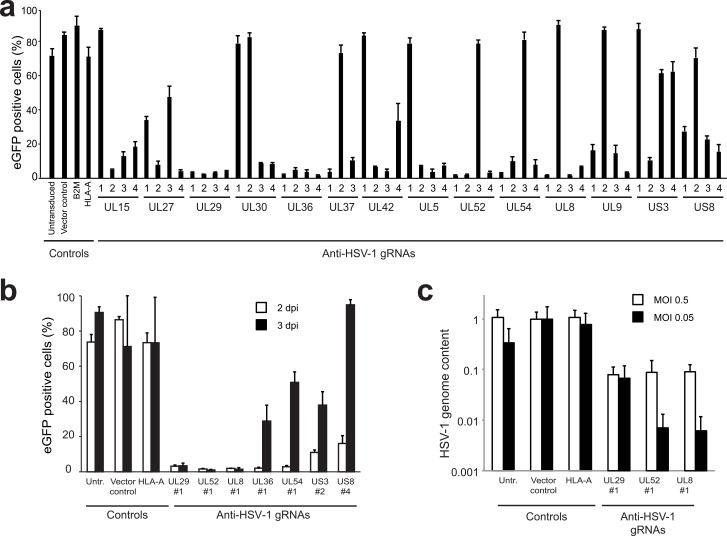
Herpesviruses infect the majority of the human population and can cause significant morbidity and mortality. Herpes simplex virus (HSV) type 1 causes cold sores and herpes simplex keratitis, whereas HSV-2 is responsible for genital herpes. Human cytomegalovirus (HCMV) is the most common viral cause of congenital defects and is responsible for serious disease in immuno-compromised individuals. Epstein-Barr virus (EBV) is associated with infectious mononucleosis and a broad range of malignancies, including Burkitt's lymphoma, nasopharyngeal carcinoma, Hodgkin's disease, and post-transplant lymphomas. Herpesviruses persist in their host for life by establishing a latent infection that is interrupted by periodic reactivation events during which replication occurs. Current antiviral drug treatments target the clinical manifestations of this productive stage, but they are ineffective at eliminating these viruses from the infected host. Here, we set out to combat both productive and latent herpesvirus infections by exploiting the CRISPR/Cas9 system to target viral genetic elements important for virus fitness. We show effective abrogation of HCMV and HSV-1 replication by targeting gRNAs to essential viral genes. Simultaneous targeting of HSV-1 with multiple gRNAs completely abolished the production of infectious particles from human cells. Using the same approach, EBV can be almost completely cleared from latently infected EBV-transformed human tumor cells. Our studies indicate that the CRISPR/Cas9 system can be effectively targeted to herpesvirus genomes as a potent prophylactic and therapeutic anti-viral strategy that may be used to impair viral replication and clear latent virus infection.
疱疹病毒感染了大多数人群,可导致严重的发病和死亡。1型单纯疱疹病毒(HSV)引起唇疱疹和单纯疱疹性角膜炎,而HSV-2则导致生殖器疱疹。人巨细胞病毒(HCMV)是先天性缺陷最常见的病毒病因,也是免疫功能低下个体严重疾病的病因。爱泼斯坦-巴尔病毒(EBV)与传染性单核细胞增多症以及多种恶性肿瘤有关,包括伯基特淋巴瘤、鼻咽癌、霍奇金病和移植后淋巴瘤。疱疹病毒通过建立潜伏感染在其宿主中终生持续存在,潜伏感染会被周期性的再激活事件打断,在此期间会发生复制。目前的抗病毒药物治疗针对的是这个增殖阶段的临床表现,但它们在从感染宿主中清除这些病毒方面无效。在这里,我们着手通过利用CRISPR/Cas9系统靶向对病毒适应性重要的病毒遗传元件来对抗增殖性和潜伏性疱疹病毒感染。我们通过将引导RNA(gRNA)靶向病毒必需基因,显示出对HCMV和HSV-1复制的有效消除。用多个gRNA同时靶向HSV-1完全消除了人类细胞中感染性颗粒的产生。使用相同的方法,EBV几乎可以从潜伏感染的EBV转化的人类肿瘤细胞中完全清除。我们的研究表明,CRISPR/Cas9系统可以有效地靶向疱疹病毒基因组,作为一种有效的预防和治疗性抗病毒策略,可用于损害病毒复制和清除潜伏病毒感染。