School of Public Health, University of California, Berkeley, CA 94720, USA.
Department of Molecular and Cell Biology, University of California, Berkeley, CA 94720, USA.
Viruses. 2021 Feb 22;13(2):338. doi: 10.3390/v13020338.
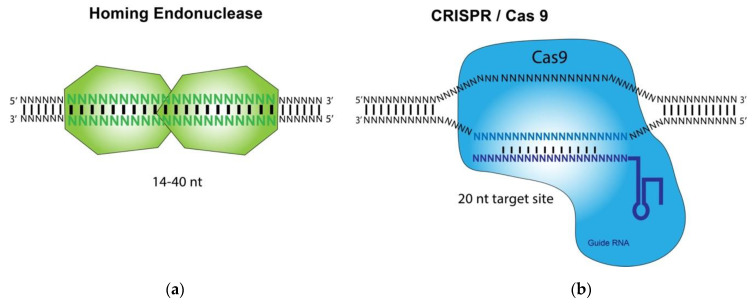
Herpes simplex virus 1 (HSV-1) is a herpesvirus that may cause cold sores or keratitis in healthy or immunocompetent individuals, but can lead to severe and potentially life-threatening complications in immune-immature individuals, such as neonates or immune-compromised patients. Like all other herpesviruses, HSV-1 can engage in lytic infection as well as establish latent infection. Current anti-HSV-1 therapies effectively block viral replication and infection. However, they have little effect on viral latency and cannot completely eliminate viral infection. These issues, along with the emergence of drug-resistant viral strains, pose a need to develop new compounds and novel strategies for the treatment of HSV-1 infection. Genome editing methods represent a promising approach against viral infection by modifying or destroying the genetic material of human viruses. These editing methods include homing endonucleases (HE) and the Clustered Regularly Interspaced Short Palindromic Repeats (CRISPR)/CRISPR associated protein (Cas) RNA-guided nuclease system. Recent studies have showed that both HE and CRISPR/Cas systems are effective in inhibiting HSV-1 infection in cultured cells in vitro and in mice in vivo. This review, which focuses on recently published progress, suggests that genome editing approaches could be used for eliminating HSV-1 latent and lytic infection and for treating HSV-1 associated diseases.
单纯疱疹病毒 1(HSV-1)是一种疱疹病毒,可在健康或免疫功能正常的个体中引起唇疱疹或角膜炎,但可在免疫不成熟的个体(如新生儿或免疫功能低下的患者)中导致严重且潜在威胁生命的并发症。与所有其他疱疹病毒一样,HSV-1 可以进行裂解感染,也可以建立潜伏感染。目前的抗 HSV-1 疗法能有效阻止病毒复制和感染。然而,它们对病毒潜伏感染几乎没有影响,不能完全消除病毒感染。这些问题,加上耐药病毒株的出现,需要开发新的化合物和治疗 HSV-1 感染的新策略。基因组编辑方法通过修饰或破坏人类病毒的遗传物质来代表一种有前途的抗病毒感染方法。这些编辑方法包括归巢内切酶(HE)和成簇规律间隔短回文重复(CRISPR)/CRISPR 相关蛋白(Cas)RNA 引导的核酸酶系统。最近的研究表明,HE 和 CRISPR/Cas 系统都能有效地抑制体外培养细胞和体内小鼠中的 HSV-1 感染。本综述重点介绍了最近发表的进展,表明基因组编辑方法可用于消除 HSV-1 的潜伏和裂解感染,并用于治疗 HSV-1 相关疾病。