Shi Lei, Qin Enqiang, Zhou Junnian, Zhao Juanjuan, Nie Weimin, Jiang Tianjun, Chen Weiwei, Wu Dan, Huang Lei, Liu Liying, Lv Liping, Zhao Min, Zhang Zheng, Wang Fusheng
Medical School of Chinese PLA, Beijing, China.
Treatment and Research Center for Infectious Diseases, Beijing 302 Hospital, Beijing, China.
PLoS One. 2016 Jun 30;11(6):e0158386. doi: 10.1371/journal.pone.0158386. eCollection 2016.
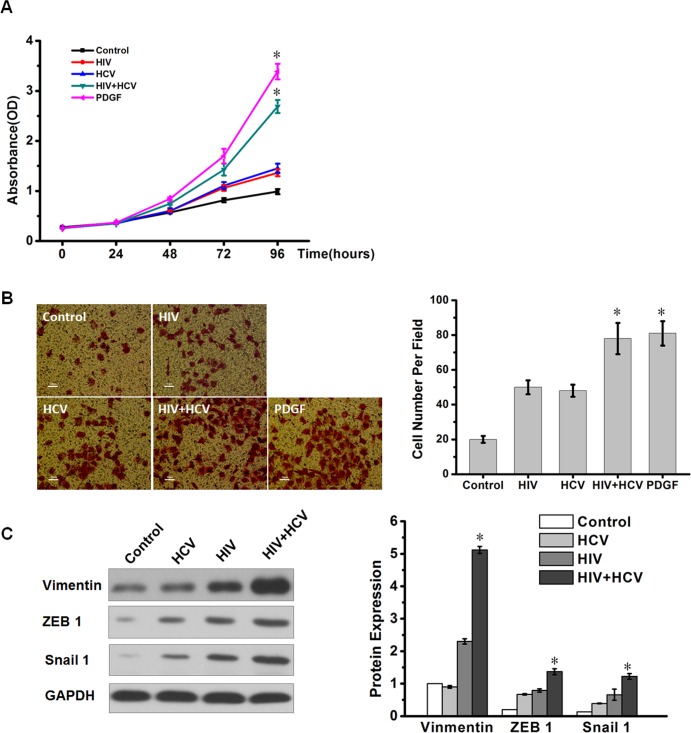
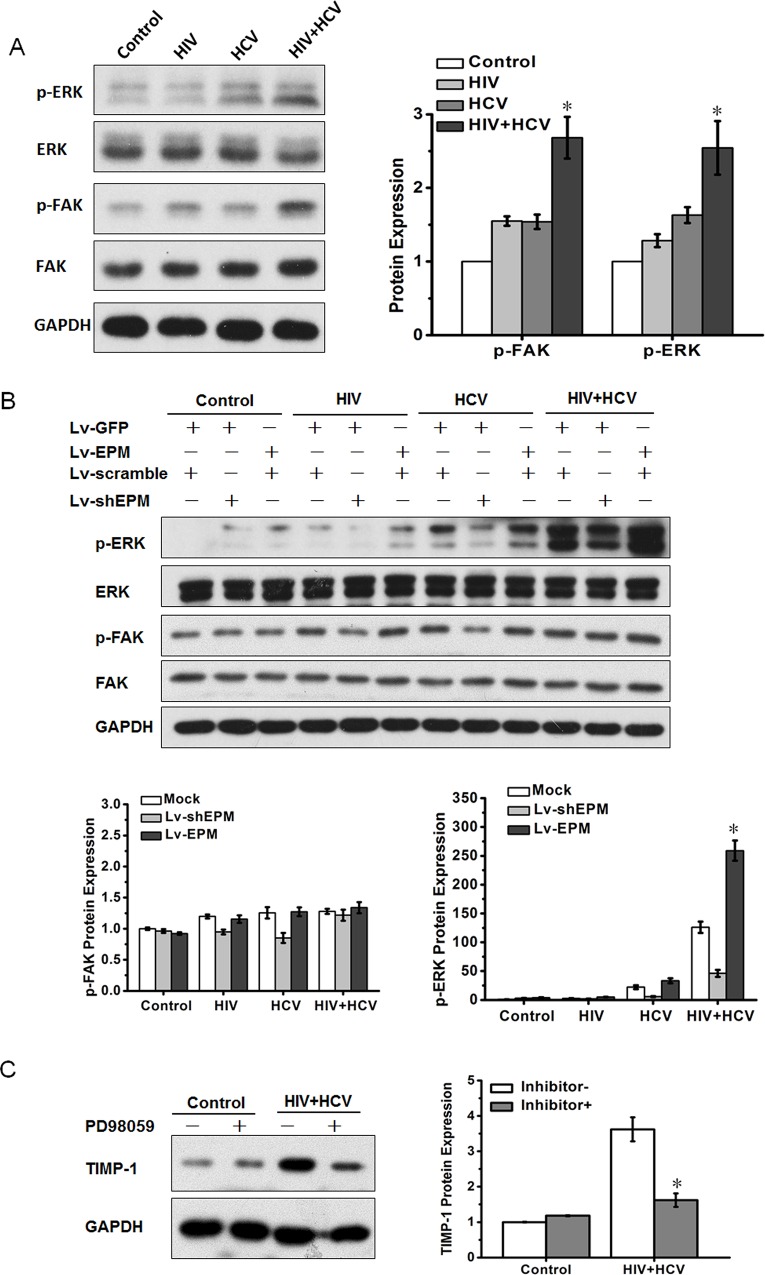
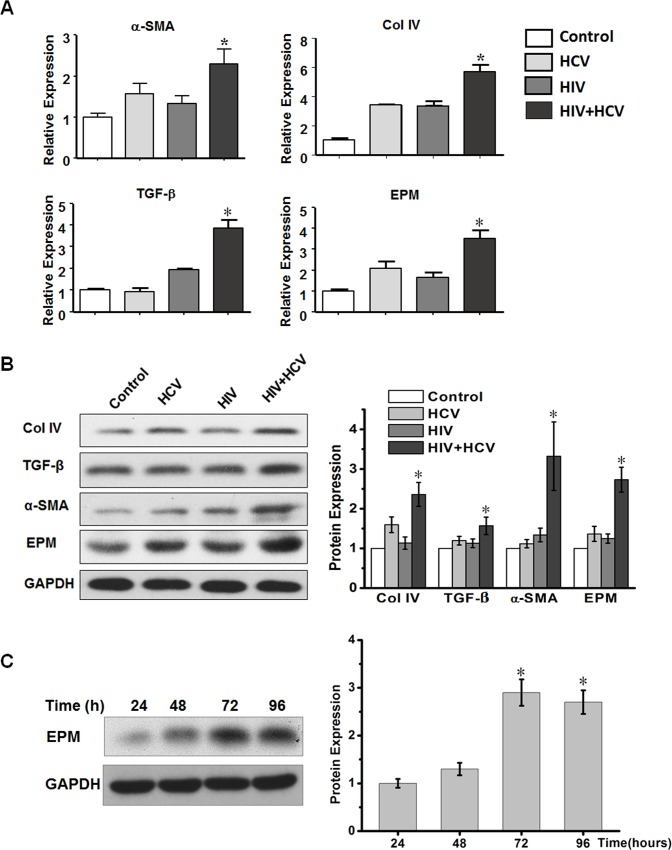
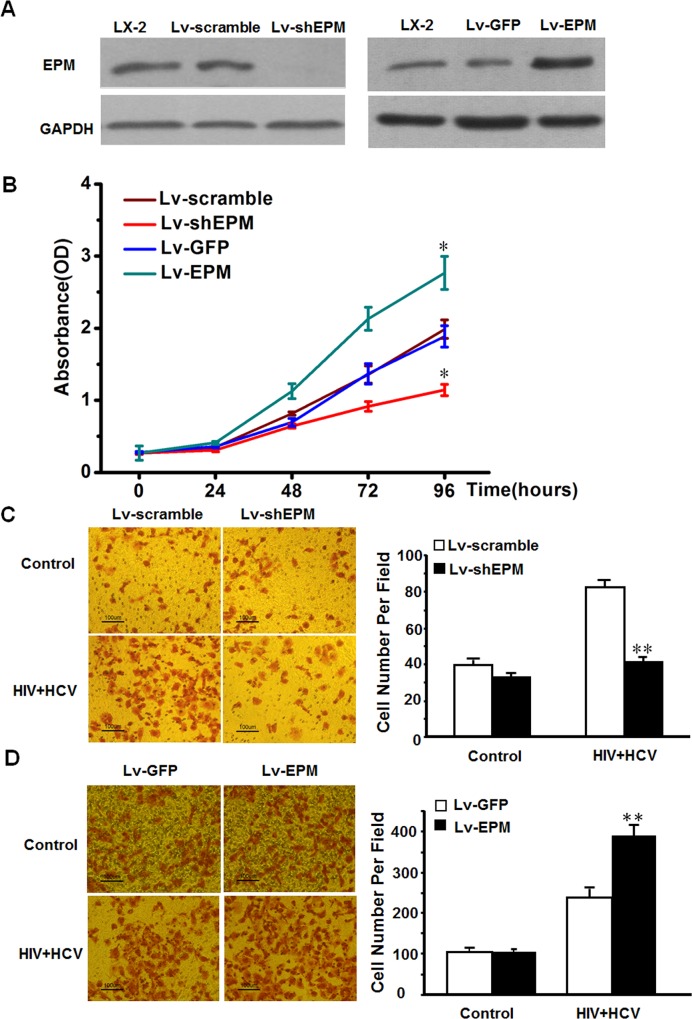
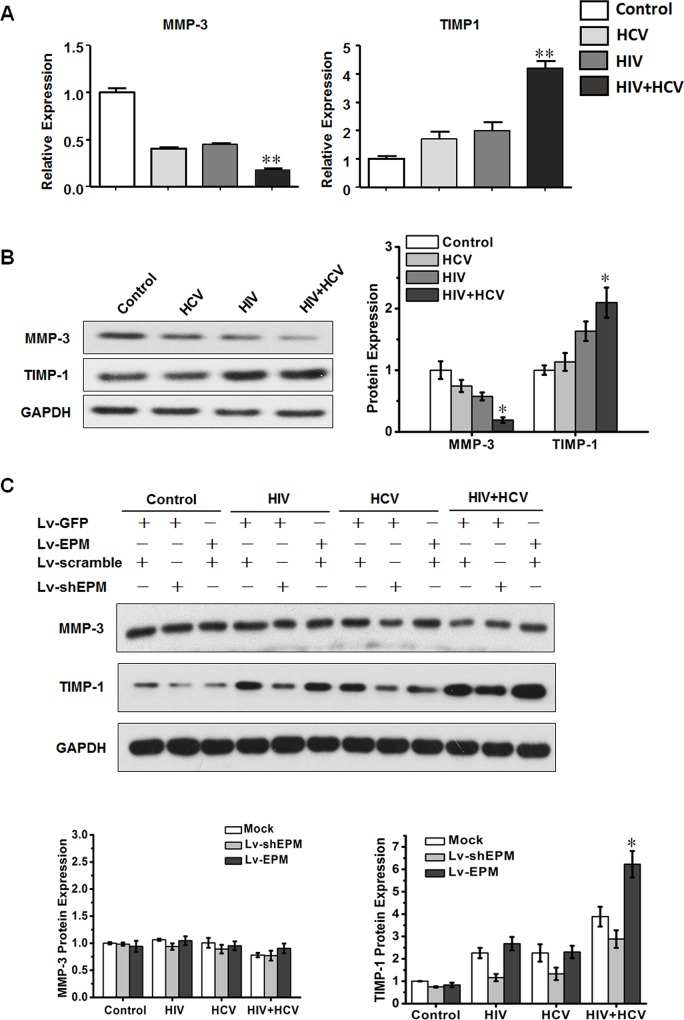
Accelerated fibrosis in patients co-infected with hepatitis C virus (HCV) and human immunodeficiency virus (HIV) has been a major cause of mortality in the highly active anti-retroviral therapy (HAART) era. However, the role of co-infection in accelerating the progression of liver fibrosis, particularly with regard to the effects of co-infection on hepatic stellate cells (HSCs), remains unclear. We hypothesized that HIV and HCV induce liver fibrosis synergistically by altering the regulation of epimorphin production, and thereby indirectly alter HSC function. Here, we examined the effects of epimorphin on HSC proliferation and invasion, and the changes in fibrogenesis-related gene activity in HSCs (LX2) in the presence of inactivated CXCR4-tropic HIV and HCV (JFH1). The combination of HIV and HCV significantly increased epimorphin expression, which increased the proliferation and invasion capabilities of HSCs. Epimorphin also induced the expression of profibrogenic tissue inhibitor of metalloproteinase 1 (TIMP1) in an extracellular signal-regulated kinase (ERK)-dependent manner. These data indicated that the effects of HIV/HCV co-infection on hepatic fibrosis might be mediated in part by EPM. Strategies to limit the expression of EPM might represent a novel therapeutic approach to prevent the progression of hepatic fibrosis during HIV/HCV co-infection.
在高效抗逆转录病毒治疗(HAART)时代,丙型肝炎病毒(HCV)和人类免疫缺陷病毒(HIV)合并感染患者中加速的纤维化一直是主要的死亡原因。然而,合并感染在加速肝纤维化进展中的作用,特别是关于合并感染对肝星状细胞(HSCs)的影响,仍不清楚。我们假设HIV和HCV通过改变表皮形态发生素产生的调节来协同诱导肝纤维化,从而间接改变HSC功能。在此,我们研究了在灭活的趋化因子受体4(CXCR4)嗜性HIV和HCV(JFH1)存在的情况下,表皮形态发生素对HSC增殖和侵袭的影响,以及HSCs(LX2)中与纤维化相关基因活性的变化。HIV和HCV的联合显著增加了表皮形态发生素的表达,这增加了HSCs的增殖和侵袭能力。表皮形态发生素还以细胞外信号调节激酶(ERK)依赖的方式诱导促纤维化金属蛋白酶组织抑制剂1(TIMP1)的表达。这些数据表明,HIV/HCV合并感染对肝纤维化的影响可能部分由表皮形态发生素介导。限制表皮形态发生素表达的策略可能代表一种预防HIV/HCV合并感染期间肝纤维化进展的新治疗方法。