Jiang Jinmai, Azevedo-Pouly Ana Clara P, Redis Roxana S, Lee Eun Joo, Gusev Yuriy, Allard David, Sutaria Dhruvitkumar S, Badawi Mohamed, Elgamal Ola A, Lerner Megan R, Brackett Daniel J, Calin George A, Schmittgen Thomas D
College of Pharmacy, University of Florida, Gainesville, FL, USA.
College of Pharmacy, Ohio State University, Columbus, OH, USA.
Oncotarget. 2016 Aug 16;7(33):53165-53177. doi: 10.18632/oncotarget.10242.
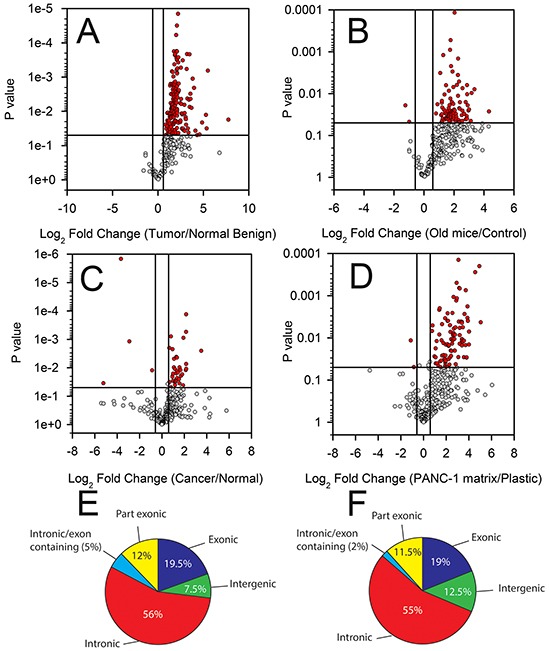
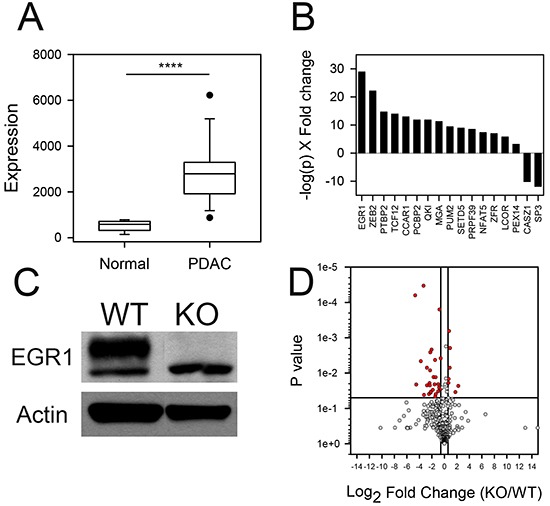
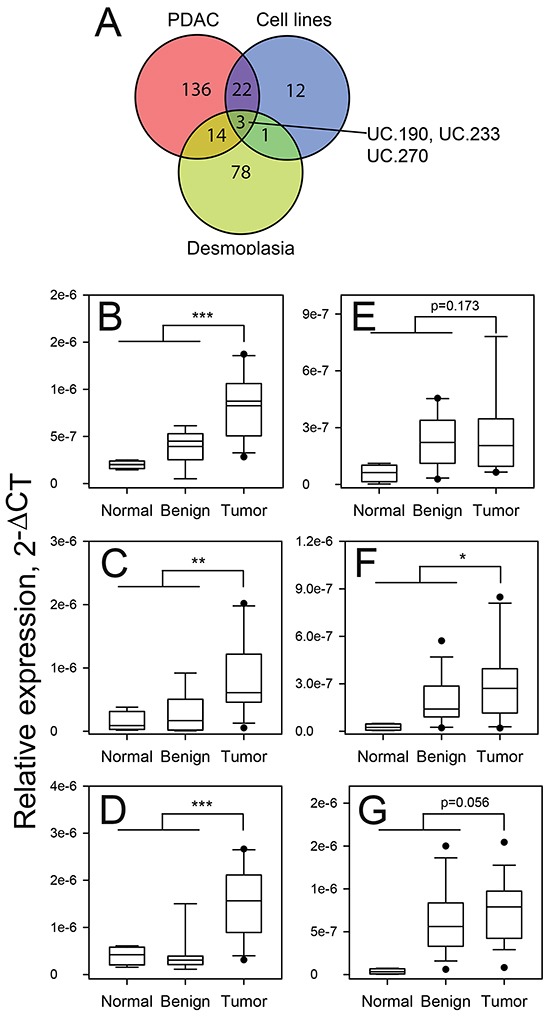
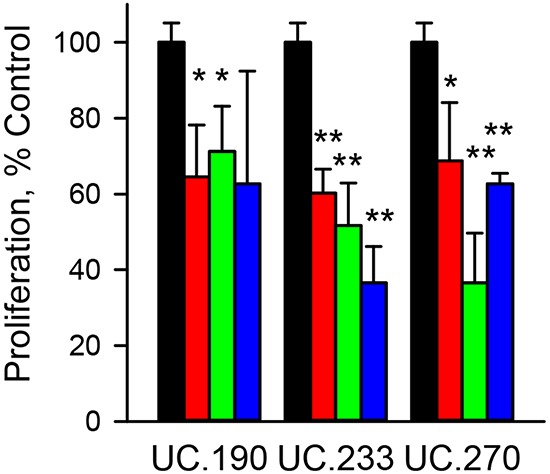
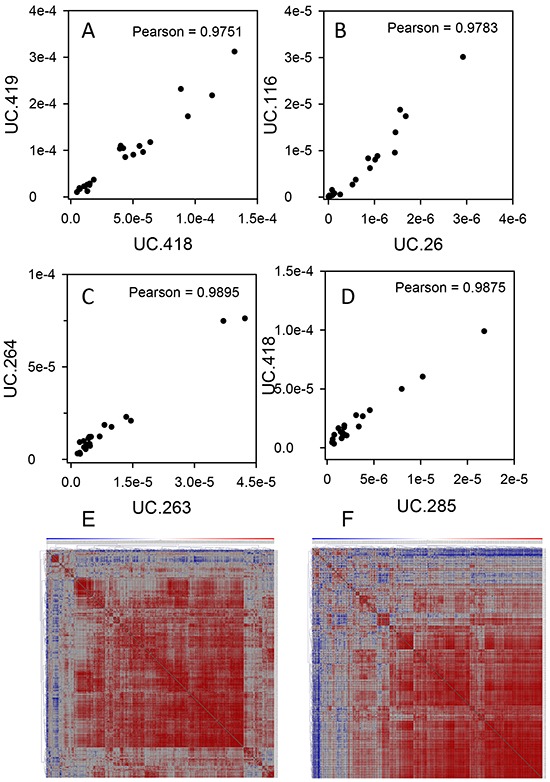
Transcribed ultraconserved regions (T-UCRs) are a class of non-coding RNAs with 100% sequence conservation among human, rat and mouse genomes. T-UCRs are differentially expressed in several cancers, however their expression in pancreatic adenocarcinoma (PDAC) has not been studied. We used a qPCR array to profile all 481 T-UCRs in pancreatic cancer specimens, pancreatic cancer cell lines, during experimental pancreatic desmoplasia and in the pancreases of P48Cre/wt; KrasLSL-G12D/wt mice. Fourteen, 57 and 29% of the detectable T-UCRs were differentially expressed in the cell lines, human tumors and transgenic mouse pancreases, respectively. The vast majority of the differentially expressed T-UCRs had increased expression in the cancer. T-UCRs were monitored using an in vitro model of the desmoplastic reaction. Twenty-five % of the expressed T-UCRs were increased in the HPDE cells cultured on PANC-1 cellular matrix. UC.190, UC.233 and UC.270 were increased in all three human data sets. siRNA knockdown of each of these three T-UCRs reduced the proliferation of MIA PaCa-2 cells up to 60%. The expression pattern among many T-UCRs in the human and mouse pancreases closely correlated with one another, suggesting that groups of T-UCRs are co-activated in PDAC. Successful knockout of the transcription factor EGR1 in PANC-1 cells caused a reduction in the expression of a subset of T-UCRs suggesting that EGR1 may control T-UCR expression in PDAC. We report a global increase in expression of T-UCRs in both human and mouse PDAC. Commonalties in their expression pattern suggest a similar mechanism of transcriptional upregulation for T-UCRs in PDAC.
转录超保守区域(T-UCRs)是一类非编码RNA,在人类、大鼠和小鼠基因组中具有100%的序列保守性。T-UCRs在多种癌症中存在差异表达,然而其在胰腺腺癌(PDAC)中的表达尚未得到研究。我们使用qPCR芯片分析了胰腺癌标本、胰腺癌细胞系、实验性胰腺纤维组织形成过程中以及P48Cre/wt; KrasLSL-G12D/wt小鼠胰腺中的所有481个T-UCRs。在细胞系、人类肿瘤和转基因小鼠胰腺中,分别有14%、57%和29%的可检测T-UCRs存在差异表达。绝大多数差异表达的T-UCRs在癌症中表达增加。使用纤维组织形成反应的体外模型监测T-UCRs。在PANC-1细胞基质上培养的HPDE细胞中,25%的表达T-UCRs增加。UC.190、UC.233和UC.270在所有三个人类数据集中均增加。对这三个T-UCRs中的每一个进行siRNA敲低,可使MIA PaCa-2细胞的增殖减少高达60%。人类和小鼠胰腺中许多T-UCRs的表达模式彼此密切相关,表明T-UCRs组在PDAC中被共同激活。在PANC-1细胞中成功敲除转录因子EGR1导致一部分T-UCRs的表达降低,表明EGR1可能控制PDAC中T-UCRs的表达。我们报告了人类和小鼠PDAC中T-UCRs表达的整体增加。它们表达模式的共性表明PDAC中T-UCRs存在类似的转录上调机制。