Abdelkader Hamdy, Longman Michael R, Alany Raid G, Pierscionek Barbara
Drug Discovery, Delivery and Patient Care (DDDPC) Theme, School of Life Sciences, Pharmacy and Chemistry, Kingston University London, Kingston Upon Thames, London, UK; Department of Pharmaceutics, Faculty of Pharmacy, Minia University, Mina, Egypt.
Drug Discovery, Delivery and Patient Care (DDDPC) Theme, School of Life Sciences, Pharmacy and Chemistry, Kingston University London, Kingston Upon Thames, London, UK.
Int J Nanomedicine. 2016 Jun 14;11:2815-27. doi: 10.2147/IJN.S104774. eCollection 2016.
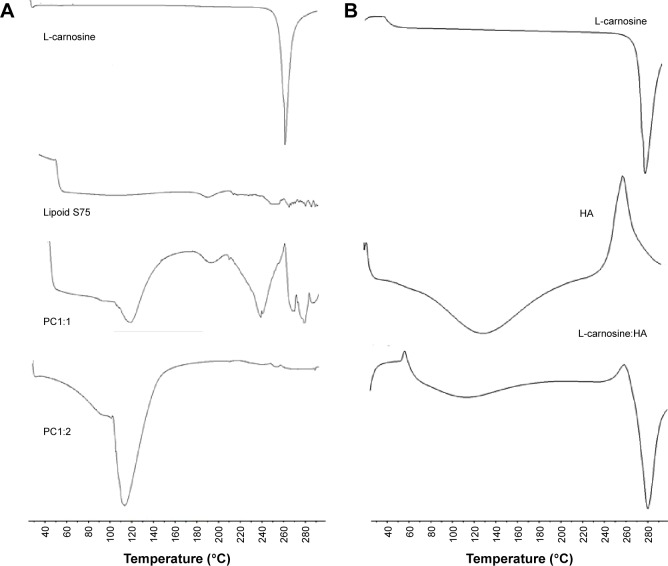
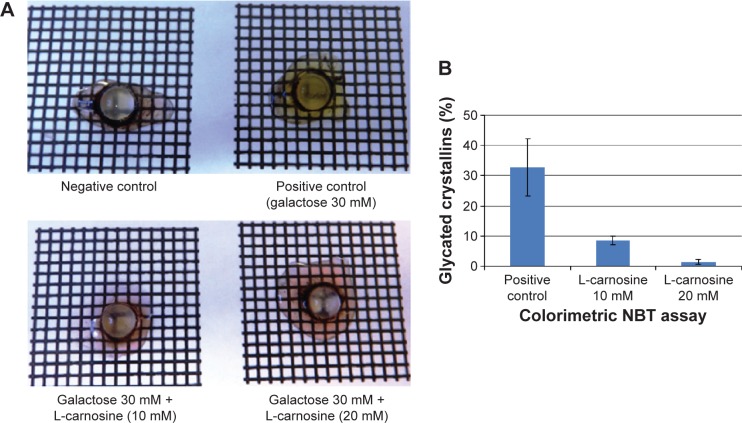
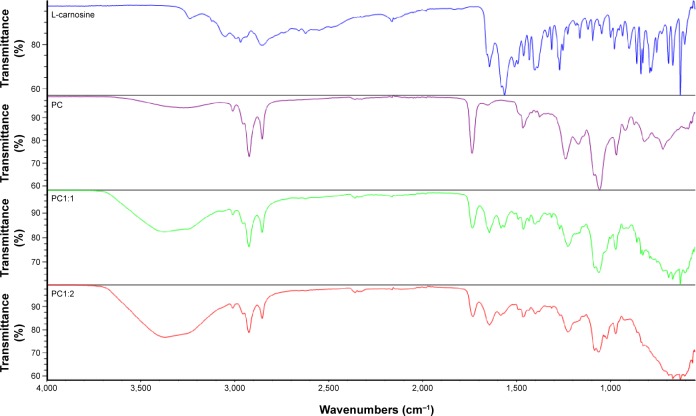
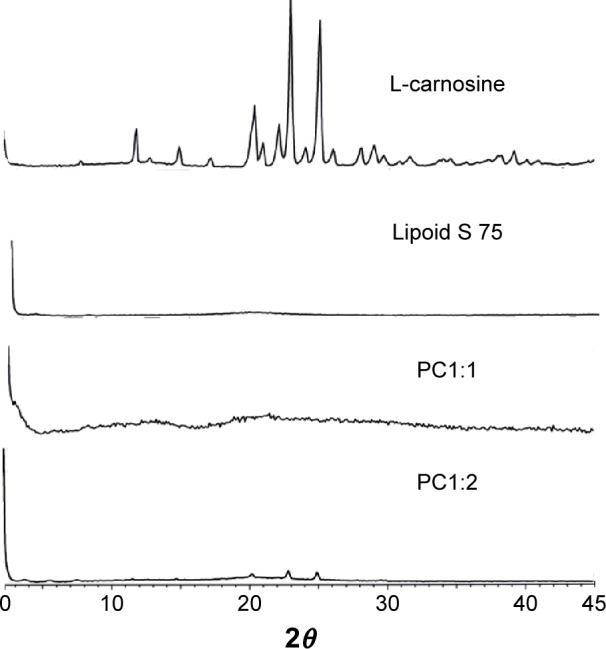
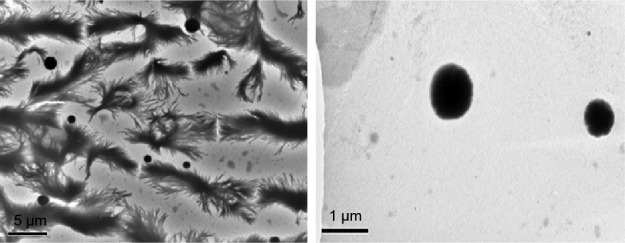
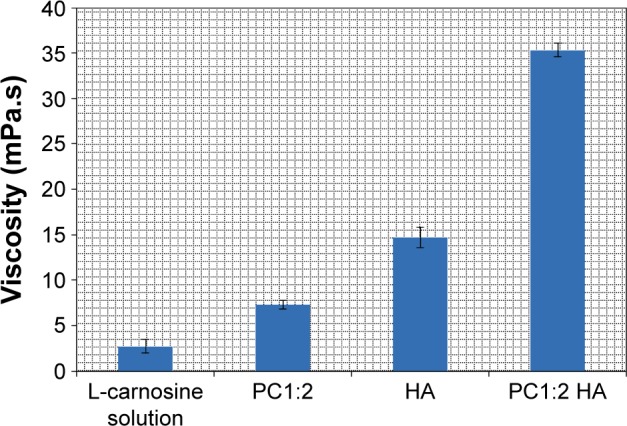
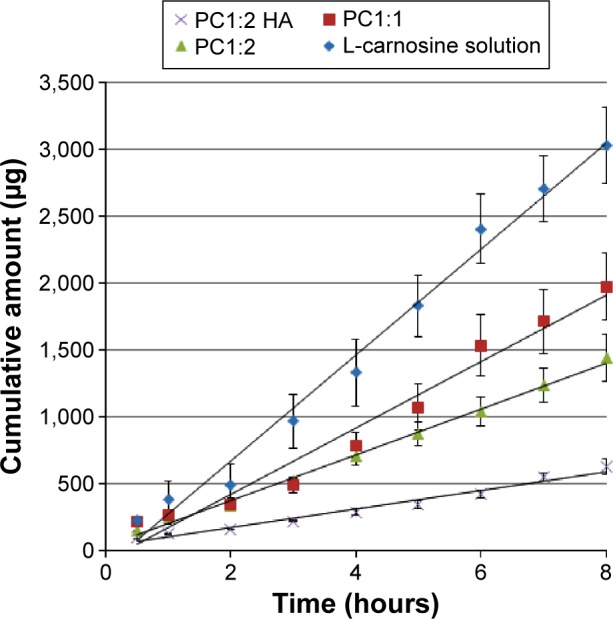
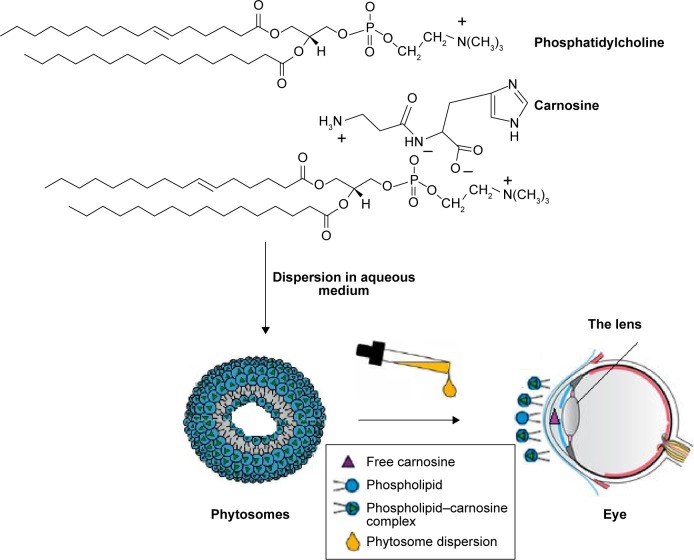
This study reports on L-carnosine phytosomes as an alternative for the prodrug N-acetyl-L-carnosine as a novel delivery system to the lens. L-carnosine was loaded into lipid-based phytosomes and hyaluronic acid (HA)-dispersed phytosomes. L-carnosine-phospholipid complexes (PC) of different molar ratios, 1:1 and 1:2, were prepared by the solvent evaporation method. These complexes were characterized with thermal and spectral analyses. PC were dispersed in either phosphate buffered saline pH 7.4 or HA (0.1% w/v) in phosphate buffered saline to form phytosomes PC1:1, PC1:2, and PC1:2 HA, respectively. These phytosomal formulations were studied for size, zeta potential, morphology, contact angle, spreading coefficient, viscosity, ex vivo transcorneal permeation, and cytotoxicity using primary human corneal cells. L-carnosine-phospholipid formed a complex at a 1:2 molar ratio and phytosomes were in the size range of 380-450 nm, polydispersity index of 0.12-0.2. The viscosity of PC1:2 HA increased by 2.4 to 5-fold compared with HA solution and PC 1:2, respectively; significantly lower surface tension, contact angle, and greater spreading ability for phytosomes were also recorded. Ex vivo transcorneal permeation parameters showed significantly controlled corneal permeation of L-carnosine with the novel carrier systems without any significant impact on primary human corneal cell viability. Ex vivo porcine lenses incubated in high sugar media without and with L-carnosine showed concentration-dependent marked inhibition of lens brunescence indicative of the potential for delaying changes that underlie cataractogenesis that may be linked to diabetic processes.
本研究报告了L-肌肽磷脂体作为前药N-乙酰-L-肌肽的替代物,作为一种向晶状体递送的新型系统。将L-肌肽负载到基于脂质的磷脂体和透明质酸(HA)分散的磷脂体中。通过溶剂蒸发法制备了不同摩尔比(1:1和1:2)的L-肌肽-磷脂复合物(PC)。通过热分析和光谱分析对这些复合物进行了表征。将PC分别分散在pH 7.4的磷酸盐缓冲盐溶液或磷酸盐缓冲盐溶液中的HA(0.1% w/v)中,以形成磷脂体PC1:1、PC1:2和PC1:2 HA。使用原代人角膜细胞对这些磷脂体制剂的大小、zeta电位、形态、接触角、铺展系数、粘度、离体角膜透过率和细胞毒性进行了研究。L-肌肽-磷脂以1:2的摩尔比形成复合物,磷脂体大小在380-450 nm范围内,多分散指数为0.12-0.2。与HA溶液和PC 1:2相比,PC1:2 HA的粘度分别增加了2.4至5倍;还记录到磷脂体的表面张力显著降低、接触角减小且铺展能力增强。离体角膜透过参数表明,新型载体系统对L-肌肽的角膜透过具有显著的控制作用,且对原代人角膜细胞活力没有任何显著影响。在无糖和添加L-肌肽的高糖培养基中孵育的离体猪晶状体显示出浓度依赖性的显著抑制晶状体褐变,这表明其具有延缓可能与糖尿病过程相关的白内障发生基础变化的潜力。