García Andrés Calderín, Olaetxea Maite, Santos Leandro Azevedo, Mora Verónica, Baigorri Roberto, Fuentes Marta, Zamarreño Angel Maria, Berbara Ricardo Luis Louro, Garcia-Mina José María
Soil Biology Laboratory, Department of Soil, Federal Rural University of Rio de Janeiro (UFRRJ), Rodovia BR 465 km 7, 23890-000 Seropédica, RJ, Brazil.
Department of Environmental Biology, Agricultural Chemistry and Biology Group-CMI Roullier, Faculty of Sciences, University of Navarra, C/Irunlarrea 1, 31008 Pamplona, Spain.
Biomed Res Int. 2016;2016:3747501. doi: 10.1155/2016/3747501. Epub 2016 Jun 5.
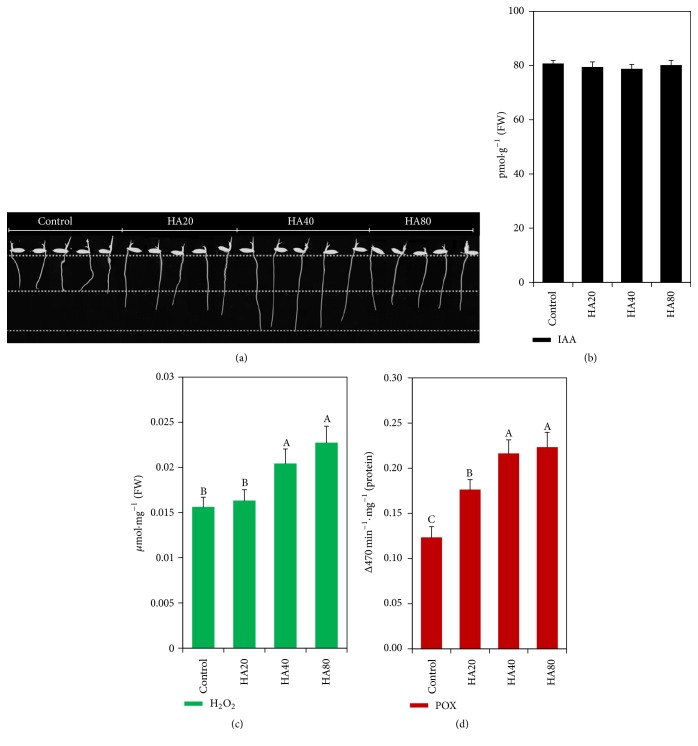
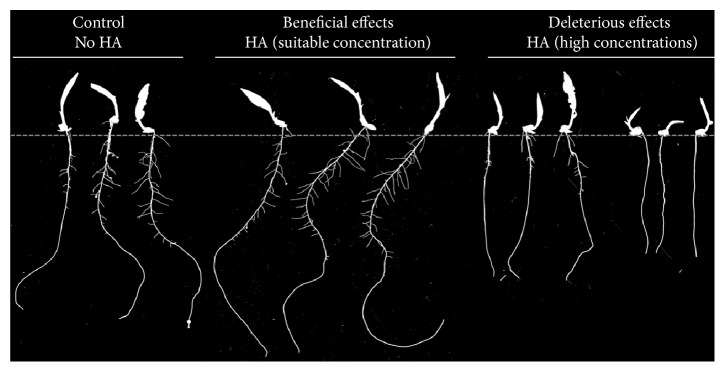
The importance of soil humus in soil fertility has been well established many years ago. However, the knowledge about the whole mechanisms by which humic molecules in the rhizosphere improve plant growth remains partial and rather fragmentary. In this review we discuss the relationships between two main signaling pathway families that are affected by humic substances within the plant: one directly related to hormonal action and the other related to reactive oxygen species (ROS). In this sense, our aims are to try the integration of all these events in a more comprehensive model and underline some points in the model that remain unclear and deserve further research.
土壤腐殖质在土壤肥力中的重要性早在多年前就已得到充分证实。然而,关于根际腐殖质分子促进植物生长的完整机制的认识仍然不全面且相当零散。在本综述中,我们讨论了植物体内受腐殖质影响的两个主要信号通路家族之间的关系:一个与激素作用直接相关,另一个与活性氧(ROS)相关。从这个意义上说,我们的目标是尝试将所有这些事件整合到一个更全面的模型中,并强调该模型中仍不明确且值得进一步研究的一些要点。