Pathangey Latha B, Lakshminarayanan Vani, Suman Vera J, Pockaj Barbara A, Mukherjee Pinku, Gendler Sandra J
Department of Biochemistry and Molecular Biology, College of Medicine, Mayo Clinic in Arizona, 13400 E. Shea Boulevard, Scottsdale, AZ 85259, USA.
Department of Immunology, College of Medicine, Mayo Clinic in Arizona, 13400 E. Shea Boulevard, Scottsdale, AZ 85259, USA.
Biomolecules. 2016 Jun 29;6(3):31. doi: 10.3390/biom6030031.
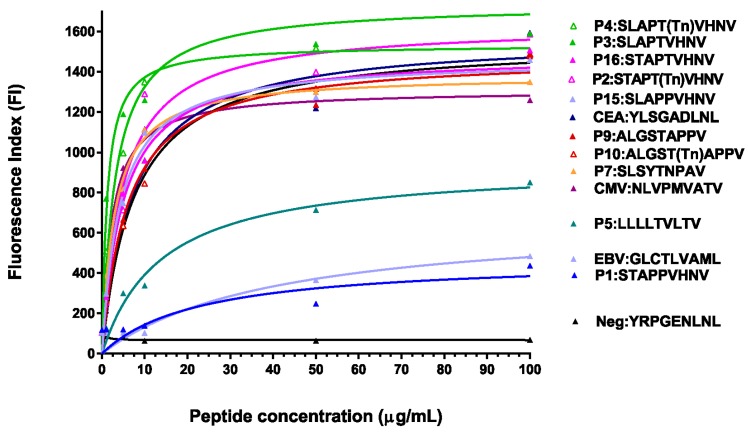
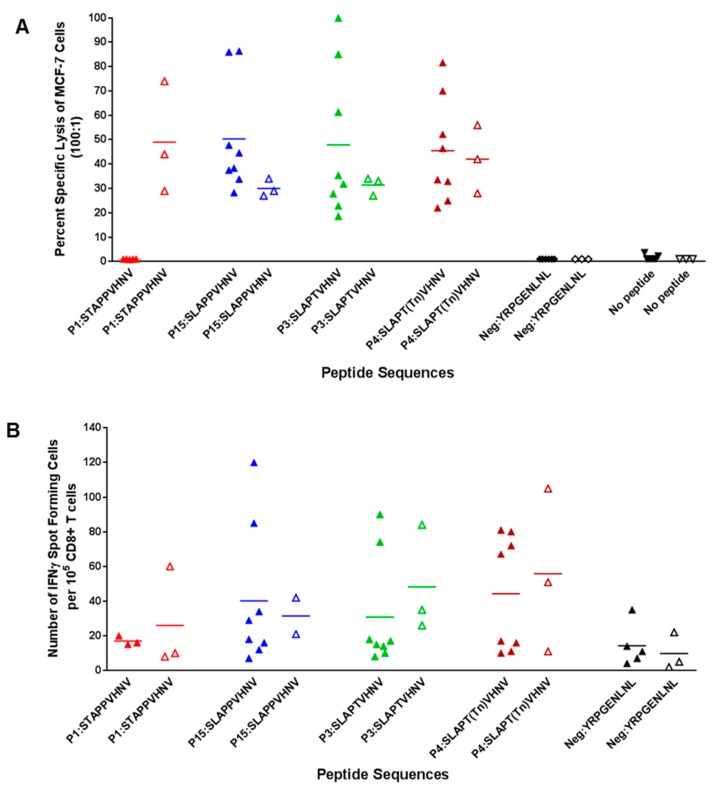
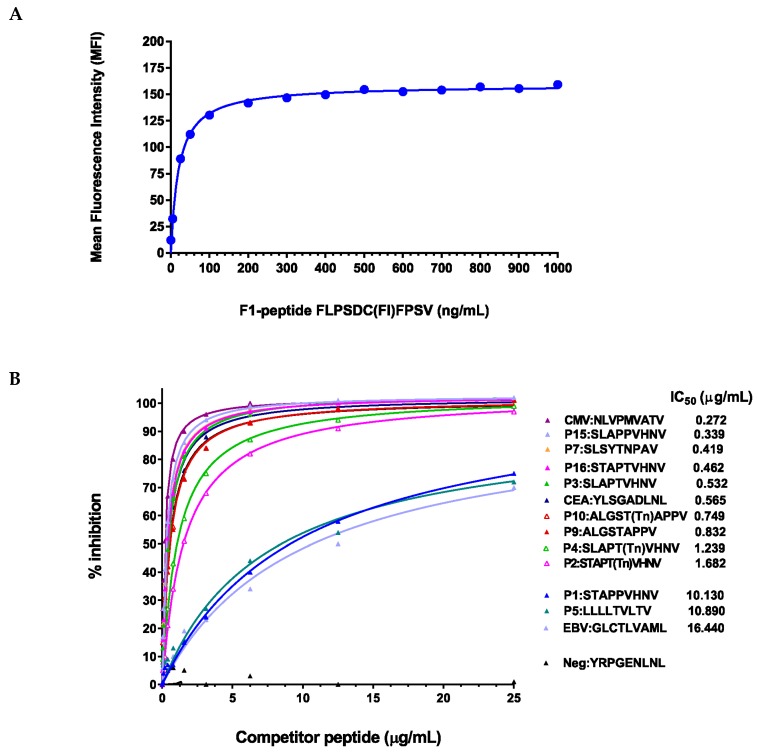
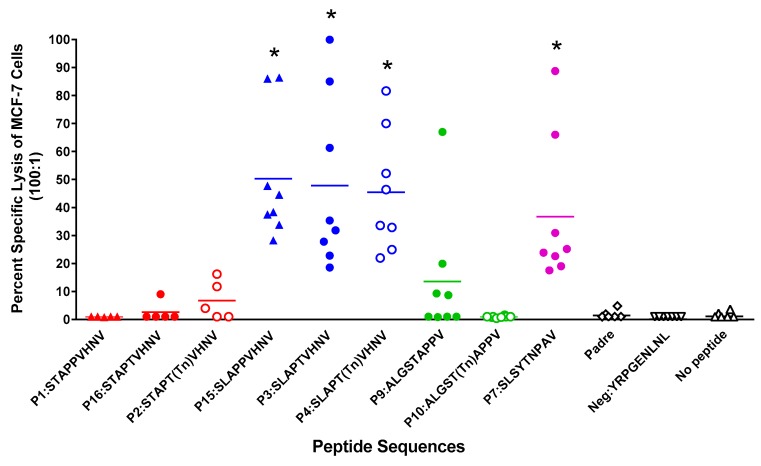
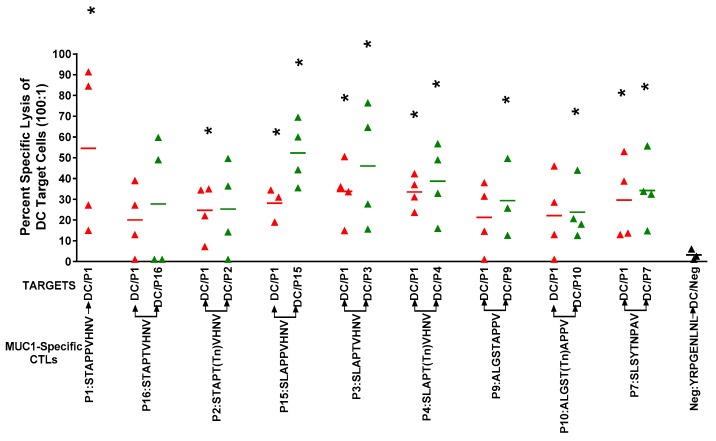
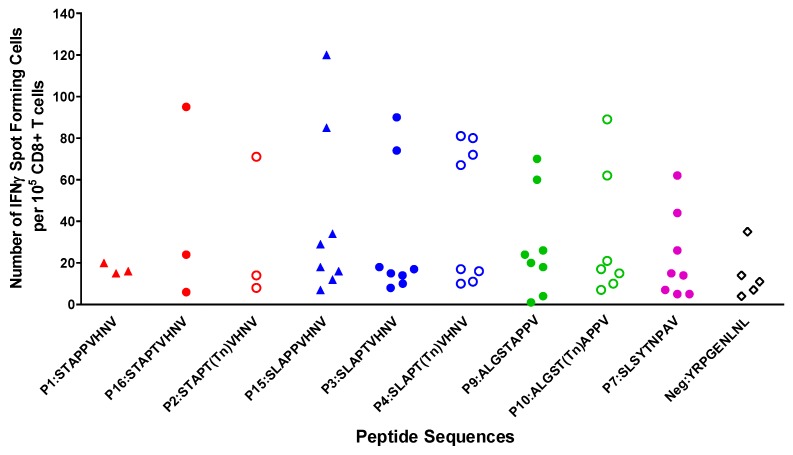
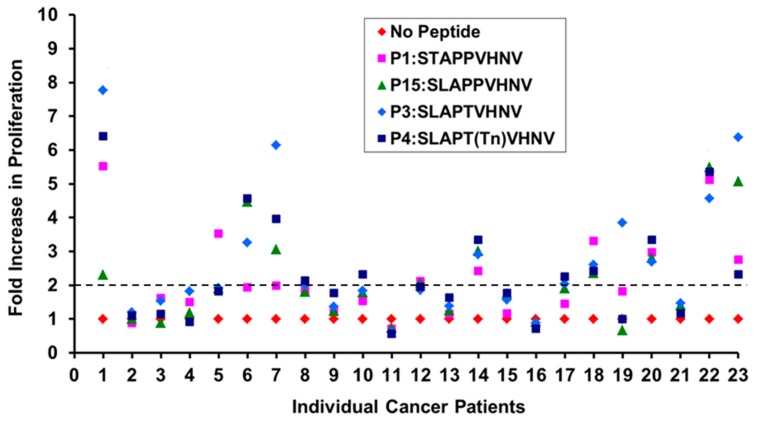
Cancer vaccines have often failed to live up to their promise, although recent results with checkpoint inhibitors are reviving hopes that they will soon fulfill their promise. Although mutation-specific vaccines are under development, there is still high interest in an off-the-shelf vaccine to a ubiquitous antigen, such as MUC1, which is aberrantly expressed on most solid and many hematological tumors, including more than 90% of breast carcinomas. Clinical trials for MUC1 have shown variable success, likely because of immunological tolerance to a self-antigen and to poor immunogenicity of tandem repeat peptides. We hypothesized that MUC1 peptides could be optimized, relying on heteroclitic optimizations of potential anchor amino acids with and without tumor-specific glycosylation of the peptides. We have identified novel MUC1 class I peptides that bind to HLA-A*0201 molecules with significantly higher affinity and function than the native MUC1 peptides. These peptides elicited CTLs from normal donors, as well as breast cancer patients, which were highly effective in killing MUC1-expressing MCF-7 breast cancer cells. Each peptide elicited lytic responses in greater than 6/8 of normal individuals and 3/3 breast cancer patients. The CTLs generated against the glycosylated-anchor modified peptides cross reacted with the native MUC1 peptide, STAPPVHNV, suggesting these analog peptides may offer substantial improvement in the design of epitope-based vaccines.
癌症疫苗常常未能兑现其承诺,尽管最近检查点抑制剂的研究结果让人们重新燃起希望,认为它们很快就能实现其承诺。虽然针对特定突变的疫苗正在研发中,但人们对一种现成的针对普遍存在的抗原(如MUC1)的疫苗仍有很高的兴趣,MUC1在大多数实体瘤和许多血液肿瘤中异常表达,包括超过90%的乳腺癌。MUC1的临床试验显示出不同程度的成功,这可能是由于对自身抗原的免疫耐受以及串联重复肽的免疫原性较差。我们假设可以通过对潜在锚定氨基酸进行异质性优化,并对肽进行肿瘤特异性糖基化修饰来优化MUC1肽。我们已经鉴定出新型的MUC1 I类肽,它们与HLA-A*0201分子结合的亲和力和功能明显高于天然MUC1肽。这些肽能从正常供体以及乳腺癌患者中诱导出细胞毒性T淋巴细胞(CTL),这些CTL在杀死表达MUC1的MCF-7乳腺癌细胞方面非常有效。每种肽在超过6/8的正常个体和3/3的乳腺癌患者中引发了裂解反应。针对糖基化锚定修饰肽产生的CTL与天然MUC1肽STAPPVHNV发生交叉反应,这表明这些类似肽可能在基于表位的疫苗设计中带来实质性的改进。