Vafaei Rana, Samadi Mitra, Hosseinzadeh Aysooda, Barzaman Khadijeh, Esmailinejad MohammadReza, Khaki Zohreh, Farahmand Leila
Recombinant Proteins Department, Breast Cancer Research Center, Motamed Cancer Institute, ACECR, No.146, South Gandi Ave, Vanak Sq, Tehran, Iran.
Department of Immunology, School of Medicine, Iran University of Medical Sciences, Tehran, Iran.
Cancer Cell Int. 2022 Jan 9;22(1):14. doi: 10.1186/s12935-021-02398-6.
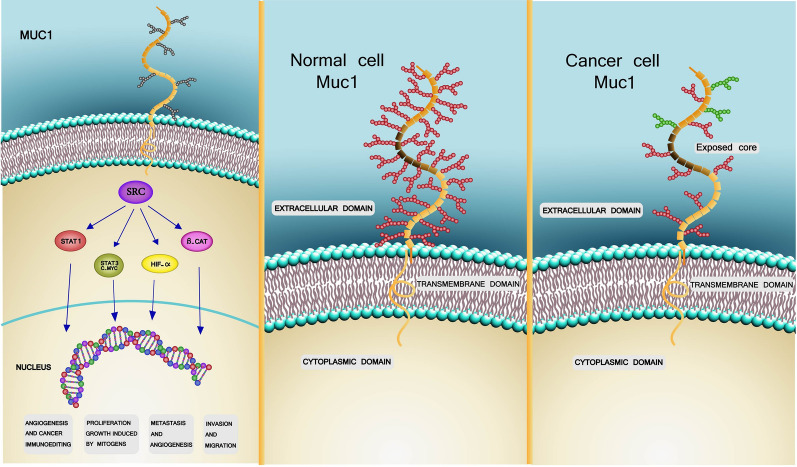
Mucin-1 (MUC-1) is a transmembrane glycoprotein, which bears many similarities between dogs and humans. Since the existence of animal models is essential to understand the significant factors involved in breast cancer mechanisms, canine mammary tumors (CMTs) could be used as a spontaneously occurring tumor model for human studies. Accordingly, this review assessed the comparison of canine and human MUC-1 based on their diagnostic and therapeutic aspects and showed how comparative oncology approaches could provide insights into translating pre-clinical trials from human to veterinary oncology and vice versa which could benefit both humans and dogs.
粘蛋白-1(MUC-1)是一种跨膜糖蛋白,在犬类和人类之间有许多相似之处。由于动物模型的存在对于理解乳腺癌机制中涉及的重要因素至关重要,犬乳腺肿瘤(CMTs)可作为人类研究的自发肿瘤模型。因此,本综述基于犬类和人类MUC-1的诊断和治疗方面进行了比较,并展示了比较肿瘤学方法如何为将临床前试验从人类肿瘤学转化为兽医肿瘤学以及反之亦然提供见解,这对人类和犬类都有益。