Viggiano Emanuela, Mollica Maria Pina, Lionetti Lillà, Cavaliere Gina, Trinchese Giovanna, De Filippo Chiara, Chieffi Sergio, Gaita Marcello, Barletta Antonio, De Luca Bruno, Crispino Marianna, Monda Marcellino
Department of Experimental Medicine-Section of Human Physiology, Second University of NaplesNaples, Italy; Department of Medicine, University of PadovaPadua, Italy.
Department of Biology, University of Naples Federico II Naples, Italy.
Front Cell Neurosci. 2016 Jun 9;10:150. doi: 10.3389/fncel.2016.00150. eCollection 2016.
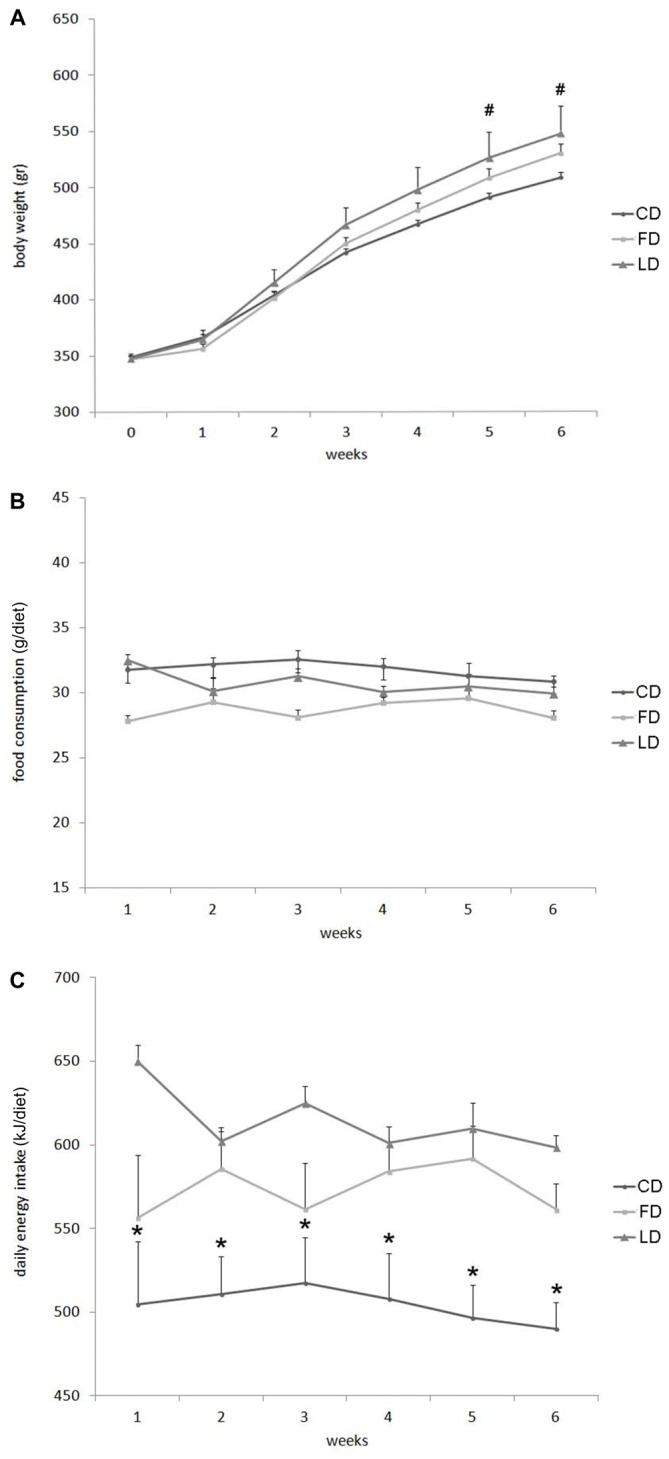
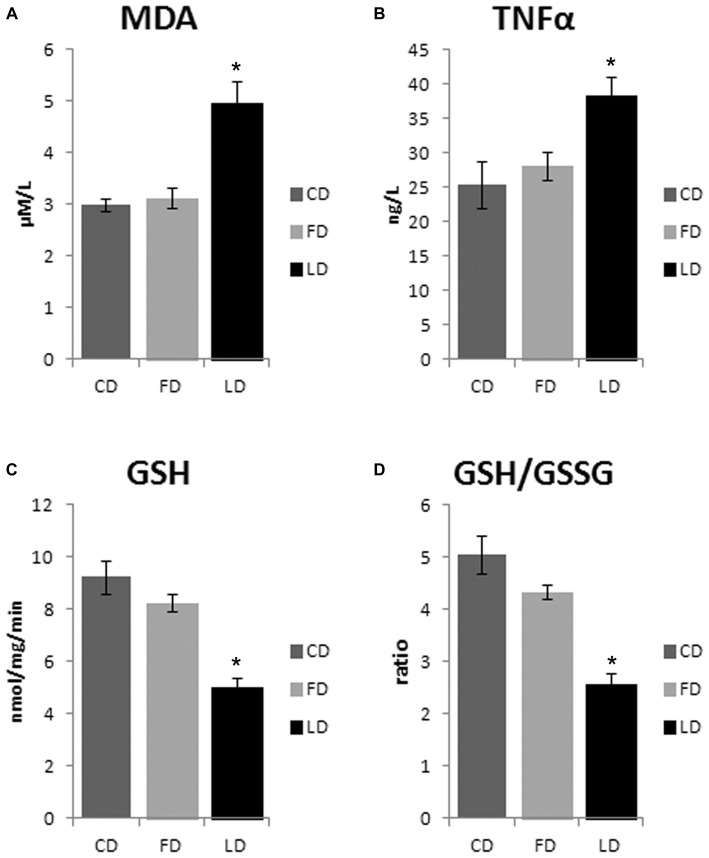
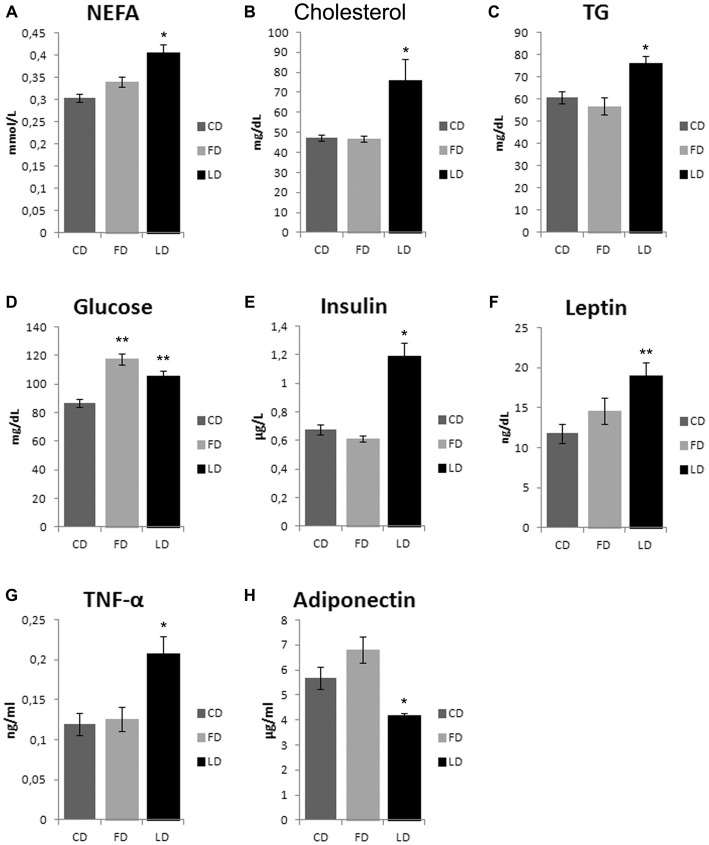
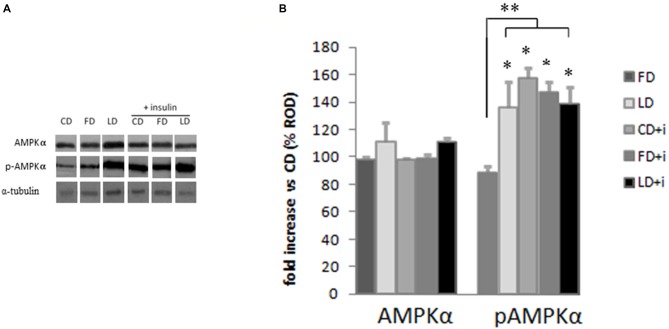
The high fat diet (HFD) rich in lard induces obesity, inflammation and oxidative stress, and the deregulation of hypothalamic nuclei plays an important role in this mechanism. One important factor involved in the food intake and inflammation is adenosine monophosphate-dependent kinase (AMPK), a serine/threonine kinase activated by phosphorylation. Omega (ω)3-polyunsaturated fatty acids (PUFA) are dietary compounds known to attenuate the obesity-related diseases, although the molecular mechanisms underlying their actions in the hypothalamus are not completely understood. We hypothesized that the beneficial effects of PUFA may be mediated by AMPK in the hypothalamus. To this aim, rats were fed a control diet (CD), or isocaloric HFD containing either fish oil (FD; rich in ω3-PUFA) or lard for 6 weeks, and the activation of AMPK, inflammatory state (IKKβ, TNF-α) and oxidative stress were analyzed in the hypothalamus. In addition, we also studied serum lipid profile, homeostatic model assessment (HOMA) index, and pro-inflammatory parameters. Our results showed, at the hypothalamic level of LD-fed rats, an increase of AMPK activation, inflammation and oxidative stress, while no modifications were detected in FD-fed animals compared to CD. In addition body weight gain, serum lipid profile, pro-inflammatory parameters and insulin resistance were reduced in FD animals compared to LD. In conclusion, our data indicate that the substitution of saturated by unsaturated fatty acids in the diet has beneficial effects on modulation of hypothalamic inflammation and function in obesity, underlying, at hypothalamic level, the interaction among insulin and/or leptin resistance, AMPK activation and hyperphagia.
富含猪油的高脂饮食(HFD)会引发肥胖、炎症和氧化应激,而下丘脑核的失调在这一机制中起重要作用。参与食物摄入和炎症的一个重要因素是腺苷单磷酸依赖性激酶(AMPK),它是一种通过磷酸化激活的丝氨酸/苏氨酸激酶。ω3-多不饱和脂肪酸(PUFA)是已知可减轻肥胖相关疾病的膳食化合物,尽管其在下丘脑中作用的分子机制尚未完全明确。我们假设PUFA的有益作用可能由下丘脑的AMPK介导。为此,将大鼠分为三组,分别喂食对照饮食(CD)、含鱼油(FD;富含ω3-PUFA)的等热量HFD或猪油,持续6周,并分析下丘脑中AMPK的激活、炎症状态(IKKβ、TNF-α)和氧化应激。此外,我们还研究了血清脂质谱、稳态模型评估(HOMA)指数和促炎参数。我们的结果显示,在喂食猪油的大鼠下丘脑水平,AMPK激活、炎症和氧化应激增加,而与喂食对照饮食的动物相比,喂食鱼油的动物未检测到变化。此外,与喂食猪油的动物相比,喂食鱼油的动物体重增加、血清脂质谱、促炎参数和胰岛素抵抗均降低。总之,我们的数据表明,饮食中用不饱和脂肪酸替代饱和脂肪酸对肥胖时下丘脑炎症和功能的调节具有有益作用,在丘脑水平上揭示了胰岛素和/或瘦素抵抗、AMPK激活和食欲亢进之间的相互作用。