Laboratory of Cell Signaling, University of Campinas, Campinas, Brazil.
PLoS One. 2012;7(1):e30571. doi: 10.1371/journal.pone.0030571. Epub 2012 Jan 18.
In experimental models, hypothalamic inflammation is an early and determining factor in the installation and progression of obesity. Pharmacological and gene-based approaches have proven efficient in restraining inflammation and correcting the obese phenotypes. However, the role of nutrients in the modulation of hypothalamic inflammation is unknown.
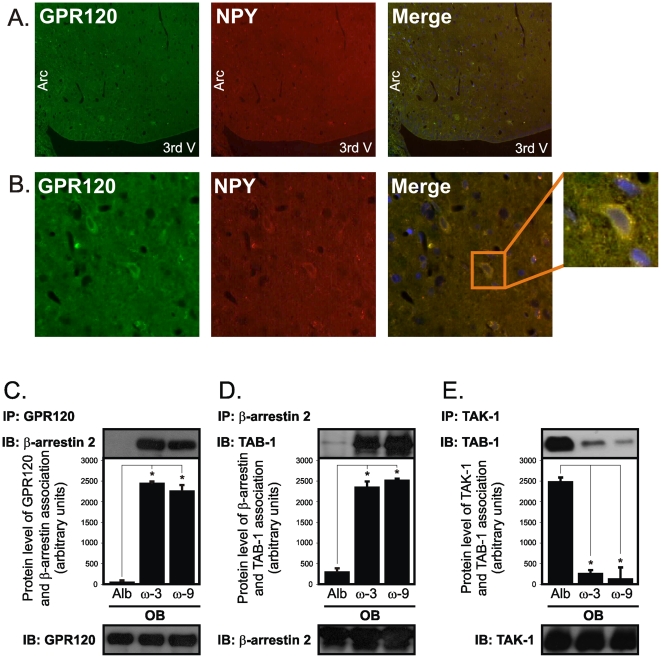
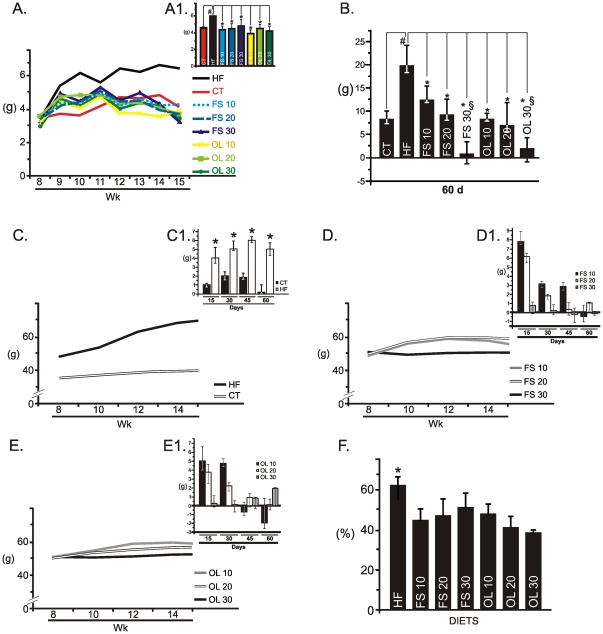
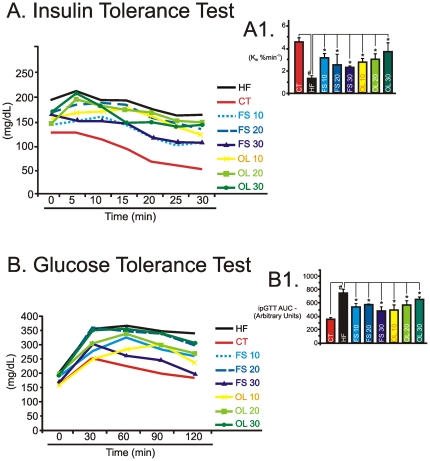
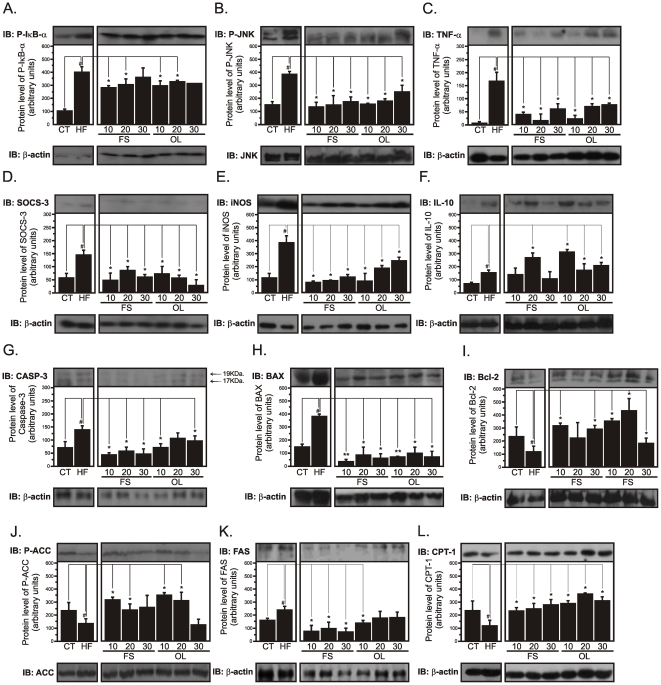
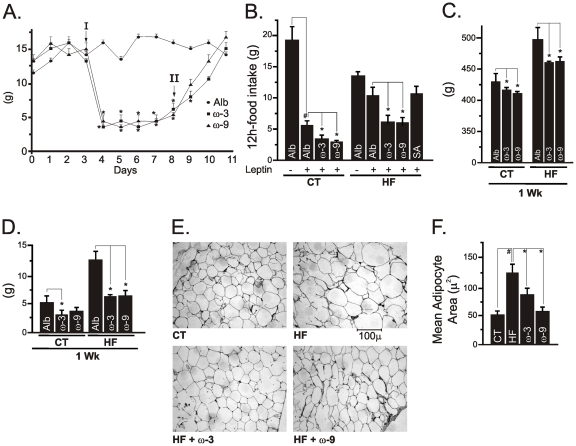
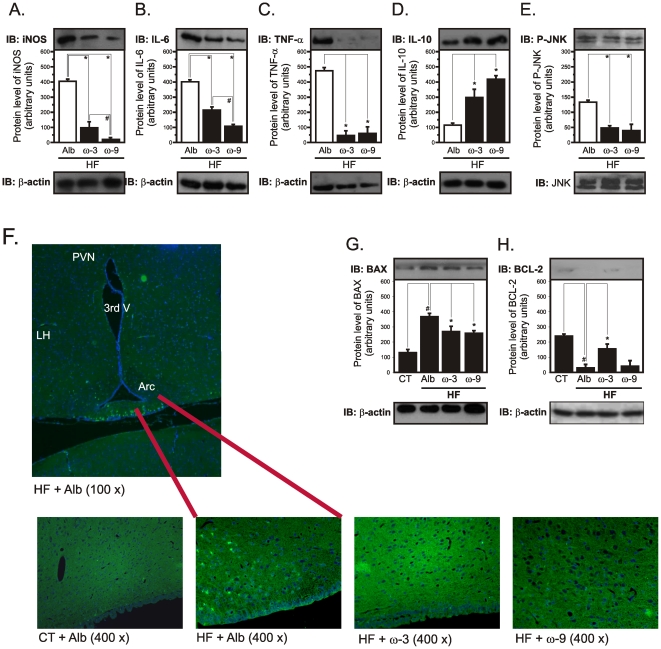
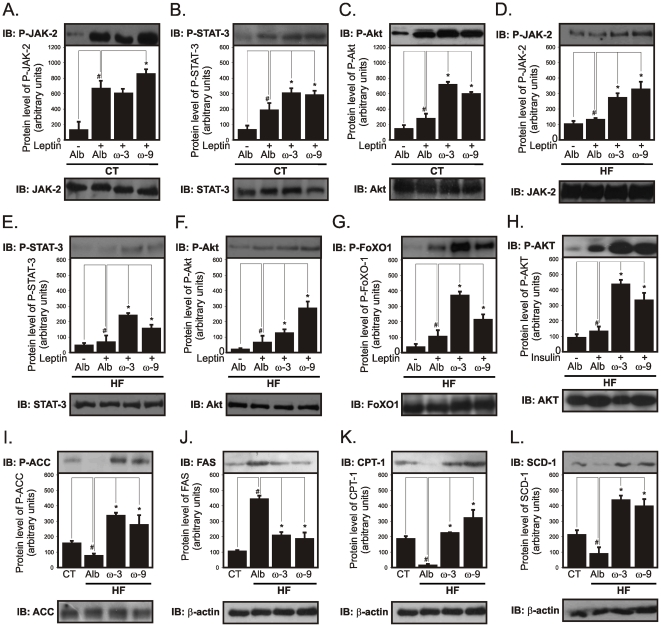
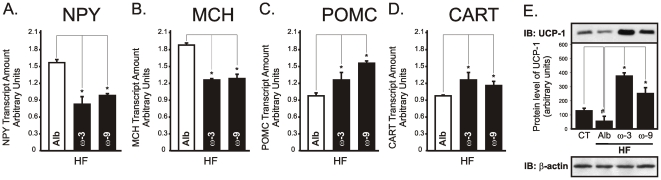
METHODOLOGY/PRINCIPAL FINDINGS: Here we show that, in a mouse model of diet-induced obesity, partial substitution of the fatty acid component of the diet by flax seed oil (rich in C18:3) or olive oil (rich in C18:1) corrects hypothalamic inflammation, hypothalamic and whole body insulin resistance, and body adiposity. In addition, upon icv injection in obese rats, both ω3 and ω9 pure fatty acids reduce spontaneous food intake and body mass gain. These effects are accompanied by the reversal of functional and molecular hypothalamic resistance to leptin/insulin and increased POMC and CART expressions. In addition, both, ω3 and ω9 fatty acids inhibit the AMPK/ACC pathway and increase CPT1 and SCD1 expression in the hypothalamus. Finally, acute hypothalamic injection of ω3 and ω9 fatty acids activate signal transduction through the recently identified GPR120 unsaturated fatty acid receptor.
CONCLUSIONS/SIGNIFICANCE: Unsaturated fatty acids can act either as nutrients or directly in the hypothalamus, reverting diet-induced inflammation and reducing body adiposity. These data show that, in addition to pharmacological and genetic approaches, nutrients can also be attractive candidates for controlling hypothalamic inflammation in obesity.
在实验模型中,下丘脑炎症是肥胖发生和发展的早期决定因素。药理学和基因方法已被证明能有效抑制炎症和纠正肥胖表型。然而,营养物质在调节下丘脑炎症中的作用尚不清楚。
方法/主要发现:在这里,我们表明,在饮食诱导肥胖的小鼠模型中,用亚麻籽油(富含 C18:3)或橄榄油(富含 C18:1)部分替代饮食中的脂肪酸成分可纠正下丘脑炎症、下丘脑和全身胰岛素抵抗以及体脂增加。此外,在肥胖大鼠的脑室内注射时,ω3 和 ω9 纯脂肪酸均可减少自发食物摄入和体重增加。这些作用伴随着对瘦素/胰岛素的功能性和分子下丘脑抵抗的逆转以及 POMC 和 CART 表达的增加。此外,ω3 和 ω9 脂肪酸均可抑制 AMPK/ACC 通路,并增加下丘脑的 CPT1 和 SCD1 表达。最后,ω3 和 ω9 脂肪酸的急性下丘脑注射通过最近发现的 GPR120 不饱和脂肪酸受体激活信号转导。
结论/意义:不饱和脂肪酸可以作为营养物质或直接在下丘脑发挥作用,逆转饮食诱导的炎症并减少体脂增加。这些数据表明,除了药理学和遗传方法外,营养物质也可以成为控制肥胖症下丘脑炎症的有吸引力的候选物。