Takao Keizo, Shoji Hirotaka, Hattori Satoko, Miyakawa Tsuyoshi
Section of Behavior Patterns, Center for Genetic Analysis of Behavior, National Institute for Physiological SciencesOkazaki, Japan; Japan Science and Technology Agency, Core Research for Evolutional Science and Technology, CRESTKawaguchi, Japan; Division of Animal Resources and Development, Life Science Research Center, University of ToyamaToyama, Japan.
Japan Science and Technology Agency, Core Research for Evolutional Science and Technology, CRESTKawaguchi, Japan; Division of Systems Medical Science, Institute for Comprehensive Medical Science, Fujita Health UniversityToyoake, Japan.
Front Behav Neurosci. 2016 Jun 3;10:99. doi: 10.3389/fnbeh.2016.00099. eCollection 2016.
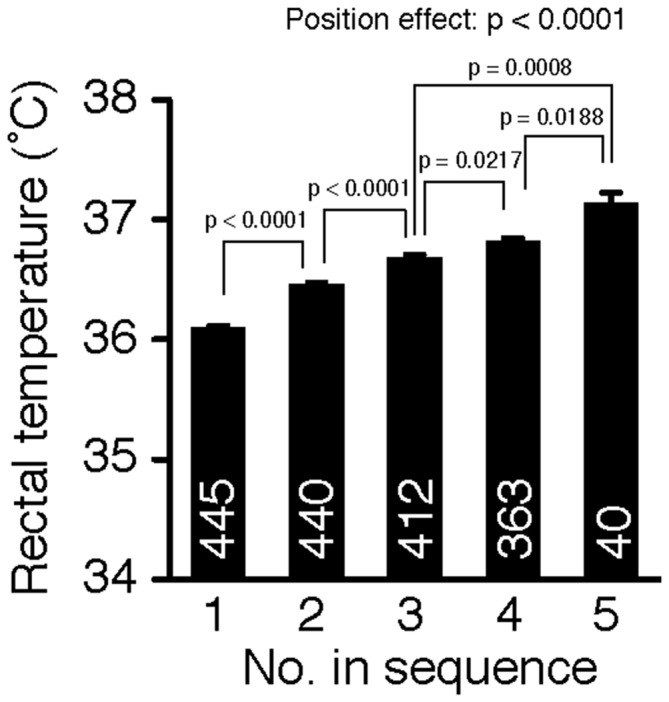
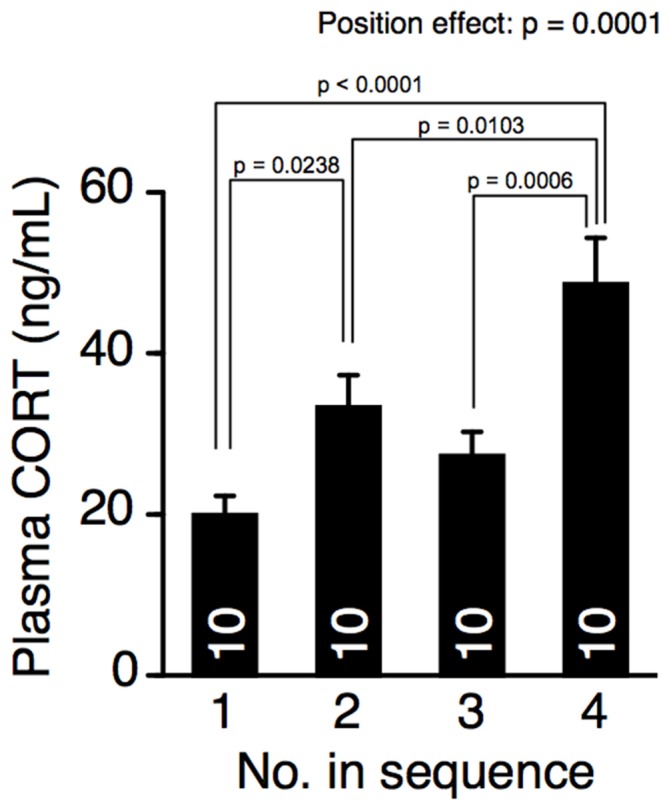
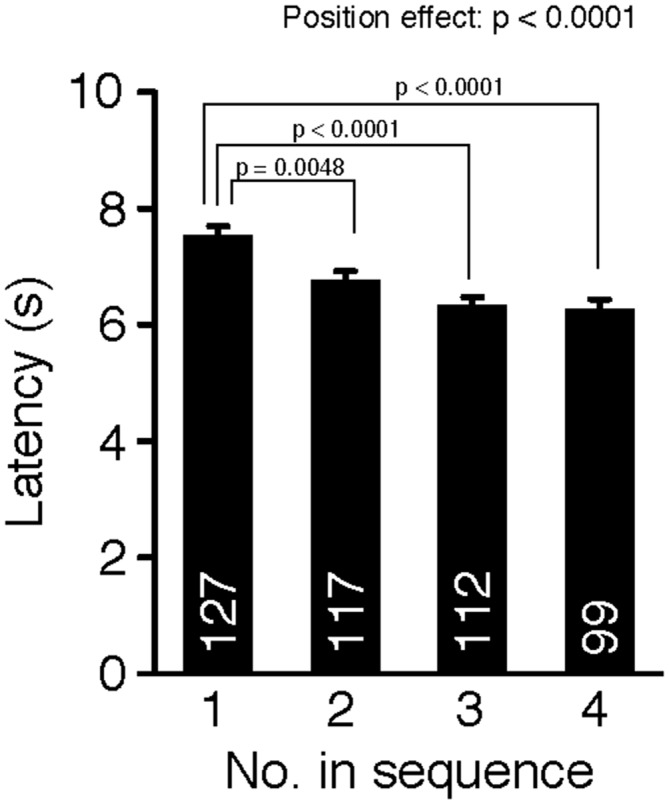
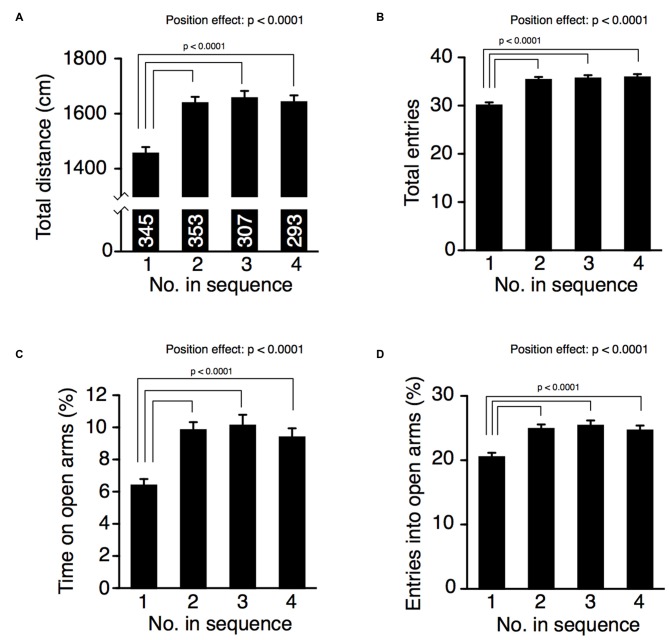
Mouse behavior is analyzed to elucidate the effects of various experimental manipulations, including gene mutation and drug administration. When the effect of a factor of interest is assessed, other factors, such as age, sex, temperature, apparatus, and housing, are controlled in experiments by matching, counterbalancing, and/or randomizing. One such factor that has not attracted much attention is the effect of sequential removal of animals from a common cage (cohort removal). Here we evaluated the effects of cohort removal on rectal temperature, pain sensitivity, and anxiety-like behavior by analyzing the combined data of a large number of C57BL/6J mice that we collected using a comprehensive behavioral test battery. Rectal temperature increased in a stepwise manner according to the position of sequential removal from the cage, consistent with previous reports. In the hot plate test, the mice that were removed first from the cage had a significantly longer latency to show the first paw response than the mice removed later. In the elevated plus maze, the mice removed first spent significantly less time on the open arms compared to the mice removed later. The results of the present study demonstrated that cohort removal induces changes in body temperature, pain sensitivity, and anxiety-like behavior in mice. Cohort removal also increased the plasma corticosterone concentration in mice. Thus, the ordinal position in the sequence of removal from the cage should be carefully counterbalanced between groups when the effect of experimental manipulations, including gene manipulation and drug administration, are examined using behavioral tests.
对小鼠行为进行分析,以阐明各种实验操作的影响,包括基因突变和药物给药。在评估感兴趣因素的影响时,通过匹配、平衡和/或随机化等方法,在实验中控制其他因素,如年龄、性别、温度、实验装置和饲养条件。一个未引起太多关注的因素是从同一个笼子中依次取出动物(群组移除)的影响。在这里,我们通过分析使用综合行为测试组合收集的大量C57BL/6J小鼠的合并数据,评估了群组移除对直肠温度、疼痛敏感性和焦虑样行为的影响。直肠温度根据从笼子中依次移除的位置呈逐步上升趋势,这与之前的报道一致。在热板试验中,最先从笼子中取出的小鼠比后取出的小鼠表现出首次爪子反应的潜伏期明显更长。在高架十字迷宫试验中,最先取出的小鼠在开放臂上花费的时间明显少于后取出的小鼠。本研究结果表明,群组移除会引起小鼠体温、疼痛敏感性和焦虑样行为的变化。群组移除还会增加小鼠血浆皮质酮浓度。因此,当使用行为测试来研究包括基因操作和药物给药在内的实验操作的影响时,应在各实验组之间仔细平衡从笼子中移除动物的顺序位置。